




Taraji P. Henson and Cedric the Entertainer star in the Broadway revival of August Wilson’s classic.
There are some nights at the theater where you watch a performance, and then there are nights where you enter a space. Last night, watching Joe Turner’s Come and Gone, it was the latter.
Before the lights even dimmed, the room felt different. Not tense, not loud, just… attentive. The set sat quietly, as it had already seen things. Like the walls knew more than we did. And when the play began, it didn’t feel like a start; it felt like we had arrived in the middle of something already in motion.
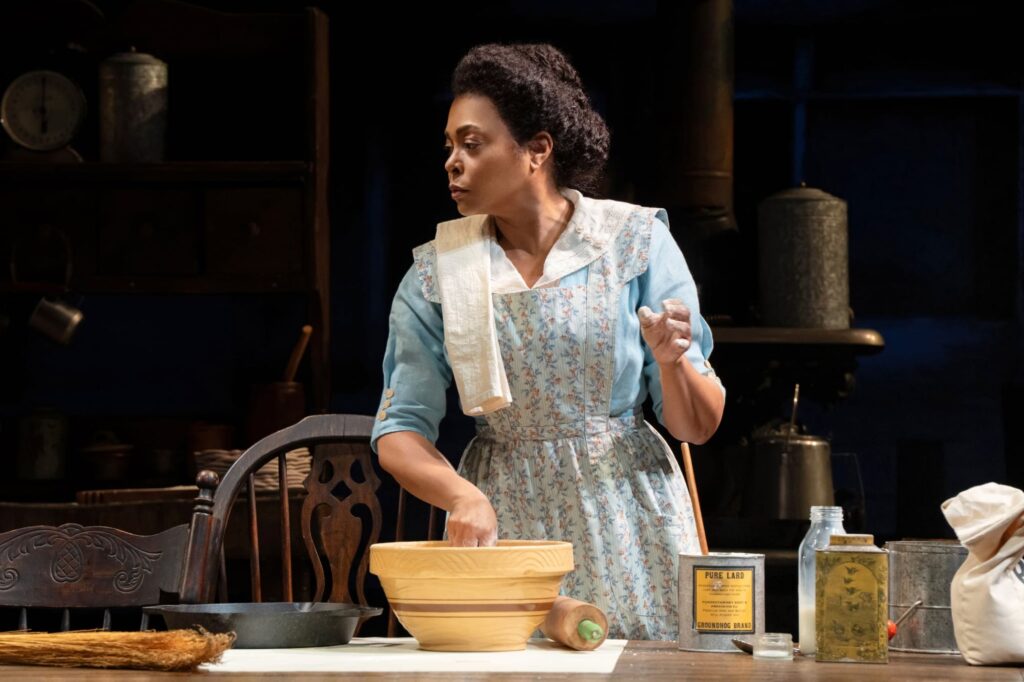
Taraji P. Henson as Bertha Holly doesn’t perform for the audience; she receives the room. There’s a softness in her voice that carries intention, not fragility. You can hear the care in how she speaks, but you can also hear the calculation, when to comfort, when to hold back, when to simply listen. And it’s in that listening where her performance deepens.
At one point, she pauses before responding, just a fraction longer than expected, and in that space, you feel her choosing her words carefully. Not because she doesn’t know what to say, but because she understands what’s at stake in saying it. That kind of restraint creates trust. You lean in, not because she demands it, but because she’s earned it.
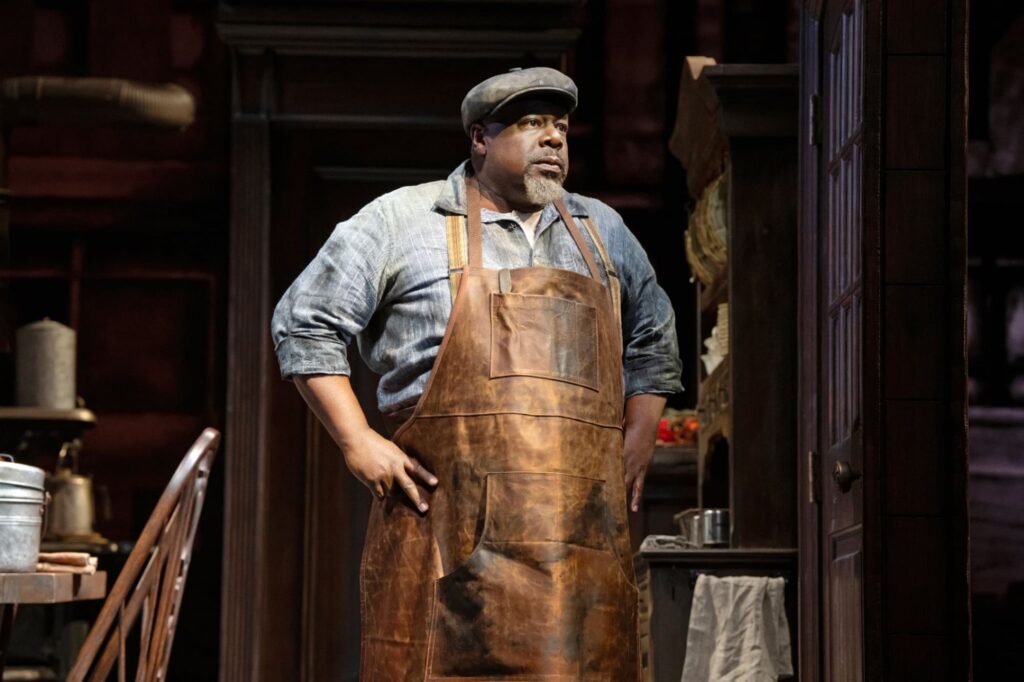
Cedric the Entertainer brings a physical stillness to Seth Holly that reads as both strength and burden. His movements are measured, almost economical, as if he’s conserving energy in a world that asks too much of him. Even when he’s not speaking, there’s a tension in his presence, hands occupied, shoulders set, eyes observing.
There’s a moment where he stops mid-task, just briefly, and something passes across his face, fatigue, maybe restraint, maybe something unspoken, and then it’s gone. It’s not emphasized. It’s not underlined. But it lands.
Under the direction of Debbie Allen, the production trusts stillness. It allows silence to do its work. Some pauses stretch long enough for you to become aware of yourself, your breathing, your posture, the way your body is reacting to what you’re witnessing. At one point, the room grew so quiet that the smallest shift in a seat felt amplified. That level of collective focus is not accidental; it’s cultivated.
What August Wilson offers in this work is not just a story, it’s reflection. Set in 1911 Pittsburgh, the play centers on Black lives in transition, in search of identity, connection, and grounding after displacement. But sitting there, it didn’t feel distant. It felt present. The questions being asked on that stage, about belonging, about memory, about self, are not confined to history.
They’re ongoing.
There were lines that landed immediately, and others that took a moment, settling in slowly, almost quietly, before you realized their weight. Those are the ones that stay. Those are the ones that follow you out of the theater.
And when it ended, people didn’t rush. There was a pause. A collective stillness, like everyone needed a moment to return to themselves. No scrambling for coats, no immediate chatter, just a shared understanding that something had shifted, even if only slightly.
For Black Westchester, this production is not just something to see, it’s something to sit with. It reminds us that Black storytelling, especially in the hands of August Wilson and performers committed to truth, is not about spectacle. It’s about presence. It’s about care. It’s about allowing complexity to exist without needing to resolve it too quickly.
This revival doesn’t push; it settles. And long after you’ve left your seat, it remains.
August Wilson’s Joe Turner’s Come And Gone opened at the Ethel Barrymore Theatre located at 243 West 47th Street, on Saturday, April 25, 2026, and runs until Sunday, July 26, 2026

Also check out Review: August Wilson’s “Joe Turner’s Come and Gone” Explores Identity, Freedom, and the Cost of Both! By AJ Woodson