


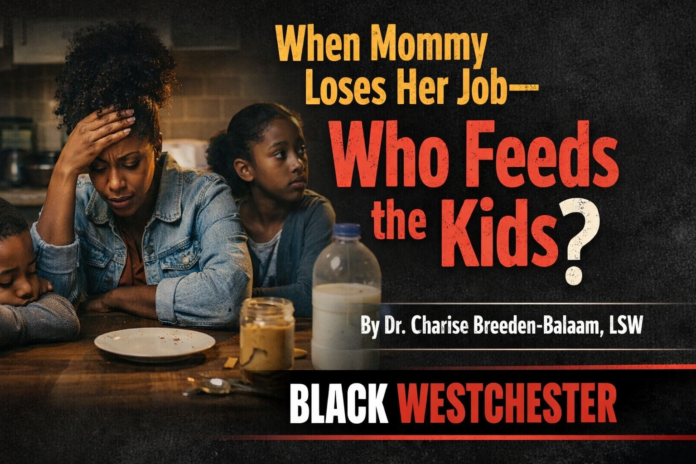





The U.S. economy may appear steady on the surface, but Black women are being pushed out of the workforce at alarming rates, and our children are paying the price.
In July 2025, the unemployment rate for Black women aged 20 and older rose to 6.3%, up from 5.8% just a month earlier, according to the U.S. Bureau of Labor Statistics. Even more concerning, from February to April, Black women lost over 304,000 jobs, despite the overall U.S. workforce adding 175,000 jobs during that same period. These numbers mark the largest month-over-month increase in unemployment for any race or gender (The Root, 2025).
This isn’t a coincidence. It’s a consequence of systemic inequities, federal job cuts, and the widespread dismantling of DEI programs across sectors that once offered Black women pathways to stability and advancement.
Black women comprise 12% of the federal workforce—the highest of any minority group (EEOC, 2021). With over 84,000 federal jobs cut since January, and the removal of DEI roles in industries like tech, retail, and healthcare, Black women are experiencing disproportionate economic loss.
And when Black women lose their jobs, their children are at greater risk of hunger.
I’ve spent my career as a social worker, educator, researcher, and mother, and I know this reality all too well: when a parent—especially a single mother—loses income, the ripple effect hits the kitchen table first.
Food insecurity is not just about empty stomachs. It’s about mental health, academic performance, physical development, and long-term opportunity. Hungry children struggle to focus in school. They face higher rates of anxiety and depression. They are less likely to graduate and more likely to fall through systemic cracks.
Cuts to food programs, school meal initiatives, and local farm partnerships—paired with job loss among primary caregivers—create a perfect storm. And it’s our children who are left in the wreckage.
This moment demands more than concern. It requires a reckoning with how we value the lives and labor of Black women—and how we protect the children who depend on them.
We must tell the full story: Unemployment isn’t just an economic indicator—it’s a child welfare crisis. And when mothers lose jobs, it’s not just a household budget that suffers. It’s a child’s next meal, their ability to learn, and their chance to thrive.
Let’s stop treating food insecurity and joblessness as separate problems. They are deeply connected, and both must be addressed with urgency, equity, and compassion.
#WhenMommyLosesHerJob #FoodJustice #BlackWomenAtWork #SocialWork #EducationEquity #PolicyMatters #DEIRollback #FoodInsecurity #ChildWellbeing #EquityInAction #BlackMothersMatter #LinkedInVoices
This article originally appeared in the August 2025 issue of Black Westchester Newspaper and is being reshared now for Women’s Month.
Editor’s Note: Over 300,000 Black women left the workforce or lost their jobs in the first half of 2025, marking a significant economic downturn for this demographic. Reports indicate a 7.3% unemployment rate for Black women, with sharp job losses in the public sector, a retreat from diversity initiatives, and increased automation.
Here are some key details regarding the high numbers of job losses for Black women include:
- Massive Workforce Exit: Between February and April 2025, approximately 300,000–320,000 Black women left the labor force.
- Disproportionate Impact: While the overall U.S. unemployment rate hovered around 4.4%, the rate for Black women increased to 7.3%. In some periods, Black women accounted for over 50% of all female job losses.
- Public Sector Layoffs: Job losses are heavily linked to cuts in government positions, where Black women are frequently employed.
- Factors Contributing to Losses: Key factors driving this trend include corporate retreats from DEI (Diversity, Equity, and Inclusion) initiatives, AI automation, and potential targeting of roles, say experts per Forbes.
- Long-Term Impact: As 69% of Black mothers are primary earners, this trend significantly impacts household financial stability.
Experts note that Black women often serve as “economic shock absorbers” and that these employment trends act as a warning signal for the broader economy, according to the Economic Policy Institute.
Unemployment for Black women has reached critical levels, with rates rising significantly to over 7% by late 2025 and early 2026, marking a sharp contrast to earlier, lower figures. This trend indicates a widening disparity, as their unemployment rate is nearly double that of white women and is driven by high job losses.