



What’s stealing your deep sleep?
It’s not just blue light. From “popcorn brain” to neighborhood noise, Dr. Derek Suite uncovers the hidden forces keeping Black communities awake at night–and how to fight back.
Three clients told me the same thing last week: “I’m doing everything right, but I still feel exhausted.” They had blackout curtains, consistent bedtimes, cool bedrooms -all the sleep hygiene basics. Yet they were dragging themselves through their days, wondering what they were missing.
Here’s what they didn’t know: the real sleep thieves weren’t in their bedrooms. They were hiding in their phones, their neighborhoods, and their family responsibilities, systematically sabotaging their rest in ways they never suspected.
You can spend 8 hours in bed and emerge feeling like you never slept at all when your nervous system never gets permission to power down fully. Your Phone Is Hijacking Your Sleep (And It’s Not Just Blue Light)
Everyone talks about blue light keeping you awake. That’s real, but it’s not the biggest problem. The real sleep thief? What Harvard researchers call “popcorn brain” – that feeling when your mind won’t stop jumping from one thought to another after scrolling through your feeds.
Why Doomscrolling Destroys Your Sleep: You know that cycle, right? You’re exhausted, you get in bed, then you scroll through news and social media “just for a few minutes.” But here’s what’s happening inside your body: all that negative content is pumping stress hormones through your system. Dr. Aditi Nerurkar at Harvard found that your cortisol and adrenaline can stay elevated for hours after scrolling.
Your brain treats that constant stream of crisis information like real danger. So even though you’re lying in your safe bedroom, your nervous system is still scanning for threats instead of powering down for restoration.
Here’s the crazy part: just 30 minutes of evening scrolling can cut your deep sleep by over a third. That’s the difference between waking up refreshed or feeling like you got hit by a truck.
Even Silent Phones Mess With Your Sleep: Think putting your phone on silent fixes the problem? Not quite. Research from UC San Francisco found that people who sleep with phones nearby – even in airplane mode – have higher stress hormone levels all night long. Your brain knows that phone is there, waiting to buzz with the next hit of information.
Your Neighborhood Is Stealing Your Sleep (Even When You Think You’re Used to the Noise)
You might think you’ve adapted to city sounds – the traffic, sirens, your upstairs neighbors. But your brain hasn’t adapted at all. A massive study following over 28,000 people for five years found that neighborhood noise directly messes with how well you sleep, regardless of how good your sleep habits are.
Why City Sounds Keep You Tired: Even when you think you’re sleeping through noise, your brain is actually staying partially alert all night. Traffic, construction, sirens – these unpredictable sounds keep your brain’s listening centers on guard, ready to decide if that noise is something you need to worry about.
The research shows that even small increases in nighttime noise systematically reduce your deep sleep. For people living in dense urban areas, this creates sleep debt that just keeps building up over time.
The Safety Factor No One Talks About: Here’s something that surprised me in my practice: how safe you feel in your neighborhood directly affects how deeply you sleep.
Dr. Chandra Jackson’s research found that in neighborhoods where people feel less secure, brain scans actually show more activity in threat-detection areas even during sleep.
When your environment doesn’t feel completely safe, your brain stays partially on guard all night. It can’t fully switch into restoration mode because it’s still monitoring for potential problems.
The Sleep Problem No One Talks About: When You’re Always “On Call”
If you’re caring for aging parents, listening for kids, or managing multiple family responsibilities, this one’s for you. Millions of Americans carry what I call the “caregiver sleep penalty” -and most don’t even realize it’s happening.
You know that feeling when even in your sleep, part of you is listening? Listening for your teenager to come home safely, for your parent to call out if they need help, for any family crisis that might need your immediate attention.
This isn’t just being a light sleeper. Research shows that people in chronic caregiving roles get significantly less restorative sleep even when they’re in bed for a full eight hours. Your sleep efficiency drops to levels you’d see in people with actual sleep disorders.
Here’s what’s happening: when your brain maintains that partial alertness for potential family needs, it blocks your transition from light sleep into the deep restoration phases.
You’re physically in bed, but your nervous system never gets the all-clear to fully power down.
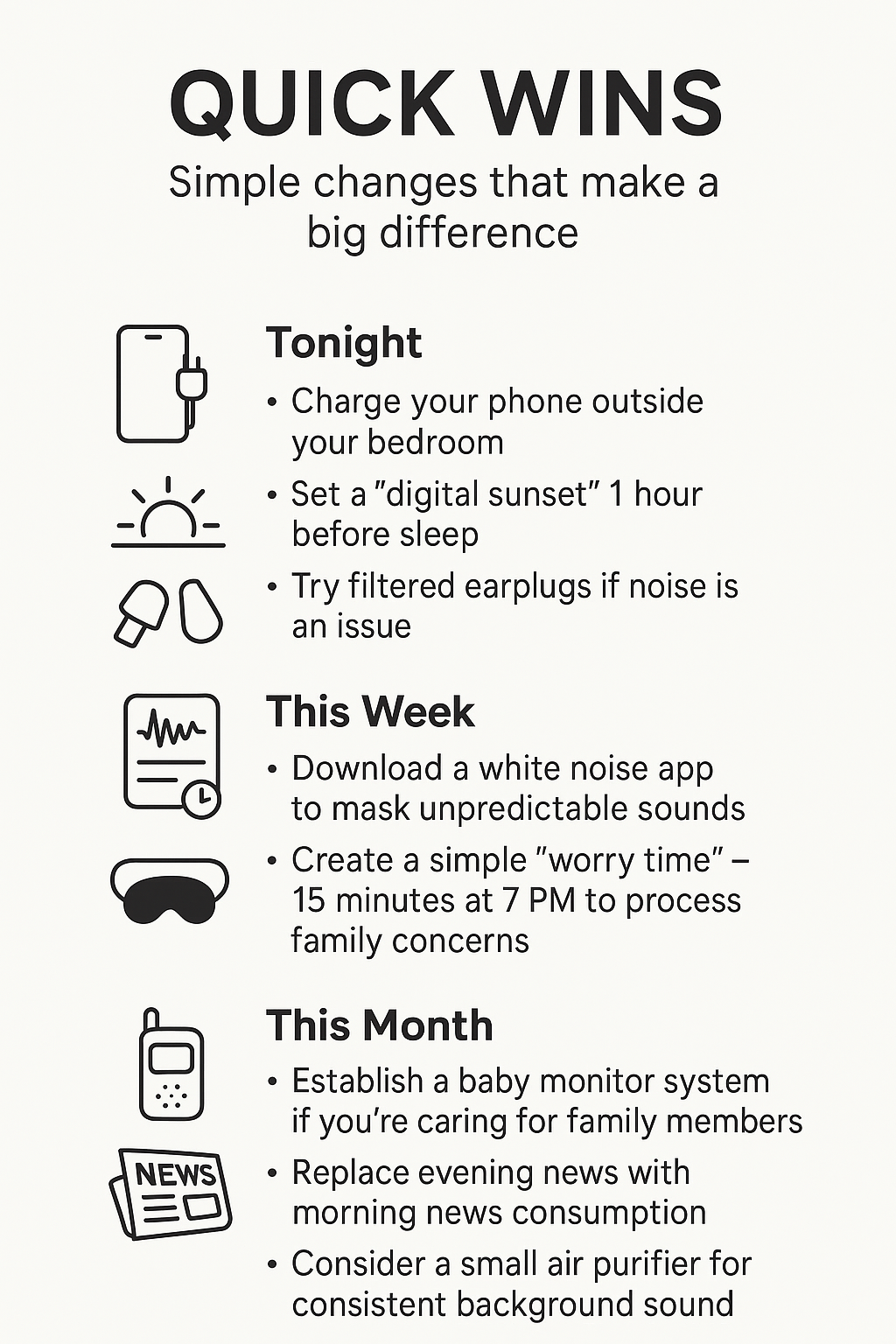
Figure Out What’s Stealing Your Sleep
Instead of guessing, here’s how to identify your specific sleep thieves:
Track Your Digital Habits: Notice the connection between evening screen time and how you feel the next day. Pay attention to whether news consumption affects how long it takes you to fall asleep.
Monitor Your Environment: Keep a simple log of noise patterns and sleep quality.
Note whether you sleep better on quieter nights or when you feel safer.
Recognize Your Vigilance Patterns: Identify what responsibilities require you to stay alert at night. Notice if work stress or family worries follow you into sleep.
What Actually Works: Real Solutions for Real Life
Based on your specific sleep disruptors, here’s what actually helps:
For Digital Overwhelm: Complete device shutdown 60 to 90 minutes before sleep. Charge all devices outside your bedroom. Replace evening news with morning information gathering. Use an old-fashioned alarm clock instead of your phone.
For Environmental Chaos: White noise machines mask unpredictable sounds.
Blackout curtains plus eye masks give you complete darkness control. Strategic use of filtered earplugs blocks random noise while still letting you hear true emergencies.
For Chronic Vigilance: Set up technology solutions for legitimate monitoring needs – baby monitors, medical alert systems. Create a designated “worry time” to process family concerns outside of sleep hours. Try progressive muscle relaxation to signal safety to your nervous system.
Linda’s Sleep Breakthrough
Linda from White Plains, who I’ve been working with on her sleep issues, had been struggling with fragmented sleep for months despite perfect sleep hygiene. Her tracker showed she was getting only 25 minutes of deep sleep per night. Once we identified her specific disruptors – -evening news scrolling and hypervigilance about her teenage kids – everything changed.
She moved her phone charger to the kitchen, installed filtered earplugs that let her hear real emergencies but blocked street noise, and created a simple check-in system with her teens. Within three weeks, her deep sleep doubled.
“I didn’t realize how many things were quietly stealing my sleep,” Linda told me. “Now I actually wake up feeling rested for the first time in years.”
When to Get Professional Help
Some sleep problems need more than lifestyle changes. See a healthcare provider if you experience persistent sleep disruption despite addressing environmental factors, loud snoring with breathing pauses, excessive daytime sleepiness that affects work or safety, or sleep problems with mood changes.
Critical point: Never accept dismissive responses about sleep concerns. Sleep disruption has measurable causes and evidence-based treatments. Quality sleep is a medical necessity, not a luxury.
Your Sleep Defense Plan
The most effective approach treats sleep protection like an active defense system. Your sleep quality depends on identifying and neutralizing the specific forces undermining your restoration.
The hidden sleep thieves – digital overstimulation, environmental chaos, and chronic vigilance – operate predictably. Once you identify them, they can be systematically defeated with targeted strategies that restore your nervous system’s ability to fully power down and rebuild.
Quality sleep isn’t about creating perfect conditions. It’s about creating enough safety and consistency for your brain to trust that deep restoration is possible.
Derek H. Suite, M.D., is a board-certified psychiatrist, a Columbia University faculty member, and the founder of Full Circle Health, a comprehensive mental health practice serving the tri-state area since 1999. For questions about this monthly column, please email info@fullcirclehealthny.com
Next in the Series: When Sleep Goes Wrong: Recognizing and Treating Common Sleep Disorders”- Understanding when disruption becomes disorder and how to get proper help.
Medical Disclaimer: This article is for educational purposes only and does not replace medical consultation. Always consult your healthcare provider if you have concerns about sleep disorders or persistent sleep disruption.