




You made it.
The holidays are behind you. The plates have been put away, the guests have gone home, and the calendar has finally stopped demanding so much. If you’re reading this now, there’s a good chance you’re running on less than you realize. Most of us are. December has a way of borrowing from the body without sending a bill until much later.
So here we are, standing at the beginning of another year, and most of us will make some kind of resolution. We always do. The harder part is making one that sticks.
I want to suggest something different this year and talk about sleep, but not in the way you’ve probably heard it discussed before.
The Education We Never Got
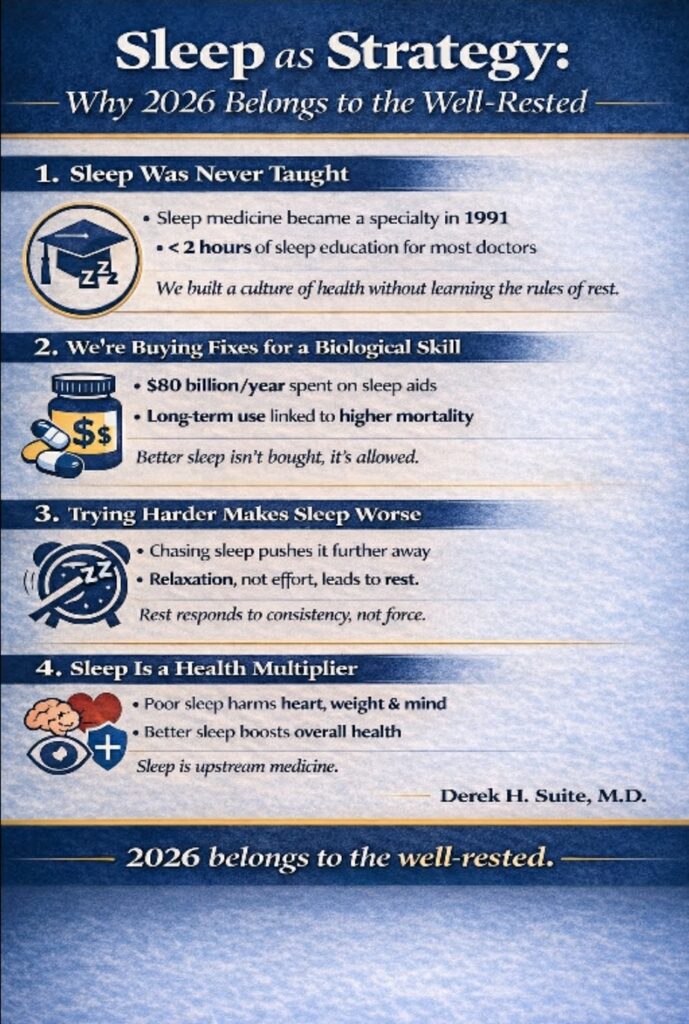
Here’s something that still surprises people when I mention it: sleep medicine wasn’t even recognized as a medical specialty until 1991. Most physicians practicing today received less than two hours of formal sleep education across their entire medical training. That’s two hours for something we spend a third of our lives doing.
This means that for decades, the very people we trusted to guide our health weren’t equipped to talk about sleep in any meaningful way. And if the doctors weren’t taught, the schools certainly weren’t teaching it either. So, the information just never reached us. We inherited a culture that treated sleep as negotiable, as something to sacrifice when life got demanding, and we passed that down without ever questioning it.
The result is a kind of generational blind spot. We talk about watching our blood pressure and managing our sugar and getting more exercise, but sleep rarely makes it into that conversation with the same weight. And yet the research has been quietly piling up for years, showing that sleep is connected to almost everything we’re already worried about, including heart disease, diabetes, weight, memory, mood, and immune function. The conditions that show up most often in our communities have sleep woven through them in ways we were never told.
What We’re Doing Instead
Americans spend somewhere around eighty billion dollars a year on sleep aids. Pills, supplements, gadgets, apps, weighted blankets, specialty mattresses, and melatonin gummies in every flavor you can imagine. It’s a massive industry built on the promise that better sleep is something you can buy.
And yet the research on many of these products tells a more complicated story. Studies have linked regular sleeping pill use to a higher mortality rate, with some showing three to five times the risk, even at relatively low doses. One large study found that people taking sleep medications had significantly shorter life expectancies than those who didn’t, even when they were getting what should have been a healthy amount of sleep.
I’m not saying this to frighten anyone who’s currently using sleep aids. These are personal medical decisions that belong between you and your doctor. But it’s worth knowing that the solutions we’ve been sold aren’t always as safe as the packaging suggests, and the approaches that work often don’t come in a bottle at all.
A Different Way to Think About Sleep
There’s a form of therapy called Cognitive Behavioral Therapy for Insomnia (CBT-I) that has become the gold standard treatment for sleep problems. It’s essentially a way of retraining your relationship with sleep, and the principles behind it can be useful for anyone, not just people with diagnosed insomnia. And it doesn’t involve medication.
One of the core insights from CBT-I is something that sounds almost too simple: the harder you try to sleep, the worse it tends to go. Sleep isn’t a task you can muscle through. It doesn’t respond to effort the way most things in life do. If anything, effort tends to push sleep further away.
This is worth sitting with for a moment, because it runs counter to everything many of us have been taught about how to get results. You know the drill: work harder, push through and stay disciplined. That mindset might serve you well in a career, in school, in building something meaningful over time. But when you bring that same energy to sleep, you end up lying in bed with your jaw clenched, watching the clock, calculating how many hours you’ll get if you fall asleep right now. This, of course, makes falling asleep even harder.
Sleep comes when you stop chasing it. The body already knows what to do if you get out of its way. And for people who’ve spent their lives “achieving”, that shift can feel almost unnatural.
What This Means for 2026
The resolution I’m offering has less to do with hours or pillows and more to do with how you relate to rest in the first place.
Respect the bed.
Your bed should be for sleep and intimacy, and not much else. When you start using it as a workspace, a scrolling zone, a place to ruminate about tomorrow’s problems, your brain stops associating it with rest. This is one of the simplest CBT-I principles, and it works because the body learns through repetition.
Stop performing sleep.
If you’ve been lying awake for twenty or thirty minutes, get up. Do something quiet in low light until you feel sleepy, then go back. The worst thing you can do is stay in bed frustrated, because that frustration becomes the new association.
Trust the pressure.
Your body knows how to sleep. It’s been doing it your whole life without instruction. When you stop overriding its signals (pushing through tiredness, using caffeine to mask fatigue, ignoring what your body is asking for), sleep tends to come more naturally.
These aren’t quick fixes. They take consistency and sometimes a few uncomfortable nights before things settle. But they address the actual problem rather than masking it.
The Bigger Ask
I said this was about 2026, and it is. But I want to zoom out for a moment, because individual resolutions can only go so far.
If the education around sleep has been missing from our communities for generations, then the fix has to be bigger than any one person deciding to take sleep seriously. The information needs to reach people in the places where real conversations already happen.
I’m talking about barbershops and beauty salons because these are places where health topics come up naturally, where trust is already established. I’m including churches and mosques, where community wellness has always been part of the mission. And fraternities and sororities, community health organizations, school PTAs, and employee wellness programs. The institutions that touch people’s lives.
What if 2026 was the year we started treating sleep like the health conversation it is? What if it got the same airtime as blood pressure and diabetes, and heart health, because the truth is, sleep is connected to all of them?
This is my challenge for the year. To anyone running a community organization, leading a congregation, hosting a wellness event, or simply having regular conversations with people who trust them: put sleep on the agenda. Bring it up, ask questions, and share what you know.
The medical schools didn’t teach it, and the healthcare system hasn’t prioritized it. So, the knowledge must travel through us instead.
A Small Way of Saying Something Large
Sleep won’t solve everything. I’ve never believed in silver bullets, and I’m not going to pretend that fixing your sleep will automatically fix your life. But I’ve been doing this work long enough to know that when sleep is off, everything else gets harder. The patience runs thinner, thinking gets cloudier, and the body feels heavier than it should.
Taking sleep seriously is a small way of saying something larger: that you’re worth taking care of. Rest belongs to you now, not after everything is done. It’s how you keep going, not what you earn after you are tired and depleted. Try resting so that you are never tired or depleted.
2026 is here. And it belongs to the people who stop treating rest as optional.
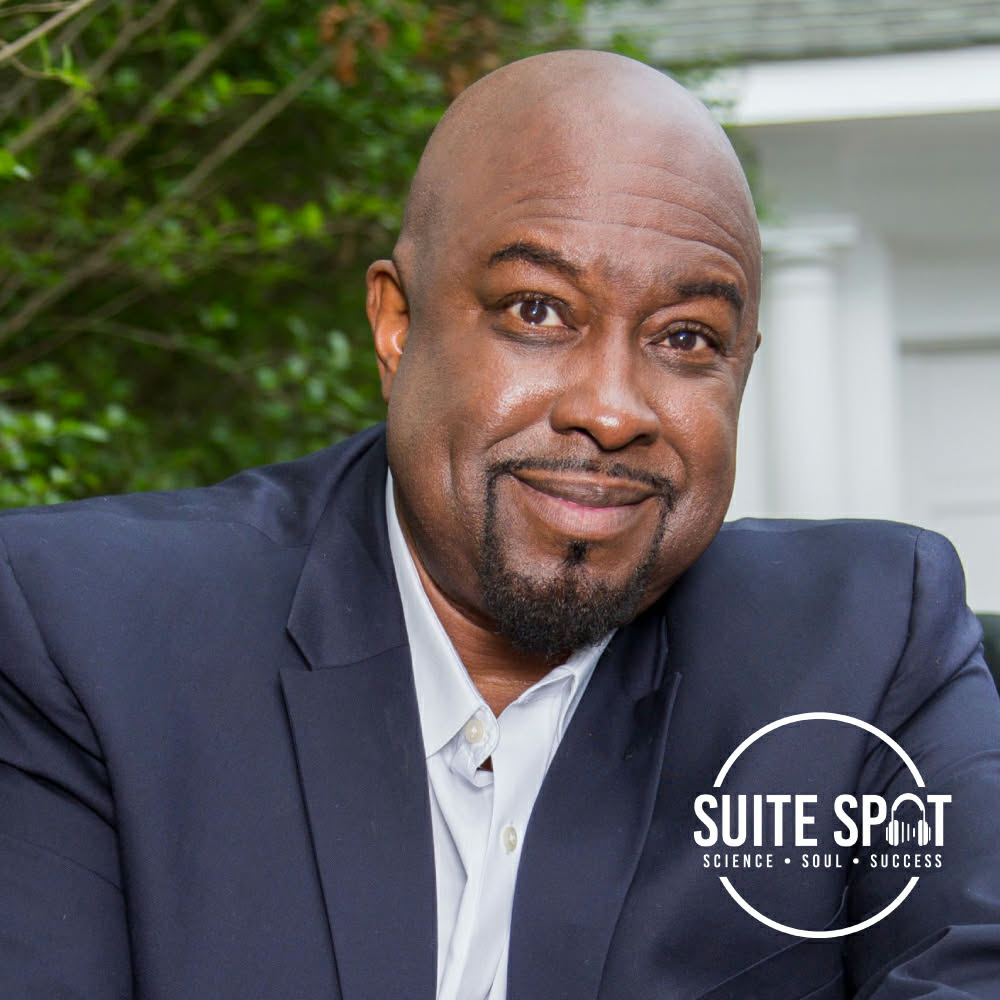
Derek H. Suite, M.D., is a board-certified psychiatrist specializing in sleep, stress, and peak performance. He is the Founder and CEO of Full Circle Health, an Adjunct Clinical Professor at Columbia University, and host of the daily podcast The SuiteSpot. His forthcoming book explores sleep as the foundation of performance medicine.








I’m not that much of a online reader to be honest but Black Westchester is really informative, keep it up! Love this article, I’ll go ahead and share it with my family and friends. Many thanks
Thank you for checking out Black Westchester 50 & Fabulous