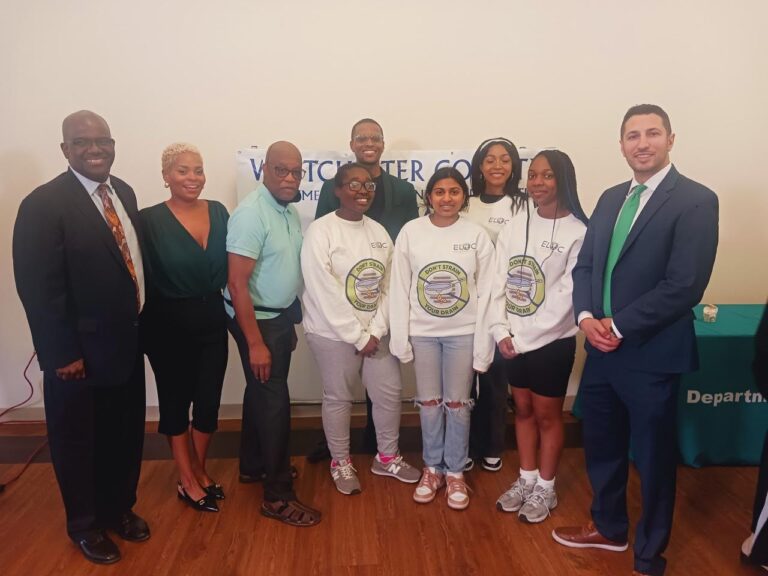
The Environmental Leaders of Color (ELOC) student teams made a powerful and uplifting impact throughout Earth Month this April, bringing fresh energy and innovation to environmental advocacy in Westchester County and beyond. Their commitment to sustainability, community action, and creative problem-solving continues to set an inspiring example for youth leadership.
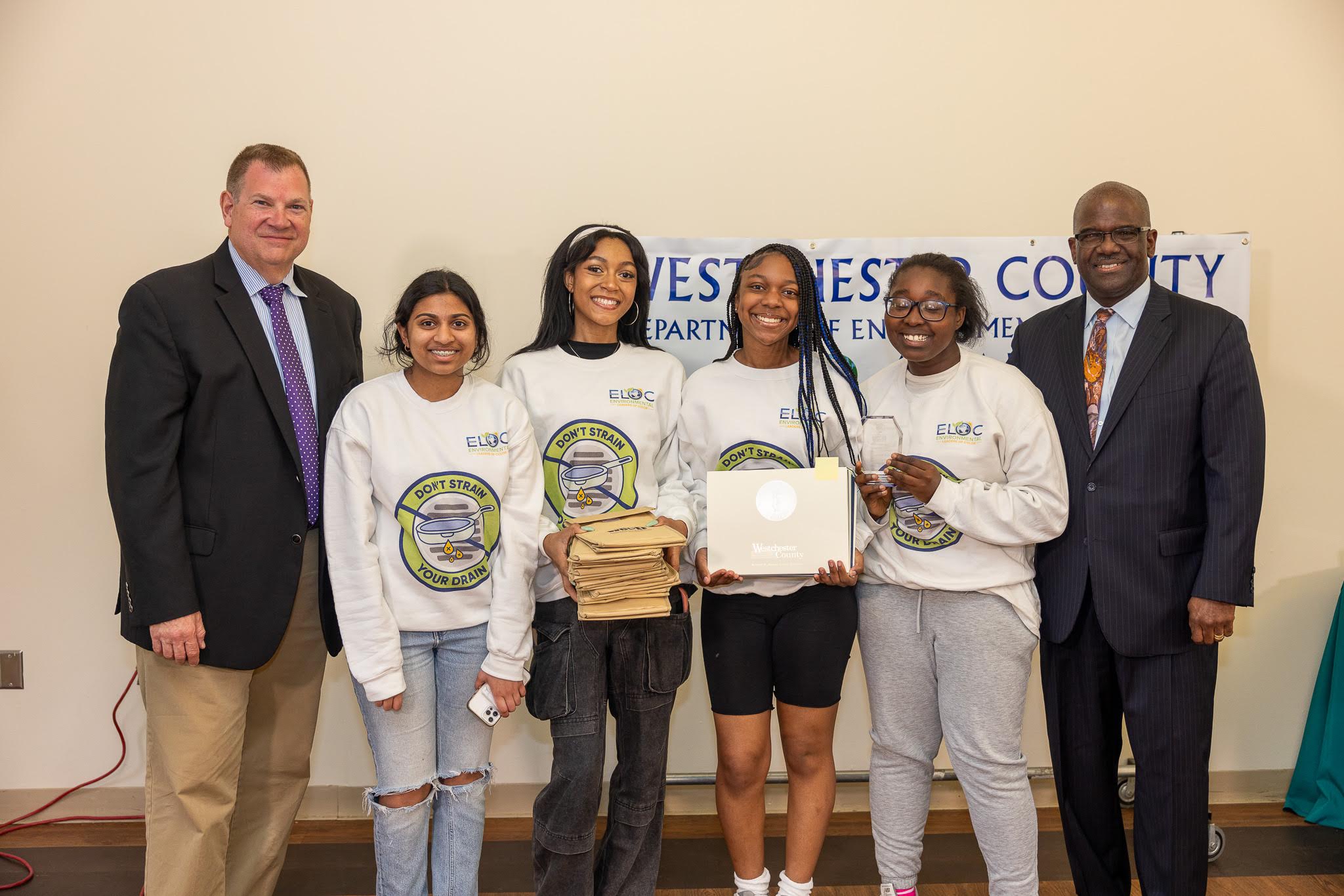
One of the standout moments of the month was the recognition of the “Don’t Strain Your Drain” team at the Westchester County Environmental Facilities’ Annual Awards Ceremony. Held at the scenic Boat House in Tibbetts Brook Park, Yonkers, on April 25, 2025, the team was honored with the prestigious 2025 ECO Award for their outstanding efforts in environmental education and advocacy. This well-earned achievement celebrates the students’ hard work in launching a campaign that encourages homes, businesses, and municipalities to properly recycle cooking oil—protecting plumbing systems and preventing pollution in local rivers and streams.
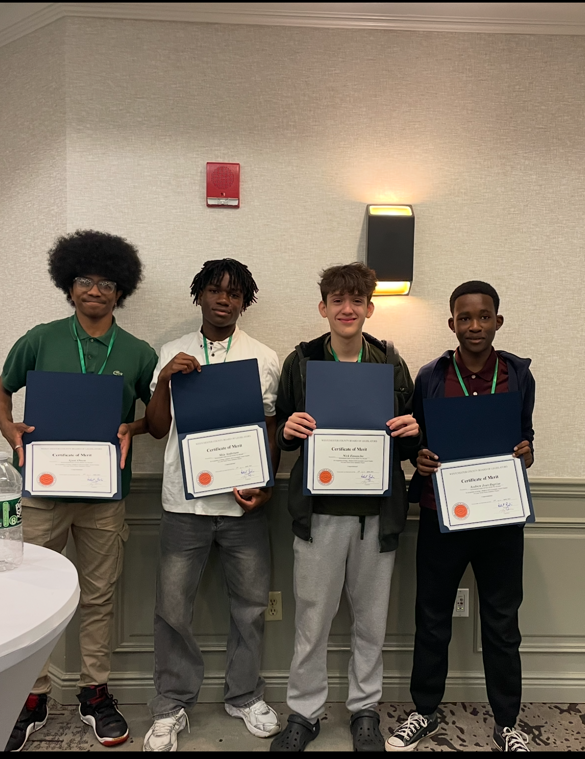
Earlier this year, the team had the unique opportunity to present their initiative to the New York State Department of Environmental Conservation (NYSDEC) in Albany. This milestone presentation was made possible by an invitation from Assemblyman Gary Pretlow, alongside other Westchester-based legislators. Adding to their growing list of accomplishments, the team was also honored during Black History Month with a Certificate of Merit from the Westchester County Board of Legislators, recognizing the impact of their environmental work.
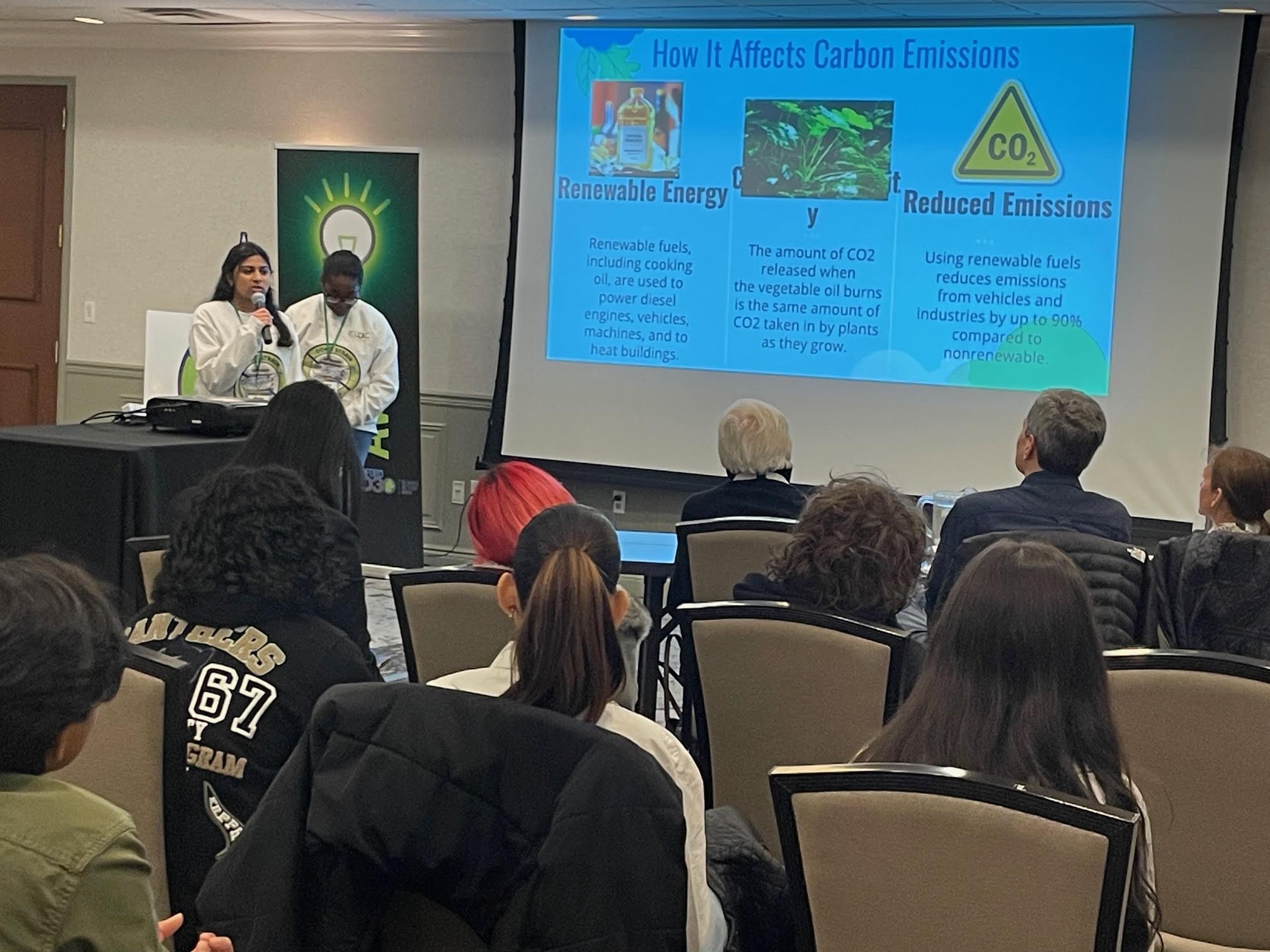
On April 27, 2025, two ELOC student teams participated in the Bedford 2030 Greenlight Award competition, an exciting event that challenges high school students to create community-centered environmental solutions. Competing against students from schools across the region—including Rye Country Day, John Jay, Hastings, and Mamaroneck—the “Don’t Strain Your Drain” team once again impressed the judges, earning a strong third-place finish for the second year in a row. Their thoughtful presentation and steady support from family and community members highlighted their commitment to lasting change.
Joining them in the competition was the forward-thinking “Green Goose Solutions” team, who tackled the lesser-known yet impactful problem of excessive goose waste near New Rochelle High School and other public spaces. Their project explored sustainable solutions for repurposing the waste—transforming a challenge into a potential resource. Although they did not place this year, the team remains enthusiastic and is already planning to return with an even stronger proposal next year.
Together, these young leaders embody the spirit of environmental responsibility and grassroots activism. Their creativity, determination, and heart are proof that meaningful change often begins with youth.
Looking ahead, ELOC is excited to launch its Student Summer Energy & Environmental Program, a six-week initiative focused on Weather and Climate. The program will take place at various locations throughout Westchester County and is open to teens passionate about environmental justice and science. For program registration and information on cooking oil recycling drop-off, please visit www.eloc.earth.
On Monday, May 12, 2025, the Officers and Executive Committee Members of the Yonkers Branch of the National Association for the Advancement of Colored People (NAACP) were sworn in at the Sarah Lawrence College Center for the Urban River at Beczak. The ceremony was officiated by The Honorable Verris Shako, a Yonkers City Court Judge. The national civil rights organization was established in 1909 and is America’s oldest and largest civil rights organization. The Yonkers NAACP Unit #2188 was formed in 1961 and is most known for the desegregation case entitled “United States and Yonkers Branch of the NAACP v. Yonkers Board of Education”.
The Officers and Committee Members are as follows: President-Kisha D. Skipper, Vice President-Karen Edmonson, Secretary-Nyla B. Green, Assistant Secretary-Eric A. Johnson, Treasurer-Christine Fils-Aime, Assistant Treasurer-Patricia Daugett, Executive Committee Members- Phillip Armstrong, Lydia E. Blakely, Rev. Frank E. Coleman, Jr., Rev. Margaret Fountain-Coleman, Reggie Crews, Tyrone Glover, Jeanette Harris, Steven Siebert, and Jacqueline White.
Branch President Kisha Skipper quoted the national organization’s message in expressing that “The NAACP advocates, agitates, and litigates for the civil rights due to Black America…From classrooms and courtrooms to city halls and Congress, our network of members across the country works to secure the social and political power that will end race-based discrimination.” I look forward to working with the newly elected officers and executive committee members in the fight for racial equity and against any/all systems that negatively impact residents in and around the City of Yonkers. The vision for the unit is to increase civic education and engagement, while continuing our advocacy and activism around housing, education, criminal justice, environmental and climate justice, and youth services. I look forward to the reestablishment of our Youth Council and all efforts to ensure that Black people and all persons of color obtain equitable opportunities in our communities.
Past President and Vice President Karen Edmonson stated, “I felt compelled to serve especially during these unprecedented times in America. The Yonkers Branch has a long history of serving this community, having changed the educational and housing landscapes in extraordinary ways. We will continue our mission to address the gaps with hope that they will once again be narrowed.”
Immediate Past President Rev. Frank E. Coleman, Jr. added: “It is with great pleasure that the mantle can be passed to the new leadership of the Yonkers Branch. Serving as President has been one of the most rewarding experiences since returning to New York, and I will remain committed to the mission of the organization and supportive of newly elected President Kisha Skipper and the entire Unit.
You may join this multigenerational network of activists dismantling structural racism by using your power to take action on the most pressing issues of our time. www.naacp.org. The Yonkers NAACP will meet every 4th Monday at the Sarah Lawrence College Center for the Urban River at Beczak beginning at 7:00 PM. Follow them on Facebook and Instagram.
By New York State law, school board and budget elections, in all districts except the Big 5 (Buffalo, New York City, Rochester, Syracuse, and Yonkers), must be held on the third Tuesday in May. The annual Budget Vote and School Board Election will be held on Tuesday, May 20, 2025, with polls open from 7 a.m. to 9 p.m. In some municipalities, May 20th is also Library Trustee Election. We contacted the District Clerks and attempted to compile a list of who is running, voting location(s), how many open seats, propositions, and any other pertinent information we could gather by press time! Several school districts responded after the newspaper was printed, so please keep checking this page for the most updated information. Thank you.
And your School Board and Library Board Trustee candidates are….
Ardsley School Districts (2 seats open) Hrishi Karthikeyan Bart Grachan
Bedford Central School District (4 seats open) Trustee candidates (in order as they appear on the ballot) are: Gillian Klein Prasad Krishnan Blakeley Lowry Amal Shady Robert Mazurek Eric Florio
Briarcliff Manor School District (2 seats open) Kenneth Torosian Michelle Woerner
Bronxville Union Free School District (3 seats open) Bronxville School – BLUE GYM Michael Brandes Elizabeth Kiehner Matthew Zloto Sarah Sepe Eddie Lemmon Peter McSherry
Proposition 1: The 2025-2026 SCHOOL BUDGET is in the amount of $55,205,497: Proposition 2: 2025 CAPITAL PROJECT at a cost not to exceed $20M, with $5M to be expended from the “Capital Reserve Fund 2011”
Chappaqua Central School District Board of Education candidates (in ballot order) Tim McNamara Ryan Kelsey Hilary Grasso Allison Steinbauer
Library Board (one seat open) Pam Moskowitz
Dobbs Ferry School District (3 seats open) Dobbs Ferry High School 505 Broadway
Eastchester Union Free School District (3 open seats) Laurie Giacobbe Christine Civitano-Lombardi Matthew Fanelli
Elmsford Union Free School District David Hecht, incumbent Suzanne Phillips, Ed.D., incumbent Rita Azrelyant
Harrison Central School District (2 seats open) Your neighborhood elementary school. Gabrielle Elfand Samantha Giberga
Hastings-on-Hudson Union Free School District Cochran Gym – Hastings High School Maureen Lennon-Santana David Weinstein Rochelle Nelson Elizabeth Adinolfi
Irvington Union Free School District (2 seats open) Main Street School Gymnasium Steven Balet Andrea Flynn
The budget appropriation amount to be voted upon is $79,576,400 and there will be a capital reserve proposition on the ballot as well to spend on various district-wide repairs in the amount of $3,950,000
Katonah-Lewisboro School District (3 seats open) Arwen Thomas Belloni, Jon Poffenberger, Carolyn Snell
Mamaroneck Union Free School District Athena Belsito-Maikish Stacey D’arcy
The proposed budget of $169,191,992 is a 6.27% or $9,987,429 budget-to-budget increase. The tax levy increase to support this budget is $7,050,627, or 4.98%, over the current tax levy.
Mount Vernon City School District School Board Candidates (three seats available) 1A – Adriane Saunders, 2A – Lorna Kirwan 3A – Orville Gayle 4A – Sakai Brown 5A – Chara Gladden 6A – Erica Peterson 7A – Randolf Scott
Public Library Board Candidates (two seats available) 1A -Cynthia Crenshaw 2A – Jonathan Davis 3A – Cynthia Dickerson 4A – Tamara Stewart 5A – Hudson Trader
Voting Locations Lincoln School, 170 East Lincoln Ave. (ED # 1) Cecil H. Parker School, 461 South 6th Ave. (ED # 4) Hamilton School, 20 Oak St. (ED # 5) Traphagen School, 72 Lexington Ave. (ED # 6) Edward Williams School, 9 Union Lane (ED # 7) Graham School, 421 East 5th St. (ED # 9) Rebecca Turner Academy, 625 4th Ave. (ED # 14) Pennington School, 20 Fairway (ED # 11) Mount Vernon Honor Academy (Formerly Holmes School), 195 North Columbus Ave. (ED # 17) Grimes School, 58 South 10th Ave. (ED # 22)
City School District of New Rochelle Two five-year terms beginning July 1, 2025, ending on June 30, 2030 The Board of Education candidates, as they will appear on the ballot, are: Myriam Decime Elana Jacob Jessica Klein Rosa Rivera-McCutchen Keith Singletary
Library Board of Trustees candidate Corey Galloway
North Salem Central School District (3) seats open Pequenakonck Elementary School Deborah D’Agostino Brandy Keenan Frances Havard
Ossining Union Free School District (2) seats open Ossining High School gymnasium 29 S Highland Ave Board of Education candidates (in ballot order) Melissa Banta Christine Mangiamele
Ossining Public Library Board of Trustees Candidates (3 seats open) Amanda Curley Althema Goodson Amanda Marsh Laurence O’Connell
Peekskill City School District Frank Robinson Jr. Mary Angel Flores Jillian Villon Hilda Kinga Portik- Gumbs
Pelham Union Free School District (3 open seats) Pelham Middle School Gymnasium 28 Franklin Place Natalie Marrero Will Treves Jackie De Angeles
Budget: Total appropriations: $96,290,000, Tax levy increase: 3.48% (complies with tax cap)
Pleasantville UFSD (one seat open) Erin Ballard
The Pleasantville Union Free School District presents a budget of $62,981,688
Pocantico Hills Central School District Pocantico Hills School Gymnasium Two (2) members for a three (3) year term commencing on July 1, 2025, and expiring on June 30, 2028, and one (1) member for the unexpired term, effective upon taking the oath of office on May 22, 2025, and expiring on June 30, 2026. Elena Riley Scott Graves Charlie Minton Joseph McGrath
Port Chester School District (1 seat open) Chrissie Onofrio Budget for the 2025-2026 school year is for $154,467,000
Rye Neck School District (2 seats open) Ruth Homberg Alex Rainert Elizabeth Yong
Tax levy falls at the cap at 2.37%; 14th consecutive year of a tax cap-compliant budget. Budget-to-budget increase of $1,421,188 or 2.78%.
Scarsdale Public School District (3 seats open) Scarsdale Middle School 134 Mamaroneck Road Suzie Hahn Colleen Brown Laura Ying Liu
Somers Central School District (3 seats open) Michael Ritacco Jozef Vala Chadwick Olsen (incumbent) Michael Rinaldi Ifay Chang (incumbent Rosalind Gallino Amanda Kandel (incumbent)
Union Free School District of the Tarrytowns (3 open seats) Washington Irving School Auditorium for eligible Tarrytown residents W.L. Morse School Cafeteria for eligible Sleepy Hollow residents BOE Trustee (in ballot order) Alex Fletcher Ida Michael Amanda Wallwin Liz Santillanes North Landesman Kristina O’Gorman-Murphy
Tuckahoe Union Free School District (2 seats open) (in ballot order) Louis Campana Joel Abrams Seth Miran
Yorktown Central School District (three seats open) (in ballot order) Lisa Rolle Cheryl Reynolds Reshmi Bose
Proposed Budget: $123,095,000 Budget-to-Budget Increase: $3,985,000, or 3.35% Tax Levy Increase: 1.74% (the allowable levy cap was 2.67%)
White Plains Public Schools (2 seats open) Julia Oliva Charlie Norris Mohammed S. Chowdhury Sheryl Brady
Polling Locations: #1 – El Centro Hispano #2 – Church Street School #3 – Rochambeau #4 – Highlands #5 – Mamaroneck Ave #6 – Ridgeway School
President Donald Trump’s recent executive order to lower prescription drug prices through a “Most Favored Nation” (MFN) policy marks a defining moment in the battle over who truly benefits from American healthcare policy. While partisan pundits will scramble to frame this through the usual left-vs-right lens, Black America has far more practical questions to ask: Will this help us afford our medication? Will this reduce the number of people in our community dying from preventable diseases? Will this force a health care system that profits off our suffering to give us a break, finally?
Black America has long carried a disproportionate share of this nation’s chronic health burdens. Black adults are 60 percent more likely to be diagnosed with diabetes than white adults. Over half—56 percent—of Black adults suffer from high blood pressure, a silent killer that often goes unmanaged due to limited access to consistent care. When it comes to cancer, Black Americans face the highest death rates and the shortest survival times across nearly every type. And for Black children, the disparities are even more alarming—they are five times more likely to be hospitalized for asthma and seven times more likely to die from it than their white peers.
This harsh medical reality is only worsened by the economic one: Black Americans spend more than $35 billion annually on prescription drugs, despite often living in neighborhoods that both pharmacies and primary care providers underserve.
According to the CDC, Black adults are 60% more likely than white adults to be diagnosed with diabetes, yet are less likely to afford the insulin they need. This is not due to a lack of will, but a lack of access. High drug costs act as a de facto gatekeeper, separating the insured from the cured. If Trump’s MFN rule holds and Medicare only pays what other wealthy countries pay for the same drugs, then for the first time in decades, American citizens—Black Americans especially—won’t be penalized at the pharmacy counter simply for living in the U.S.
The Biden administration’s Inflation Reduction Act took modest steps in drug price negotiations for a select group of drugs. Trump’s executive order takes a more aggressive stance. If the pharmaceutical industry’s panic is any indication, that means it could work—and they know it.
At a press conference supporting the executive order, Health and Human Services Secretary Robert F. Kennedy Jr. laid bare why such a policy has never been passed before:
“There’s at least one pharmaceutical lobbyist for every congressman, every senator on Capitol Hill, and every member of the Supreme Court… The pharmaceutical industry spends three times more on lobbying than the next largest lobbying group. This was an issue nobody wanted to touch because it was radioactive… Now we have a president who can’t be bought, unlike most politicians in this country, and he is standing here for the American people.”
Dr. Mehmet Oz, now leading Medicare and Medicaid services, underscored the insanity of the current pricing system that has bled working-class Americans dry for decades:
“That means that we are paying in America four times more than the drug costs in other countries. Again, 100% is the baseline. It’s 289% above that baseline. It goes all the way down to when we’re paying 50% more than any other country. That’s the range. As pointed out by President Trump, half the time we’re paying three times more than other countries spend. It doesn’t make any sense for the system.
This is not just about Trump—it’s about someone finally doing what establishment politics refused to do. For decades, Black America has backed candidates who made healthcare reform central to their campaigns, yet prescription drug prices kept rising, while corporate profits soared. This executive order represents a departure from the status quo, and the industry’s response underscores that fact.
Who Gets Hurt?
Big Pharma’s claim that lower drug prices will “stifle innovation” should be seen for what it is: a scare tactic. Profit margins, not compassion, drive their innovation. When Sowell analyzed similar claims in housing or education, he noted that the people making these arguments are rarely the ones who suffer the consequences of policy failure. Likewise, it’s not CEOs who ration insulin or split pills in half—it’s everyday people, many of them Black and working-class.
Even if there is some impact on research budgets, the short-term benefit of saving lives today outweighs the speculative fear of what drugs might be developed decades from now. If the current pricing model keeps people from affording life-saving treatment now, what good is a miracle cure they’ll never live to see?
This executive order also forces a sobering question: Why haven’t Black elected officials championed such aggressive measures before? For decades, we’ve seen performative politics—marches, press conferences, hashtags—but very little structural change in how the healthcare system operates. Black communities have largely backed one party for generations, yet saw drug prices continue to climb, hospitals in our neighborhoods close, and access to care shrink.
Suppose a Republican president can do more in one stroke of a pen to lower medication costs than decades of Democratic health policy. In that case, it’s time to reassess whether loyalty is being repaid with results.
For Black America, the path forward is simple, if not easy. We must become issue-focused, not party-loyal. If Trump’s drug pricing order is upheld and enforced, we should not only support it—we should demand more of it. We should call out those who try to block it in the courts. We should pressure our elected leaders, regardless of party, to expand their reach and protect it from being repealed.
And if it fails or stalls, we must ask why—and who profits from our continued pain.
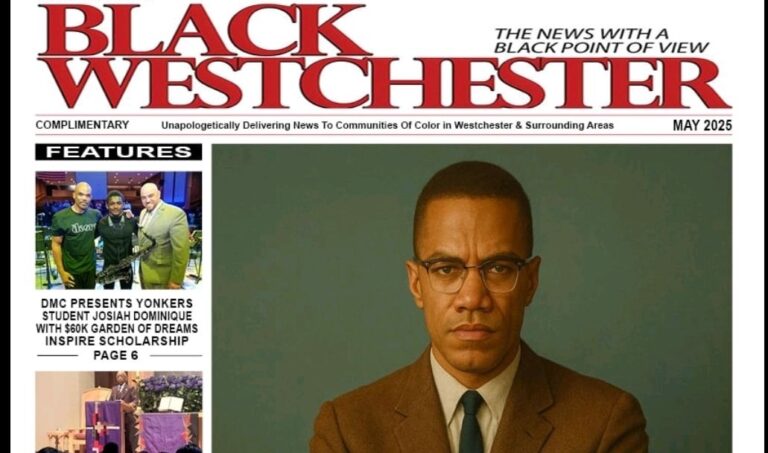
Welcome to our May 2025 issue, the second-to-last issue before the June 24th Democratic Primary. This month, on Tuesday, May 20th, throughout the county, there will be elections for School Board and Library Board Trustees and votes for the 2025-2026 budgets. You can see a complete list of candidates on page 10. As you can see from the front cover, this issue is dedicated to celebrating the Life & Legacy of Malcolm X on pages 14-15. He would have turned 100 on May 19th. I also wrote an editorial celebrating the legacy of faith and activism (page 24). This month, our Black 2 Business spotlight is Jasmine Clarke, founder of So Jazzed Esthetics (page 12). May is also Mental Health Awareness Month, and Publisher Damon K Jones penned an article, “Recognizing Black Minds Must Matter” (page 25). Andrew Wang and Dr. José Valentino Ruiz composed a powerful article on how “Beatboxing is a Therapeutic Tool for Speech Impediments (pages 20-21). And as always, we filled the pages of this issue with many other informative articles and the News With The Black Point Of View.”
As always, we would like to take this time to thank all the readers, listeners, supporters, sponsors, contributors, and advertisers for their support in our effort to deliver the “News With The Black Point Of View,” since 2014. We are always looking for writers, photographers, and interns, email BlackWestchesterMag@gmail.com to inquire.
Send us your feedback, let us know what you think of this issue. Let us know subjects/topics you would like to see us cover in the future, and send your letters to the editor to BlackWestchesterMag@gmail.com.
With Approval from the New York State Department of Education, Amani Public Charter Will Expand to Grades K-4
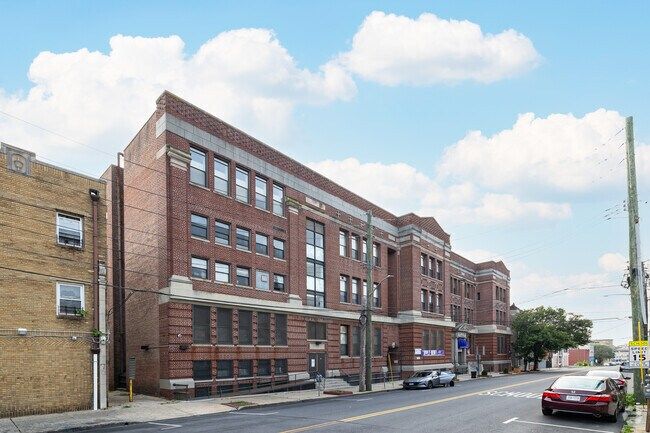
Mt. Vernon, NY – On Monday, May 5, the Board of Regents’ P-12 Education Committee voted to approve the expansion of Amani Public Charter to include kindergarten through 4th grade. This is in addition to the school’s existing grade 5 through 8 configuration. The first class of kindergartners and first-graders will begin in Fall 2025.
There were mixed reactions from Mount Vernon residents when they heard about the proposed expansion of Amani Charter School. Kathie Brewington, President of the Mount Vernon Chapter of the NAACP, wrote a letter to the New York State Education Department in strong opposition to the expansion. The Mount Vernon City School District offices held two public hearings on Thursday, February 13th, on proposals for change to two of the city’s two charter schools. A proposal at the legally required hearing is to expand student enrollment at Amani Public Charter School from the current grades 5th through 8th, to eventually add grades K through 4th for the coming school year. Debra Stern, Executive Director and Founder of Amani Public Charter School, even appeared on the February 23rd episode of People Before Politics Radio to address the proposed expansion and take questions from the audience.
Final approval of the proposed changes was entirely up to the New York State Department of Education. Residents were waiting to hear what the NYS Dept of Ed would decide. Well, the wait is over; last week, they voted to approve the expansion.
According to a statement sent to Black Westchester, this decision guarantees that even more deserving young children in Mount Vernon will access the high-quality, holistic educational and extracurricular program offered at Amani. Debra Stern, Executive Director and Founder of Amani Public Charter School, issued the following statement following news of the approved expansion:
“Since our founding 15 years ago, Amani’s mission has been rooted in one simple truth: every student, regardless of their zip code, deserves access to free, quality education that fosters their whole being and puts them on a path to success. By expanding our school to K-4, we will create even more opportunities for the youngest generation of scholars in our community. We are deeply grateful to the Board of Regents for approving our expansion, and we look forward to working in close collaboration.
Since Amani’s first graduating class in 2011, the school has served over 1,000 students, creating avenues for exploration in academics, athletics, and the arts for each young scholar that comes through our doors. By offering our curriculum alternatives beginning in kindergarten, Amani will provide a unique opportunity to address achievement gaps in Mt. Vernon youth and build a stronger academic foundation.
Parents or guardians in Mt. Vernon who are interested in having their student attend Amani should visit the school, go online at www.amanicharter.org/apply, or attend a registration event to secure your child’s enrollment at Amani Public Charter School.
Registration Event Dates:
May 14, 2025 3:00 pm to 6:00 pm
May 22, 2025 4:00 pm -5:30 pm
June 14, 2025 Noon – 2:00 pm
Founded in 2010 by Dr. Debra Stern and Charles Stern, Amani Public Charter School is a transformative educational institution serving grades 5-8 in Mount Vernon, New York. The name “Amani” – meaning “peace” in Swahili – reflects our commitment to creating a nurturing environment where students can thrive academically and personally. They believe in providing robust opportunities for all students, creating a school where chess classes coexist with basketball, where rigorous academic preparation aligns with music and the arts.. Their “Amani Family” culture empowers students to take academic risks and pursue excellence.
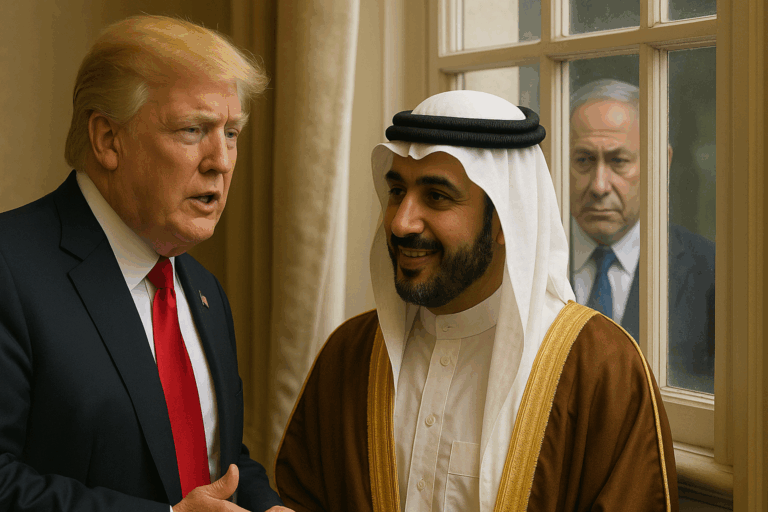
If you’re looking for sentimentality or symbolic gestures, you won’t find them in Donald Trump’s second-term foreign policy—especially not in the Middle East. What you will find is a transactional recalibration rooted in one question: What do we get out of this?
It’s a question Washington hasn’t asked nearly enough. For decades, America has signed blank checks to foreign allies, policed distant borders, and absorbed trade imbalances that weaken its own economy. Trump’s approach isn’t based on ideology—it’s based on leverage, cost-benefit analysis, and putting American interests first.
Israel remains a key strategic ally, but under Trump’s second term, it’s being treated as an ally—not an untouchable sacred cow. Despite the U.S. sending nearly $4 billion in annual military aid under a 10-year agreement, Israel reportedly asked Trump for tariff exemptions and additional economic concessions.
Trump’s response was blunt: “You’re already getting billions. The U.S. is paying nothing more.” That wasn’t anti-Israel—it was pro-American taxpayer. It was the application of the same logic used in renegotiating NATO contributions, NAFTA, and the U.S.-China trade imbalance: no more paying twice.
Adding fuel to the fire, Trump’s trust in Israeli leadership was further strained by revelations that former National Security Advisor Mike Waltz had engaged in unauthorized communications with Prime Minister Benjamin Netanyahu. According to reports, Waltz was in backchannel talks with Israeli officials about possible military action against Iran—without the president’s approval. These conversations directly contradicted Trump’s stated aim of avoiding new Middle East wars and instead seeking economic stability and leverage-based diplomacy.
When the news broke, Trump immediately fired Waltz, seeing it as not just insubordination, but a deliberate attempt to sabotage his foreign policy. The fallout deepened the rift between Trump and Netanyahu, reinforcing Trump’s belief that even close allies must be handled with discipline, not deference.
Perhaps the most perplexing chapter of Trump’s Middle East playbook is Gaza. On one hand, he has declared that he wants Palestinians to be free. On the other, his proposal to “take over” Gaza and transform it into a Middle East Riviera—potentially involving forced relocation—has drawn fierce criticism for being both vague and volatile.
The complexity deepens when you factor in that a significant number of Muslim Americans supported Trump in 2024, largely in protest of the Biden administration’s handling of the war in Gaza. Many believed Trump would de-escalate the conflict and stand up to Netanyahu. Now, those same voters are watching with confusion as Trump’s unorthodox style leaves more questions than answers.
He says he wants peace. He says he wants Palestinians to be free. But what does freedom mean under a U.S.-imposed redevelopment plan that may displace millions? So far, he hasn’t said clearly. And that lack of clarity is leaving Muslim Americans—who made a calculated bet on Trump as a disruptor—uncertain about what they actually voted for.
Still, Trump is doing what most politicians won’t: forcing a conversation on results rather than ritual. Whether his Gaza plan is naive or visionary, it reflects a shift away from symbolic diplomacy and toward blunt economic engineering—whether the region is ready or not.
While Israel is asking for more, Saudi Arabia is offering more—in the form of a $1 trillion investment package in defense, infrastructure, and AI. Trump is pursuing nuclear cooperation with the Kingdom without making it contingent on recognizing Israel, breaking from previous U.S. policy.
Why? Because Trump sees direct, measurable benefit. He’s not interested in preserving outdated diplomatic rituals when new alliances serve American jobs, manufacturing, and geopolitical strength better.
Trump’s new push for a nuclear deal with Iran also reflects transactional realism. Unlike previous administrations, he’s not betting on goodwill. He’s demanding a complete dismantling of uranium enrichment in exchange for economic relief. That’s not diplomacy through optimism—it’s negotiation through pressure.
And unlike the Obama-era deal, Trump’s approach refuses to sideline Israel’s security concerns—but also refuses to let them dictate U.S. leverage at the bargaining table.
Donald Trump isn’t playing checkers in the Middle East. He’s playing chess—and he’s refusing to make moves just because they “look good” or preserve status quo relationships.
He’s telling allies, including Israel: If you’re already getting billions in military aid, don’t expect tariff breaks too. If you want American support, show us the economic return. If you want to avoid war, end it before January.
Critics will call it cold or transactional. But in a world of rising debt, broken alliances, and endless conflict, what America needs is exactly this kind of realism. The logic is simple: If the outcome doesn’t serve the American people, it’s not worth the cost.
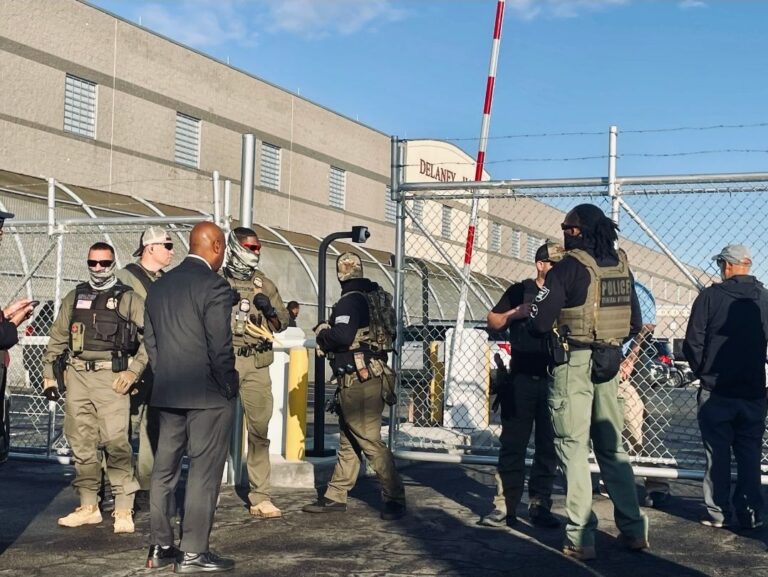
In a striking political moment with implications for immigration policy and states’ rights, Newark Mayor Ras Baraka was arrested on May 9, 2025, outside the Delaney Hall ICE detention facility in New Jersey (see video below). Baraka, a prominent Democratic figure and current gubernatorial candidate, was among elected officials and activists protesting the reopening of the privately operated detention center, which recently resumed operations under a federal contract despite opposition from state and local leaders.
According to Homeland Security Investigations (HSI), Baraka was taken into custody after allegedly trespassing on federal property and refusing multiple requests to vacate the premises. Authorities stated that Baraka attempted to join members of Congress—Bonnie Watson Coleman, LaMonica McIver, and Rob Menendez—who were seeking access to inspect the facility. Unlike the congressional delegation, Baraka was not granted entry, and officials argued he crossed into restricted territory.
The arrest has sparked a fierce backlash in New Jersey. Governor Phil Murphy called the incident “a disgrace,” emphasizing that the state passed legislation in 2021 banning private immigration detention centers. “This facility is not only out of step with our values but arguably in violation of state law,” Murphy stated. New Jersey Attorney General Matt Platkin added, “Peaceful protest should not be met with handcuffs, especially when it concerns matters of moral and legal urgency.”
Supporters of Baraka view the arrest as a heavy-handed response to a legitimate protest. They argue that Baraka was exercising his right to peacefully demonstrate and was acting in line with New Jersey’s legal stance against the privatization of immigration enforcement. Critics of private prisons have long accused facilities like Delaney Hall—run by GEO Group—of prioritizing profit over humane conditions, with little transparency or accountability.
However, federal officials maintain that the Delaney Hall facility operates under legal jurisdiction granted by federal contract and that local or state preferences cannot override immigration enforcement protocols. An ICE spokesperson noted that the facility helps alleviate overcrowding and improve logistical efficiency in processing undocumented migrants. “Interference with federal operations cannot be tolerated, regardless of one’s political position or elected office,” the agency said in a statement.
The broader issue reflects a growing national rift between state and federal governments over immigration enforcement, private detention centers, and the boundaries of local autonomy. While New Jersey law may prohibit such facilities, the federal government retains the authority to enforce immigration laws and contract with private entities for detention services. Legal experts suggest that the dispute may soon land in federal court, testing the limits of state sovereignty versus federal supremacy.
Baraka was released hours after his arrest and vowed to continue opposing the facility’s presence in Newark. “We will not stand by while this unjust institution operates in the heart of our city,” he told supporters. “Newark is not a dumping ground for policies we never asked for and do not support.”
As the election season heats up, the incident is likely to galvanize both supporters and opponents of Baraka’s platform. Whether seen as a courageous stand or an unnecessary political stunt, the arrest has elevated a local protest into a flashpoint of national debate—one that blends immigration policy, states’ rights, and the role of civil disobedience in the age of federal privatization.
Check out the Sunday, May 11th episode of Black Westchester presents The People Before Politics Radio Show for an independent, unapologetic voice discussing this story and other news, politics, culture, health, and justice from the Black perspective. From local issues to national conversations, we speak truth to power and amplify the voices of our community.
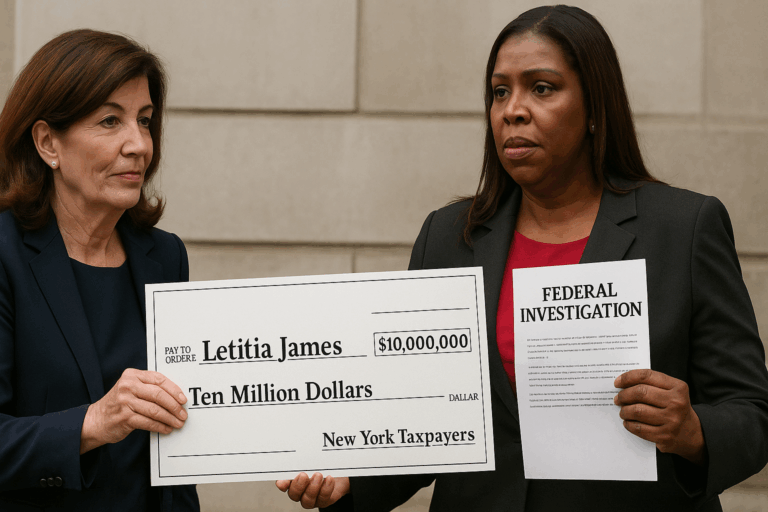
In a stunning display of self-interest masquerading as governance, New York State lawmakers quietly approved a $10 million taxpayer-funded legal defense fund for elected officials under federal investigation. Baked into the state’s bloated $254 billion budget, this provision allows politicians—many of whom are facing credible allegations of misconduct—to make the public pay for their private legal battles. This isn’t governance. It’s legalized grift.
At the root of this scandal lies a deeper truth: corruption festers when one political party holds unchallenged control for too long. In such an environment, loyalty replaces accountability, transparency gives way to entitlement, and the people’s money becomes a piggy bank for political survival. In New York, where one party dominates nearly every lever of state power, the system is no longer being used to serve the people—it’s being used to shield the powerful from the consequences of their own misconduct.
Case in point: New York Attorney General Letitia James is now reportedly under federal investigation for questionable real estate transactions involving not one, but two properties—one in Virginia and another in Brooklyn. According to forensic fraud expert Sam Antar, who spoke exclusively with Black Westchester, James allegedly acquired the Virginia property. Mortgage filings raise serious legal and ethical concerns. Similar patterns of potential misrepresentation and irregular filings have emerged in the Brooklyn property case. Antar uncovered documentation suggesting that material facts may have been concealed or falsified in mortgage applications tied to both properties. These documents are now under federal scrutiny and, if verified, could constitute mortgage fraud.
And yet, thanks to this new legal defense fund, James—or any other official under investigation—could request to have her legal bills covered by taxpayers, so long as the alleged misconduct is deemed “reasonably related” to her duties. Who makes that decision? The Attorney General’s office or the Governor’s counsel—meaning political insiders under scrutiny get to decide whether taxpayers should finance their defense.
Let’s be clear: how is allegedly committing mortgage fraud on personal real estate holdings an act of governance? It’s not. These are private transactions, carried out for personal gain, and they fall completely outside the scope of public service. Yet somehow, state leaders believe the public should bear the financial burden of defending these actions. It’s a slap in the face to every New Yorker—especially those struggling to stay housed themselves.
While state officials protect themselves with taxpayer dollars, Black communities across New York State continue to suffer from systemic neglect. In cities like Buffalo, Mount Vernon, and Rochester, students are crammed into overcrowded classrooms with outdated textbooks and failing infrastructure. Neighborhoods continue to battle rising gun violence and the trauma that follows, yet mental health services remain underfunded and inaccessible. Families are still living in food deserts, with few grocery options beyond overpriced convenience stores. Public housing continues to crumble, and the dream of homeownership feels more distant with each passing year.
Ten million dollars could have been used to address any of these urgent problems. It could have supported youth programs, expanded trauma counseling, funded community gardens and nutrition programs, repaired aging schools, or boosted homeownership opportunities for Black families. Instead, that money now sits in a legal war chest for Albany elites looking to avoid accountability.
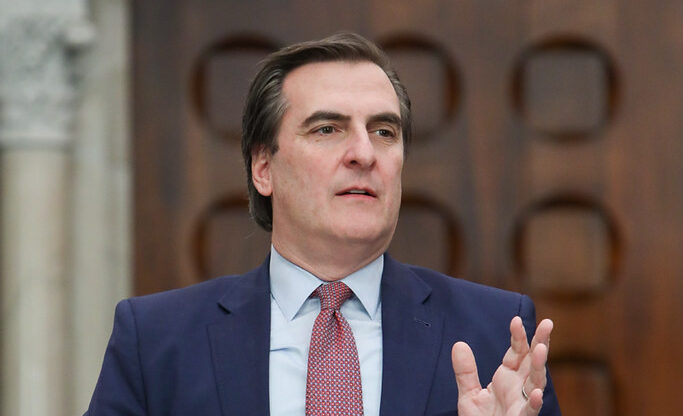
Not everyone in government supports this travesty. Senator Michael Gianaris of Queens has tried to hold the line. He introduced Senate Bill S2454, aimed at prohibiting taxpayer reimbursement for legal defenses funneled through campaign or political accounts. His efforts reflect a desire to restore both ethical integrity and fiscal responsibility. But Gianaris is clearly outnumbered, surrounded by a political establishment more committed to shielding itself than protecting the public.
Sadly, we won’t hear a word from Black leaders. The pastors will stay silent from their pulpits, unwilling to confront power when it wears the same political jersey. The local civil rights organizations will remain preoccupied with ceremonial marches and symbolic awards, ignoring the real policy betrayals happening before us.
They’ve placed party above people, loyalty above truth, and personal access above collective accountability. That’s why our neighborhoods remain locked in poverty, ravaged by violence, overlooked in education, and ignored in economic investment. They’ve traded in advocacy for alignment, and in doing so, they’ve allowed the very conditions harming us to deepen, all while claiming to represent us. And if you dare to question them, they’ll reflexively point to “racist Trump” as if invoking his name justifies everything their own party is doing wrong. But that is still no excuse to use our tax dollars to defend public officials under federal investigation. Aren’t we taxed enough in New York already? We pay some of the highest taxes in the country, and instead of funding better schools, safer neighborhoods, or affordable housing, that money is now being used to protect powerful people from the consequences of their own alleged corruption. That’s not leadership. That’s betrayal dressed in party colors.
This is the end result of one-party rule. With no meaningful opposition to hold them accountable, those in power legislate in secrecy, protect their own, and use public funds to defend against personal scandal. The system has become closed, cynical, and self-sustaining. Corruption isn’t being hidden—it’s being written into law. And worse, it’s being protected by those who look like us but no longer speak for us.
If New Yorkers—especially Black New Yorkers—want real change, it will not come from the same machine that just handed itself legal immunity. It will require a new political consciousness. It will demand civic pressure, electoral competition, and leadership that remembers who it works for.
This budget is not just an insult. It is a warning. In a state where power has gone unchallenged for far too long, the rot is no longer creeping. It is full-blown—and funded by you.
According to authorities, Ras Baraka, the mayor of Newark, was taken into custody on Friday afternoon for allegedly trespassing into an ICE facility in New Jersey, where he has been protesting its opening this week, a federal prosecutor said.
“The Mayor of Newark, Ras Baraka, committed trespass and ignored multiple warnings from Homeland Security Investigations to remove himself from the ICE detention center in Newark, New Jersey this afternoon,” Alina Habba, the Interim U.S. Attorney for the District of New Jersey, posted on X.
According to Kabir Moss, Spokesperson for Ras Baraka for Governor Campaign, Mayor Baraka was brought to an ICE field office located at 620 Frelinghuysen Ave. in Newark.
“We are actively monitoring and will provide more details as they become available,” Moss shared with Black Westchester.
According to the Associated Press, Witnesses said the arrest came after Baraka attempted to join three members of New Jersey’s congressional delegation, Reps. Robert Menendez, LaMonica McIver, and Bonnie Watson Coleman, attempting to enter the facility. When federal officials blocked his entry, a heated argument broke out, according to Viri Martinez, an activist with the New Jersey Alliance for Immigrant Justice. It continued even after Baraka returned to the public side of the gates.
“There was yelling and pushing,” Martinez said. “Then the officers swarmed Baraka. They threw one of the organizers to the ground. They put Baraka in handcuffs and put him in an unmarked car.”
In a statement, the Department of Homeland Security said that the lawmakers had not asked for a tour of the facility, contrary to witnesses’ accounts. The department said further that as a bus carrying detainees was entering, “a group of protestors, including two members of the U.S. House of Representatives, stormed the gate and broke into the detention facility.”
Advocates Demand Immediate Release of Newark Mayor Ras Baraka
“No sitting mayor of an American city should be arrested for trying to inspect an immigration facility in their jurisdiction. ICE detention facilities are subject to inspection and oversight by elected officials. But in today’s climate, federal immigration enforcement has been emboldened by the callous and lawless actions of the Trump administration to the point of responding to that oversight with this reckless and irresponsible action. The arrest of Newark Mayor Ras Baraka is a step much too far. We demand the immediate release of Mayor Baraka, and for those responsible for this decision to be held accountable,” Murad Awawdeh, President and CEO, New York Immigration Coalition, said in a statement sent to Black Westchester.
“ICE’s arrest of Newark Mayor Ras Baraka is a dangerous assault on our collective rights. This is not just an attack on Mayor Baraka, but an attack on the people of Newark. Until Freedom stands in solidarity with Mayor Baraka. We demand accountability and an end to these unjust actions by the Trump administration and the agents carrying out his agenda. Our communities will not be intimidated, and we will not back down in the face of oppression,” said Angelo Pinto, Co-Founder, Until Freedom.
The New Jersey chapter of the Council on American-Islamic Relations (CAIR-NJ) also condemned the detention of Mayor Baraka, and demanded his immediate release
“Mayor Baraka’s detention is an affront to free speech and the right to protest,” said CAIR-NJ Executive Director Selaedin Maksut. “His actions were in defense of the Constitution and the rights of immigrants. We stand in solidarity with him and demand his immediate release. The Delaney Hall facility has long raised serious legal and ethical concerns, including its lack of proper municipal approvals and transparency. No facility that deprives people of their liberty should be allowed to operate in violation of local laws and without community oversight. Mayor Baraka was standing up for lawful governance, and for that, he should be commended— not criminalized.”
CAIR-NJ, whose mission is to protect civil rights, enhance understanding of Islam, promote justice, and empower American Muslims, calls on federal authorities to respect the First Amendment rights of all individuals and urges the immediate release of Mayor Baraka. They also called for a full investigation into the conditions at Delaney Hall and the legality of its operations.
No charges have been made public.
Stay tuned to Black Westchester for more on this developing story!