Master P’s Comments Raise a Larger Question About Historical Memory, Black Wealth and Institutional Power
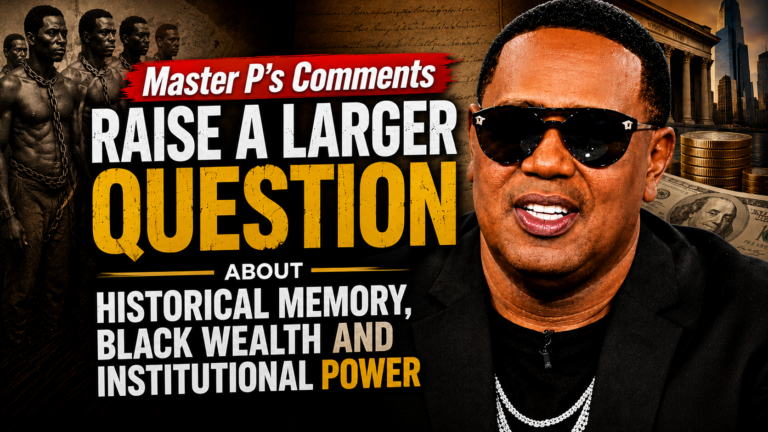
Earlier this week, Master P sparked a bit of controversy when quotes surfaced of him saying that he hoped Black people would stop talking about slavery and start changing the future. As usual when topics like this arise, people found the comment problematic. But what Master P said about the backlash should receive as much attention as the original comments. “I love my people. And when you bring up slavery our ancestors went through so much. We’re not going to forget about them, we will continue to bring awareness. But we got to bridge the wealth gap.” Master P continued on responding to the backlash. This is an important distinction. If Master P is saying all that Black Americans should do is remember our past and stop looking toward a future of building businesses, purchasing property, investing our dollars, starting institutions and closing the racial wealth gap, then there is little to agree with. When Master P speaks about ownership he has earned his credibility. He didn’t just become a rapper and get rich. He built an empire with No Limit Records that was predicated on the concepts of ownership, control, and entrepreneurship. However, his original statement left many with a far larger question. Why are black people so often told to stop talking about slavery?
America hasn’t ever stopped remembering history.
Black people have been told some version of this line our whole lives. “Slavery was over 100 years ago, stop living in the past. Stop talking about racism and move forward.” America doesn’t say that about itself. We teach kids about the founding fathers who died over 200 years ago. We say “Never forget” about 9/11. We have memorials for Pearl Harbor, museums on battlefields, and presidential libraries. We litigate in courtrooms every day about what specific words written in the Constitution in 1787 mean in 2026. No one questions the relevance of the constitution; America knows its past is the foundation of its present. So why is it when Black people apply that same logic we’re told our history/memory is unhealthy? Remembering slavery doesn’t mean you want to be enslaved. Researching Jim Crow doesn’t mean you want Jim Crow back, and knowing about redlining doesn’t remove Black Americans from personal accountability. Pointing to history isn’t an excuse… It’s proof. It’s why we’re here.
Here Is Why Conversations About Slavery Are Still Valid: This Conversation Is Also About Power
Part of that response may be attributed to institutional power. Jewish Americans have constructed and been influential in creating robust institutions in American business, media, entertainment, academia, philanthropy and politics. I’m not suggesting Jewish people have taken over those industries. Neither am I suggesting Jewish Americans are a monolith. The lesson is not how to hate on another group of people for being successful. The lesson is studying how they built and maintain institutions that allow them to protect their history and their interests. Black America has millionaires and billionaires. We have superstar athletes, award-winning entertainers, powerful executives, politicians and household-name television personalities. What we failed to do as a community, however, was connect individual success to collective institutional power. One does not imply the other. Individual Black excellence is not communal Black power. A highly compensated Black manager on the staff of a major media company does not translate to Black ownership of that media company. Black people strategically placed in positions of influence at financial institutions does not always mean we have enough Black-controlled capital. Black elected officials do not mean Black communities have accumulated enough political strength to possess sway independent of the party in power. There’s a reason why People of Color are often referred to as “minority groups.” There’s power in numbers and collective control. Understanding the difference between being invited to the table and owning the table is critical. Institutions allow communities to keep their history alive, protect their interests, educate young people and mobilize when their interests are being undermined. So maybe the question is not only about why people feel empowered to tell Black people to stop talking about slavery. Maybe we should also ask ourselves why have we not built enough institutions of our own to scare people off when they try to dismiss our past. We don’t need people to forget. We need power behind our memory.
If You’re Talking About the Wealth Gap, You Have to Talk About History Too
When Master P took to Twitter earlier this week to say if there was a “wealth gap between white and black people lets stop trying to close the gap and study how to get it back,” he actually made a strong argument for the study of history.
If there exists a racial wealth gap, why wouldn’t we want to know how that gap was created in the first place before trying to close it? Blacks did not wake up one day and collectively decide that we did not want to build wealth. After slavery there was emancipation, Black Codes, racial terrorism, Jim Crow, segregation, redlining and restricted access to wealth-building opportunities. The former were not just acts of individual bias; many were undergirded by laws, government policies and institutions. Through it all, Blacks still built wealth. We purchased property. We established businesses. We founded churches. We created banks and developed thriving communities and business districts. Sometimes what was built by Black Americans was destroyed. Other times it was stolen. And other times government policies prevented Black families from capitalizing on wealth-building opportunities that were afforded to other Americans. Just because slavery ended in 1865 didn’t mean that racial inequality ended the next day. The 13th Amendment ratified in 1865, the 14th Amendment in 1868 and the 15th in 1870 but Black Americans would spend generations trying to access the rights those amendments were supposed to guarantee them. The Fair Housing Act wasn’t passed until 1968, over 100 years after the Emancipation Proclamation. That means there are people currently living in the United States who were born into a country where major forms of housing discrimination were legally permitted by the federal government. That isn’t ancient history.
Advantages Compound, and So Do Disadvantages
America seems fine acknowledging inheritance when we talk about wealth. Families can inherit homes, businesses, land, investments and financial savings, all opportunity and wealth that can be passed down from generation to generation for children and grandchildren who had nothing to do with actually building that wealth. If we can accept that advantages can accrue generationally, we shouldn’t be arguing about whether or not disadvantages can do the same. Just because American history was marked by discrimination against Black people doesn’t mean the economic state of every Black person in America today can be tied directly to an event that happened 100 years ago. And just because America has a history of economic discrimination against Black people doesn’t mean every white American has been personally handed wealth from slavery. But for too many people, that’s where the conversation ends. Saying that historical policies have no bearing on today’s economy is just as stupid as saying that today’s economy is wholly determined by past policies. Acknowledging the former should not absolve anyone of believing in the latter.
Master P Is Right About Responsibility and Ownership
This is why Black America needs to truly listen to Master P. While we can’t ignore our history, we cannot let learning about it become an excuse not to act. We cannot spend all of our time highlighting what somebody did to us instead of figuring out what we are willing to do for ourselves and future generations. The next generation of Black children should learn about entrepreneurship, investing, credit, homeownership, owning land, technology, AI, financial literacy and how to build a business. We should be asking ourselves how much money Black America makes and spends but also how much Black America owns and controls. We need Black banks to become stronger but we also need Black businesses to become stronger. We need to fix our families and build stronger financial networks. We need Black media that is independent and community organizations that address the needs of our people. We also need to build stronger political institutions within our communities. Black America can demand that they teach slavery properly in schools while we build and learn how to grow our own businesses. We can talk about redlining while also encouraging Black homeownership. We can demand that the government be held accountable for past injustices while we also demand those who commit crimes against our community inside our communities be held accountable. We can debate reparations while we build generational wealth for our families. Accepting what America did to us and demanding more from ourselves are not mutually exclusive. If our goal is true empowerment we must do both.
Don’t Forget Slavery—Learn From It
Maybe instead of telling Black America to “stop talking about slavery”, we should focus on telling Black America to learn something from the slavery we keep talking about. Learn what slavery can teach us about ownership. Learn what Reconstruction can teach us about political power and the danger of losing it. Learn what Jim Crow can teach us about government and law. Learn what redlining can teach us about property ownership and generational wealth. Learn what economic exclusion has taught us about controlling our own capital, and learn what Black Wall Streets can teach us about building and maintaining our own institutions. Once we learn these lessons, we can apply them by purchasing property, starting businesses, investing, teaching financial literacy, empowering families, and building up independent Black institutions while gaining political and economic leverage. Master P is right that we can’t change yesterday, but we can learn from yesterday how to build our tomorrow. I actually think his follow-up statement steers us into waaay better territory: “We are not going to forget them and will keep bringing awareness, but we have to bridge the wealth gap.” I’ll gladly drink to that.
Black America Needs More Power Behind the Memory
Never should black Americans forget our ancestors. However we should never allow ourselves to define black existence during enslavement solely through the lens of our suffering. They lived through it. They formed families despite it. They created a culture in spite of it. They built institutions because of it. They fought for their freedoms knowing their children and grandchildren may reap the rewards of that fight. Remembering is not what’s holding black America back. What we do after we remember is what will determine our future. America remembers the Boston Tea Party and calls it patriotism. America remembers the victims of September 11th and calls it honoring the dead. Jewish Americans remember the Holocaust and the world understands the necessity of teaching future generations about what happened. Black Americans should never feel embarrassed about demanding slavery, Reconstruction, Jim Crow and the fight for civil rights stay engraved in our collective memories as well. Remembering won’t kill us.
However, pride in our history alone will not give black Americans the power we’ve yet to achieve as a people. Ownership of our history is just the beginning. Our next step should include institution building, economic independence and the ability to defend ourselves from anyone who threatens our best interests. We shouldn’t celebrate when we produce another black millionaire and ignore the fact that we have no institutions that can outlive him. That may be the biggest lesson black America can take from the Master P controversy. We don’t remember too much. Our history is not typically tied to our economics or our political ideologies in a way that will build independent black power. Individual black success does not mean collective black strength. Black America will never have to forget slavery to move forward. We simply have to figure out what our history has taught us, apply those lessons to today and build something that can be passed down to future generations. We don’t need less black history. We need more black power behind our history.
ELOC Receives $5,000 United Way Grant to Expand SAT Prep Access for Westchester Students
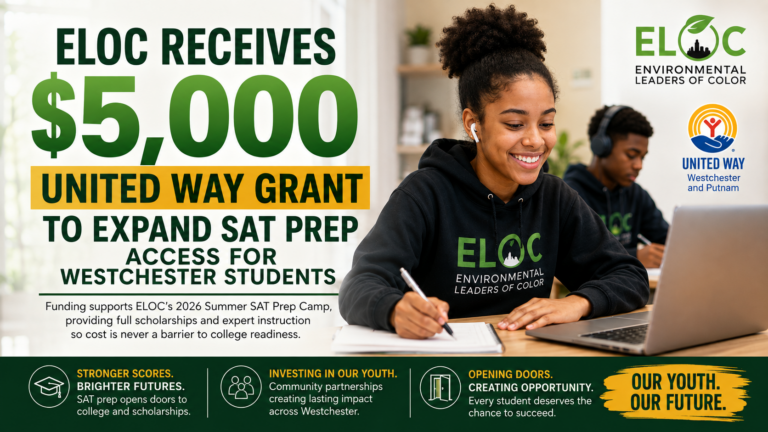
MOUNT VERNON, NY — Environmental Leaders of Color (ELOC), a Mount Vernon-based nonprofit, has received a $5,000 Community Impact Grant from United Way of Westchester and Putnam to support its 2026 Summer SAT Prep Camp and help make college preparation more affordable for Westchester County students.
ELOC was selected from more than 160 applicants through a competitive grant process. The funding allowed the organization to provide full $250 scholarships to students participating in its summer SAT preparation program.
The grant addresses an issue that can easily be overlooked in conversations about educational opportunity: college preparation itself can be expensive. Families already struggling with the cost of housing, food, transportation and other necessities may find private SAT preparation financially out of reach.
ELOC’s Summer SAT Prep Camp is a 16-session, 72-hour online program led by experienced instructors through Google Meet. The program began July 18 and runs Saturdays and Sundays as students prepare for the September 12, 2026, SAT.
According to ELOC, commercial SAT preparation programs can cost between $1,000 and $3,000. The organization designed its program to provide students from under-resourced and ALICE households — families who are working but still struggling to meet basic living expenses — access to preparation without allowing family income to become another obstacle on the road to college.
“Strong SAT scores open doors — to college admissions, to scholarships, and to greater financial opportunity,” said Diana Kaye Williams, Executive Director of Environmental Leaders of Color. “This support from United Way of Westchester and Putnam helps us put high-quality, expert-led SAT preparation within reach of Westchester students who might not otherwise have access to it.”
United Way officials said the grant reflects the organization’s commitment to removing financial barriers facing local students.
“At United Way of Westchester and Putnam, we believe every student should have access to the tools and opportunities they need to succeed, regardless of their family’s financial circumstances,” said Juan Cabrera, Director of Community Impact for United Way of Westchester and Putnam.
Cabrera said the partnership with ELOC provides students with resources that can have a meaningful impact on their educational futures.
The investment also highlights the importance of supporting community-based organizations that are working directly with young people. For Mount Vernon and other communities throughout Westchester, college readiness isn’t simply about encouraging students to attend college. Students also need access to the preparation, information and resources necessary to compete for admissions and scholarships.
Programs like ELOC’s SAT Prep Camp are especially important for Black students and other students from families who may not have the financial resources to pay for private test preparation. In Westchester County, where significant wealth exists alongside communities facing real economic challenges, access to quality college-prep resources can vary greatly by ZIP code and household income. Providing professional SAT preparation at no cost helps close that opportunity gap, giving Black students greater access to the same preparation, scholarship opportunities and college pathways available to families who can afford expensive private programs
ELOC says it hopes to offer additional SAT preparation cycles in the future, expanding opportunities for more students throughout Westchester County.
Environmental Leaders of Color is a Mount Vernon-based 501(c)(3) nonprofit providing environmental education, STEM programming, clean-energy workforce development and college-readiness programs to young people across Westchester County.Families interested in future SAT Prep Camp opportunities can contact ELOC at contactus@eloc.earth or visit the organization’s website
When Banks See Your Business as “Too Risky”: What Westchester Entrepreneurs Need to Know
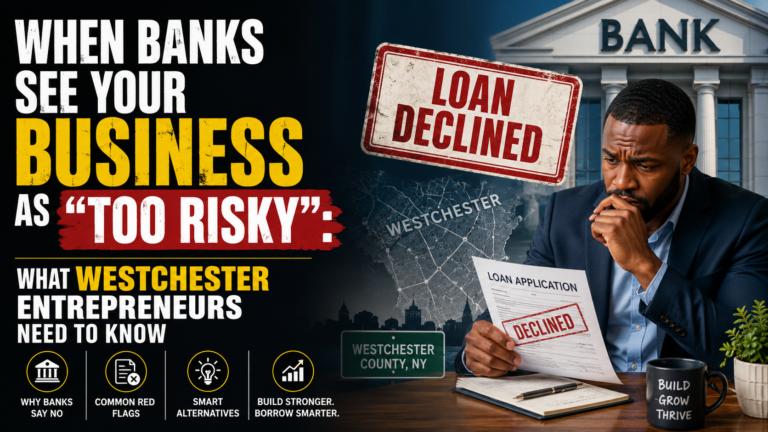
For many entrepreneurs in Westchester, the first goal is straightforward: open the business, serve customers well, and generate steady revenue. A restaurant may want to take online orders. A wellness provider may want to sell service packages. A consultant may need to accept deposits. A local retailer may want to reach customers beyond foot traffic.
A less visible issue can interrupt all of that: payment access. If a business cannot accept cards, process online orders, handle disputes, or receive funds reliably, growth becomes harder. Some owners discover the problem when a payment platform rejects their application. Others find out after funds are held, transactions are reviewed, or an account is closed.
In many cases, the business is legal and legitimate. The problem is that banks and processors may classify it as higher risk.
What “High-Risk” Really Means in Payment Processing
In payment processing, “high-risk” refers to how banks, card networks, and processors evaluate the chance of financial loss. It does not automatically mean the business is unsafe, illegal, or poorly managed.
A business may be considered higher risk because of frequent refunds, fraud exposure, large transaction amounts, recurring billing, delayed delivery, regulatory scrutiny, or chargeback history. Certain industries are reviewed more carefully because customers may dispute payments more often or because the service is delivered after payment is collected. Common examples include travel, coaching, online education, CBD-related products, nutraceuticals, credit-related services, subscription offers, event ticketing, telehealth, and some e-commerce categories.
When a customer disputes a charge, the merchant may lose the sale, pay a fee, and face closer monitoring. If disputes become frequent, the processor may decide the account presents too much risk.
For entrepreneurs whose businesses fall into categories that banks review more carefully, understanding payment processing for high-risk industries can help reduce the chance of rejected applications, frozen funds, or sudden interruptions in revenue.
Why Some Westchester Businesses May Face More Scrutiny
Westchester has a wide mix of local service providers, online sellers, consultants, wellness entrepreneurs, event organizers, beauty professionals, restaurants, nonprofits, and community-based brands. Many rely on digital payments to book appointments, take deposits, send invoices, process online orders, and serve customers across the Tri-State area.
Some business models create risk signals. A company that takes deposits months before delivering a service may receive more review than a store that sells products in person. A subscription business may face questions because customers sometimes forget recurring billing terms. A wellness brand selling online may need to document product claims, refund policies, and shipping timelines. A coaching or consulting business may have to explain exactly what the customer receives and when.
For Black-owned and community-based businesses, these barriers can be especially frustrating. Entrepreneurs are encouraged to create jobs, build wealth, and reach customers beyond their immediate neighborhood. But expansion usually requires more than cash transactions. It requires card payments, online checkout, digital invoices, deposits, and reliable settlement.
If a business is treated as risky, the owner may need to provide more documentation, pay higher processing fees, operate with rolling reserves, or use stricter fraud prevention tools. The result affects practical decisions such as payroll, inventory, vendor payments, and customer service.
What Happens When a Customer Pays by Card
When a customer pays by card, several parties are involved. The customer enters card details online, taps a card in person, or uses a stored payment method. A payment gateway or terminal captures the transaction information and sends it securely for review. The processor routes the request through the card network. The issuing bank checks whether the card is valid, whether funds or credit are available, and whether the transaction appears suspicious.
If the transaction is approved, the money still has to be settled. Funds move through the payment system and are later deposited into the merchant’s account, usually after fees are deducted.
Risk checks may happen throughout this process. Processors may review transaction size, customer location, card type, billing pattern, refund history, chargeback activity, and fraud signals. If a business suddenly processes much larger payments than expected, receives several disputes, or operates in a category with higher complaint rates, the account may be reviewed.
That is why payment processing should be treated as part of a business’s financial infrastructure, not as a simple checkout feature.
Why Chargebacks Can Put a Business at Risk
A chargeback happens when a customer disputes a transaction through their card issuer. The customer may not recognize the charge, claim the product never arrived, object to the service, or report fraudulent card use.
Consumers have formal rights around credit card disputes, so merchants need clear records, refund policies, delivery confirmations, signed agreements, and customer communication before a payment problem escalates.
For a small business, a chargeback can be costly. The merchant may lose the sale amount, pay an additional fee, and spend time gathering evidence. Processors also measure dispute patterns, even when the merchant believes each sale was valid.
Some industries face more misunderstandings than others. A customer may forget they agreed to recurring billing. A client may expect immediate results from a service that takes time. A buyer may dispute a charge instead of requesting a refund. A delayed shipment may become a formal payment dispute.
High-risk businesses should reduce confusion before the sale. Product descriptions should be accurate. Refund policies should be easy to find. Subscription terms should be clear. Service agreements should explain timelines and deliverables. Receipts should display a business name customers will recognize on their bank statement.
The Difference Between a Standard Account and a Higher-Risk Setup
Many popular payment platforms are built for simple businesses with low dispute rates and predictable transaction patterns. A local coffee shop selling in person is easier for a processor to evaluate than an online coaching company selling six-month programs to customers across several states.
Higher-risk businesses usually go through more detailed underwriting. The processor may review the owner, business model, website, refund policy, expected monthly volume, average transaction size, customer base, and dispute history. It may also request prior processing statements, business registration documents, bank information, and proof that the company operates transparently.
A higher-risk setup may include fraud filters, chargeback alerts, transaction monitoring, reserve requirements, ACH options, virtual terminals, or e-commerce integrations. These tools help reduce losses and keep payments moving.
Rules vary by industry, sales model, transaction volume, and documentation quality. A business that can clearly explain how it sells, fulfills orders, manages refunds, and handles complaints has a better chance of passing review.
What Entrepreneurs Should Prepare Before Applying
Business owners should address payment processing during launch planning. A strong application should include business documents, accurate ownership information, clear product or service descriptions, expected processing volume, average sale amount, refund policy, delivery timeline, and customer support process.
For online businesses, the website matters. It should show contact information, terms and conditions, a privacy policy, refund or cancellation rules, and clear descriptions of what customers are buying. Subscription terms should be easy to understand. If a service will be delivered later, the timeline should be visible before payment is collected.
Recordkeeping is equally important. Invoices, signed agreements, shipment tracking, appointment confirmations, email communication, and proof of delivery can help if a customer disputes a payment. These records do not prevent every dispute, but they give the business a stronger response.
Entrepreneurs who have processed payments before should review past statements and chargeback history. If issues occurred, they should be ready to explain what changed, such as updated refund policies, improved customer service, clearer product descriptions, or discontinued offers that caused complaints.
Why This Matters for Local Economic Growth
Payment access affects business opportunity. A company that accepts reliable digital payments can sell beyond its immediate area, book customers in advance, invoice professionally, and reach people who rarely carry cash. A company that struggles to process payments may lose customers to competitors with stronger systems.
For Westchester entrepreneurs, this connects to ownership, self-determination, and local wealth. A business needs customers, visibility, and community support, but it also needs back-end systems that convert that support into revenue.
Discussions around local Black business growth often focus on visibility and community spending. Those issues matter, but payment systems, bookkeeping, tax planning, customer records, and fraud prevention also shape whether a business survives beyond the launch stage.
This is especially true for hybrid businesses. A local brand may sell at community events, through social media, on its website, and by invoice. A service provider may work with customers in Mount Vernon, Yonkers, White Plains, New Rochelle, the Bronx, and New Jersey. Each sales channel can create different payment needs.
Entrepreneurs should ask direct questions before choosing a processor. What happens if sales volume grows quickly? How are disputes handled? Are funds held in reserve? What industries are supported? What fraud tools are available? What documents are needed before approval?
Payment Access Is Part of Business Infrastructure
Entrepreneurs often spend months thinking about branding, pricing, marketing, and customer service. Payment processing deserves the same level of planning because unreliable access to funds can weaken every part of the business.
For businesses in industries that banks review more carefully, preparation is essential. Owners should understand why their category may be considered higher risk, how transactions are reviewed, why chargebacks matter, and what documents processors may request. They should also build clear policies and keep strong records from the beginning.
A business can have a strong mission, loyal customers, and real community value, yet still struggle if the payment side is weak. Westchester entrepreneurs who understand the risk conversation early can protect cash flow, avoid preventable disruptions, and build businesses ready for a card-first economy.
If You Felt That, You’re Not Wrong – Your Collaborators Are Your Competitors, and That’s Not a Bad Thing
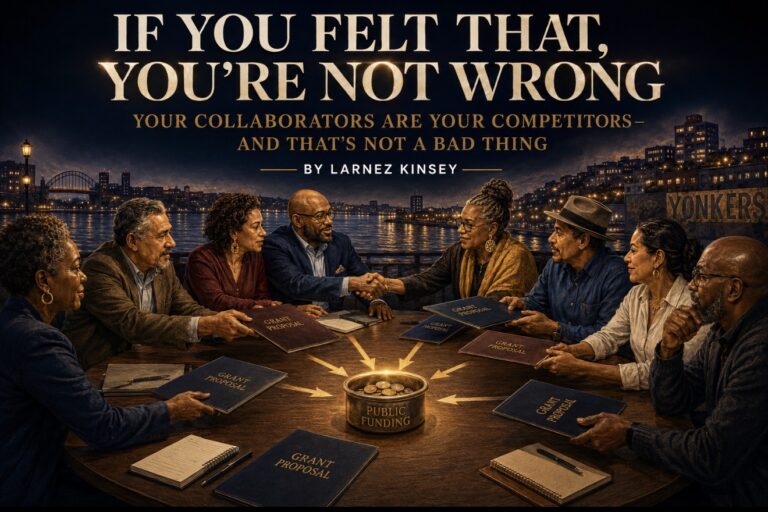
Yonkers is home to approximately 212,603 people. Nearly half of its residents identify as Hispanic or Latino, more than 16 percent identify as Black, one-third were born outside the United States, and half speak a language other than English at home, according to the U.S. Census Bureau. Diversity is not a special initiative here; diversity is the city.
According to Yonkers’ 2025 Annual Action Plan, approximately $3.25 million in federal Community Development Block Grant funding was allocated across the city. About $1.41 million was designated for public facilities, $649,749 for city administration, $500,000 for economic development, $200,000 for code enforcement and $487,312 for nonprofit public-service programs.
Only 15 percent of the total allocation was designated for organizations providing direct services to young people, seniors, families and people with disabilities. That was not entirely the city’s choice, because federal CDBG requirements generally cap public-service spending at 15 percent while permitting as much as 20 percent for planning and administration.
These figures do not prove that funds were mishandled. Administration, economic development, code enforcement and safe public facilities are legitimate community investments. They also do not establish that every allocated dollar has been spent, because money assigned on paper is not the same as money drawn down after eligible expenses are documented.
What the numbers reveal is how the system is built. Millions can be announced in the name of community development while grassroots organizations compete over a much smaller portion. The public hears that $3.25 million was invested while community leaders try to stretch $5,000 across months of programming, and both realities are somehow expected to live peacefully inside the same press release.
This is why we have to examine what “collaboration” actually means. The word appears in grant proposals, campaign speeches, strategic plans and photographs crowded with community logos. Everybody is a partner until it is time to discuss who controls the money, owns the idea or makes the final decision.
A photograph can show who attended, but it cannot show who possessed authority. It cannot tell us who designed the initiative, who entered the room after the important decisions were made, or who received enough funding to build something sustainable. Collaboration is not measured by how many people stand behind the podium; it is measured by what power they possess after the microphone is turned off.
That brings us to a truth community organizations should be willing to name: Your collaborators are your competitors, and that is not necessarily a problem. Competition can sharpen an organization’s purpose, improve its services and require its leaders to explain what makes their work distinct. It can expose unmet needs, reduce duplication and encourage organizations to produce measurable results.
The problem is not competition; the problem is performing collaboration as though competition does not exist. The organization sitting beside you at a coalition meeting may submit for the same grant, approach the same sponsor or recruit from the same community. It can respect your work, support your mission, and still believe it is the strongest candidate for the opportunity.
That is not betrayal; that is an ecosystem operating with limited resources. Collaboration and competition can occupy the same relationship, but only when everyone is honest about both.
Working together does not require surrendering every contact, concept or strategy you have developed. Partnership is not a community-property agreement for your intellectual capital. Organizations can share a mission without sharing every method, and they can celebrate one another’s success while protecting what makes their own work valuable.
Competition becomes harmful when scarcity is manufactured, concealed or used to keep organizations fighting sideways. Groups may be encouraged to exchange knowledge in one room and then compete for the same limited public-service funding in another. When tension follows, institutions can describe the community as fragmented without acknowledging how the funding structure helped produce that fragmentation.
A review of Yonkers’ publicly posted Year 51 approvals shows dozens of community and nonprofit organizations receiving CDBG support through multiple awards. The recipients and amounts appear across Board of Contract and Supply records, including those dated November 18, 2025, December 2, 2025, January 27, 2026, April 7, 2026, May 5, 2026 and August 11, 2026. Many direct-service grants ranged from $3,000 to $15,000, while some facility awards reached six figures.
Those awards may appear on the same recipient list, but they do not provide the same staffing capacity, stability or influence. The most revealing question is not simply who received funding; it is who received enough to build. There is a difference between paying for a temporary activity and investing in the organization responsible for sustaining it.
Yonkers does not lack credible community leadership. Youth workers, organizers, coaches, artists, healers, clergy members, neighborhood elders and credible messengers already understand the city’s emotional geography. They know which families are struggling, which blocks feel abandoned and which young person may be one conversation away from making a different decision.
Institutions often want access to that knowledge without fully investing in the people carrying it. A community leader may attend meetings, explain why the messaging failed, introduce an initiative to residents and repair trust after an institutional misstep, only to be thanked for offering “valuable insight.” If the insight is valuable enough to guide funded work, it is valuable enough to compensate.
The body recognizes when partnership becomes extraction. It remembers the meeting where someone repeated your idea as though it had just entered the room, the proposal containing your language but not your name and the request for your contacts followed by your exclusion from later decisions. That hesitation you feel the next time someone proposes a collaboration is not negativity; it is your nervous system reviewing the minutes from meetings your mind tried to forget.
For many community leaders, this is more than professional frustration. Repeated exposure to crisis, grief and other people’s trauma can produce secondary traumatic stress, while knowing what residents need but being repeatedly prevented from providing it can create moral injury. Every stressful experience is not trauma, but when leaders are expected to absorb community pain, compete for survival funding and remain publicly composed, their exhaustion may reveal not a lack of commitment, but what that commitment has cost them.
This is especially damaging in Black, Latino, immigrant and working-class communities, where institutions may mistake access to residents for ownership of community trust. Trust does not transfer because a respected organization’s logo appears on a flyer. It is earned through consistency, protection and presence long before funding arrives and long after the cameras leave.
Administrative capacity still matters because public money requires financial controls, reporting and compliance. But administrative capacity and community competence are not interchangeable. One organization may know how to manage a million-dollar contract, while another knows how to keep a young person alive; an effective system should know how to connect and invest in both.
That investment should include technical assistance, administrative staff, timely reimbursements and multiyear support. Capacity should be developed instead of used as a permanent gate that protects organizations already funded well enough to demonstrate it. You cannot praise grassroots leadership publicly while starving it structurally.
Community organizations should continue collaborating, but they should do so with clarity. Before pursuing an opportunity together, partners should decide in writing who will lead, how funding and responsibilities will be divided, who owns the work, how public credit will be shared and what happens if the organizations later pursue the same opportunity.
Those conversations do not weaken trust; they prevent confusion from dressing itself up as betrayal. Healthy competitors do not need one another to fail, and healthy collaborators do not require unrestricted access to everything another organization has built.
The next time millions are announced for community development, do not stop at the number in the headline. Ask how much was available for direct services, how much was assigned to administration and facilities, which organizations received enough to build, and whether the money allocated was ultimately spent. Those questions are not accusations; they are how informed communities distinguish investment from announcement.
Community leaders must also recognize that their names, relationships, ideas and reputations are resources. Before lending them to an initiative, clarify the compensation, responsibilities, ownership and authority attached to your participation. A seat at the table means very little when the menu, meal and bill were decided before you arrived.
Your collaborators are your competitors, and that does not make them your enemies. It means collaboration requires honesty, competition requires integrity, and both require boundaries. A strong community ecosystem is not one where everyone pretends to agree; it is one where organizations can compete for resources without sabotaging relationships or losing sight of the people the funding was created to serve.
If this made you reconsider a partnership, reread an award announcement or look differently at the logos on the next community flyer, share it with someone sitting in those rooms. Ask each other who controls the funding, who owns the work, who absorbs the risk and who possesses the authority to change the outcome. Once communities learn to follow those questions, collaboration can no longer be used to decorate decisions they were never empowered to make.
If you felt the tension between partnership and competition, you were not being suspicious. You were recognizing the system while it was operating, and recognition is where discernment begins. If you felt that, you’re not wrong; you were paying attention.
Things that make you go hmmm…
References:
Demographic paragraph
Yonkers is home to approximately 212,603 people. Nearly half of its residents identify as Hispanic or Latino, more than 16 percent identify as Black, one-third were born outside the United States, and half speak a language other than English at home, according to the U.S. Census Bureau’s QuickFacts profile for Yonkers. Diversity is not a special initiative here; diversity is the city.
Funding-allocation paragraphs
According to the city’s 2025 Annual Action Plan, Yonkers allocated approximately $3.25 million in federal Community Development Block Grant funding. About $1.41 million was designated for public facilities, $649,749 for city administration, $500,000 for economic development, $200,000 for code enforcement and $487,312 for nonprofit public-service programs.
Only 15 percent of the total allocation was designated for organizations providing direct services to young people, seniors, families and people with disabilities. That was not entirely the city’s choice: HUD’s CDBG requirements generally impose a 15 percent public-service cap and a 20 percent planning and general-administration cap.
Award-review paragraph
A review of Yonkers’ publicly posted Year 51 approvals shows dozens of community and nonprofit organizations receiving CDBG support through multiple awards. The recipients and award amounts appear across several Board of Contract and Supply records, including the agendas dated November 18, 2025, December 2, 2025, January 27, 2026, April 7, 2026, May 5, 2026 and August 11, 2026. Many direct-service grants ranged from $3,000 to $15,000, while some facility awards reached six figures.
Yonkers Has the Village. Now We Have to Move Like One.
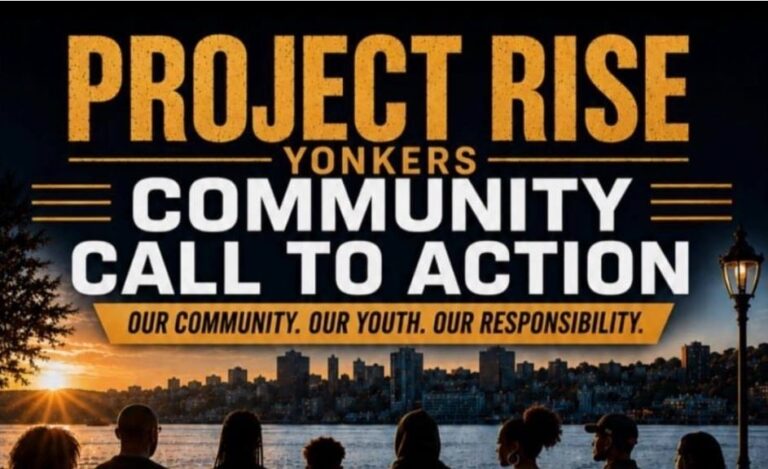
Project RISE showed me something I haven’t seen enough of in seven years of living in Yonkers: organizations actually moving together. Now we have to make sure the village reaches the whole family, not just the child. By Larnez Kinsey
Yonkers is home to an estimated 212,603 people packed into just 18 square miles. Nearly one in five residents is under 18, meaning more than 40,000 children are growing up here. And while the median household income is $83,549, 13.8% of Yonkers residents live below the poverty line.
Those numbers tell us something about Yonkers. But they don’t tell us everything. They don’t tell us what it feels like to be 14 years old and already know the sound of gunfire. They don’t tell us what happens inside a family when somebody’s child doesn’t make it home. And they don’t tell us what it means when the children we’re trying to protect are sometimes also the children we’re trying to prevent from pulling the trigger.
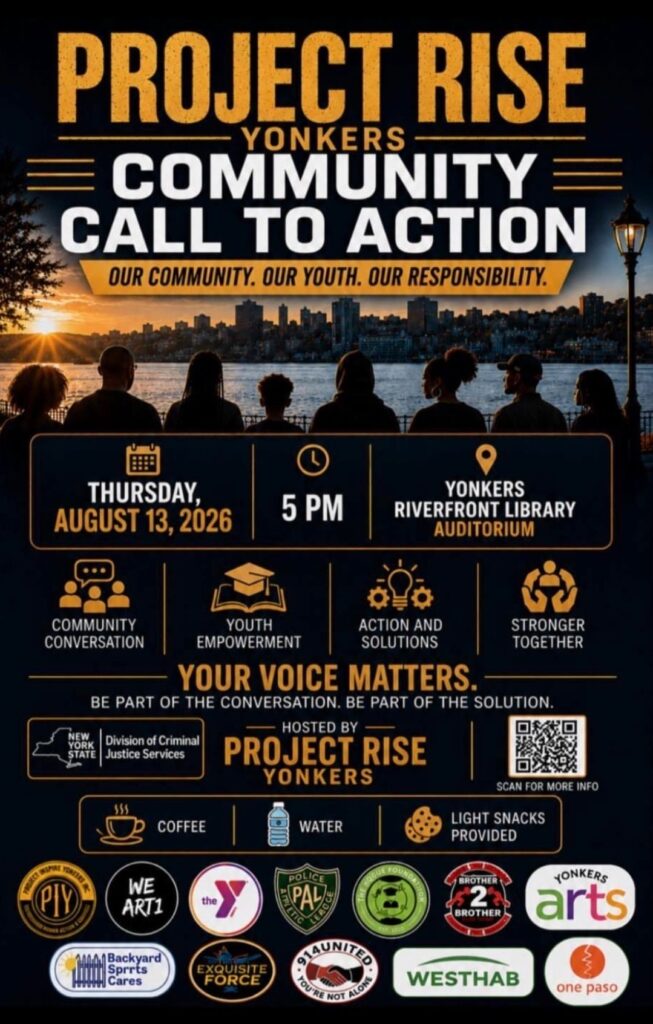
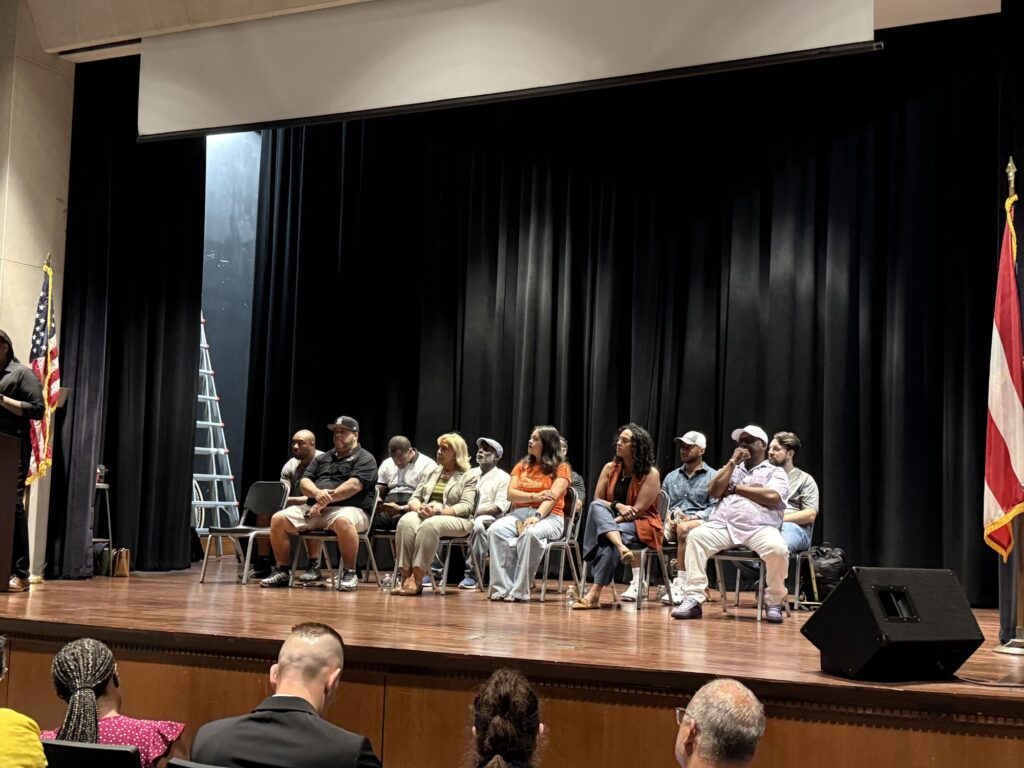
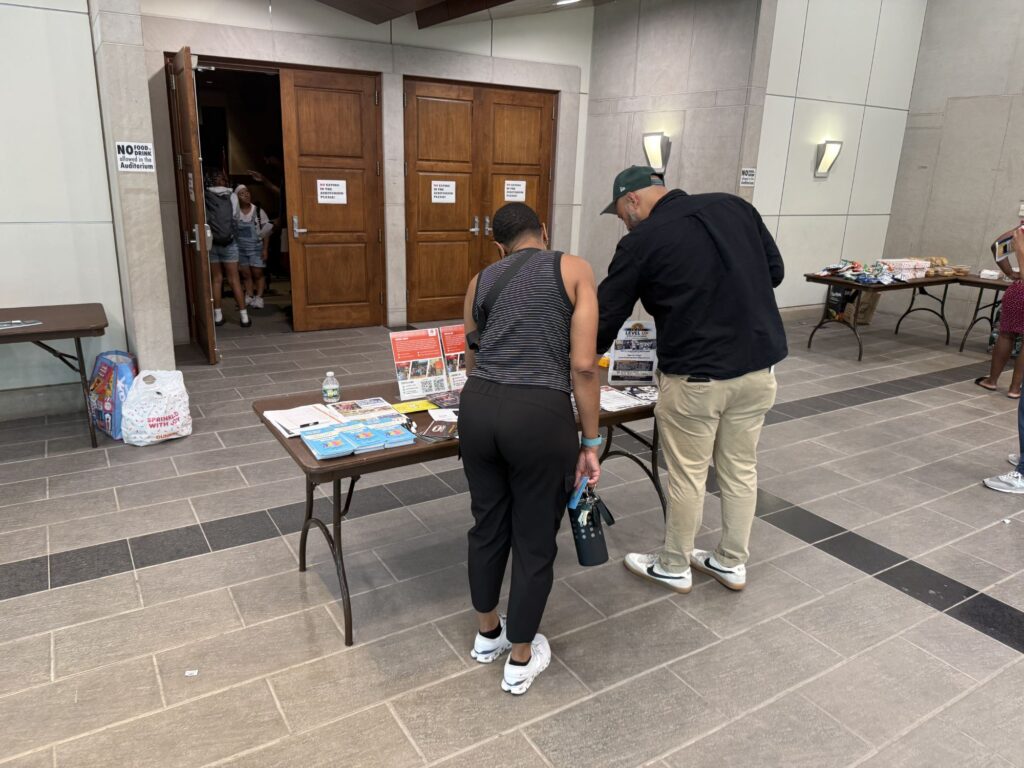
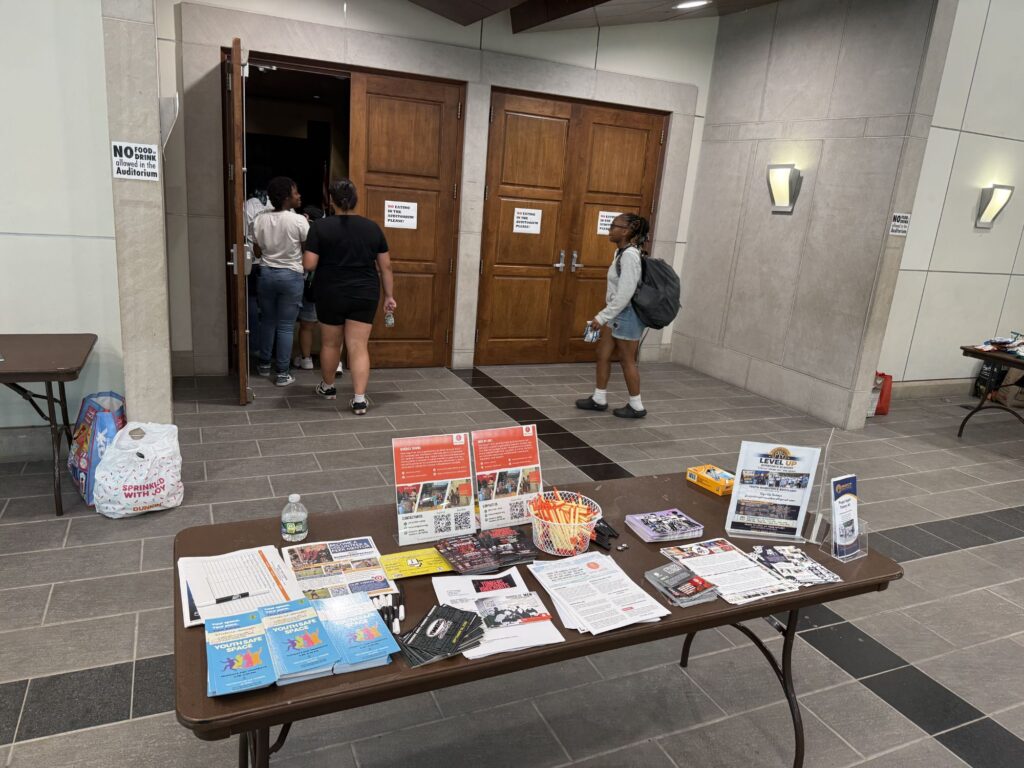
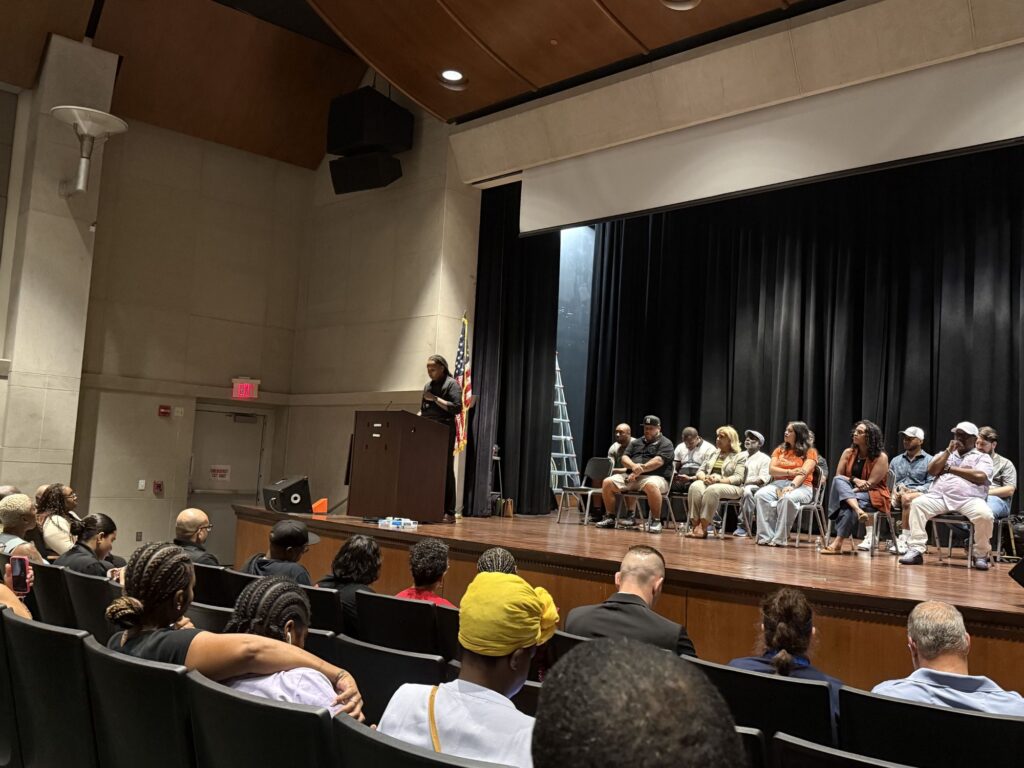
That reality was sitting heavy on me when, on Thursday, August 13, 2026, at 5 p.m., I walked into the Yonkers Riverfront Library for the Project RISE Yonkers Community Call to Action. The message was: Our community. Our youth. Our responsibility.
Beautiful words, but everybody loves community until community requires inconvenience. Everybody loves our youth until the youth is angry, grieving, suspended, arrested, traumatized, loud, misunderstood, or already halfway convinced the streets are the only place where they belong. And everybody loves responsibility until it’s time for somebody to actually take some, but that evening, I saw something in Yonkers that gave me hope.
For the first time in the seven years I have lived here, I saw this many community organizations visibly moving around the same mission. Not just logos lined up on a flyer. People working together.
Everybody on That Stage Had a Why
Each organization had a representative on stage speaking about its programs, but they weren’t just giving us the nonprofit elevator pitch. They talked about why. Why they mentor? Why they coach? Why they create? Why they intervene? Why they continue showing up when community work can exhaust you?
We heard from parents, people raised in these communities, people who have watched young people they knew become victims of violence, people who have watched friends make choices that changed their lives forever, and people who understand that behind every statistic is somebody’s baby.
There’s a kind of knowledge you learn in training. Then there’s the kind you carry because you know the block. You know the family. You know that mother’s face. You know what it feels like when somebody’s name suddenly ends up on a candle, a hoodie, or a memorial T-shirt. That’s different, and sitting there, I thought: Yonkers already has the village. Now we have to connect it.
The Village Was in the Room
Project RISE, Respond, Invest, Sustain and Empower, invests in community organizations addressing gun violence and the conditions surrounding it. New York State’s current Year 3 funding structure identifies three Yonkers lead organizations: the Police Athletic League of Yonkers Foundation, Yonkers Family YMCA and Westhab Inc. PAL distributes funding to Brother 2 Brother and The Hogue Foundation; the YMCA works with 914United, We Art One and Exquisite Academy of Arts; and Westhab works with One Paso, Project Inspire and Yonkers Arts.
Different organizations.
Different strengths.
Same children.
And I want to give particular flowers to We Art One, Yonkers Arts, 914United, Project Inspire, Brother 2 Brother, One Paso and the YMCA. Not because they’re the only organizations doing meaningful work. They’re not. I’m highlighting them because I personally keep seeing them. At each other’s events. Sharing resources. Connecting people. Supporting young people. Building relationships across organizational lines.
For seven years, I’ve watched good organizations do good work throughout Yonkers. What felt different on August 13 was seeing pieces of that work actually connecting. Because collaboration isn’t ten logos sitting together at the bottom of a flyer. Collaboration is when the mission becomes more important than whose logo gets the credit. That is what Yonkers needs more of.
Now Widen the Circle
Collaboration cannot become another exclusive club. There are grassroots organizations throughout Yonkers doing meaningful work without large budgets, government contracts, or polished communications departments. Some are working from churches, community rooms, gyms, art spaces, neighborhood spaces and sometimes somebody’s living room. But they may possess something institutions spend years trying to manufacture: Trust.
They know the families. They know which child stopped coming around. They know who’s grieving. They know who just came home. They know who’s angry. They know which mother is overwhelmed. They may know who is one bad night away from making a permanent decision. I believe deeply the people closest to the problems in our communities are often closest to the solutions. Find them. Invite them. Listen to them. And when they’re doing effective work, resource them.
Stop Plucking Children Out of Their Circumstances
This is where our approach to youth violence has to mature. We cannot keep plucking children out of their circumstances, putting them into a six-week or twelve-week program, teaching them coping skills, leadership, and conflict resolution and then dropping them right back into the same conditions without offering meaningful assistance to the parents and caretakers raising them.
You cannot heal a child in isolation. What happens when the workshop ends? What does home look like? Is the rent behind? Is there enough food? Is the caregiver overwhelmed? Does somebody need mental-health support? Does the family need employment assistance? Childcare? Transportation? Housing support? Financial literacy? Therapy?
Sometimes the strongest youth intervention isn’t another youth program. Sometimes it’s helping the person raising that young person breathe. We love saying, Save the children. Okay. Help the people raising them. Children don’t live in programs. They live in ecosystems. Helping the parent helps the child. Supporting the caretaker supports the child. Stabilizing the household supports the child. That is violence prevention too. We cannot keep trying to save children while ignoring what they’re being asked to survive.
Violence Is Moving Through Our Communities
Violence is a disease moving through our communities, and our children are being asked to develop immunity in real time. They’re watching friends die. They’re watching fights become content. They’re watching social-media arguments become street conflicts. They’re carrying grief before they even have language for grief. Some are carrying fear. Some are carrying anger. And some are carrying weapons because somewhere along the way they learned that having a gun meant having protection.
We cannot keep waiting until they’re bleeding, physically or emotionally, to decide prevention matters. They need tools before the crisis. They need language to identify what they’re feeling before those feelings start making decisions for them. They need tools to regulate anger before anger becomes action. They need mental-health resources. They need safe adults. They need opportunity. They need somewhere to belong. They need to know who to call. And they need all of that before somebody puts their face on a candle, hoodie or memorial T-shirt.
We Heal Communities Through Connection
That’s why I kept coming back to one word: Connection.
Connect the child to the mentor. Connect the parent to resources. Connect the school to the grassroots organization. Connect the credible messenger to the family. Connect mental-health providers to the people who need them. Connect the artist to opportunity. Connect the organization with community trust to the institution with resources. Because a village isn’t simply a bunch of people standing near each other. A village is a network of relationships that knows how to move when somebody needs help.
Jordan Mendez Said the Part We Needed to Hear
One of the strongest moments of the evening came from Jordan Mendez. Jordan told the room he was indignant. Not simply angry. Indignant. Angry because what he was witnessing felt like an injustice. And then this young man challenged a room full of adults. If all these organizations exist… If all these programs exist… If all these adults care… why don’t enough young people know about them? There it is. Adults love saying: There are programs out here. Okay! Does the 14-year-old know? Does the mother working two jobs know? Does the grandmother raising grandchildren know? Does the teenager who just came home know?
A resource our families don’t know exists cannot help them. Jordan challenged Yonkers to bring violence-prevention organizations directly into our schools. And that deserves serious consideration. School is one of the few places where we already have access to large numbers of young people, so why are we treating violence prevention like an extracurricular activity when violence isn’t extracurricular in their lives?
Jordan wasn’t simply giving adults his opinion.
He was giving us policy.
Listen to him.
Everybody Doesn’t Need a Basketball
We also heard about free youth programming that includes sports, family engagement, and robotics. The robotics caught my attention because someone acknowledged an obvious truth our youth-development strategies sometimes miss: Every child doesn’t want to play sports. Somebody wants a camera. Somebody wants a computer. Somebody wants to paint. Somebody wants to dance. Somebody wants to build something. Somebody wants to make music. Somebody wants to start a business. And somebody hasn’t discovered what makes them light up yet. Violence prevention cannot become code for: Give Black and brown kids a basketball.
Give them choices. Give them exposure. Give them possibilities. Let them discover who they are before the streets decide who they’re supposed to be.
Presence Is the Beginning. Partnership Is the Assignment.
Government leadership was represented in the room as well.
Among those I observed were Symra Brandon, representing the office of New York State Senate Majority Leader Andrea Stewart-Cousins; Westchester County Legislator James Nolan, District 15; Yonkers City Council President Lakisha Collins-Bellamy, Esq.; and Yonkers City Councilwoman and Majority Whip Deana R. Norman, representing District 1. I also saw Leslye Oquendo-Thomas, candidate for Westchester County Legislature District 17. Their presence mattered. But presence is the beginning. Partnership is the assignment.
Grassroots organizations have relationships government cannot manufacture. Government has access and resources grassroots organizations often cannot reach. We need both. If elected leaders heard an idea in that room that makes sense, help move it. If organizations need access to schools, help open the door. If a grassroots organization is producing results, help connect it to sustainable resources. Don’t just applaud the work. Build infrastructure around the people already doing it.
Some of the Most Important People Weren’t on the Stage
I also noticed credible messengers from SNUG in the audience. That mattered to me. Sometimes the person who can reach a young person isn’t the person with the biggest title or longest résumé. Sometimes it’s somebody who can look at them and say: “I’ve been where you are.” And the young person knows they’re not performing empathy. They lived it.
I also saw organizers from ELOC (Environmental Leaders of Color) alongside some impressive young advocates. We need those young people in these conversations. Not as decoration. Not for the group photo. Not because somebody’s grant requires “youth voice.” Give them influence. Ask why their friends carry guns. Ask what scares them. Ask why they don’t come to our programs. Ask which adults they trust. Ask what we’re getting wrong. And then do something adults sometimes struggle with: Be quiet and hear them.
No Wrong Door
Here’s what I want this ecosystem and eventually the broader Yonkers community to become: No wrong door. A young person enters through art and needs mental-health support? Connect them. A credible messenger meets somebody who needs employment? Connect them. A family enters through the YMCA and needs another service? Connect them.
Brother 2 Brother or Project Inspire realizes a child is struggling because the parent is drowning? Help the parent too. A teacher notices something changing in a student? They should know who to call before that child reaches crisis. Wherever a child or family enters the village, somebody should know where the next door is. That’s an ecosystem. That’s community. That’s prevention.
Don’t Let August 13th Become Another Meeting
This is my challenge to everybody who was in that room, including me. Don’t let August 13 become another meeting where everybody felt good about the conversation and then went back to their separate corners. Don’t let the photographs become the outcome. Don’t let attendance become the accomplishment. And please don’t let another shooting be the thing that brings everybody back together.
For the first time in seven years of living in Yonkers, I saw enough organizations genuinely moving together to make me believe something bigger is possible. So build on it. Widen the circle. Bring in the grassroots organizations still outside of it. Bring in the schools. Bring in businesses. Bring in mental-health providers. Bring in parents and caretakers. Bring in credible messengers. And put young people at the center, not at the edge.
Because Yonkers doesn’t have to start from scratch. We have programs. We have artists. We have mentors. We have mental-health advocates. We have credible messengers. We have grassroots leaders with community trust. We have elected officials with the ability to open doors. And we have young people intelligent enough to tell us exactly what we’re missing. Yonkers has the village. Now connect it. Because the people closest to our community’s problems are often closest to the solutions.
And because violence is a disease our children are combating in real time, our responsibility is to make sure they and the people raising them have the tools, language, resources and relationships to protect themselves, heal and choose something different.
On August 13, the message was: OUR COMMUNITY. OUR YOUTH. OUR RESPONSIBILITY.
Cool.
Now comes the part that counts:
Move like it.
Was There Special Treatment? Questions Surround Tuckahoe Police Response to Former Chief’s Wife
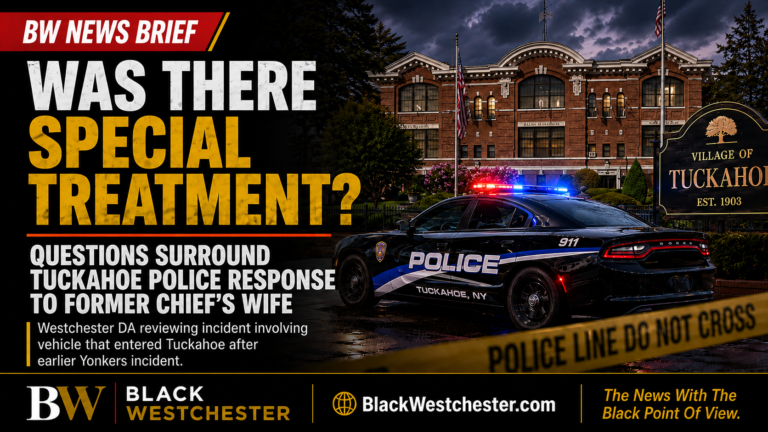
Former Tuckahoe Police Chief’s Wife at Center of Incident Now Under DA Review
An independent investigation is underway into the Tuckahoe Police Department’s handling of an August 14th incident that allegedly began in Yonkers and ended in Tuckahoe. The incident allegedly involved Donna Costanzo, the wife of John Costanzo, the retired Tuckahoe Police Chief who currently serves as Executive Director of the Westchester County Chiefs of Police Association.
Black Westchester has independently learned from sources familiar with the matter that Donna Costanzo was allegedly intoxicated and may have been involved in collisions with two vehicles in Yonkers before striking a third vehicle in Tuckahoe.
Sources also told Black Westchester that, following the incident, Costanzo was allegedly driven home by a member of the Tuckahoe Police Department rather than being taken into custody.
If those accounts are accurate, the circumstances raise serious questions that go well beyond the alleged collisions themselves: Who responded to the incident? Were standard police procedures followed? Why was Costanzo allegedly driven home instead of being taken into custody? And did her relationship to a former Tuckahoe Police Chief influence how she was treated?
The Village of Tuckahoe, the Tuckahoe Police Department, and the Westchester County District Attorney’s Office have not publicly confirmed those allegations.
After consulting with Mayor Cara Kronen and the Village Administrator, Tuckahoe Police Chief Larry Rotta determined that both the circumstances surrounding the incident and the police response warranted an independent review.
The Village subsequently contacted Westchester County seeking an outside investigation and was referred to the Westchester County District Attorney’s Office, which is now reviewing the matter.
A spokesperson for the District Attorney’s Office confirmed to Black Westchester that while Mrs. Costanzo’s actions are not under investigation, the police actions following the incident are “currently under review by our Public Integrity and Law Enforcement Bureau.”
In an August 20 statement provided to Black Westchester, the Office of Mayor Cara Kronen emphasized the Village’s commitment to transparency, accountability and an independent review:
“The Village of Tuckahoe is aware of questions regarding an incident that occurred on Friday, August 14th, involving a motor vehicle that entered the Village following an earlier incident in the City of Yonkers. We are committed to transparency, accountability, and maintaining the public’s confidence in our Village government and Police Department. To ensure that this matter receives an independent and impartial review, the Tuckahoe Police Chief, in consultation with Mayor Kronen and the Village Administrator, determined that the circumstances surrounding the incident and the subsequent police response should be reviewed by an outside agency. Chief Rotta and Mayor Kronen firmly believe that absolute transparency is paramount in maintaining public trust and upholding the integrity of the Police Dept.”
It is encouraging that the Village of Tuckahoe has taken a proactive approach by referring the matter for an independent and impartial investigation rather than allowing it to be handled solely within the department. Public confidence in law enforcement can quickly erode whenever there is even the appearance that someone with connections to the police may have received preferential treatment. An outside investigation provides an opportunity for the facts to be examined independently, transparently and without favor.
At the same time, it is important to emphasize that the allegations surrounding Costanzo remain under investigation and have not been established as fact.
Ultimately, the review should answer three fundamental questions: What exactly happened on August 14? Were established procedures followed by responding officers? And did Donna Costanzo receive the same treatment that any other person would have received under the same circumstances?
That last question may ultimately determine whether this was simply an unusual police response—or an example of preferential treatment.
Stay with Black Westchester for the latest updates as more information becomes available.

The Unintended Consequences: NABJ Went After Stephen A. Smith — Now ESPN Has a New White Face
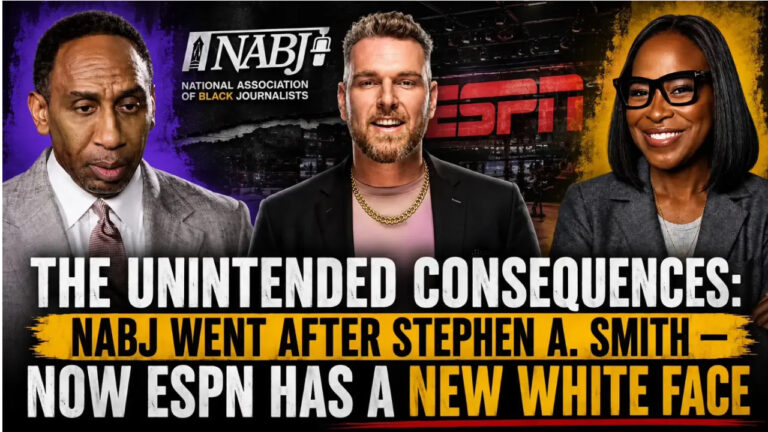
Intentions are not consequences. You can think you’re doing the right thing. You can win praise from those who agree with your action. And still produce an outcome far different than what you originally intended. For that reason, good leadership must always look past the cheers of the moment and take a hard look at the result. Good leadership must ask questions like “What did we actually accomplish?” “What did this cost?” “Who gained power?” and “Who lost power?” As far as leadership goes, those are the questions that Black journalists should be asking about NABJ’s decision to honor Stephen A. Smith with its 2026 Thumbs Down Award. According to NABJ, Smith exhibited “a recurring pattern of disparaging commentary toward prominent Black women.”
Stephen A. is rich and popular, but that doesn’t make him above criticism. And if NABJ feels Stephen A. has crossed a line, the organization has every right to call him out. But just because you have a right to do something doesn’t mean you shouldn’t consider the consequences. Those consequences are difficult to ignore when you consider what is happening at ESPN at the exact same time NABJ is attacking Stephen A. Smith. Today, ESPN is giving Pat McAfee more visibility and opportunity. McAfee is white. He’s also quickly becoming one of ESPN’s biggest stars. NABJ is not responsible for McAfee’s success. And McAfee is not literally taking Stephen A. ‘s spot on First Take. But if Stephen A.’s relationship with Black journalists continues to weaken while McAfee’s relationship with ESPN continues to grow, who ultimately gains power? Who loses it?
Stephen A. Wasn’t Just a Black Face at ESPN
Black representation is not the same thing as Black power. Representation involves seeing a Black person at the desk. Power is that person earning enough influence to dictate where an enormous media corporation travels, what resources it devotes to certain projects and which institutions it allows access to that coveted platform. Stephen A. Smith earned that kind of power at ESPN. That is why what is reportedly happening now matters. Don’t like his politics? Sorry you didn’t like my personality? Think he talks too much nonsense? Fine. Those are valid discussions to be sure. But none of that changes the reality that Stephen A. became one of the most famous figures representing ESPN. For generations of Black journalists, the goal was simply to gain entry into established newsrooms and sports departments. Stephen A. Smith earned himself a place where he was not just another ESPN employee. His larger-than-life personality became part of the fabric of the ESPN brand itself. When you have that kind of visibility, you wield something more valuable than celebrity: leverage with the institution that employs you. Some of that was directly used to benefit NABJ.
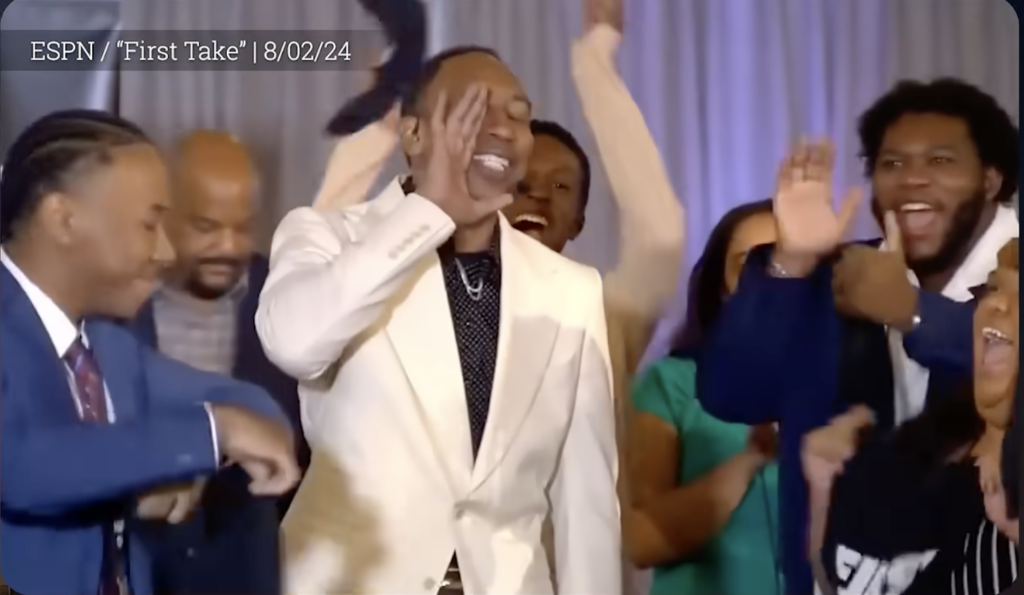
Last year, ESPN broadcast First Take outside its regular studio and onto the floor of the NABJ Convention in Chicago, with Stephen A. Smith and Molly Qerim hosting from inside the convention. ESPN placed its cameras, production team, on-air personalities, and national audience directly into the heart of an event devoted to Black journalists. Reportedly, NABJ also hosted Smith and live broadcasts of First Take at its 2024 and 2025 conventions. That context matters because Stephen A. was never just another celebrity appearing at NABJ. His partnership with the organization created a valuable link between NABJ and one of the most powerful media brands in all of American sports. At the same time, NABJ developed a relationship with Stephen A., linking him to an important professional organization serving Black journalists. Both sides had something to gain from that relationship, which is why any attempt to damage it should be taken seriously by everyone involved. When Stephen A. brings First Take to NABJ, he is not simply flying into the conference on the cache of his own celebrity. He also brings ESPN with him.
Black Power Is More Than Seeing a Black Face
Sometimes Black America conflates representation with power because for so much of our existence we have been fighting simply to gain representation. Having a Black anchor, executive, coach, journalist, or politician in a space that was previously closed off to us is important, but representation reaches new heights of value when that person is able to cultivate enough influence within that institution to help open doors for more Black people and Black institutions. Stephen A. had reached that level. ESPN wasn’t just paying a Black commentator to be on television; they had a Black man who had become one of the network’s flagship personalities. When that personality can help to bring First Take and ESPN’s media might to an NABJ convention, symbolic Black representation is morphed into something more powerful: Black institutional power.
Institutional power can not be easily replicated because black people with Stephen A.’s influence are not ubiquitous. ESPN can hire another Black commentator tomorrow, but that hire won’t automatically endow that person with Stephen A.’s viewership, negotiating ability, contacts, longevity, or clout. Organizations can fire employees, but whole communities can’t fire away decades of established leverage. That’s why I feel the controversy surrounding Stephen A. warrants more discussion than simply whether you feel he was right or wrong in his statements. There aren’t dozens of journalists with Stephen A.’s reach at major media companies across America. And when something is scarce, it should be treated as such when it’s diminished or lost.
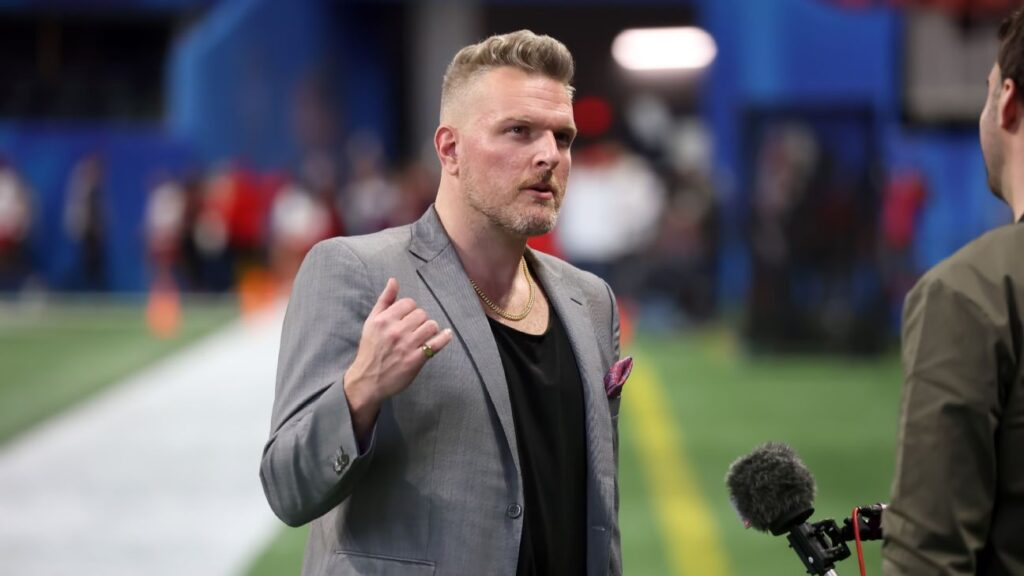
Now Look at Pat McAfee
Stephen A.’s relationship with NABJ is reaching an all-time low. During this exact moment, ESPN is launching Pat McAfee into the universe. Pat McAfee has his own talk show. He has a consistent role on College GameDay, and now ESPN is allowing him to stretch his platform even further with Monday Night Countdown. Before we know it, sports media wonks will be debating if Pat McAfee is now ESPN’s marquee personality. There is nothing wrong with Pat McAfee receiving these opportunities. McAfee has carved out a massive platform for himself, and ESPN sees dollar signs when his face is on television. To frame this as a black man vs. white man scenario would be doing yourself a disservice. The real issue at hand is what McAfee’s ascension tells us about how power is redistributed within these corporations. ESPN is under no obligation to uphold Black institutional power.
Disney doesn’t owe Black people anything by ensuring that if Stephen A. loses power or becomes estranged from Black organizations, another Black man will receive the same pull. Companies typically give these opportunities only to people they believe will generate viewers, advertisers, subscribers, eyes on whatever product they are peddling, and cultural cachet. If ESPN believes Pat McAfee can do those things, they will continue to give Pat McAfee all the opportunities, whether Black people feel another Black man should’ve been given Stephen A’s seat. This is where the unintentional consequences of our arguments come into play. Black journalists could fight over whether Stephen A deserved to win an award for two weeks, and ESPN will continue to build Pat McAfee into the network’s next golden child. The corporation doesn’t care who’s right, and the new influential person doesn’t have to uphold the same ties to Black institutions that Stephen A. did.
Corporate America Does Not Guarantee Black Succession
Another perilous assumption about Blackness and representation is that when a Black person reaches a position of power, that position becomes Black forever. We have no examples in American corporate history supporting the idea that “if a Black man can run the company, so can a white man” applies when a Black news anchor gets a job, so can a white news anchor. Or that if one powerful Black figure influences culture, another powerful white figure can take his spot. Companies will not miss a beat if Black people are gone. ESPN will show games, companies will buy ads, Disney will sell their packages, and fans will still watch sports. If the suits decide they want someone else as the face of their network, they will make it happen whether that person is Black or not.
This is why Black institutions need to recognize how powerful it is when Black people gain power inside institutions we do not own. We do not own ESPN; we cannot dictate Disney’s executive decisions, and we cannot decide who the next big personality at that network will be. What we can do is recognize how powerful our outreach is when a Black person becomes powerful enough within these institutions to open doors for Black institutions.

Could This Have Been Handled Differently?
Finally, this leaves us with NABJ’s process. Could the same issues have been addressed without putting that relationship at risk on day one? In reviewing the public reporting on this subject, I have found no evidence that NABJ President Errin Haines or NABJ leadership met with Stephen A. Smith before presenting him with the Thumbs Down Award. Stephen A. publicly asked why no one had reached out to him before the meeting and why no one had had a conversation first. That is intriguing, because NABJ is made up of journalists. Journalists will always insist that people and institutions be given a chance to respond before serious allegations are made public. Allowing someone to respond doesn’t allow the subject of an investigation to veto your story. It allows the opportunity for context, a response, and fairness before deciding to levy public judgment.
Additionally, considering Stephen A.’s past with NABJ, it would have made sense from an institutional perspective to sit down with him. Leadership could have told him directly that they felt his commentary had gone too far, listened to his side, and still moved forward with their public denouncement if they felt he wasn’t accountable for his actions. Starting with diplomacy wouldn’t have meant NABJ threw their principles out the window; it would have meant that the organization understood that a valuable relationship was on the line and warranted an attempt to protect it. Relationships are institutional assets, and yes, sometimes principles mean you need to risk those assets. However, responsible leadership should know what they’re risking before deciding to do that, especially when the relationship in question pairs a Black professional organization with one of the most influential media companies in America.
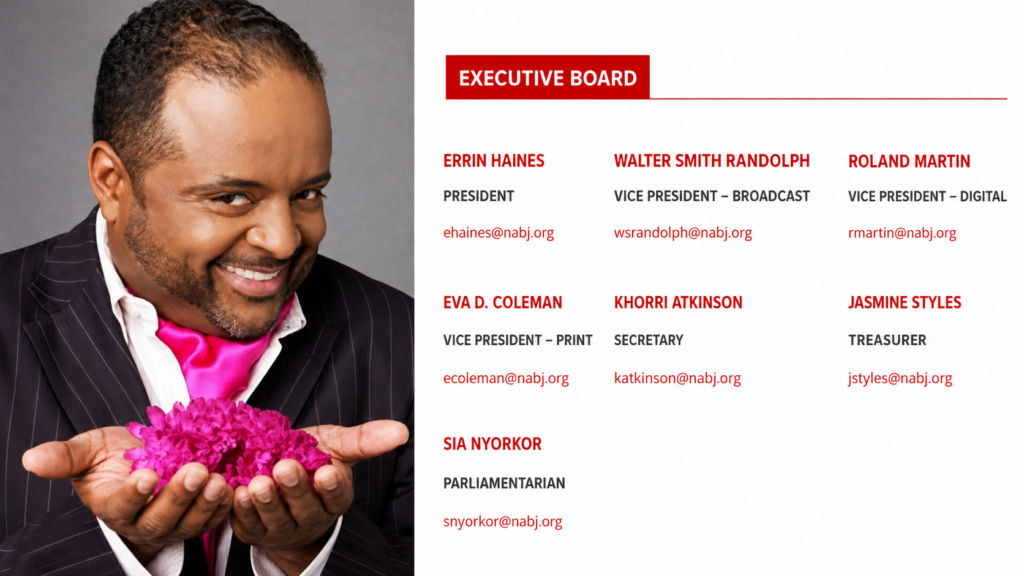
Then There Is the Roland Martin Question
Yet another problem involves clarity on the selection process by NABJ. Roland Martin had NABJ President Errin Haines on his show, Roland Martin Unfiltered, to explain where NABJ stands after the backlash ensued. Now, Roland Martin is no outsider to journalism organizations covering NABJ: the organization lists him as its Vice President–Digital, making him a member of NABJ’s executive leadership. Roland Martin has also publicly clashed with Stephen A. on political commentary in the past. That doesn’t mean Roland Martin had anything to do with Stephen A. receiving the award. In fact, I have seen no proof that Roland Martin was involved in the nomination, deliberation, or ultimate decision to approve the award. Pointing fingers without proof would be a huge mistake on my part.
However, that is why clarity from NABJ would dismiss much of the unfounded speculation. NABJ could easily answer some simple questions about its selection process. Who nominated Stephen A. Smith? Who reviewed his nomination? Who was involved in the deliberation process, and who ultimately decided to approve Stephen A. Smith? Those are all fair questions to ask. It is also fair to question if Executive Board members were involved in the selection process and what role, if any, Roland Martin played. If Roland Martin had no involvement, then NABJ can state that and take him out of the equation. But here’s the thing: Those are valid questions, but they shouldn’t be the story. The story is what happens to Black institutional power when one of the most high-profile Black voices in mainstream media further distances himself from an organization meant to represent Black journalists while his network continues to create and empower another high-profile personality who is white.
Who Actually Pays the Price?
Let’s say Stephen A. doesn’t want anything to do with NABJ anymore. Though it may seem like Stephen A. is being punished, organizational repercussions rarely work that cleanly since Stephen A. would retain ESPN, his massive platform, his podcast, business interests, his friendships, and millions of dollars. Meanwhile, NABJ would be tasked with figuring out if they can replicate access and national media attention that having First Take broadcast from its convention created. If First Take doesn’t come back, ESPN scales back its convention footprint and another Black ESPN personality doesn’t have Stephen A.’s pull or desire to keep that relationship alive, the long-term institutional repercussion may land harder on NABJ than the member they wanted to punish. That doesn’t mean NABJ shouldn’t uphold their standards for the cameras at ESPN. It means punishment and repercussions don’t always fall on the same person, and an organization can call someone out publicly and learn weeks later they’ve impacted their own standing.
A White Face Can Fill the Vacuum
Meet Pat McAfee. I’m glad he has been successful. I’m not raising this point to throw shade at McAfee or point out that he did something wrong. I mention him because his rise to prominence showcases how swiftly corporations can pivot power. ESPN doesn’t need another Black person to elevate Stephen A.’s platform so they can later give another person more influence. If McAfee provides executives with the ratings and dollars they desire, ESPN can keep elevating him without having to find Stephen A.’s Black replacement. Imagine what the institutional consequence could look like if we allow this to continue. Stephen A. grows more irrelevant to NABJ; First Take can’t secure expo booths at NABJ conventions as it used to; and ESPN can continue elevating McAfee to arguably the most recognizable face on the network. By that point, ESPN may have lost very little because they still have one of the most marketable superstars that will attract billions of eyes.
Meanwhile, Black journalism may have lost access to something far more valuable to replace. Black journalism may have lost a Black man’s willing access into the circle where he was able to gain enough influence at ESPN to help bring one of the largest sports-media companies in America into our fold. This would be a negative racial consequence whether it was planned by NABJ, ESPN, McAfee, or Stephen A., and that’s exactly why we should view this as an unintentional consequence instead of a conspiracy.
The Next NABJ Convention Will Tell Us More Than Social Media
But the true battleground of this controversy won’t take place on Twitter. It won’t be decided by who had the better argument on television. It won’t be measured by who got more likes or who got applauded when their award was presented. Future NABJ conventions will matter more than this one because we’ll get to see if the institutional partnerships that existed before this controversy will look the same going forward. Keep an eye on whether Stephen A. returns to NABJ. Keep an eye on if First Take returns. Keep an eye on whether ESPN continues to allow NABJ to sell cameras, personalities, and production resources. Keep an eye on if another Black ESPN personality will have enough clout to keep that relationship going or increase it. Now we’re talking about tangible results that will tell us far more about the impact of this controversy than posturing on social media ever will.
If Stephen A. returns and ESPN continues to send cameras and platforms into the future, fears of long-term damage to the institution will have been greatly exaggerated. Any legitimate argument has to allow for that possibility because accountability and business relationships aren’t mutually exclusive if both sides feel that relationship is worth maintaining. If Stephen A. refuses to return, if First Take goes away, and if ESPN stops sending resources while Pat McAfee continues to get bigger and bigger, then I hope we stop pretending like those things don’t matter to Black journalists. We’ll instead have to question if trying to hold one successful Black man accountable also played a role in diminishing a valuable relationship between Black journalists and one of the biggest powers in sports media.
As a Black Journalist, I Have to Ask the Hard Questions
I’m writing this as a Black journalist and publisher who has covered politics, government, policing and race-related issues for 15 years. I’m also coming at this as a journalist who knows our job often requires us to ask tough questions, even when they’re uncomfortable and even when an organization we generally admire is forced to answer them. We hold government, corporations and politicians to high standards of transparency. Shouldn’t we hold our own organizations to the same level of accountability?
It’s why I still have questions about NABJ’s decision to honor Stephen A. Smith. Was there a documented conversation with Stephen A. about his behavior beforehand? Who nominated him? Who voted and participated in the discussion and what, if any, influence did NABJ Vice President–Digital Roland Martin have? I’m not throwing accusations. I want answers. Here are legitimate questions about process and transparency. But I also have to wonder if NABJ took into consideration what else may be lost. Yes, Stephen A. Smith is a known commodity when it comes to Black journalists and celebrities skating around the topic of police brutality. But he also holds enough institutional power to bring First Take, ESPN’s cameras and national coverage into NABJ’s convention.
Accountability for his actions is one thing. Understanding the power and ability of that relationship is another. It’s why I can’t applaud this moment simply because a Black organization held one of its own accountable. I have to question it through the lenses of power, access and ultimately what the outcome will be. If Black journalism comes out of this stronger with its relationships intact and its power amplified, then NABJ made a decision that could have the proper consequences. But if the relationship between Stephen A. and NABJ is irreparably damaged, ESPN turns its cameras around and Pat McAfee continues to become the friendly face of the network, we’ll have to decide if Black journalism won the argument but lost valuable institutional power. Journalism is about holding people accountable, even if those people are us. The real question isn’t if NABJ had good intentions, it’s if Black journalism has more power when this is all said and done.
A Historic Run, A Divided Reaction: Byron Donalds and the Fight Over What His Candidacy Means to Black America
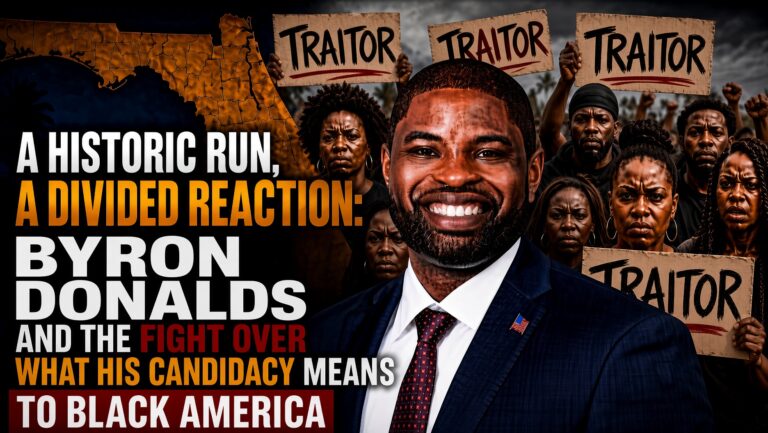
Byron Donalds needs just one election to become Florida’s first Black governor. Donalds, a Republican congressman, easily won his primary on Aug. 18, 20 and, at that point, had already amassed a significant financial lead over his Democratic opponent, David Jolly, who had formerly been a Republican before crossing over to the Democratic Party. He’s running on a campaign war chest of $100 million dollars, thanks to mega Republican donors like Ken Griffin. He also has the endorsement of former President Donald Trump. Donald’s impending accomplishment should be something that we can all celebrate. He was born in Brooklyn and spent several years working in the banking, finance, and insurance industry before pursuing a career in politics. He is poised to become Florida’s first Black governor. But this moment is not being celebrated in quite the same way among Black Floridians and Black political analysts nationwide. The rift illuminates how America talks about race and representation more than it highlights anything about Donalds himself.
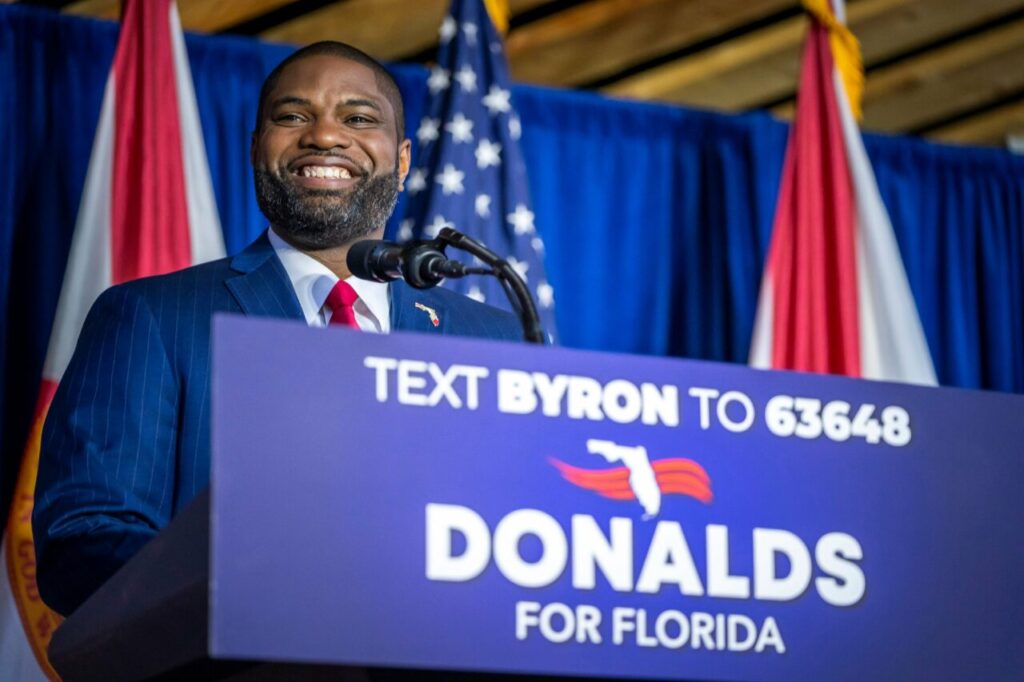
The case for pride
Others say that representation is representation. That for Black people to know that someone who looked like them made it to the highest office in the state, regardless of the state’s often fraught and frequently violent racial history, should be celebrated regardless of party affiliation. They argue that milestone ‘firsts’ have been heralded on both sides of the aisle: cite the first Black secretary of state, or the first Black Supreme Court justice, or the first Black president. Arguing that a Black Republican’s accomplishment is any less deserved or legitimate than a Black Democrat’s sets a dangerous precedent, they say, one that implies that Black accomplishments are only acceptable if they help progress a particular partisan goal. Donalds has, at times, leaned into this framing, recounting his own story — arriving in Florida at 17 years old with nothing but a Greyhound ticket and a suitcase full of clothes, putting down roots to start a family and build a career, and working his way up to the state legislature and now Congress — as one example of what Florida has offered him regardless of political beliefs.
Read: The Rise of Black Republicans: Traitors or Trailblazers?
The case for skepticism, even anger.
For others, the criticism stems not from Donald’s race, but instead his political beliefs and what they see as his race being exploited by a party which they feel willfully works against Black political and economic interests when it comes to issues like voting rights, criminal justice, and civil rights enforcement. People who believe this see celebrating a “first” as a hollow gesture while ignoring the policy positions that person espouses, and they argue that having a representative without unity on key issues is not the type of progress praised in these situations. Some of the criticism goes a step further by accusing the GOP—whether intentionally or not—of attempting to downvote fraud claims, weakening criticism of the GOP’s positions on race-centric policies by electing Donalds, a Black person, who can help defend their policies. During his career, particularly for being a prominent Trump surrogate and vocal critic of the legitimacy of the 2020 election, Donalds has faced this criticism from within Black Democratic political circles.
Why both reactions are coherent
Both answers are fair. Just as any collective of individuals is diverse, so too has the question of whether ‘representation’ should be measured by identity or alignment with one’s political interests been a long-running debate within American politics – we’ve seen it with Clarence Thomas, with other Black Republican politicians prior to him, and we will see it again. What’s notable about the Donalds is the degree to which this is the case: a real opportunity to take the reins of the nation’s third-largest state, seeing as Florida’s Republican voter rolls now outnumber Democrats by 1.5 million – indicating this is no mere gesture or unlikely bid, but a tangible route to the governor’s mansion.
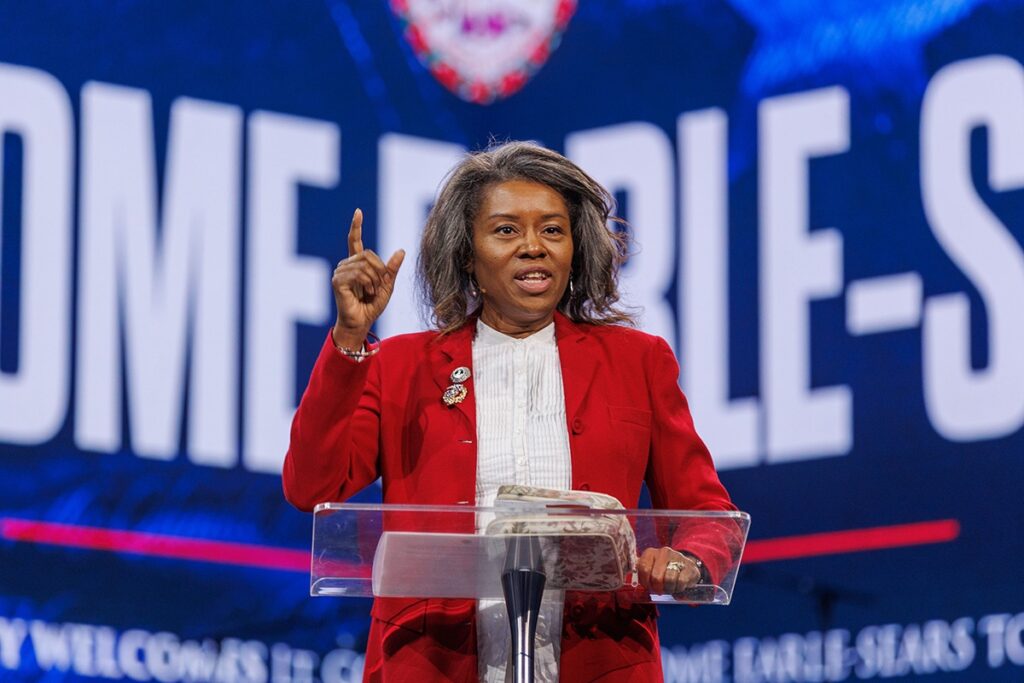
A preview in Virginia
Virginia was an early example of this dynamic playing out. Winsome Earle-Sears, a Black woman, a veteran of the Marines, a mother of three who supported herself and several others working multiple jobs, and Virginia’s first-ever Black statewide officeholder — ran as a Republican in 20×5 and found that her biography alone did not automatically grant her the institutional support many assumed it would. The Virginia NAACP technically does not endorse any candidate, Democrat or Republican. The group clarified that during her campaign.
However, actions spoke louder than words: the NAACP had noted the “historic significance” surrounding Earle-Sears’ 20×1 nomination in 2021, but offered no accommodation for her to run again in 2025, despite her opponent, Democrat Abigail Spanberger, headlining the group’s state convention. Earle-Sears ultimately lost in the general election. To her critics, nothing had happened. Her supporters saw it as undeniable proof that support from Black institutions had subtly shifted to favor a particular party, meaning a Black candidate’s pioneering status was only lauded when it benefited Democrats.
Regardless of which side one takes, what happened to Earle-Sears in Virginia last year was the same phenomenon as surrounds Byron Donalds in Florida: Black candidates’ race is becoming politicized by both parties and voters alike less by their identity and more by the party they chose to attach themselves to.
What’s next
Donalds will be running against David Jolly in November. Recent polls show the race to be tighter than Republicans would like against independents, but Donalds remains the heavy favorite come fall. Regardless of who wins however, the controversy over his candidacy won’t likely disappear. If anything, a win for Donalds would likely amplify the conversation surrounding what a “first” means and for whom.
Giving Children Fun & Scholarly Reasons to Smile
=Cupcake Cutie Boutique & The 1600 Non- Profit Charty Orrganization, brought families and community members together for a day of fun, fellowship, and giving back with its Back-to-School Fun Day and Giveaway. This community event served as a way to not only prepare children for their return to school. It offered families a chance to come together, have fun, and celebrate young people before they head back to the classroom. Between the food, music, and activities during the day-long event, there was plenty of reason for children and parents to enjoy some fellowship and celebrate with friends and neighbors. Hosting a bike giveaway was one of the many highlights of Cupcake Cutie Boutique & Friends’ Back-To-School Giveaway.
It brought smiles to the children receiving new bikes and added to the family-friendly atmosphere of the event. Mount Vernon City Councilman Andre Wallace stopped by to have some fun with the kids and celebrate with friends and families in attendance. When city leaders take time to interact with the community they serve, it can enable others to do the same. Councilman Wallace joined supporters, families, and local businesses to show Mount Vernon’s youth that people are fighting for them.
When local businesses, organizations, friends, neighbors, elected officials, and residents all come together for a day of fun and service, it is amazing what a community can accomplish. During back-to-school season, families often find themselves overwhelmed with the cost of preparing their children for another school year. Community events like this not only help ease some of that burden, but also show young people that they have their entire community behind them. Giving back to the community can take place through funded programs and government initiatives, but is not limited to them. Community service can look like food on the grill, music playing in the background, and children laughing with the neighbors while riding bicycles they got to keep. Cupcake Cutie Boutique & Friends ensured that as students head back to school, they’ll have something to smile about. They know their community cares about them.