Yonkers Double-Parking Fines Update New Double Parking Regulations
YONKERS, NY – In a move aimed at improving traffic flow and public safety, the City of Yonkers is launching a crackdown on double parking, increasing fines and stepping up enforcement efforts across high-traffic areas.
City officials say the initiative comes in response to growing concerns from residents, businesses, and emergency responders who have long complained that double-parked vehicles create dangerous bottlenecks, block access for first responders, and endanger pedestrians.
“As Yonkers continues to grow, so does the need for safer and more efficient streets,” said Mayor Mike Spano in a statement. “Double parking is not just a nuisance — it’s a serious safety issue, and we’re taking clear steps to address it.”
Under the new measures, fines for double parking will be increased significantly, particularly in commercial and school zones where infractions are most common. Officials confirmed that the penalty will be “substantially higher” than the current base fine of $115.
“The Yonkers City Council has increased the fine for double parking to $150,” Yonkers City Council President Lakisha Collins-Bellamy shared with Black Westchester. “Double parking blocks traffic and creates safety hazards — so think twice before stopping beside another parked car!”
Local business owners and residents have expressed mixed reactions to the crackdown. While some welcome the effort to ease congestion and improve accessibility, others worry about how stricter enforcement could affect deliveries and short stops in busy areas. Some residents, like Erin from Yonkers, want to make sure the enforcement is carried out equally throughout all of Yonkers.
“Make sure it’s inclusive of all neighborhoods from McLean Avenue in the South to the furthest point north, and from east to west,” Erin Theresa wrote on Facebook.
In addition to higher fines, the Yonkers Police Department and Parking Violations Bureau will be deploying additional patrols and enforcement agents during peak hours. These targeted efforts will focus on busy corridors such as South Broadway, Central Park Avenue, McLean Avenue, and areas around schools and transit hubs.
“We are not looking to punish drivers unnecessarily, but the culture of ignoring parking regulations has to change,” said Police Commissioner Christopher Sapienza. “We’re prioritizing public safety and the ability of emergency vehicles to get where they need to go without delay.”
Yonkers City Council Majority Leader John Rubbo added that the Yonkers Police Department’s 2nd Precinct issued 100 additional tickets in this area for double parking in May.
“At times, people will be double parking, and we have emergency vehicles trying to get by or school buses that are trying to get by,” says Rubbo.
He says they plan to enforce this, in part, through new technology such as handheld devices that can scan registration and quickly print a ticket.
City officials say they are reviewing options to expand legal loading zones and improve signage in affected areas to reduce the need for illegal parking. A public awareness campaign is also planned to educate drivers about the dangers and consequences of double parking.
The city’s new enforcement push is expected to begin immediately and continue through the fall, with the possibility of extending or adjusting the initiative based on community feedback and results.
In August 2024, the Metropolitan Transportation Authority (MTA) announced a similar enforcement for vehicles blocking bus stops or double parking in NYC. Letting the public know they will no longer be warned, and they will receive summonses in the mail starting at $50 and scaling up to $250 for repeat violators
Yonkers and Westchester Residents with questions or concerns about the new parking enforcement measures are encouraged to contact the Yonkers Parking Violations Bureau or visit www.yonkersny.gov for more information.
What do you think of the new Double-Parking Fines in the City of Yonkers? Leave your thoughts and feedback in the comments below. We want to hear from all of you.
On July 3, 2025, Congress passed the One Big Beautiful Bill Act, a sweeping reform of tax policy and social spending that critics immediately labeled a “gift to the rich” and a “war on the poor.” But such rhetoric, though emotionally satisfying, ignores the deeper reality: this bill is a turning point in how America rewards behavior. And whether we like it or not, the real question for Black America is whether we are positioned to compete under the rules this new framework enforces.
This bill doesn’t simply reward wealth—it rewards the creation of wealth. It signals a shift in how the government treats those who produce value. It makes permanent the Trump-era tax cuts, expands the Child Tax Credit, eliminates federal taxes on overtime and tips, ends Biden’s student loan forgiveness program, cuts green energy subsidies, and tightens eligibility requirements for programs like Medicaid and SNAP. For able-bodied adults, continued access to Medicaid now requires 80 hours per month of work, school, or job training. That is not a punishment. It is an incentive to participate in the economy—an economy that is increasingly shifting its rewards toward builders and away from dependents.
Black America has no more excuses. We spend over $1.5 trillion every year—more than the GDP of entire nations like Australia, Mexico, and South Korea. Yet instead of leveraging that power to build, we spend it foolishly on products we don’t own, brands we don’t control, and institutions that give us nothing in return. No oppressed people in modern history have had this level of spending power and still remained economically dependent. That is not just a system problem—it’s a mindset failure. The new tax code is not just a policy shift; it’s a blueprint for wealth builders. We must learn it, master it, and use it to our advantage. With $1.5 trillion at our disposal, we have the capital. What we need now is the courage and discipline to redirect that money from consumption into ownership, investment, and long-term power
The truth is, this bill isn’t designed to hurt the poor—it’s designed to expose who is prepared to take initiative. In this economy, participation matters. You must be earning, producing, hiring, or investing. Those waiting on symbolic gestures or government dependency will find fewer rewards going forward. And that’s not a failure of policy—it’s a reflection of what America now values.
For small businesses—particularly Black-owned enterprises—this bill provides both opportunity and a warning. The benefits are real for those who are prepared to act. Equipment, software, tools, and vehicles can now be fully deducted in the year they’re purchased, allowing small businesses to reinvest and reduce their tax burdens. Pass-through entities like LLCs, sole proprietors, and S-corps continue to benefit from the 20 percent Qualified Business Income deduction, lowering effective tax rates and improving margins. Employers no longer need to withhold federal payroll taxes on tips and overtime, easing payroll burdens and increasing workers’ take-home pay. IRS reporting has been simplified, which reduces administrative costs—an overlooked but important advantage for small operations trying to scale.
In addition, domestic production tax credits and purchase incentives favor American-made goods and services. That means Black-owned manufacturers, local food producers, and logistics firms are well-positioned to benefit—if they are aligned with these incentives. But there are no special protections, no racial carve-outs, no government set-asides. The playing field is open—but you still have to play. That’s the part many in our community are reluctant to confront.
There are also challenges. The bill does nothing to address the lack of access to capital for many Black entrepreneurs. No SBA expansion. No targeted lending programs. If you can’t get startup funding, these tax benefits are out of reach. And if members of your workforce rely on Medicaid or SNAP and lose benefits under the new requirements, you may face pressure to raise wages or offer private benefits. These are real-world trade-offs that demand real-world preparation.
So, what should Black entrepreneurs do now? Form a legal business entity like an LLC or S-Corp to take full advantage of the QBI deduction. Invest in tools, technology, or equipment this year to lower taxable income. Learn the tax code or hire someone who does. Begin recruiting and training skilled workers, especially in trades. And consider entering industries like real estate, logistics, home services, and agriculture—fields that this bill indirectly supports through its economic structure.
The Medicaid work requirement is not just a policy change—it’s a mirror. If members of our community are at risk of losing coverage, the answer is not protest. The answer is preparation. Where are the trade schools? The apprenticeships? The technical programs? There are over 800,000 open jobs in trades like welding, HVAC, electrical, and solar installation—jobs that offer dignity, income, and the potential for ownership. Our schools, however, continue to steer young people toward four-year degrees and student debt, promising status instead of substance. That model has failed. And this bill makes it clear: the marketplace will no longer subsidize it.
The expansion of the Child Tax Credit in the One Big Beautiful Bill Act is another example of how the legislation rewards working families who are actively contributing to the economy. Rather than offering open-ended welfare, the credit provides direct tax relief to parents who are raising children and earning income. For many Black families, this can result in meaningful savings—money that can be reinvested in education, childcare, or household stability. But as with the rest of the bill, this benefit is structured around participation. It is not a handout; it is a hand up, designed to reinforce the connection between family responsibility and economic reward.
What Black America needs now is not another protest but a blueprint. We must stop talking about representation and start talking about results. Build businesses. Purchase assets. Teach financial literacy and trades. Fund institutions that train and develop talent. Support candidates who understand economics and push for development—not dependency.
This bill will not close the racial wealth gap. That is not its purpose. But it will deepen the divide between those prepared to build and those waiting to be rescued. It will separate producers from petitioners, investors from activists, and builders from bureaucrats. It is not just a tax bill. It is a test of whether we understand how this economy works and whether we’re ready to act accordingly.
Black America now stands at a fork in the road. Either we shift our mindset, realign our institutions, and retool our strategies—or we risk permanent exclusion from the economy this bill is creating. The age of emotional politics has run its course. We are now in the age of structured outcomes. And in this system, only those who build, own, and produce will thrive.
It’s time to make a decision. Shift—or be left behind.
Download the Free eBook: The Black Tax Pivot: How to Survive and Thrive Under the Trump Cuts
In this bold and urgent guide, discover how the latest tax reform can become a turning point for Black America — not a setback. The Black Tax Pivot: How to Survive and Thrive Under the Trump Cuts breaks down the Trump tax cuts in plain language and shows how strategic thinking, entrepreneurship, local control, and financial literacy can transform our communities from consumers to producers. This is not just about taxes — it’s about reclaiming economic power, ending generational poverty, and building a future we control. Whether you’re a working professional, small business owner, pastor, or parent, this free eBook is your blueprint for navigating change with vision and purpose. Download now and learn how to play the game — or get played
Are you ready to break the cycle of emotional loyalty and political disappointment?
Then Emotional Politics — Logical Failure is the book you need.
In this bold and unfiltered work, Damon K. Jones delivers the hard truths many are afraid to say out loud: Black America has been loyal to a system that has failed to deliver. We’ve mastered symbolism but forfeited strategy. We show up to vote, but not to fund. We speak out, but rarely build. And the result? Speeches instead of solutions. Visibility instead of victory.
This book is not about left or right. It’s about logic over emotion. Power over performance. It’s a call to wake up, re-strategize, and use our political currency with purpose.
If you’re tired of being used, overlooked, and sold out—this book is your blueprint for change. Your voice is powerful. Your vote is valuable. But your money, your mindset, and your political clarity are what will make the difference.
Read the book. Share the message. Challenge the tradition. And let’s finally start getting what we pay for.
One of the most dangerous assumptions in politics today is that new processes automatically yield better outcomes. Ranked Choice Voting (RCV) was introduced in New York City as a supposed upgrade to democracy, giving voters more voice and ensuring broader representation. But as with many well-intentioned reforms, what matters is not how it sounds, but how it works. And for Black communities in New York, it is not working.
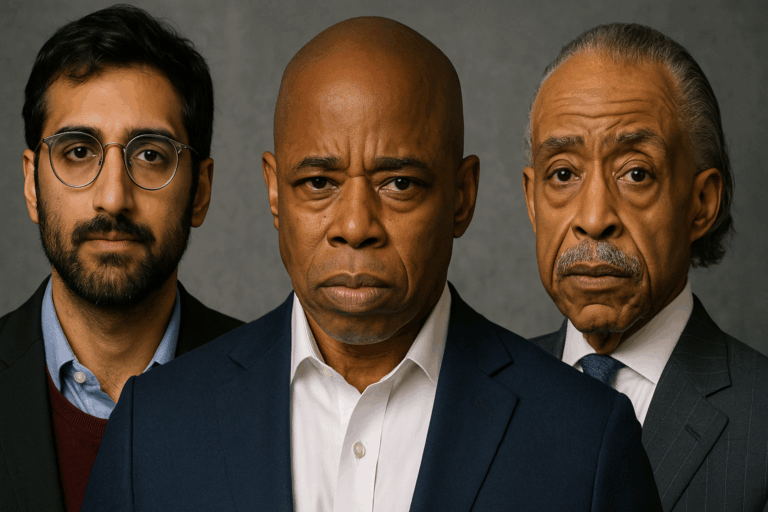
The recent Democratic mayoral primary produced a clear example: Zohran Mamdani, a candidate backed by the Democratic Socialists of America, won the nomination despite failing to win majority support in historically Black neighborhoods. The very voters most vulnerable to economic instability and crime were effectively bypassed in a system that rewarded coordinated coalitions over concentrated support.
This is not a question of personality. Mamdani may be young, energetic, and symbolic of a new political wave, but symbols do not govern—policies do. His platform, which includes a $30 minimum wage, rent freezes, and defunding police departments, may earn applause in academic circles, but its practical effects on working-class Black families, business owners, and homeowners are either unknown or clearly harmful.
RCV was sold as a way to broaden voter choice. But in practice, it has created a system where outcomes are increasingly driven by those with the most organized political machinery—not those with the most community support. Mamdani’s campaign succeeded not by winning the first-choice votes of Black voters, but by building a coalition of progressive voters across affluent and gentrified districts who were highly engaged, well-funded, and ideologically aligned. His base ranked in unison. Many in the Black community did not rank at all.
This is not empowerment. It is displacement.
The Black vote in New York, long a dominant force in Democratic politics, is being diluted not by suppression in the traditional sense, but by procedural complexity and political substitution. The language of equity is used to advance policies that undermine the very institutions—small businesses, property ownership, and policing—that provide structure and opportunity in Black neighborhoods.
What is perhaps most telling is not just who won, but who supported him. Several prominent Black leaders, including Reverend Al Sharpton, publicly endorsed Mamdani. Their support signals a deeper shift—not in ideology, but in incentives. Too many in the Black political class have begun to align themselves with donor-funded movements that speak the language of progress but produce results that are either neutral or negative for the communities they claim to serve.
This pattern is not new. Throughout history, elites have often aligned with prevailing winds to preserve their own status, even at the cost of the broader group’s advancement. Today’s progressives speak of systemic change, but the systems they are changing often involve replacing functional, if imperfect, structures with ideological experiments—at the expense of those who can least afford the consequences.
Take Mamdani’s stance on law enforcement. His description of the NYPD as “wicked and corrupt” may play well among anti-police activists, but it ignores the fact that many Black residents in high-crime areas are not demanding abolition—they are demanding competence and accountability. The elimination of police funding without a proven alternative does not make these communities safer; it simply shifts the cost of insecurity onto those with the fewest resources to respond.
The same is true of Mamdani’s economic proposals. A $30 minimum wage might sound like justice to political activists, but it operates on the false assumption that wages can be raised by law without consequences. In the real world, wages are paid out of business revenue—not good intentions. When government mandates drive labor costs beyond what small businesses can afford, the result is fewer jobs, shorter hours, and shuttered storefronts. Most Black-owned businesses in New York—barbershops, childcare centers, delis, salons, food carts—operate on thin margins. They cannot absorb a 50 to 100 percent increase in payroll costs without raising prices, cutting staff, or going under altogether. And when those businesses close, it’s not the Ivy League socialist or nonprofit staffer who loses their job—it’s the entry-level worker, the teenager seeking their first opportunity, or the family trying to keep the lights on. As
Thomas Sowell wrote, “The real minimum wage is zero—that is what people receive when they are unemployed.” Policies that price low-skilled workers out of the labor force don’t fight poverty—they expand it.
What makes Mamdani’s promise even more dishonest is the fact that the Mayor of New York City has no legal authority to change the minimum wage. That power lies entirely with the New York State Legislature. So the $30 wage proposal is not just economically reckless—it’s politically empty. Either Mamdani doesn’t understand how government works, or he does—and he’s gaslighting the public by making promises he knows he has no power to fulfill. That’s not leadership. It’s manipulation.
None of this is accidental. The political left in New York, increasingly led by white liberal activists and advocacy organizations, has effectively hijacked the Democratic Party. Candidates like Mamdani are not anomalies—they are the outcome of a strategic shift away from traditional, neighborhood-based politics toward ideologically driven movements financed by donors who are culturally progressive but economically insulated.
These groups speak often of the “working class,” but their version of the working class does not include the barber with a storefront lease, the grandmother trying to hold on to her home amid rising property taxes, or the young Black man looking for stability in a trade. Their policies are designed for theorists, not for families.
To make matters worse, Black political leaders who endorse such candidates are not planting seeds of Black empowerment—they are reinforcing a structure that treats Black voters as a means to someone else’s end. Influence is being traded for visibility. Endorsements are being given in exchange for relevance. And the results speak for themselves: lower homeownership, fewer business opportunities, and declining neighborhood security.
This is not about left or right. It is about logic and results.
What has been the outcome of progressive dominance in New York City politics? Are Black families better off today than they were five years ago? Are our schools improving? Is crime going down? Is capital more accessible? If the answer to those questions is no, then the logical conclusion is that the current political direction is failing—not rhetorically, but measurably.
Political power is not defined by who gets to speak on TV. It is defined by who gets results. And right now, the policies being championed under the banner of justice are producing outcomes that leave Black communities weaker, not stronger.
It is time for a political realignment—one grounded not in slogans but in structure. We need leadership that prioritizes ownership over programs, accountability over popularity, and long-term prosperity over short-term applause.
Until that happens, Ranked Choice Voting and the progressive coalitions that exploit it will continue to sideline the very communities they claim to uplift. And Black voters will continue to be used for legitimacy rather than empowered for leadership.
The only way to change that is to stop judging candidates by their identities or affiliations—and start judging them by their outcomes.
Are you ready to break the cycle of emotional loyalty and political disappointment?
Then Emotional Politics — Logical Failure is the book you need.
In this bold and unfiltered work, Damon K. Jones delivers the hard truths many are afraid to say out loud: Black America has been loyal to a system that has failed to deliver. We’ve mastered symbolism but forfeited strategy. We show up to vote, but not to fund. We speak out, but rarely build. And the result? Speeches instead of solutions. Visibility instead of victory.
This book is not about left or right. It’s about logic over emotion. Power over performance. It’s a call to wake up, re-strategize, and use our political currency with purpose.
If you’re tired of being used, overlooked, and sold out—this book is your blueprint for change. Your voice is powerful. Your vote is valuable. But your money, your mindset, and your political clarity are what will make the difference.
Read the book. Share the message. Challenge the tradition. And let’s finally start getting what we pay for.
Exploring Independence Day through the Lens of Courage & Liberation
The Fourth of July, celebrated as Independence Day in the United States, is a day marked by fireworks, parades, and festivities. This national holiday commemorates the adoption of the Declaration of Independence on July 4, 1776, a pivotal moment when the thirteen American colonies declared their separation from British rule. Yet, while the Declaration proclaimed the ideals of liberty and equality, the path toward achieving those ideals has been complex and paved with the sacrifices of countless individuals. Among these figures is Harriet Tubman, whose profound contributions to the liberation of enslaved people resonate deeply with the spirit of independence.
Independence Day: A Celebration of Freedom
The Fourth of July serves as a reminder of the founding principles of the United States—life, liberty, and the pursuit of happiness. It is a time to reflect on the nation’s history, its struggles for self-determination, and the ongoing journey toward a more perfect union. The ideals enshrined in the Declaration of Independence have been the foundation for movements for justice and equality throughout American history, extending far beyond the colonial era.
Yet, when the Declaration was signed, these principles were not universally applied. Slavery remained a pervasive institution, and millions of African Americans were denied their fundamental rights. For many, the Fourth of July represented a paradox—a celebration of freedom in a land where freedom was not equally granted.
Harriet Tubman: A Symbol of True Independence
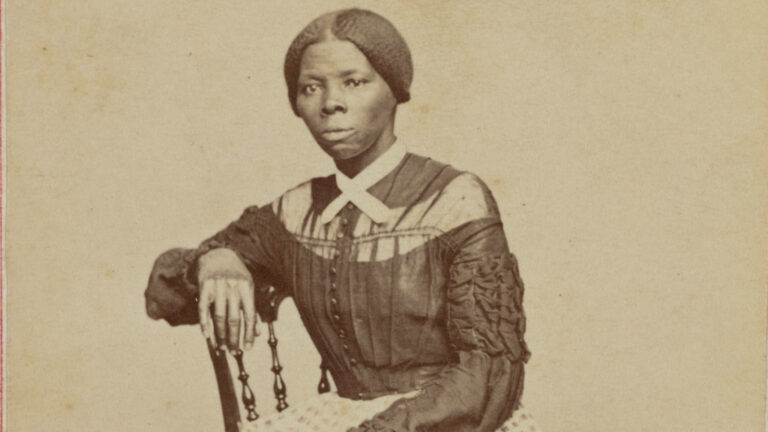
Harriet Tubman, born into slavery in the early 1820s, is one of the most iconic figures in American history. Her life exemplifies the true meaning of independence—a relentless pursuit of freedom not only for herself but for others. Tubman escaped slavery in 1849, embarking on a perilous journey to the North. However, her escape was not the end of her mission; it was the beginning. She became a conductor on the Underground Railroad, a network of secret routes and safe houses that helped enslaved individuals find freedom.
Tubman risked her life repeatedly, returning to the South to guide others to safety. Over the course of her efforts, she is believed to have led more than 70 people to freedom, earning the nickname “Moses” for her role in delivering her people from bondage. Her courage and determination are a testament to the values celebrated on the Fourth of July—liberty, resilience, and the unwavering pursuit of justice.
The Intersection of Independence and Liberation
The story of Harriet Tubman enriches the narrative of the Fourth of July by highlighting the multifaceted nature of freedom. While Independence Day traditionally marks the nation’s liberation from British rule, Tubman’s life reminds us that the struggle for independence is ongoing and often personal. Her contributions extend beyond the abolition of slavery; they also reflect the broader fight for equality and human dignity.
During the Civil War, Tubman continued her fight for freedom by serving as a spy, nurse, and scout for the Union Army. Her intelligence-gathering missions were instrumental in weakening Confederate forces and advancing the cause of emancipation. In 1863, she became the first woman to lead an armed expedition during the Combahee River Raid, which liberated more than 700 enslaved people in South Carolina. Her actions not only affirmed her commitment to freedom but also underscored the interconnectedness of personal courage and national ideals.
Reimagining the Fourth of July
As we celebrate the Fourth of July, it is essential to recognize the contributions of individuals like Harriet Tubman, who expanded the meaning of independence. Her life encourages us to reflect on the progress made and the work that remains in achieving true freedom for all. The fireworks and festivities of Independence Day should not only commemorate the past but also inspire a commitment to justice and equality in the present and future.
In honoring Harriet Tubman’s legacy, we at Women’s Leadership Institute (WLI) are reminded that Independence Day is not only a historical event but also a continuous effort that requires courage, sacrifice, and unwavering determination. Her story calls us to celebrate the Fourth of July not just as a day of national pride, but as an opportunity to renew our dedication to the ideals of liberty and justice for all. We at WLI are committed to strengthening opportunities for women and girls through a variety of impactful programs. WLI also collaborates with policymakers to advocate for systemic changes that break down barriers to equality and create a more inclusive future.
By continuing these efforts and expanding our reach, WLI aims to ensure that independence and opportunity are not just ideals but realities for every woman and girl. Together, through collective action and unwavering dedication, we aim to shape a brighter and more equitable world for the generations to come.
The Women’s Leadership Institute is an organization established to advance and improve the personal, economic, and professional status of women and girls. Activities and programs are designed to promote talented women and girls seeking leadership, advancement, and opportunities for skills enrichment. We connect women and girls across industries and demographics. Visit their webpage or contact us at (914) 664-0430.
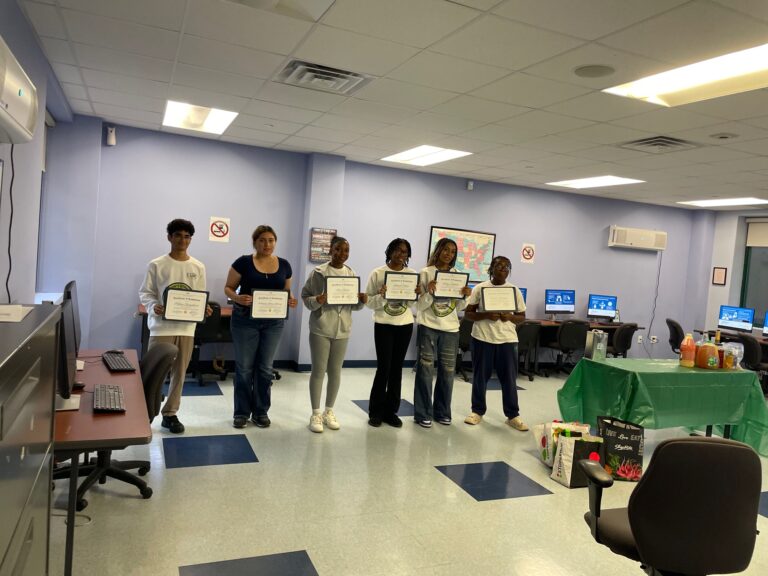
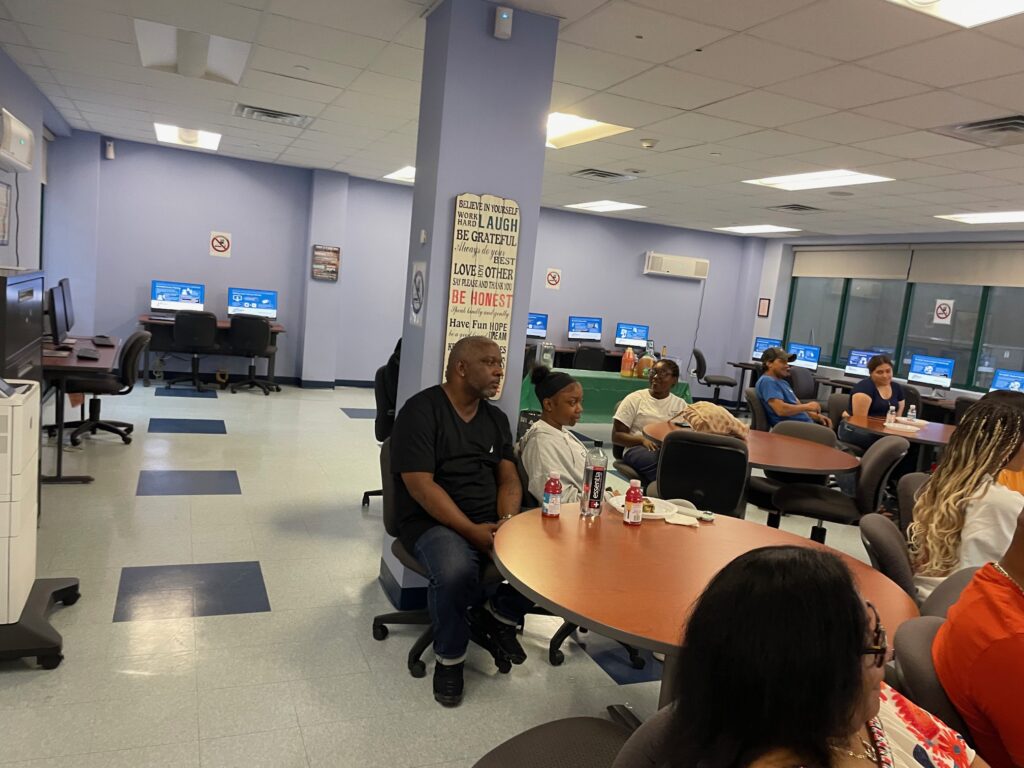
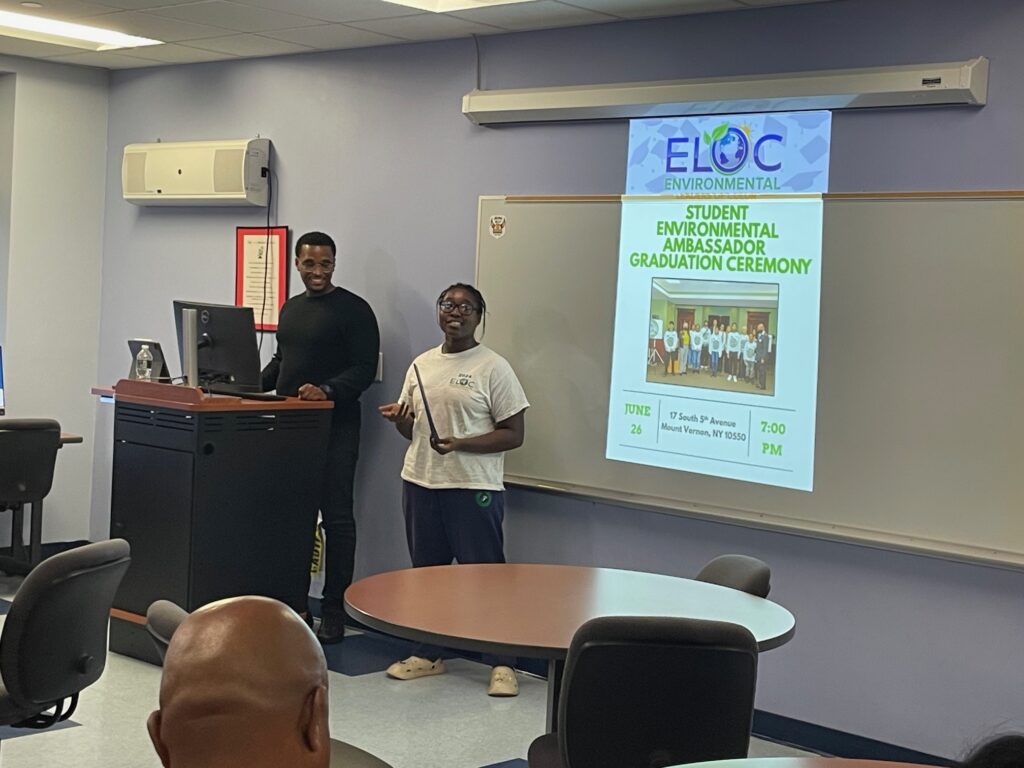
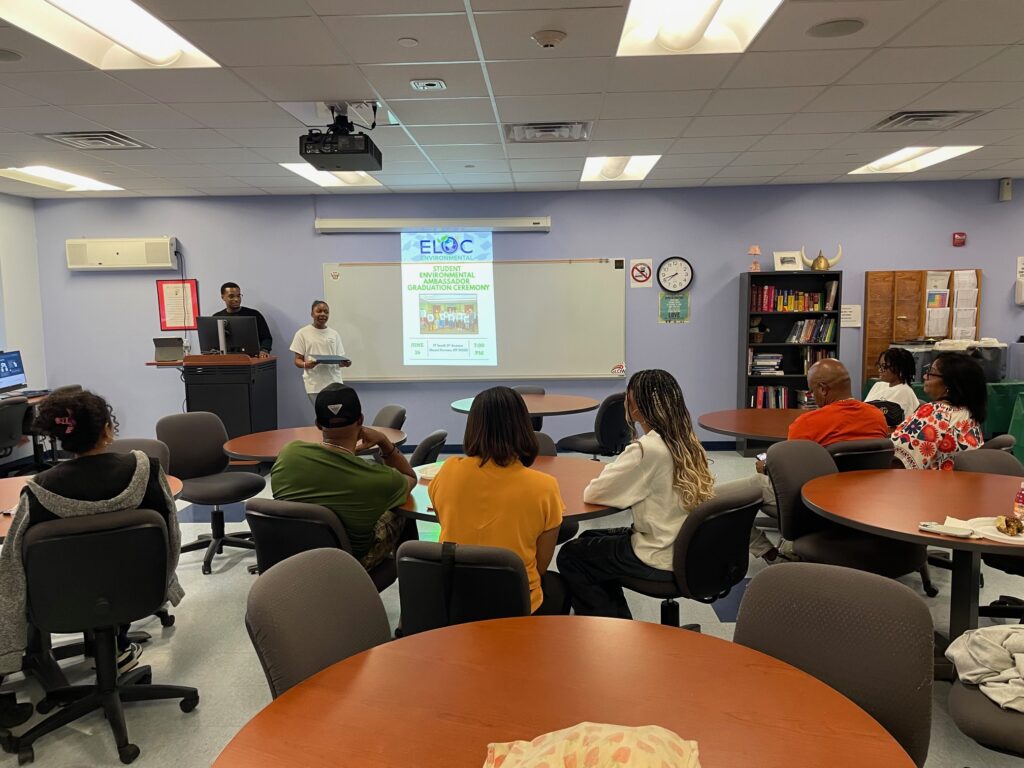
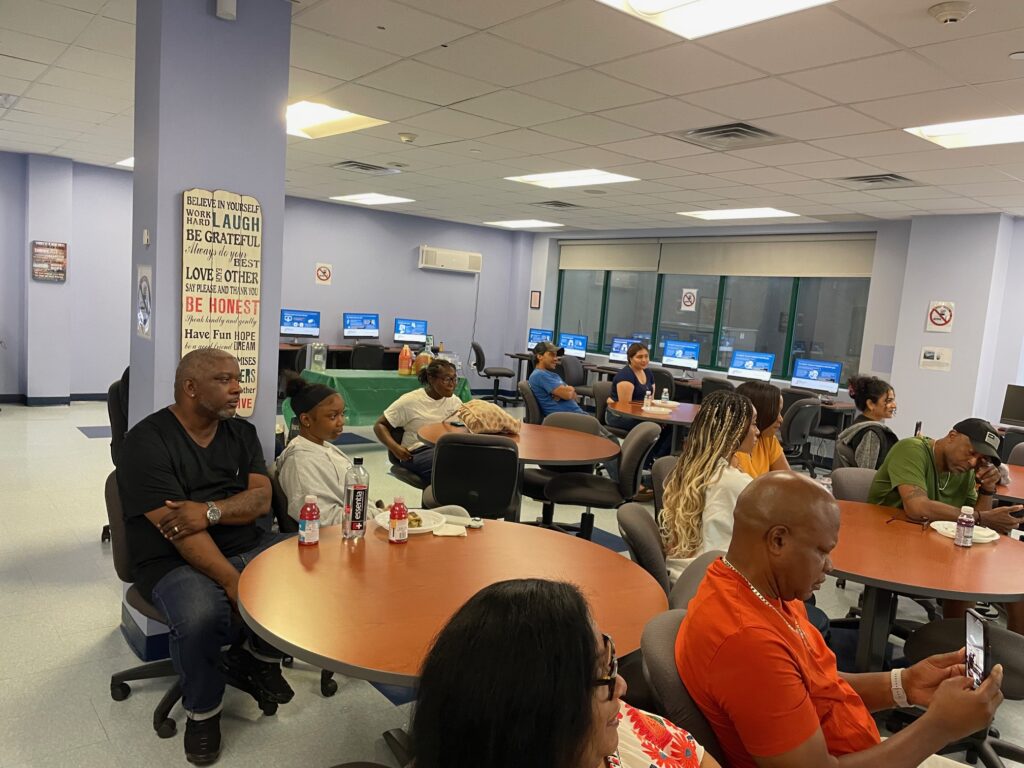
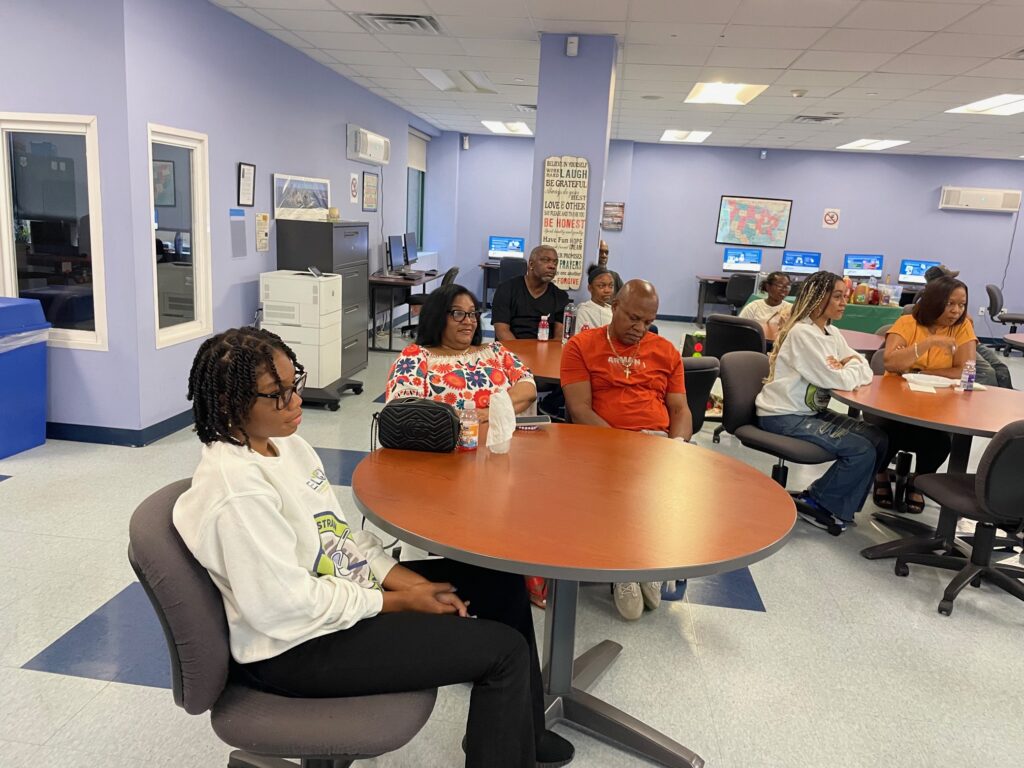
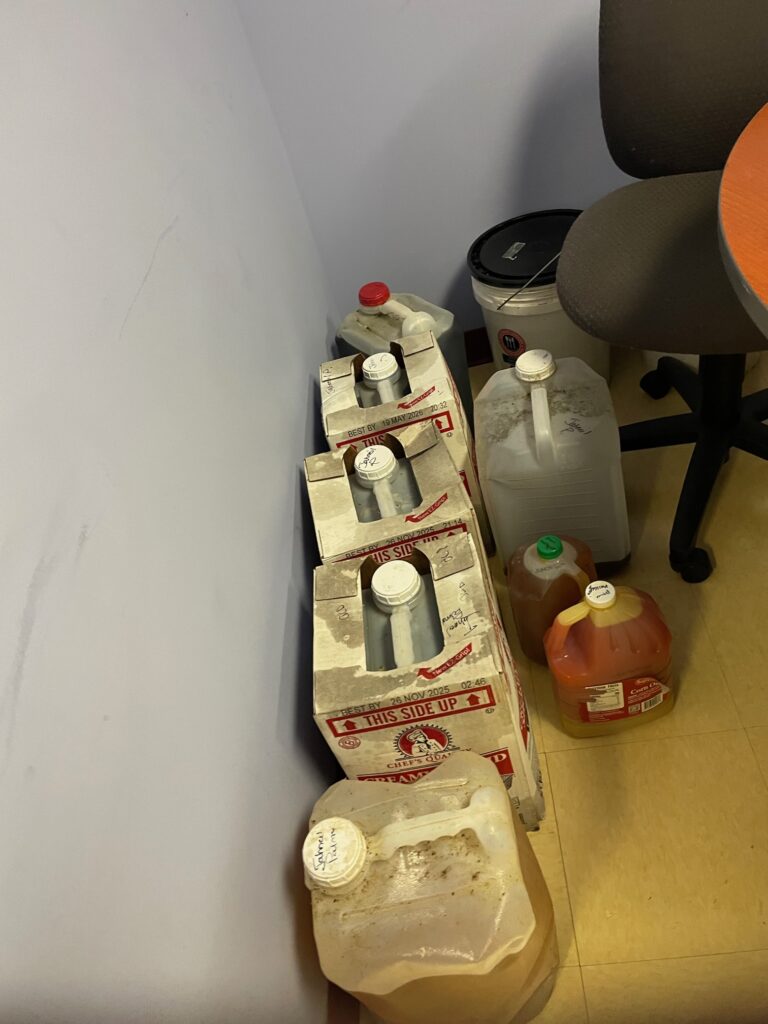
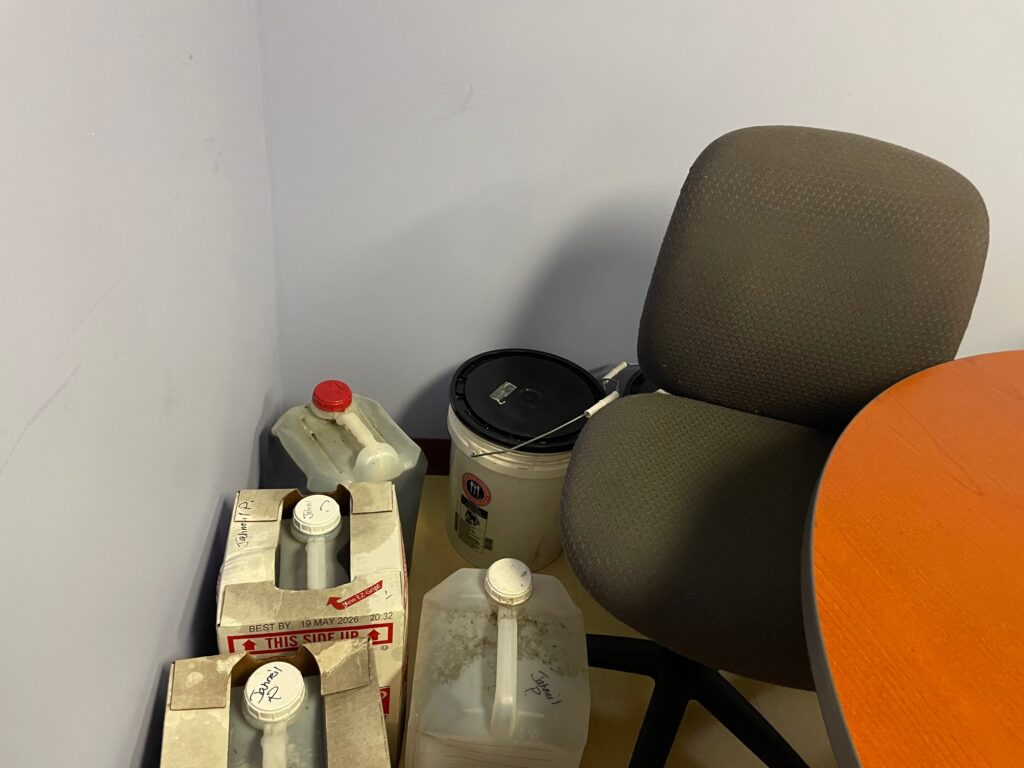
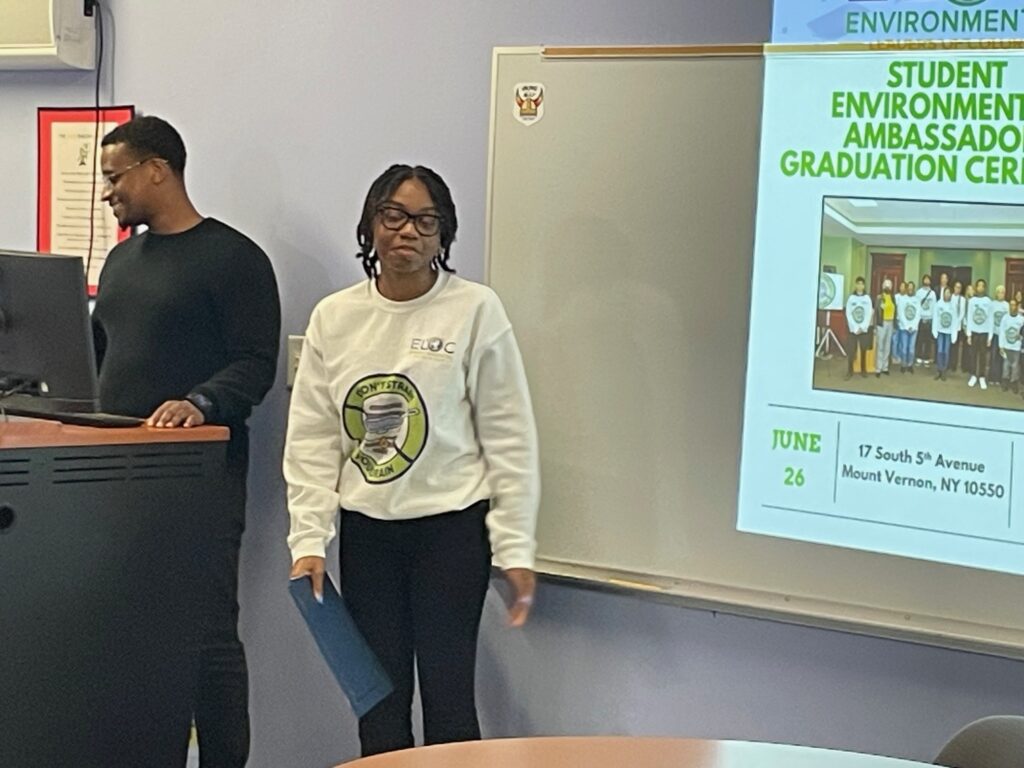
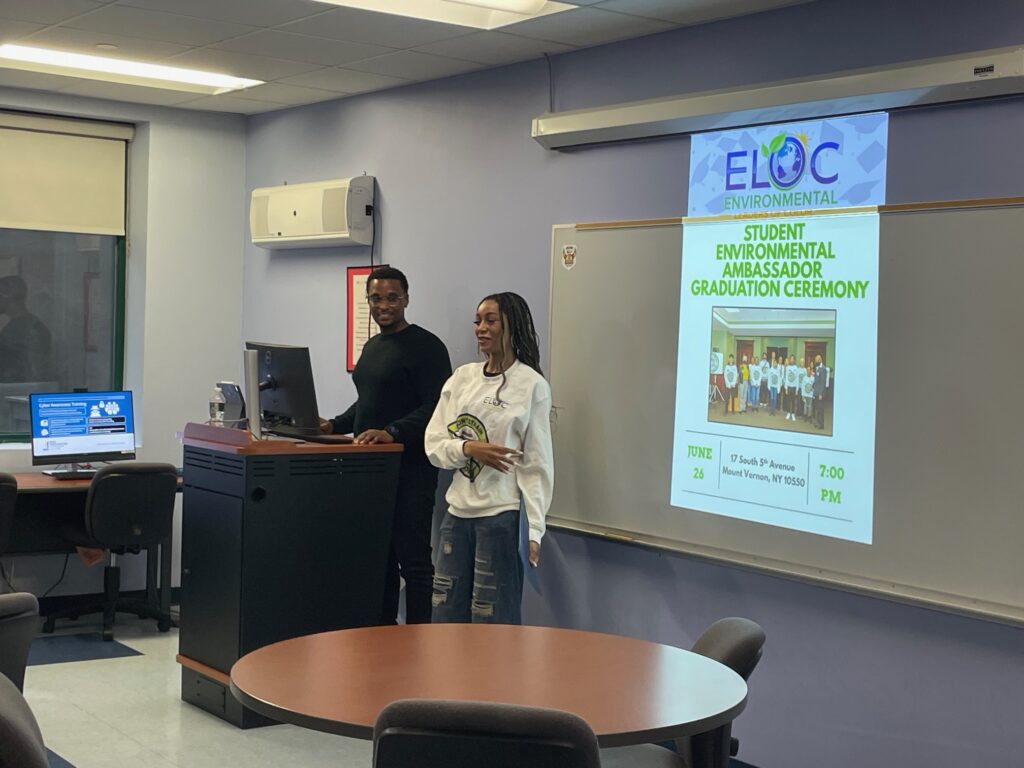
On Thursday, June 26, 2025, the Environmental Leaders of Color (ELOC) celebrated the graduation of student participants from its Student Environmental Ambassador Program, hosted at the Westchester Community College annex in Mount Vernon. This event marked a significant milestone in the innovative “Don’t Strain Your Drain” campaign—a youth-led initiative aimed at reducing water pollution and sewer issues through the proper disposal of used cooking oil.
The program originated in 2023 through ELOC’sStudent Summer Energy and Environmental Program for Teens (SSEPT), when a team representing Mount Vernon’s YCOP proposed the “Don’t Strain Your Drain” concept. Since then, the ELOC Student Environmental Ambassador Program has empowered students from across Mount Vernon, Port Chester, and New Rochelle to become advocates for environmental action in their communities.
In recognition of their efforts:
Students presented to the New York State Department of Environmental Conservation (NYSDEC) in January 2025, supported by NYS Assemblyman Gary Pretlow.
The team received a Certificate of Appreciation from the Westchester County Board of Legislators in February.
They won Third Prize at the Bedford 2030 Greenlight Award in April.
In May, they were awarded the Westchester County ECO Award by the Environmental Facilities Department.
Through local outreach and two collection sites in Mount Vernon, the students helped divert 200 gallons—nearly 1,400 pounds—of used cooking oil from businesses and residents, promoting cleaner water systems and environmental sustainability.
During the graduation ceremony, monetary awards were announced for students who collected the most significant amounts of oil in their communities, honoring their hands-on contributions to environmental protection.
“We are incredibly proud of what these young leaders have achieved,” said Marvin Church, Associate Program Director at ELOC. “This initiative shows how education, advocacy, and local action can come together to make a real environmental impact.”
ELOC also announced the opening of its new office at the Westchester Community College annex in Mount Vernon, made possible through the generous support of the college administration and the Westchester County Legislators.
For more information about the Don’t Strain Your Drain initiative or how to get involved, visit www.eloc.earth or contact info@eloc.earth.
In the modern liberal playbook, one lie gets recycled more than any other: “You’re poor because someone else is rich.”It’s a convenient explanation — emotionally satisfying, politically useful, and economically false. Because the truth is, we are not poor — we are broke.
Poverty is a condition of permanent lack. Being broke is a result of habits, decisions, and mindset — all of which can be changed. But instead of offering the tools to change them, the dominant message in Black communities has become one of resentment, blame, and learned helplessness.
In this upside-down worldview, success is suspect, wealth is oppression, and billionaires are the boogeyman. Our children are taught to hate wealth before they ever learn how to create it. Yet at the same time, they are taught to admire entertainers and athletes for their wealth — some of the highest-paid employees in the world — as if wealth is only acceptable when it comes with a microphone or a ball. They’re told to “fight inequality,” but never taught how interest compounds. They’re trained to protest against the 1%, but never taught how to budget, build credit, or own property. In many urban schools, capitalism is portrayed as the enemy — while dependency is framed as justice.
But if we’re so poor, why are Black Americans spending more than $1.5 trillion every year, mostly on consumer goods and status symbols? That level of spending exceeds the entire economies of countries like South Korea, Australia, Spain, and Mexico. You cannot call a group “oppressed” while they outspend entire nations. The problem is not poverty — the problem is how we use our power.
That money doesn’t disappear. It builds wealth — just not for us. It goes into luxury brands, fast food chains, car dealerships, and tech platforms we don’t own. This isn’t wealth extraction — it’s voluntary consumption. No one forces us to spend on liabilities instead of assets. That’s a mindset problem, not a systemic trap. We have the power to transform our communities — but instead, we’re making everyone else rich while owning nothing.
And while we spend, we’re taught to wait — for government handouts, student loan forgiveness, housing vouchers, and stimulus checks. But government handouts do not make you independent. They make you dependent — and that’s the point. Dependency is not a flaw in the system. It is the system. When you rely on the state to survive, you stop demanding opportunity. You stop building. You start waiting. And a people who are waiting are never a threat to the people in power.
Take Rep. Alexandria Ocasio-Cortez for example. She built a national profile — and raised over $10 million — by making the rich the enemy. Her message was clear: tax the wealthy, dismantle capitalism, fight inequality. And yet, the district she represents remains one of the poorest in New York City, with poverty rates in parts of the Bronx topping 25%, rising crime, deteriorating housing, and vanishing economic opportunity. While she attacks private ownership in her speeches, she’s quietly advancing her own brand, her own influence, and likely her own financial future, just like many who came before her. That’s not change. That’s business as usual, dressed in radical rhetoric.
The same politicians who preach about inequality are quietly building wealth through real estate, investments, and generational planning, fly in private jets , while pushing our children to chase identity politics, protest movements, and symbolic gestures. They teach their kids to own. They teach ours to obey.
Wealth is not built through emotion. It is built through ownership, savings, discipline, and sacrifice. These are not racial principles — they are universal ones. But they require a shift in mindset. Until we stop vilifying the rich and start studying how they operate, until we stop seeing government as a savior and start seeing ourselves as responsible agents of our own future, we will remain loyal voters, loud consumers — and broke citizens.
The numbers prove we are not powerless. But if we don’t change how we think, we will continue to be the most influential culture with the weakest economic foundation. And no amount of protest, hashtags, or slogans will change that.
Because if you can keep a people emotionally triggered, financially ignorant, and dependent on handouts — you never have to worry about them becoming truly free. And the longer we fall for that trap, the more we’ll stay loud, loyal, and broke — marching in circles while the wealth we could have built slips into someone else’s hands.
On June 27, 2025, a rare event occurred in global diplomacy: Rwanda and the Democratic Republic of the Congo, two nations long embroiled in a cycle of war, betrayal, and foreign exploitation, signed a peace agreement. Brokered in Washington, D.C., and attended by U.S. Secretary of State Marco Rubio and former President Donald Trump, the deal should have flooded headlines. Instead, it landed with a whisper.
Why is that?
After all, we’re talking about a conflict that has cost over six million lives. A region destabilized for decades. One of the most mineral-rich zones in the world—home to cobalt, coltan, copper, and lithium—finally witnessing a structured attempt at troop withdrawal, disarmament, and reintegration. This is not a footnote. It’s front-page news. Or at least, it should be.
But mainstream media coverage has chosen caution over curiosity. Skepticism over strategy. Rightfully so, in part—because the deal excludes the M23 rebel group, avoids discussions on justice and reparations, and hinges on fragile political trust. These are not minor flaws. Yet, when the only stories told are those of what could go wrong, we deprive the world—and especially the Congolese people—of the full story.
The story of hope. The story of possibility. The story of what this moment could become.
Let’s not pretend the peace deal is perfect. It isn’t. The exclusion of M23 is a glaring omission. The silence on reparations is deafening. And the long shadow of past broken agreements looms large. But this agreement is different for one key reason: it introduces economic and political incentives tied directly to stability.
For the first time, access to Congo’s critical minerals is not just a trigger for warlords and smugglers—it’s a bargaining chip in a rules-based framework. The joint security mechanism, troop withdrawal deadlines, and disarmament plans offer structure where chaos once reigned. That matters.
Yet, legacy media institutions are not prepared to embrace this as progress. They’ve grown more comfortable covering Congo as a humanitarian crisis, not as a site of African agency or African diplomacy. The framing remains extractive: what can the West get out of this? How might China respond? Will it help U.S. battery production?
What about the Congolese child who may no longer be recruited by armed militias?
What about the families in Goma and Bukavu who might finally return home?
What about African-led peace?
The truth is, narratives of African success—especially when negotiated without UN troops, Western sanctions, or regime change—don’t fit the script. The Congo-Rwanda deal wasn’t orchestrated from Geneva or Brussels. It was birthed through regional pressure, national exhaustion, and yes, Western strategic interest—but not Western control.
Maybe that’s why it’s being downplayed.
Here’s what the media won’t say: peace, even imperfect peace, is power. And this deal, flawed as it may be, is a chance for the DRC and Rwanda to reset decades of animosity and foreign manipulation. If successful, it could shift how conflicts are resolved in Africa—by Africans, with accountability, economics, and sovereignty at the center.
But only if we stop treating African peace as unnewsworthy. Only if we dare to report hope, not just horror.
If we wait for the perfect peace deal before we acknowledge progress, we may never acknowledge progress at all.
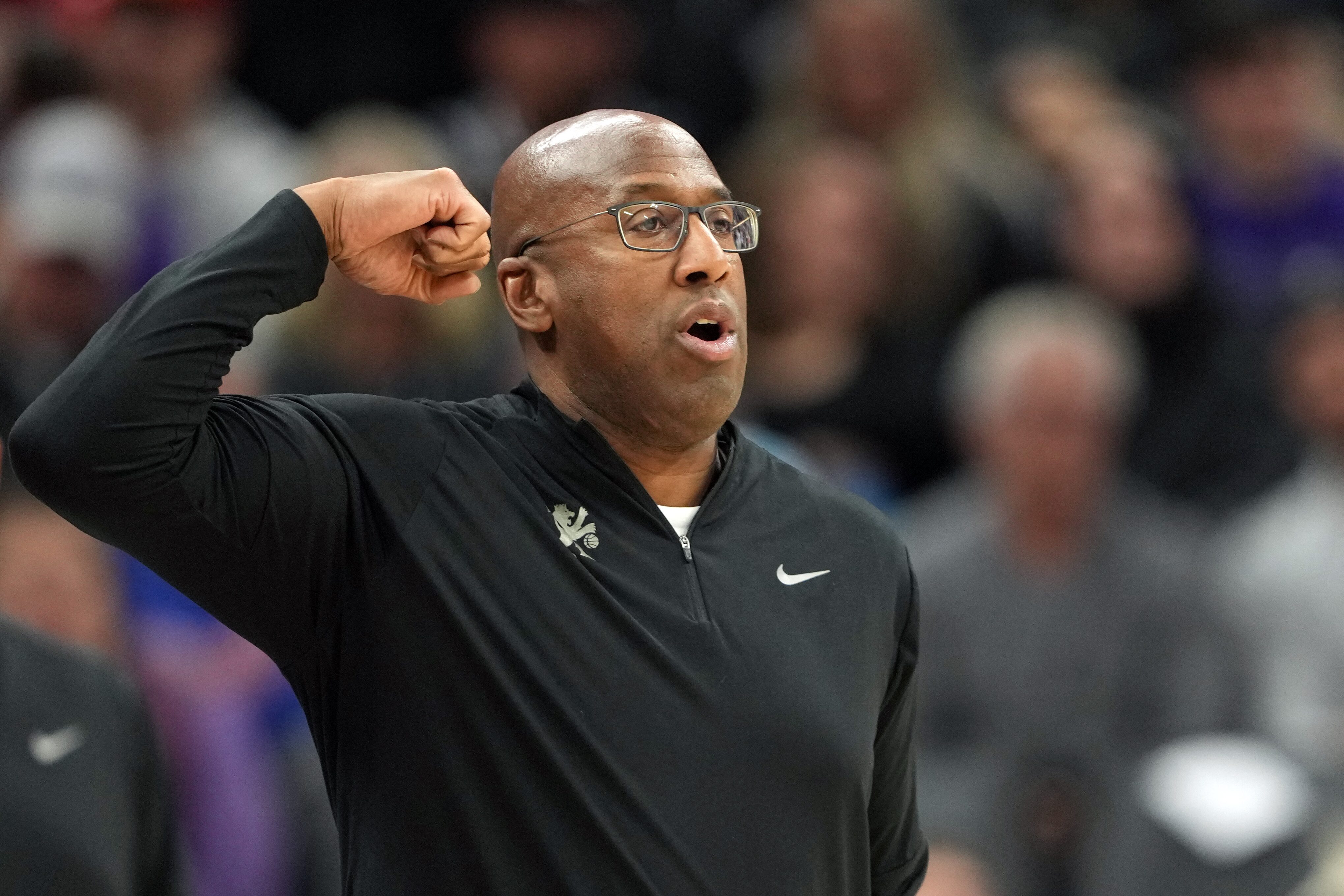
On Wednesday, Mike Brown was appointed the 32nd head coach of the New York Knicks, ushering in a new era of high expectations and metric tons of pressure to win right away. In the last week, Brown became the front-runner. Following a meeting with James Dolan, he was officially designated as Tom Thibodeau’s replacement, capping a month-long search. The 55-year-old has 758 regular-season games under his belt, a .599 winning percentage, and two Coach of the Year awards.
Mike Brown is one of just 24 coaches in NBA history to have won more than 450 games during the regular season and more than 50 during the playoffs. Sacramento finished with a losing record in each of the 16 seasons prior to the Kings hiring Mike Brown, the 2023 NBA Coach of the Year winner. In 2022–2023, the Sacramento Kings finished 48–34. They placed third in the Western Conference and first in the Pacific Division. They were defeated 4–3 by the Golden State Warriors in the Western Conference First Round.
First, let me say this, why I still have mixed emotions on this decision: with the Knicks choosing to let Thibs go after coming up two games short from making the NBA Finals, one thing was for certain: no matter who they decided to go with the next head coach will be expected to maximize roster talent with a big emphasis on player development, which Thibs was criticized for not doing. More than anything, Brown brings experience to almost every NBA circumstance.
He worked with most of the all-time greats of a generation, serving as either the head or assistant coach on rosters with Tim Duncan, Stephen Curry, LeBron James, Kobe Bryant, and Kevin Durant. He has won four championships as an assistant coach. Brown bloomed from the Gregg Popovich tree in San Antonio, winning titles as an assistant, one with the Spurs, and then under another Pop disciple, Steve Kerr, winning three in Golden State. Brown has been named NBA Coach of the Year twice, in 2009 and 2023. He has led teams to the NBA Finals as a head coach, notably with the Cleveland Cavaliers in 2007, but ultimately did not win the championship.
With many fans with mixed feelings about the firing of Thibs, let’s look at what Mike Brown brings to the Knicks. In addition to his reputation for excellent communication and teamwork with players and the front office, Mike Brown offers the Knicks a combination of defensive savvy and offensive inventiveness. He’s known for implementing high-tempo, handoff-heavy offenses with an emphasis on pace and space, potentially shifting the Knicks away from their reliance on one-on-one scoring.
Like Thibs, Brown is a strong defensive coach, but his Sacramento Kings teams also showcased innovative offensive strategies. In Sacramento, Brown implemented a pace-and-space offense, using De’Aaron Fox’s speed and Domantas Sabonis’s playmaking to create mismatches and exploit defensive weaknesses. Brown’s Sacramento Kings teams were known for their high-powered offense and ball movement, finishing fourth and second in passes per game during his tenure. The Knicks, in contrast, ranked 18th in passes per game last season. I’m eager to see how Brown will increase ball movement in New York, potentially leading to more interplay and two-man game opportunities for Brunson and Towns.
With a talented center serving as a hub for playmaking and wing players attacking off screens, his offenses frequently take a handoff-heavy strategy. He also places a strong emphasis on quicker average possession times and transition play. This new offensive strategy could help the Knicks, who were one of the slowest teams in terms of offensive pace.
What I believe was one of the deciding factors of the Knicks going with Brown as their new head coach, Brown is known for utilizing his bench more effectively than Thibodeau, which could lead to a deeper rotation for the Knicks. Something many Knicks fans and the minute police have long complained about under Thibs’ tenure, not going deeper enough, and developing the talent on the bench. Brown has a history of getting the most out of his players, including developing stars like LeBron James early in his career.
Another important distinction to point out is the fact that Brown has shown an ability to adapt his coaching style to different players and situations, which could be crucial for the Knicks as they navigate different matchups and playoff scenarios. Brown also has a strong connection with William “Worldwide Wes” Wesley, a key figure in the Knicks’ front office, which may have influenced the decision to hire him.
Compared to Thibs, Brown is expected to bring more flexibility. This includes diversifying the offense and experimenting with lineups and game plans. This could help the Knicks avoid predictability and better adapt to playoff matchups. Brown’s experience in high-pressure situations and ability to manage star talent (having coached LeBron James and worked with the Warriors’ core) will be valuable in New York.
In conclusion, Mike Brown is expected to bring a fresh offensive approach, strong leadership, and valuable experience to the Knicks, with the aim of helping them take the next step towards championship contention. Mike Brown brings several key elements to the Knicks, but as I start, this job comes with high expectations and metric tons of pressure to win right away.
One thing is for sure with selecting Brown as their HC on Wednesday: adding a frontcourt Frenchman to the rotation. Guerschon Yabusele, 29, who revived his career in the 2024 Olympics for France and then last season with the Sixers, agreed to a two-year deal Tuesday, and Jordan Clarkson, the tattooed veteran guard, intending to sign with the Knicks as a low-cost scoring option off the bench, a late entry into the market after agreeing Monday to a buyout with the Jazz, Rose and Worldwide Wes are not done!
So, is Brown the coach who will take the Knicks to the next level? Only time will tell, but I believe that Leon Rose, Worldwide Wes, and the rest of the front office have shown us they know what they are doing. So while I remain cautiously optimistic until proven otherwise, it’s ‘In Rose We Trust,’ for me!
But Brown will have a very brief, if any, honeymoon as fans will be calling for his head if they don’t see immediate changes, which, while being unrealistic, is just how it goes in Gotham. New York is a pressure cooker where you can be loved and hated on the same day, and you are only as good as the last game, the last play, the last coaching decision! For Brown, it’s NBA Finals or bust! If Brown doesn’t take them there, the front office is going to catch the heat on this one, too.
In the wake of Sean “Diddy” Combs’ federal conviction for transporting women for prostitution, a familiar script is unfolding. Some will cry conspiracy. Others will attempt to separate the artist from the man, the music from the misconduct. But before the noise settles, we must face a much harder question: What does this say about the culture that made him powerful in the first place?
Combs was charged with racketeering conspiracy, sex trafficking, and violating the Mann Act by transporting women across state lines for purposes of prostitution. While the jury acquitted him on the more severe racketeering and trafficking charges, he was found guilty on two felony counts of transporting women for prostitution—one of whom was longtime partner and singer Cassie Ventura. These are not minor infractions. Each count carries up to 10 years in federal prison, meaning Combs could face a maximum of 20 years. Federal sentencing guidelines, however, suggest a likely sentence of 4 to 5 years, with prosecutors reportedly preparing to recommend around 51 months. He has been denied bail and remains in federal custody awaiting sentencing. And while celebrity gossip shows debate whether he’ll serve time or negotiate down, the real story is this: A man who helped shape modern hip-hop has now been legally convicted of exploiting the very women his music claimed to elevate.
Let’s be clear. Diddy didn’t just succeed in spite of promoting sex, drugs, and violence—he succeeded because of it. He built an empire on the back of imagery that turned dysfunction into glamor, women into objects, and criminality into credibility. His brand—like much of mainstream hip-hop—taught an entire generation that morality is negotiable if the money’s right.
That’s not a condemnation of the music. It’s a critique of the mindset.
We are so culturally numb to dysfunction that we now mock Cassie—who courageously came forward with allegations of abuse—as a willing participant rather than a victim. In a society addicted to fame, money, and power, too many assume she signed up for the trauma because it came wrapped in luxury. But this is the very trap our culture manufactures: the illusion that proximity to wealth excuses the cost of abuse.
What people have forgotten—or perhaps never learned—is what abuse actually looks like. Abuse is not just bruises or hospital visits. It’s control. It’s isolation. It’s manipulation disguised as love. It’s being made to feel worthless unless you’re useful. It’s being conditioned to tolerate emotional volatility, physical threats, or sexual coercion because the abuser pays the bills or promises the spotlight.
Mental abuse rewires how a person sees themselves. Physical abuse doesn’t always leave marks, but it always leaves fear. Psychological abuse traps victims in cycles of self-blame, confusion, and learned helplessness—often making them defend their abuser publicly out of survival or shame.
When wealth is involved, the abuse becomes harder to recognize—and easier for society to dismiss. We’ve become so accustomed to dysfunction being glamorized in our music, our entertainment, and even our social media feeds, that we now treat victims like they’re complicit if their suffering happened behind designer curtains or in luxury hotels.
That’s not logic. That’s moral rot.
Until we as a culture relearn how to identify abuse in all its forms—and stop confusing silence with consent—we will continue to re-victimize the very people we claim to protect. The Cassie case didn’t just expose one man’s pattern of control. It exposed our collective failure to draw the line between admiration and accountability.
And what many people fail to realize—and what the mainstream media won’t say—is that the real defendant in this case wasn’t just Sean Combs. The culture itself was on trial. A culture that glorifies violence, normalizes sexual exploitation, and hides behind record deals and endorsement contracts. A culture where female artists sing lyrics written by men, promoting degradation under the guise of empowerment, while our mothers, sisters, and daughters shake their behinds on social media, unknowingly echoing messages designed to exploit their ignorance—not liberate it.
It’s a culture that has convinced young men that gang-banging, pimping, and drug dealing are not only normal—but admirable. It trains them to imitate prison culture, not escape it. It celebrates street cred over self-control, and flaunts dysfunction as authenticity. Meanwhile, the same community that once leaned on faith now leans into false freedom. We’d rather post Sunday brunch selfies than seek Sunday morning sermons. We’ve replaced spiritual discipline with surface-level distractions—and we wonder why the outcomes look the way they do.
This wasn’t just about Diddy. This was about an entire ecosystem that got rich off of selling chaos to a community that didn’t own the master recordings.
For decades, we’ve confused artistic expression with cultural leadership. We’ve allowed lyrics to replace logic, lifestyle marketing to replace moral accountability, and worst of all, we’ve normalized exploitation in our pursuit of “representation.” But representation without responsibility is not progress. It’s camouflage.
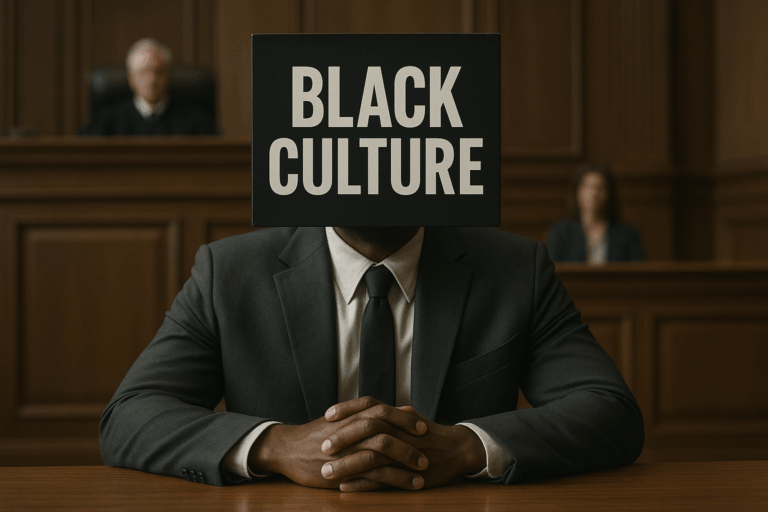
The silence of other entertainers, influencers, and so-called moguls in the wake of the Diddy verdict speaks volumes. These are individuals who built careers alongside him, profited from the same system, and shaped the image of what’s now sold as “Black culture.” Yet when the mask slipped and the ugliness was exposed, they chose silence over accountability. That silence isn’t just cowardice — it’s evidence of moral decay. The influence of a broken culture—driven by those who call the shots—has stripped away our foundation of faith, spirituality, and moral responsibility. In its place, we’ve elevated money, clout, and fame as the highest forms of value. We no longer measure greatness by integrity or service, but by followers, net worth, and shock value. And in doing so, we’ve allowed a manufactured culture to replace a spiritual one, and now we’re reaping the consequences in silence
The Diddy verdict didn’t emerge from a vacuum. It came after years of lawsuits, testimonies, and whispered stories that were too inconvenient to take seriously. The question isn’t why it happened. The question is: Why were we okay with it for so long?
In a culture where “keeping it real” often meant keeping it reckless, we stopped asking the most basic questions:
What are the long-term outcomes of glorifying a lifestyle rooted in chaos?
Who benefits when dysfunction is sold as authenticity?
And how many victims are sacrificed in the name of entertainment?
This isn’t about canceling rap. This is about confronting the economic, psychological, and cultural costs of turning trauma into commerce. It’s about what Thomas Sowell often reminded us: Every policy, every trend, every choice must be measured not by intent—but by results.
And the results are in.
An industry that once claimed to speak for the streets now stands accused of preying on them. A mogul who was hailed as a business genius is now facing the consequences of choices shielded by wealth and celebrity. And a community that once cheered his rise must now reckon with what it ignored to protect his image.
If there’s a silver lining, it’s this: The mirror is up. And what we do next will tell us more about our future than any verdict ever could.
Will we continue to defend dysfunction in the name of culture? Or will we finally draw a line between what’s marketable—and what’s morally bankrupt?
Because the truth is, it wasn’t just Diddy on trial. It was our cultural compass. And if we don’t reset it now, we may never find true north again.
“This Fourth of July is yours, not mine
You may rejoice, I must mourn…”
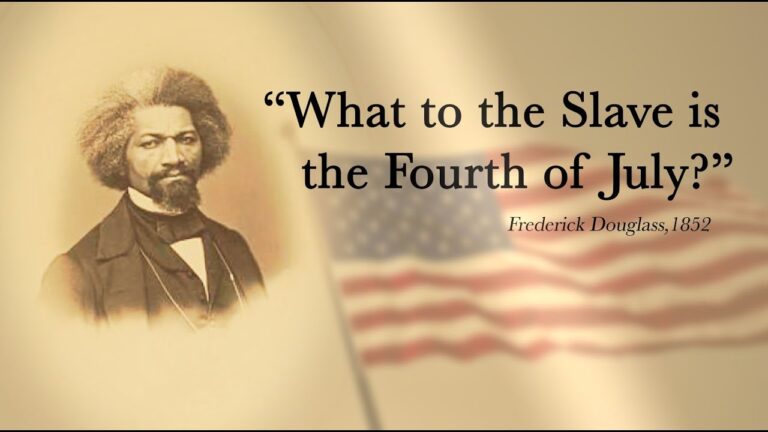
Frederick Douglass’s stirring and well-known speech, “What to the Slave is the Fourth of July?” given on July 5, 1852, is the reason he is so famously linked to the Fourth of July. Douglass used Independence Day to draw attention to the glaring contrast between the American ideals of liberty and the reality of slavery in a speech to the Rochester Ladies’ Anti-Slavery Society.
Douglass’s eloquence and personal experience as a former slave made his speeches incredibly influential in raising awareness about the horrors of slavery and garnering support for the abolitionist movement. His bold critique challenged the prevailing beliefs of white Americans about race and slavery, forcing them to confront the inconsistencies in their own values. What to the Slave Is the Fourth of July?” has served as an inspiration for generations of activists and writers fighting for civil rights and racial justice, including in contemporary movements like Black Lives Matter.
In a time when there are efforts to whitewash American History and erase our history, Black Westchester celebrates Douglass. The speech’s themes of hypocrisy, injustice, and the pursuit of true liberty resonate even today, making it a powerful text for understanding and addressing ongoing issues of racial inequality. In July 1776, Black people were not free, so in the words of Frederick Douglass, What to the Slave is the Fourth of July?
Douglass chose to give one on July 5th instead. When Douglass gave his speech, he acknowledged the signers of the Declaration of Independence, but he made it clear that there was too much work to be done before the 4th of July would be a day of celebration for Blacks.
Fellow-citizens, pardon me, allow me to ask, why am I called upon to speak here today? What have I, or those I represent, to do with your national independence? Are the great principles of political freedom and of natural justice, embodied in that Declaration of Independence, extended to us? And am I, therefore, called upon to bring our humble offering to the national altar, and to confess the benefits and express devout gratitude for the blessings resulting from your independence to us?
We share this video of James Earl Jones reading Douglass’ famous and powerful speech (see video below).
…But such is not the state of the case. I say it with a sad sense of the disparity between us. I am not included within the pale of glorious anniversary! Your high independence only reveals the immeasurable distance between us. The blessings in which you, this day, rejoice, are not enjoyed in common.ÑThe rich inheritance of justice, liberty, prosperity and independence, bequeathed by your fathers, is shared by you, not by me. The sunlight that brought light and healing to you, has brought stripes and death to me. This Fourth July is yours, not mine. You may rejoice, I must mourn. To drag a man in fetters into the grand illuminated temple of liberty, and call upon him to join you in joyous anthems, were inhuman mockery and sacrilegious irony. Do you mean, citizens, to mock me, by asking me to speak today? If so, there is a parallel to your conduct. And let me warn you that it is dangerous to copy the example of a nation whose crimes, towering up to heaven, were thrown down by the breath of the Almighty, burying that nation in irrevocable ruin! I can today take up the plaintive lament of a peeled and woe-smitten people!…
Frederick Douglass delivered his powerful speech, “What to the Slave Is the Fourth of July?”, on July 5, 1852, in Rochester, New York, at a meeting organized by the Rochester Ladies’ Anti-Slavery Society. In the address, Douglass critically examined the hypocrisy of celebrating American independence and freedom while slavery persisted. He highlighted the stark contrast between the ideals of liberty enshrined in the Declaration of Independence and the reality of enslavement for millions of African Americans.
The speech was delivered shortly after the passage of the Fugitive Slave Act of 1850, which intensified the persecution of escaped slaves and fueled the abolitionist movement. Angered by the passage of the Fugitive Slave Act of 1850, Frederick Douglass delivered his famous “Fifth of July” address on July 5, 1852, at Rochester’s Corinthian Hall. (Emancipation of slaves in New York—which occurred on July 4, 1827—was traditionally celebrated on July 5 so as not to conflict with Independence Day observances.) In thunderous language, he condemned America’s July Fourth holiday as a hollow fraud because there was neither dignity nor freedom for Americans whose skin was black. He reserved some of his harshest language for pro-slavery Christian clergymen: “I would say welcome infidelity! Welcome to atheism! Welcome to anything! In preference to the gospel as preached by those divines! They convert the very name of religion into a barbarous cruelty.” Many historians consider this the most important antislavery speech of the years leading up to the Civil War.
Efforts to limit or remove Black history from school curricula in the United States are gaining ground, raising concerns about the impact on students’ understanding of history and its connection to present-day society. Critics argue that these efforts aim to present a sanitized version of American history that minimizes or ignores the experiences and struggles of Black people. This can lead to a less accurate and complete understanding of the nation’s past and how it continues to shape the present.
In summary, efforts to limit or exclude Black history from school curricula are viewed by many as an attempt to erase or distort important narratives about the nation’s past and present. These actions have sparked considerable debate and concern about the potential consequences for education and society as a whole.
So this Fourth of July weekend, as you enjoy backyard barbeques and fireworks displays, let us not forget these powerful words of Frederick Douglass. Let’s share them with our youth. No matter what efforts the government attempts to erase our history, it is our job to carry on the traditions of the African griots who played a vital role in preserving and transmitting culture, history, and traditions through oral performance.