Yonkers Mayor Mike Spano today announced Yonkers City Hall TV received two prestigious New York Emmy Award nominations in the categories of Interactive Media and Public Affairs Series. It is the first time in the station’s more than 40-year history, it has been honored with a nomination from the New York Chapter of the National Academy of Television Arts and Sciences.
“To be recognized by such a distinguished organization shows we remain relevant when it comes to communicating our important initiatives to the people of Yonkers,” said Mayor Spano. “I’m proud of the work our Communications Department produces every day and am pleased their creativity and skillsets are being recognized amongst their peers and profession.”
In 2023, Yonkers’ Communication Department produced an interactive social media campaign during National Pizza Month, highlighting the top pizzerias in Yonkers and a weekly public affairs series, “Your Yonkers Now.” All productions can be viewed on Yonkers City Hall TV Optimum Channel 78, Verizon Channel 39, and the City of Yonkers’ social media platforms, along with Mayor Mike Spano’s YouTube channel.
The award ceremony is scheduled for October 26 in New York City.
The City of Yonkers is the third largest city in New York State and Westchester County’s largest city. Yonkers serves as the gateway to the Hudson Valley with more than 40 vibrant and diverse suburban neighborhoods. First settled as a small farm town in 1646 settled by Dutchman Adriaen Van Der Donck, Yonkers evolved into a major trading and industrial center. Today, Yonkers hosts the largest film production studios in the Northeast, claiming the title Hollywood on Hudson. Yonkers is one of the safest cities of its size in the nation and is home to a vibrant arts district along with more than 80 local parks.
Yonkers shines as the new ‘Hollywood on the Hudson’
Yonkers Is Hollywood On Hudson digital billboard on 43rd & Broadway in Times Square
The city of Yonkers has also celebrated the success of productions filmed there. Major productions filmed in Yonkers, such as “Severance” and “The Penguin,” received multiple Emmy nominations. Yonkers has become a popular filming location, with various productions using its streets and buildings, including the Hudson River Museum, Lawrence & Saratoga Streets, and Wells Avenue.
“Severance” received 27 nominations, and “The Penguin” received 24 nominations. These nominations highlight Yonkers’ role as a backdrop for high-profile television shows. Here’s a breakdown:
“Severance”: (Apple TV+) received 27 nominations.
“The Penguin”: (HBO Max) received 24 nominations.
“The White Lotus”: (HBO Max) received 23 nominations.
“The Studio”: (Apple TV+) also filmed in Yonkers.
“Last Week Tonight with John Oliver”: filmed at Wells Avenue in Yonkers, and was also nominated.
Several other productions that filmed in Yonkers, or Westchester County, have received Emmy nominations.
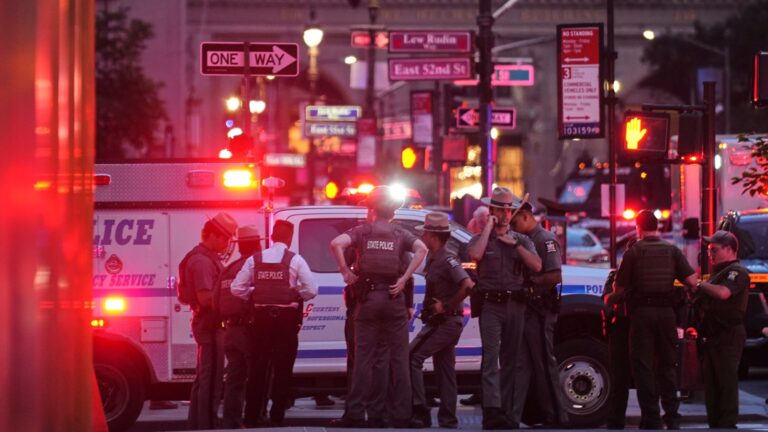
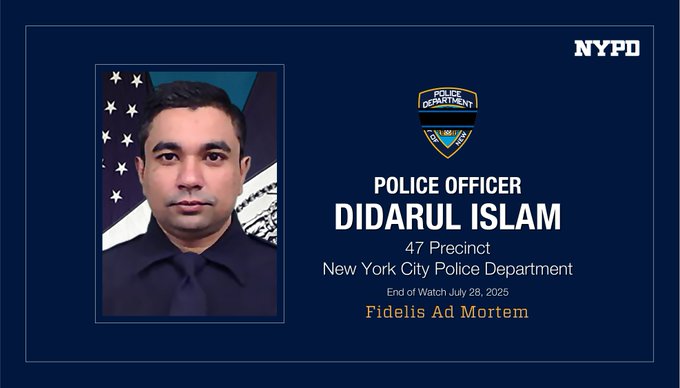
By now, I’m sure you have heard about Shane Devon Tamura, a 27-year-old Nevada resident wearing body armor and carrying an M4 assault rifle, who shot and killed four people, including an off-duty police officer in a Midtown Manhattan office building, on Monday evening before killing himself. He entered the lobby of the Midtown tower alone and immediately opened fire on an NYPD officer and sprayed the lobby with bullets. The deceased included NYPD officer Didarul Islam of the 47th Precinct in the Bronx, who came to the U.S. from Bangladesh.
Several local elected officials have issued statements on the Midtown Manhattan Shooting.
NYS Senator Shelley B. Mayer of the District 37 that covers a swath of Westchester County, including some or all of Bedford, Eastchester, Harrison, Larchmont, Mamaroneck, New Rochelle, North Castle, Port Chester, Rye, Rye Brook, White Plains, and Yonkers issued the following statement.
“I am deeply saddened by yesterday’s fatal shooting in Manhattan that took the lives of four people, including NYPD officer Didarul Islam, and severely injured another, before ending with the gunman taking his own life. Officer Islam was a hero, and I am deeply grieved by his loss. My heartfelt condolences go out to all the families and loved ones of the victims, and to everyone impacted by this senseless act of violence. I extend my sincere appreciation to the NYPD and all the first responders for their swift action. To those grieving today, please know that you are not alone. I am with you and will continue to support efforts to heal, protect, and strengthen our communities in the wake of this tragedy,” Sen. Mayer shared in a statement to Black Westchester.
“We will always remember the sacrifice Officer Islam, a husband, a son, and father, made for all of us,” Senate Minority Leader Chuck Schumer said on Tuesday. “To the other victims — people just trying to make a living, do their jobs — our hearts are broken, and we, too, grieve with your families.”
Congressman George Latimer (Congressional District 16 – Southern Westchester and Northern Bronx) also issued the following statement: “Last night, a horrible shooting took place in Midtown Manhattan, with four innocent people killed, including a brave NYPD officer,” Latimer wrote. “Our thoughts and prayers are with the family and friends of NYPD Officer Didarul Islam and the other victims.”
Rep. Ritchie Torres of the Bronx (District 15) said Monday’s shooting demonstrated how New York “has to live with the consequences of the lax gun laws from other states. It’s unfair. It feels like we’ve been stripped of control of our own destiny,” he said, arguing it is time for federal gun reforms.
Congressman Mike Lawler (District 17- includes all or parts of Rockland, Westchester, Putnam, and Dutchess counties) expressed condolences on social media. “I’m devastated by the senseless killing of an NYPD officer and innocent civilians in Midtown,” he wrote. “Praying for their families and loved ones.”
Westchester County District Attorney, Susan Cacace, took to social media to offer a statement as well, “On behalf of everyone at the Office, DA Cacace wishes to express her condolences to the family of Officer Islam and to our NYPD colleagues, who are mourning the loss of a true hero and dedicated public servant,” the post read. Her post closed with, “the families of the three civilians who were killed remain in our thoughts as we all begin to process this senseless tragedy.”
“Tonight, my heart goes out to the six victims of the tragic shooting in Manhattan. It’s deeply saddening to know that among those affected were two brave members of the NYPD, and we must mourn the loss of them all. Events like this are a stark reminder of the urgent need for change in our society. We must come together to foster a safer and more compassionate world. Please keep these victims and their families close in your thoughts and prayers during this incredibly difficult time,” Westchester County Legislator James Nolan (District 15 – Yonkers, Bronxville, Eastchester) posted on social media.
Legislator Catherine Parker (District 7 – Mamaroneck, Rye, Larchmont, part of New Rochelle, part of Harrison) feels that more than statements need to be made by elected officials; she suggests they should urge Congress to pass an assault weapons ban in the slain officer’s name.
“To my Republican friends, a Police Officer’s life is worth more than your thoughts and prayers. Tell Congress to pass the Didarul Islam Assault Weapons Ban in his honor and before his third child is born. That would be worthy of his life and service,” she shared on Facebook, Tuesday.
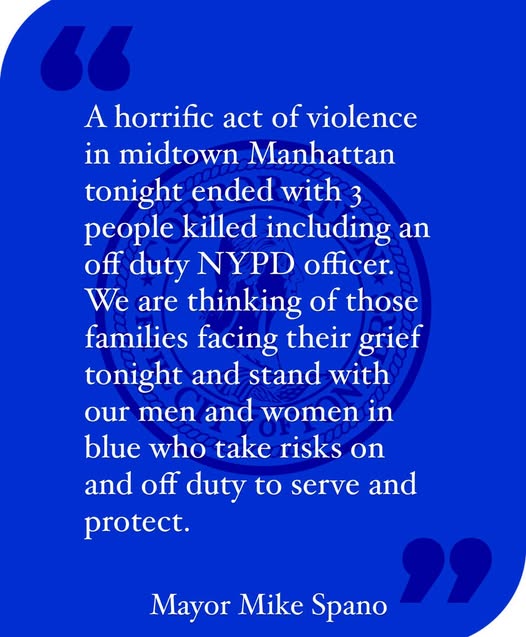
Yonkers Mayor Mike Spano’s statement on the killing of an off-duty NYPD officer and the deaths of two other innocent people.
Assemblyman Matt Slater, who represents Putnam County, also mourned the loss of Officer Islam, “Yesterday’s horrific shooting claimed the life of hero Police Officer Didarul Islam among the victims. He leaves behind a young family with his third child due any day,” he wrote.
“We are deeply saddened to learn that NYPD Officer Didarul Islam, who was fatally shot in yesterday’s incident, was a member of our beloved Parkchester community. He was not only a public servant, but a neighbor – someone who dedicated his life to protecting others and made the ultimate sacrifice in the line of duty. This act of violence has shaken families and communities across our city. As the investigation continues, my thoughts are with all those affected- the families grieving, the loved ones seeking answers, and everyone feeling the weight of this tragedy,” New York City Council Majority Leader Amanda Farías shared in a statement on Tuesday.
New York Gov. Kathy Hochul recalled her conversation with the widow of New York Police Officer Didarul Islam, who is expecting her third child, “I spoke to the young widow, a mother of two, expecting her third child. I tried to convey, again, that sense of compassion all of us as human beings feel,” Hochul said during a vigil for the victims of the mass shooting. “I said, ‘Is there anything we can do for you?’ And in her broken English, she just said: ‘Pray for us.’”
A police officer and three civilians were killed, officials said. The suspected gunman acted alone and died from a self-inflicted gunshot, authorities said.
Shane Devon Tamura, a 27-year-old Nevada resident wearing body armor and carrying an M4 assault rifle, shot and killed four people, including an off-duty police officer in a Midtown Manhattan office building, Monday evening before killing himself, officials said. He entered the lobby of the Midtown tower alone and immediately opened fire on an NYPD officer and sprayed the lobby with bullets. The deceased included NYPD officer Didarul Islam of the 47th Precinct in the Bronx, who came to the U.S. from Bangladesh and who Mayor Eric Adams said had been on the force for almost four years. He was working security in the building while off duty.
“Early tonight, I met with the officer’s family. I told them that he was a hero, and we admire him for putting his life on the line,” Adams said at press conference, joined by Alvin Bragg, the Manhattan district attorney; and an array of high-ranking officials from the Police Department, the U.S. Department of Homeland Security, Kaz Daughtry, the deputy mayor for public safety, Patrick Hendry, the head of the police officers’ union, as well as a white-coated hospital doctor. “He was doing what he does best, and all members of the police department carry out. He was saving lives. He was protecting New Yorkers.”
“He put himself in harm’s way. He made the ultimate sacrifice — shot in cold blood, wearing a uniform that stood for the promise that he made to this city,” NYPD Commissioner Jessica Tisch said.
Security video shows the gunman got out of a double-parked car with an M4 rifle and entered the building’s lobby, where he “immediately opened fire” on an NYPD officer, who was killed, the police commissioner said. “He then shoots a woman who took cover behind a pillar and proceeds through the lobby, spraying it with gunfire,” Police Commissioner Jessica Tisch said at a news conference. The gunman shot a security guard at the elevator bank as the guard was taking cover behind a security desk. The shooter called the elevator to the lobby, a woman got out, and the gunman allowed her to exit unharmed. The shooter went up to the 33rd floor and “begins to walk the floor, firing rounds as he traveled,” Tisch said. One person was shot and killed on that floor, she said. “He then proceeds down a hallway and shoots himself in the chest,” she said.
Islam was married with two young boys, and his wife was pregnant with a third child. The officer and the surviving male civilian were taken to New York Presbyterian, where the civilian is in critical but stable condition. Two other civilians, one male and one female, both killed in the shooting, were taken to Bellevue Hospital. Police say another female was the victim found dead on the 33rd floor. The shooting occurred just before 6:30 p.m. in an office building at 345 Park Ave. at East 52nd Street, which contains the headquarters for the investment company Blackstone and the National Football League.
KPMG, an accounting firm that also has offices in the building, released a statement after the shooting, saying, “Our hearts go out to the victims of this horrific act and their families. We are incredibly grateful for the bravery of building security and law enforcement,” the company said.
A National Football League employee was seriously injured in the shooting, NFL Commissioner Roger Goodell said in a memo to employees.
“One of our employees was seriously injured in this attack. He is currently in the hospital and in stable condition,” Goodell wrote in the memo, which was obtained by ABC News. “NFL staff are at the hospital and we are supporting his family. We believe that all of our employees are otherwise safe and accounted for, and the building has nearly been cleared.”
Goodell said in the memo that there would be “increased security presence” at the league’s offices “in the days and weeks to come.” He said employees based in New York should work remotely on Tuesday or could take the day off. “Every one of you is a valued member of the NFL family,” Goodell wrote. “We will get through this together.”
NFL employees were told to shelter in place at the time, ESPN’s Jeff Darlington reported. The NFL offices are on floors five through eight of the 44-story building.
Hakeem Jeffries, the House minority leader and a Brooklynite, issued a statement calling for stricter gun laws: “Mass shootings are a plague. The gun violence epidemic continues to afflict our country and has now shattered lives in our great City. The time has come for decisive action.”
New York’s senators, Chuck Schumer and Kirsten Gillibrand, posted on social media that they were praying for those affected by the shooting. “We must do more to stop gun violence in America,” Schumer wrote.
Candidates for New York City mayor responded to the shooting on social media. “Grateful to our first responders who run toward danger to keep us safe,” Republican candidate Curtis Sliwa wrote. “I’m grateful for the courage of our NYPD and first responders, and my prayers are with the victims and their families,” former governor Andrew Cuomo, who is running as an independent, posted.
Zohran Mamdani, the Democratic nominee for mayor of New York City who has been visiting family in Uganda, posted on social media that he was “heartbroken to learn of the horrific shooting.” He said: “I am holding the victims, their families, and the NYPD officer in critical condition in my thoughts. Grateful for all of our first responders on the ground.”
Tamura was the owner of the BMW that the shooter arrived in. Commissioner Tisch stated that the police discovered a backpack, Tamura’s prescription medication, a loaded handgun, ammo, magazines, and a rifle case with shots inside the vehicle. No explosives were present. He drove across the country in recent days, arriving in New York City today. Tamura was licensed to carry a gun in Nevada, NYPD Commissioner Jessica Tisch said at a news conference tonight.
The assistant director in charge of the FBI’s New York field office promised the “full force” of the agency in the investigation into today’s shooting.
“You have the full force of FBI New York and full force of FBI to get to the bottom of the answers,” said Chris Raia, the assistant director in charge of the office.
The investigation into the gunman’s motives and the shooting is ongoing. Raia said that “initial checks of our internal systems have not revealed any information about the subject.”
“We are deeply saddened to learn that NYPD Officer Didarul Islam, who was fatally shot in yesterday’s incident, was a member of our beloved Parkchester community. He was not only a public servant, but a neighbor – someone who dedicated his life to protecting others and made the ultimate sacrifice in the line of duty. This act of violence has shaken families and communities across our city. As the investigation continues, my thoughts are with all those affected- the families grieving, the loved ones seeking answers, and everyone feeling the weight of this tragedy,” New York City Council Majority Leader Amanda Farías shared in a statement on Tuesday.
Stay tuned to Black Westchester for more on this developing story!
Steven “Butch” Thomas, brother of former Mount Vernon Mayor Richard W. Thomas, filed Chapter 7 bankruptcy on July 3, 2025, after losing a defamation lawsuit in June 2023, filed against him by former Mount Vernon City School Board President Lesly Zamor.
“It’s very unfortunate that it had to come down to this with Butch. I had considered Butch a friend. He did work for me at my house and for my clients. However, I think the influence of Joe Spezio was overwhelming, as he and his brother, Richie, were receiving money from Spezio, and they both lost their better judgment, specifically Butch, when he decided to collaborate with Spezio to write these false and defamatory stories about me. The era of people writing baseless and defamatory statements against each other needs to stop. It’s very difficult to hide behind fake internet and social media accounts nowadays, and you will be found out. This judgment against Butch in my favor proves just that. Just don’t do it. We can agree to disagree, but there’s never a reason to make personal attacks that are baseless and can damage people’s reputations. I hope that we can all be on the same team for a better and more prosperous Mount Vernon,” Zamor shared with Black Westchester.
In June 2018, Lesly Zamor filed a summons and complaint in the Supreme Court of the State of New York, County of Westchester, against Thomas, alleging defamation and libel per se, and seeking at least $1,000,000 in damages, stemming from an online smear campaign that began in 2017.
The complaint specifically references an email sent on June 30, 2017, by an anonymous person under the name “MV Ed” Citizens for a Better Board, which allegedly contained defamatory statements about Zamor. This email is presented as an example of the alleged smear campaign.
On June 13, 2023, by a preponderance of the evidence, the jury unanimously returned a verdict holding Thomas liable for circulating defamatory statements about Zamor and, by clear and convincing evidence, concluded that statements by Butch Thomas, a 2017 Republican candidate for the Mount Vernon City Council were false and that, when he circulated or allowed the circulation of these statements through his Mail Chimps’ account, plaintiff knew the statements were false or acted in reckless disregard of the truth or falsity of the statements.
The jury unanimously awarded Zamor $35,000 in compensatory damages. Five jurors determined that Thomas was liable for punitive damages, and after the court charged the jury with respect to punitive damages, the jury unanimously awarded Zamor $10,000 in punitive damages. Ordering Thomas to pay $45,000 within 20 days following the judgment on June 29, 2023, plus $700 in costs according to CPLR section 8201 (1-3) for a total of $45,700. After July 19, 2023, if not paid 9% interest commenced.
Zamor previously served as a trustee and president of the Mount Vernon City School Board, as well as a commissioner on the City of Mount Vernon’s Planning Board. The lawsuit claims the smear campaign was intended to defame him, damage his reputation, and undermine his leadership.
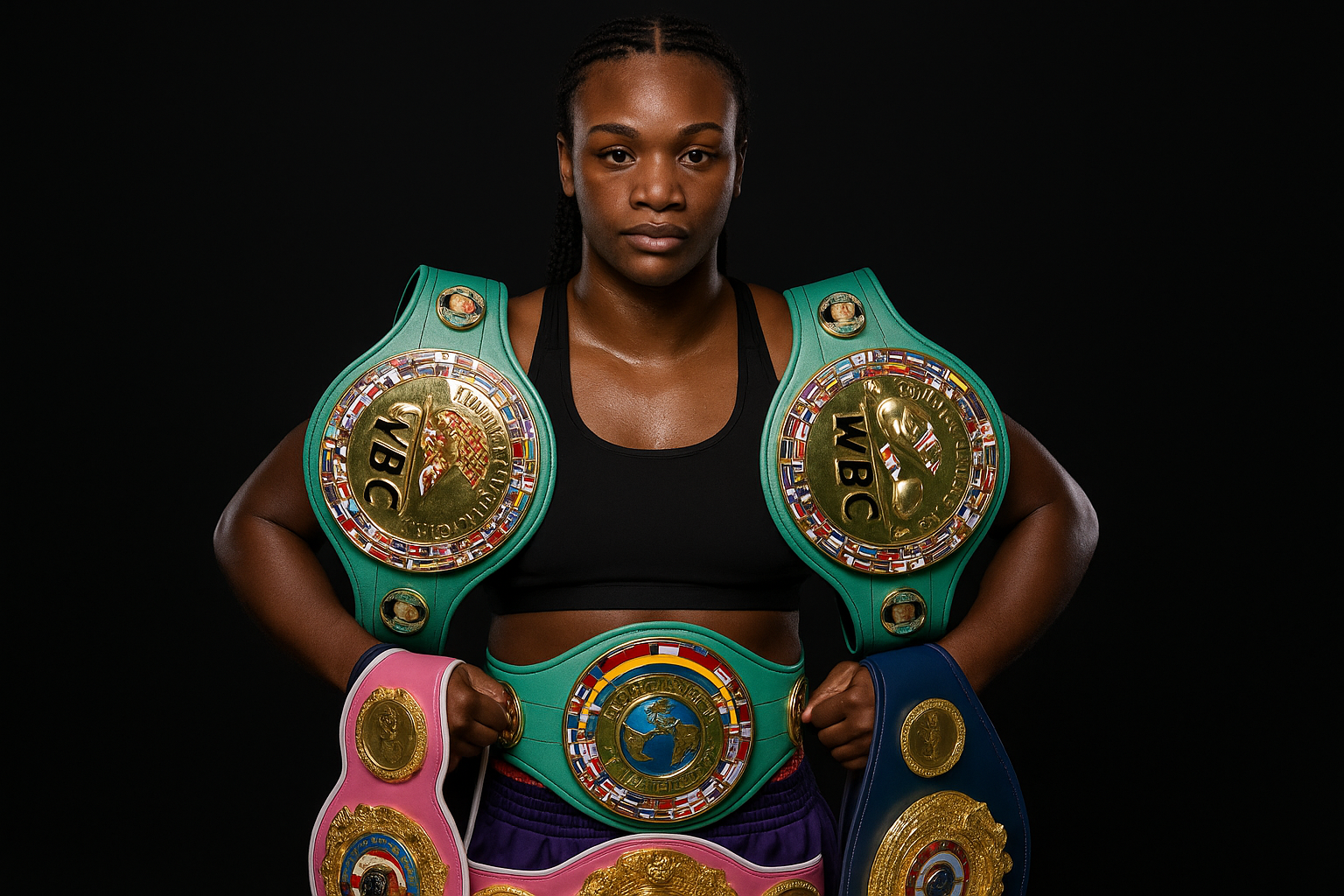
On July 26, 2025, under the bright lights of Detroit’s Little Caesars Arena, Claressa Shields once again proved why she’s not just in the conversation of greatness—she is the conversation. In a dominant, calculated performance against New Zealand’s Lani Daniels, Shields successfully defended her undisputed heavyweight world championship, adding another chapter to her already historic career.
This wasn’t just a win—it was a masterclass.
From the opening bell, Shields controlled every inch of the ring. She dictated the pace, angles, and rhythm with a confidence born of preparation and precision. Daniels came to fight, but she never had a chance to breathe. In Rounds 1 and 2, Daniels didn’t land a single punch. That’s not just defense—that’s domination.
By the end of the night, the punch statistics told the whole story: Shields landed 167 punches to Daniels’ 41. That’s more than 4 to 1 in clean connects. The judges had it 100–90, 99–91, and 99–91. And frankly, those numbers were generous to Daniels.
This wasn’t a competitive bout—it was a coronation.
But the victory wasn’t just about this one fight. It was about what it represented. With this defense, *Claressa Shields cements her place in history as the only boxer—male or female—in the four-belt era to become undisputed champion in three different weight classes: 154 (super welterweight), 160 (middleweight), and now heavyweight.
Let that sink in.
Canelo hasn’t done it. Crawford just reached two. Even legends like Ali and Tyson never had to navigate the modern politics of four major sanctioning bodies. Claressa did. Three times.
She’s 17–0. She’s been undisputed in every weight class she’s entered since going pro. And she’s done it all while being unapologetically Black, bold, and vocal.
She’s not asking for respect—she’s taking it.
This is a woman who grew up in Flint, Michigan. A city neglected, poisoned, and forgotten by the system. But Shields didn’t let that define her. She fought her way out. She didn’t wait for the establishment to recognize her greatness. She forced them to. Not with marketing hype—but with results.
And while the mainstream media continues to hype influencer boxing and novelty fights, Shields is out here rewriting boxing history—quietly, powerfully, and consistently.
After the fight, she hinted at dropping back down to 154 for more challenges. Mikaela Mayer’s name came up. Whether that happens or not, one thing is clear—Shields is running out of worthy opponents. Not because the sport lacks talent, but because she is simply that far ahead of the pack.
Her nickname is GWOAT—Greatest Woman of All Time. But at this point, we need to remove “woman” from the equation. Because Claressa Shields isn’t just the GWOAT.
She’s making the case as one of the greatest boxers of all time. Period.
At Black Westchester, we don’t just celebrate the wins. We celebrate what they represent. Shields is a symbol of resilience, excellence, and unshakable self-belief. She’s what happens when you combine purpose with preparation. She’s the blueprint for what greatness looks like when you bet on yourself—and deliver every time.
History is watching. And it’s writing her name in bold.
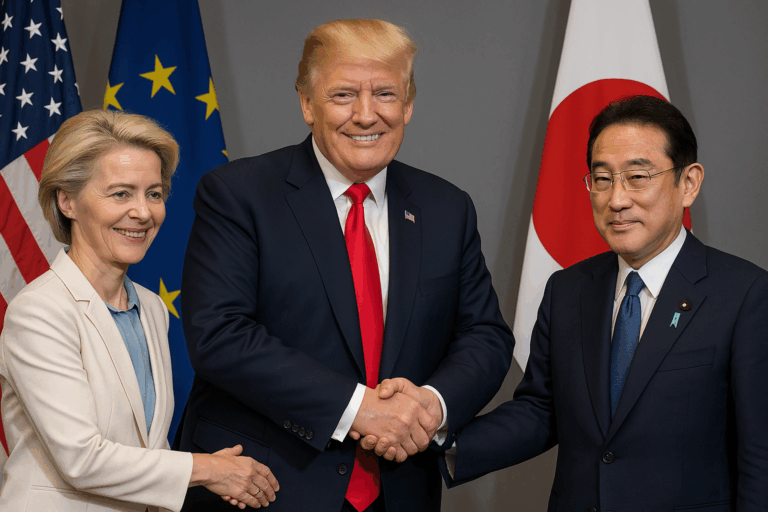
While cable news is obsessed with personalities, indictments, and distractions, something transformational just happened in international economics—something Black America can’t afford to ignore. Donald Trump’s newly announced trade deal with the European Union is being called one of the most aggressive and economically strategic tariff agreements in U.S. history. And for good reason.
It didn’t just threaten tariffs—it extracted results.
Announced on July 27, 2025, the Trump–EU tariff deal avoided a full-scale trade war by leveraging America’s consumer market in exchange for investment and reciprocity. Under the agreement, the United States will impose a 15% baseline tariff on most EU imports—far lower than the previously threatened 30%—but still firm enough to rebalance unfair trade terms.
In return, the EU agreed to the following:
$750 billion in U.S. energy purchases—a massive win for American oil, natural gas, and renewables.
$600 billion in investment across sectors including defense, infrastructure, aviation, and advanced manufacturing.
Zero-for-zero reciprocal tariffs on key sectors like semiconductors, aircraft parts, chemicals, and certain agricultural products.
Steel and aluminum tariffs remain at 50%, protecting U.S. producers in critical industries.
This isn’t just a “deal”—it’s a redirection of global capital. And if Black America isn’t positioned to intercept any of it, then our political and economic leadership has failed.
The Missed Opportunity Narrative Is Getting Old
Let’s be clear: Black communities are always on the receiving end of “equity conversations” but rarely at the table when capital changes hands. This deal moves over $1.3 trillion in commitments—yet no national Black leader has issued a statement, no civil rights group has laid out an access strategy, and no member of the Congressional Black Caucus has proposed a trade-linked workforce plan.
We chase diversity while others chase the contract.
We rally for board seats while others negotiate billion-dollar energy investments.
We demand police reform while ignoring the trillions redirected through tariffs, trade, and manufacturing.
The question isn’t whether Trump’s deal helps Black America—it’s whether Black America is prepared to help itself by aligning with it.
Energy, Manufacturing, and Strategic Goods: Where Are We?
The EU deal centers around strategic sectors—sectors that Black America has been systemically locked out of, but not irreversibly. Manufacturing, logistics, defense, and energy are the lifeblood of this agreement. And the question is: where are Black businesses in these fields?
Energy: With $750 billion flowing into U.S. energy, will Black-owned firms in renewables, infrastructure, or fuel logistics get a piece? Or will we keep talking about food deserts while ignoring the energy deserts in our own neighborhoods?
Manufacturing: With reciprocal tariff reductions on aircraft parts and semiconductors, will we keep marching for “inclusion” in tech, or will we invest in the machinery that makes tech possible?
Workforce Access: Will we demand union jobs in these fields—or sit back while they go to politically connected firms that don’t hire from our communities?
You Don’t Have to Like Trump to Learn From the Strategy
This isn’t about being a Trump supporter. It’s about seeing the strategy and positioning ourselves to respond with logic, not emotion. Trump’s deal didn’t promise anyone equality. It delivered incentive-based outcomes that benefit those who are prepared.
That’s the hard truth: capital doesn’t care about hashtags. It flows where the structure exists to receive it.
DEI Never Promised You a Factory
While the elite Black class is still busy applauding DEI hires and university fellowships, this tariff deal bypassed the corporate culture wars entirely and focused on leverage, reciprocity, and industry. There is no budget line in this deal for diversity consultants or symbolic partnerships.
But there’s plenty of space for welders, coders, engineers, machine operators, agri-tech builders, and logistics managers—fields where Black talent has historically been underrepresented, underfunded, and underestimated.
The Path Forward: Build Institutions, Not Talking Points
Here’s what must happen next if Black America wants to benefit from this deal:
Black chambers of commerce must publish sector-specific response plans for energy, defense, and logistics.
HBCUs must build industrial trade and export readiness programs—not just business school panels.
Faith-based institutions and nonprofits must pivot from food giveaways to workforce pipelines.
Local Black elected officials must identify federal trade zones, ports, and infrastructure projects tied to this deal and demand Black participation in procurement and contracting.
Because here’s the reality: if we don’t build the institutions to receive these blessings, they will pass us by.
Final Thought: Tariffs Are Not Racist—They’re Relentless
Donald Trump didn’t rewrite trade law for Black America. He leveraged it for national advantage. Now it’s our turn to leverage this moment for community advantage.
But the window won’t stay open forever.
The question isn’t “Did Trump help us?” The question is: Are we willing to help ourselves now that the money is moving?
Until we treat economics with the urgency we give to politics and protest, we’ll stay spectators in a game we could be winning.
Emotional Politics — Logical Failure is the book you need.
In this bold and unfiltered work, Damon K. Jones delivers the hard truths many are afraid to say out loud: Black America has been loyal to a system that has failed to deliver. We’ve mastered symbolism but forfeited strategy. We show up to vote, but not to fund. We speak out, but rarely build. And the result? Speeches instead of solutions. Visibility instead of victory.
This book is not about left or right. It’s about logic over emotion. Power over performance. It’s a call to wake up, re-strategize, and use our political currency with purpose.
If you’re tired of being used, overlooked, and sold out—this book is your blueprint for change. Your voice is powerful. Your vote is valuable. But your money, your mindset, and your political clarity are what will make the difference.
Read the book. Share the message. Challenge the tradition. And let’s finally start getting what we pay for.
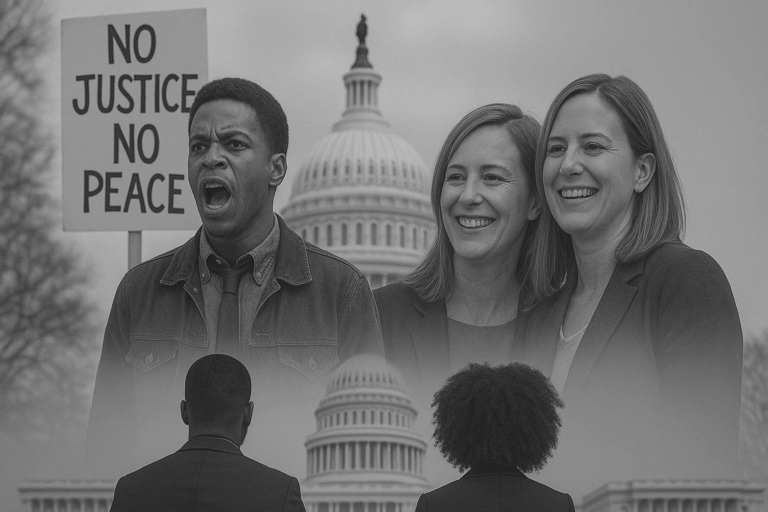
One of the great political deceptions of modern America is the use of universal language to sell policies that were demanded, justified, and paid for—almost exclusively—by Black suffering. The result is a long line of laws and reforms that, while claimed as victories for Black Americans, disproportionately benefit everyone except Black Americans.
The pattern is as old as Reconstruction. The 14th Amendment, passed in 1868, was clearly a response to the treatment of freed slaves who had no citizenship protections under the law. Yet rather than crafting legislation to specifically protect those who had been enslaved and their descendants, Congress instead applied sweeping language: “All persons born in the United States…” That one phrase opened the door to a legal doctrine of birthright citizenship that now benefits every immigrant group, legal or illegal, while Black Americans remain economically and politically stagnant in the very country they helped build.
This isn’t a historical fluke—it’s a recurring strategy.
The Civil Rights Act of 1964, passed only after fire hoses, assassinations, and national embarrassment, was sold as a correction to racial injustice. But once the ink dried, it became a tool of generalized “equality.” And who benefited most? White women, who used gender-based clauses of the law to advance in corporate America, often at the direct expense of the very Black workers whose protests made the law possible.
The Fair Housing Act of 1968 followed the same script. It outlawed housing discrimination, but offered no mechanism to correct generations of redlining, displacement, or stolen land. Black families didn’t receive restitution—they received fair warning that future discrimination might be politely discouraged. Meanwhile, suburbs flourished, banks were bailed out, and property wealth continued to accumulate in white hands.
Then came affirmative action—originally conceived as a limited, targeted tool to remedy institutionalized discrimination against Black Americans. Yet over time, it evolved into a universal diversity initiative that grouped together every non-white or non-male individual under one umbrella, no matter how recent their arrival or how indirect their suffering. So while elite universities checked their diversity boxes, Black American students—especially those from poor, urban communities—remained underrepresented and under-resourced.
Now we have DEI (Diversity, Equity, and Inclusion)—the latest corporate trend designed to appear socially conscious while avoiding any meaningful confrontation with actual injustice. Predictably, white women have once again become the primary beneficiaries. They lead DEI departments. They are promoted in the name of “equity.” And they enjoy the economic mobility that these programs pretend to offer to the marginalized. If DEI were judged by outcomes—not by intentions—its record would show more advancement for privileged women than for the people it claims to help.
Worse still, many Black politicians and public figures either fail to see this or deliberately ignore it. Some are too politically compromised to speak up. Others are simply content to chase proximity to power rather than advocate for targeted results. Either way, they serve as loyal spokespeople for programs that—time and again—fail to produce measurable change in the communities they claim to represent.
The lesson is simple, but inconvenient: When a law meant for Black people is written to apply to everyone, it ends up serving everyone but Black people. When benefits are distributed based on abstract categories like “diversity,” “equity,” or “underrepresented,” the group that led the struggle becomes just another line on a grant application. That’s not progress. That’s a bait and switch.
In economics, incentives matter. In politics, outcomes matter. And in history, intent means little when results fail to match the sacrifice.
Until Black Americans demand policy based on injury, not just identity—specific remedies for specific harm—we will continue to be used as the moral foundation for reforms that enrich everyone but us.
EEOC Affirmative Action Statistics Data showing white women as primary beneficiaries of affirmative action. U.S. Equal Employment Opportunity Commission: https://www.eeoc.gov/statistics/employment
Thomas Sowell – Discrimination and Disparities Examines the fallacies behind race-based policy outcomes. Basic Books, 2018.
Dr. Claud Anderson – PowerNomics: The National Plan to Empower Black America Argues for group-based, targeted solutions to economic exclusion. Harvest Institute, 2001.
Emotional Politics — Logical Failure is the book you need.
In this bold and unfiltered work, Damon K. Jones delivers the hard truths many are afraid to say out loud: Black America has been loyal to a system that has failed to deliver. We’ve mastered symbolism but forfeited strategy. We show up to vote, but not to fund. We speak out, but rarely build. And the result? Speeches instead of solutions. Visibility instead of victory.
This book is not about left or right. It’s about logic over emotion. Power over performance. It’s a call to wake up, re-strategize, and use our political currency with purpose.
If you’re tired of being used, overlooked, and sold out—this book is your blueprint for change. Your voice is powerful. Your vote is valuable. But your money, your mindset, and your political clarity are what will make the difference.
Read the book. Share the message. Challenge the tradition. And let’s finally start getting what we pay for.
In a culture obsessed with popularity, we rarely talk about what it costs to truly walk in your purpose.
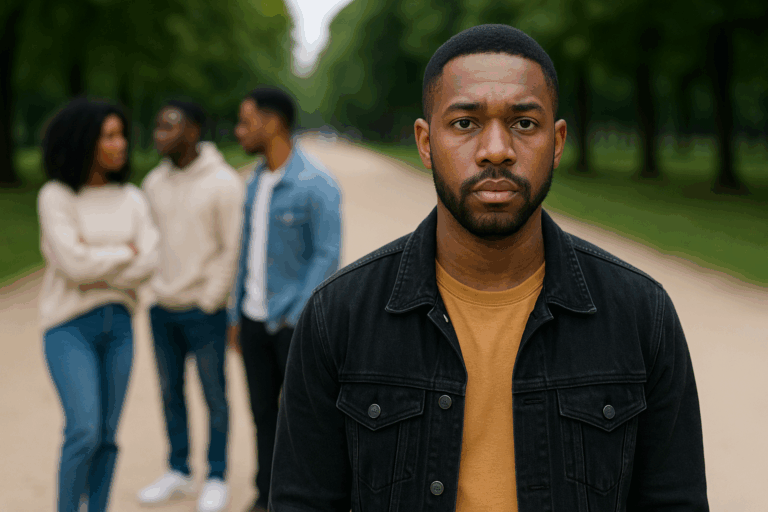
Not your passion — your purpose. Because while passion feeds the ego, purpose feeds the soul. And when you finally answer that higher calling, don’t be surprised when the phone stops ringing, the group chats go silent, and the invitations stop coming.
That’s not betrayal. That’s alignment.
Too many people confuse growth with arrogance. They think just because you’re no longer available for dysfunction, you think you’re better. But the truth is, purpose demands a level of clarity and peace that drama can’t survive in. When you finally decide to live intentionally — to pray more, plan more, heal, and build — the atmosphere shifts. And people either rise with you… or fall off.
Both are necessary.
We have to stop mourning relationships that were never built to go the distance. The painful reality is this: everyone who started with you won’t finish with you. That doesn’t make them enemies. It just means they weren’t equipped for the next level of your life. Elevation will expose who was attached to the version of you that needed validation, not vision.
Even Jesus had to walk alone. In the Garden of Gethsemane, when the pressure was at its highest, the people closest to Him fell asleep. That wasn’t coincidence — it was confirmation. Purpose is never a group project.
We don’t talk enough about the loneliness that comes with becoming. Social media tells you to “cut people off,” but rarely does it explain the emotional toll of walking alone. The truth is: healing is messy. Growth is isolating. And purpose will always demand separation before elevation.
But don’t let the silence fool you. You’re not being punished — you’re being positioned.
If you’re in a season where your circle is shrinking, and you’re questioning why it feels like you’re losing everyone around you — consider this: maybe God is making room. Maybe He’s clearing the noise so you can hear His voice. Maybe the people you’re crying over are the very people who would’ve talked you out of your destiny.
Purpose requires obedience, not popularity. And sometimes, choosing the call on your life means losing the crowd around your life.
But that’s OK.
Because what’s ahead of you — clarity, impact, peace, legacy — will always be worth more than what’s behind you.
Support the Mission — Feed Your Mind, Fuel the Movement
Books by Damon K. Jones
Looking to go deeper on your journey of healing, purpose, and power?
Support the 28-Day Health & Wellness Challenge by purchasing transformational books by Damon K. Jones—a respected wellness coach, spiritual advisor, and community leader. His works empower Black families through health, faith, masculine leadership, and cultural restoration.
Each book is written with one mission in mind: To help you reclaim your power—mind, body, and spirit.
🔥 Featured Titles:
📖 The 28-Day Health & Wellness Challenge Your official companion guide—daily routines, holistic practices, and practical strategies for real-life transformation.
📖 God Is In Your Vegetables A spiritual and nutritional call to return to God’s design for food, healing, and sacred living.
📖 Jesus and Divine Black Masculinity A groundbreaking guide on how Black men can reclaim spiritual leadership and divine purpose modeled by Christ.
📖 The Health Mindset: 6 Pillars of Health and Wellness Master the six key foundations of lifelong wellness—from mental clarity to physical vitality.
📖 The Book of Black Love A cultural and spiritual journey into restoring love, trust, family, and sacred connection in the Black community.
📖 The 53 Building Blocks to Divine Masculinity A bold and practical guide for men committed to leading, protecting, and building with strength and integrity.
📖 The Empowering Benefits of Detoxing, Cleansing, and Eating Clean Learn how detoxing and clean eating are more than a trend—they are tools of liberation, mental clarity, and divine health.
📖 The Black Tax Pivot: How to Survive and Thrive Under the Trump Tax Cuts Understand the new economic terrain and how to reposition your family with financial strategy and sovereignty.
💡 Why It Matters:
Every book purchase helps fund:
✔️ Free health and wellness programming ✔️ Culturally grounded community education ✔️ The fight for health equity and Black media independence
🛒 Read. Transform. Support the Mission.
👇🏾 Click here to shop the full library of books by Damon K. Jones
For nearly a decade, Americans were told that Russia stole the 2016 election. The media said it. Intelligence officials signed off on it. And for four years, that narrative served as the foundation to delegitimize a sitting president. But with the release of the House Intelligence Committee’s newly declassified July 2025 report, the question isn’t whether Russia interfered. It’s who really interfered in our democracy—and why.
The report confirms that there was no verified intelligence showing Vladimir Putin preferred Donald Trump. The so-called “evidence” was manufactured inference, not fact. And yet it was used to trigger surveillance, public mistrust, and the most politically motivated investigation in modern history.
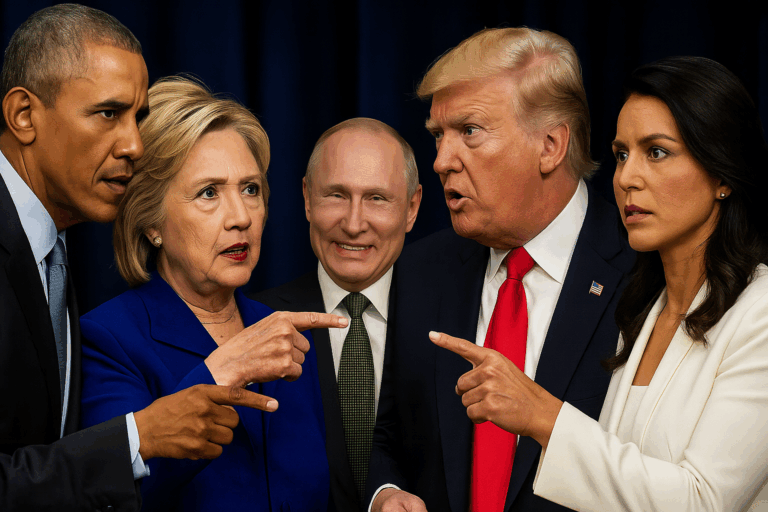
President Trump has now accused Barack Obama of “treason,” charging that the entire Russia probe was a calculated effort to derail his presidency before it began. Hillary Clinton, whose campaign helped fund the Steele dossier, has also been tied to what Trump calls “clear proof” of a coordinated effort to deceive the American public. Tulsi Gabbard, now serving as Director of National Intelligence, has echoed these concerns. In a recent White House briefing, she referred Obama to the Department of Justice for what she called “overwhelming evidence” of a fabricated intelligence narrative designed to delegitimize Trump.
Obama’s office has dismissed these claims as “ridiculous distractions.” But what’s not disputed—even by bipartisan bodies like the 2020 Senate Intelligence Committee—is that the Russia story was never about altering votes. It was about shaping perception. The influence campaign was real. But the collusion narrative? That came from inside our own government.
Gabbard’s declassified 44-page report provides more than just a rehashing of the past. It offers documentation that top intelligence officials—John Brennan, James Clapper, James Comey—helped shape an assessment that Russia favored Trump, despite no verified evidence supporting that conclusion. The narrative wasn’t born from intelligence—it was born from political inference dressed up as classified insight.
The report also reveals that Russia claimed to have compromising information on Hillary Clinton. U.S. intelligence picked up chatter suggesting Russian officials believed she was medically unfit to serve and allegedly reliant on tranquilizers. Whether true or not, this information wasn’t used in public discourse, weaponized by foreign actors, or inserted into official assessments.
Why not?
Because Hillary Clinton didn’t win.
If Russian intelligence had truly wanted to interfere, releasing that information could have been explosive. But when the final ballots were counted and she wasn’t the incoming president, the incentive to expose her vanished. In strategic terms, there’s no point in burning political ammunition on someone who holds no power. Her loss made the alleged kompromat irrelevant.
And that’s what makes the double standard so revealing.
While unverifiable claims about Trump were pushed to the public and cited in federal surveillance requests, potentially credible concerns about Clinton were buried. Intelligence wasn’t judged by its reliability—it was judged by its usefulness. They didn’t suppress Clinton’s vulnerabilities because they didn’t exist. They suppressed them because they no longer served the narrative.
The report also references a now-infamous email that former National Security Advisor Susan Rice sent to herself on Inauguration Day—documenting a White House meeting where President Obama instructed officials to handle the Russia investigation “by the book.” Critics view this not as routine recordkeeping but as a strategic memo to legally insulate the administration from what was, in effect, a politically driven operation. Rice was also among those who requested the unmasking of Trump transition officials, further underscoring how national security tools were deployed with political precision.
Meanwhile, the Department of Justice has received referrals for potential criminal wrongdoing by former Obama-era officials. Whether those referrals lead to prosecutions or are dismissed as political retaliation is secondary to the point: the machinery of government was used to interfere in an election, and the people responsible walked away with book deals and cable news contracts.
This wasn’t about protecting democracy. It was about controlling it.
The intelligence community was never supposed to operate as a partisan tool. But what the report reveals is a systemic abuse of power, justified under the guise of national security. If that power can be turned on a president, it can be turned on any citizen.
What matters now isn’t whether Trump was treated unfairly. What matters is whether we still live in a constitutional republic or an administrative state where intelligence officials make political decisions behind closed doors, and the public is expected to accept their conclusions without question.
The real threat to democracy was never just Russian trolls. It was the people in Washington who believed their power was above the will of the voters.
And now, we see many Democratic politicians shouting about oligarchy—about dark money, elite control, and the erosion of democracy. But when the dealings and deception come from within their own party, suddenly the outrage disappears. Let’s call a spade a spade. If we’re going to protect democracy, we need to call balls and strikes, no matter whose team is at bat.
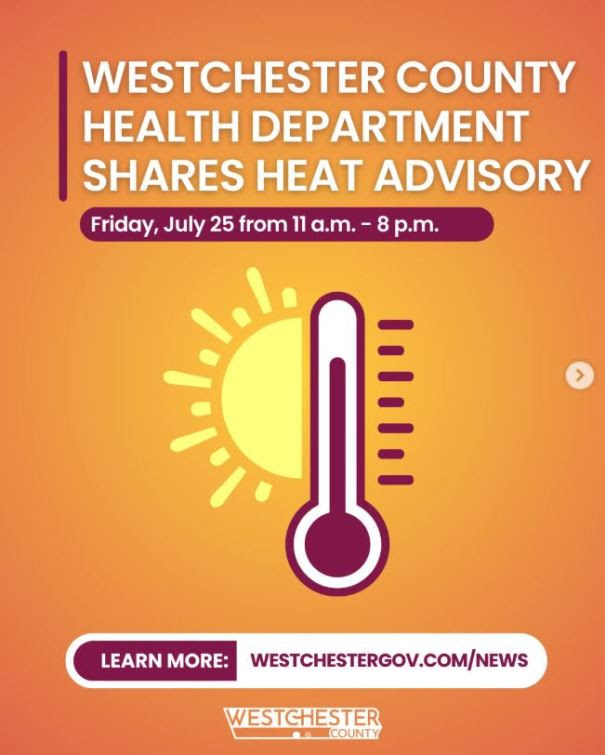
Westchester County Health Department Shares Heat Advisory;Vulnerable Residents Urged to Limit Time Outdoors and Avoid Strenuous Activity
The National Weather Service has issued a Heat Advisory for Westchester County on Friday, July 25, from 11 a.m. to 8 p.m. During this time, heat and humidity may make outdoor temperatures feel as high as 105 degrees. While some relief is expected overnight, Saturday afternoon temperatures are forecasted to remain in the low 90s.
The Westchester County Health Department advises residents to:
Stay hydrated by drinking plenty of water – Drink plenty of water, even if you don’t feel thirsty, and stay away from alcoholic or caffeinated beverages. Construction workers and others who do lots of physical activity or work outdoors should be conscious of keeping hydrated while on the job. Make sure pets have access to fresh drinking water that is clean and cool.
Avoid strenuous outdoor activity and overexertion – Reduce or refrain from strenuous physical activities until the coolest time of the day. At-risk populations such as older people, children, and pregnant women should stay in the coolest place available, which may not necessarily be indoors. (Maybe it’s in the local pool!)
Check on vulnerable family members, friends, and neighbors – If you know someone who is at risk of heat-related health issues, make sure they are well cared for and in a safe and cool place. Don’t leave children or pets unattended in hot cars.
Eat light. Go for cool, easy-to-digest foods like fruit, salads or even fruit salad. If you are bringing food somewhere, make sure to put it in a cooler or include ice packs, as meat and dairy products can spoil in the heat.
Go somewhere cool. Spend some time in an air-conditioned place, whether that’s home, the library, a mall or other public spaces. You can search for your nearest local emergency cooling center by county at the New York Department of Health website. Ensure pets have access to shady spots when outdoors, or keep them inside.
Ensure pets and outdoor animals have access to shade and fresh water – Residents are also reminded never to leave children or pets in a closed vehicle, as temperatures inside can rise to dangerous levels within minutes.
Extreme heat and humidity will significantly increase the potential for heat-related illnesses, particularly for those working or participating in outdoor activities.
Heat exhaustion and heat stroke are the two primary heat illnesses in the United States. Heat cramps can also occur if the body is not properly hydrated during extreme weather events. Any heat-related illnesses, mainly heat exhaustion and heat stroke, can happen at any temperature above 90 degrees.
The Occupational Safety and Health Administration also recommends scheduling “frequent rest breaks in shaded or air-conditioned environments” when doing work outdoors.
El Departamento de Salud del Condado de Westchester comparte un aviso sobre el calor;Se insta a los residentes vulnerables a limitar el tiempo al aire libre y evitar actividades extenuantes
El Servicio Meteorológico Nacional ha emitido un aviso de calor para el condado de Westchester el viernes 25 de julio, de 11:00 a. m. a 8:00 p. m. Durante este periodo, el calor y la humedad podrían provocar una sensación térmica de hasta 40 °C. Si bien se espera algo de alivio durante la noche, se pronostica que las temperaturas del sábado por la tarde se mantendrán en torno a los 32 °C.
El Departamento de Salud del Condado de Westchester recomienda a los residentes:
Manténgase hidratado bebiendo abundante agua.
Evite las actividades extenuantes al aire libre y el esfuerzo excesivo.
Controle a sus familiares, amigos y vecinos vulnerables.
Asegúrese de que las mascotas y los animales al aire libre tengan acceso a sombra y agua fresca.
También se recuerda a los residentes que nunca deben dejar a niños ni mascotas en un vehículo cerrado, ya que la temperatura en el interior puede alcanzar niveles peligrosos en cuestión de minutos.