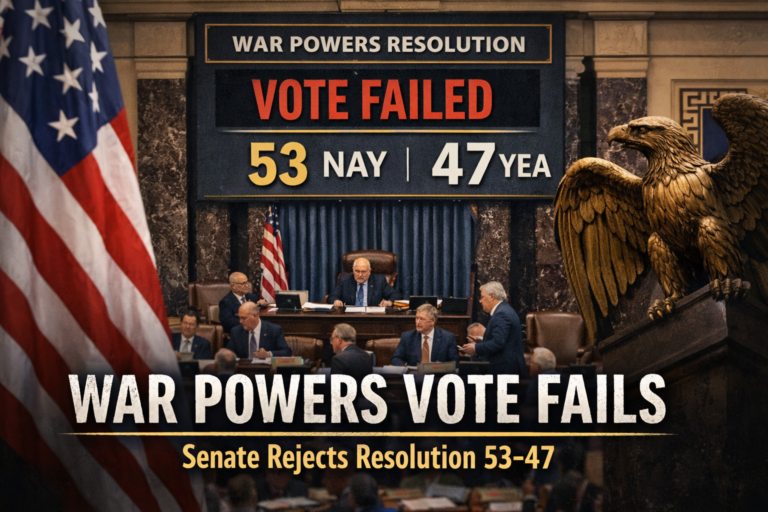
The United States Senate held a vote this week on a War Powers Resolution intended to limit President Donald Trump’s ability to continue military operations against Iran without explicit congressional authorization. After days of political debate and media attention, the final result was clear.
The resolution failed.
The Senate voted 53–47 against the measure, meaning the attempt to restrict the president’s authority did not pass. Because the resolution failed to gain a majority, it does not move forward and places no new limits on the administration’s current military posture.
The vote also revealed how sharply divided Washington remains over the issue of executive military authority.
Most Republican senators voted against the resolution, supporting the administration’s position that the president has the authority to act under the existing framework of the War Powers Resolution and the broader responsibilities of the commander in chief.
Most Democratic senators voted in favor of the resolution, arguing that Congress should have a direct role in approving continued military engagement.
However, the vote was not perfectly partisan.
Senator Rand Paul of Kentucky was the only Republican who voted in favor of the resolution, siding with Democrats who argued Congress should reassert its constitutional authority over military action.
Senator John Fetterman of Pennsylvania was the only Democrat who voted against the resolution, joining Republicans in opposing the measure.
Those two votes illustrate an important reality about war powers debates in Washington. While the rhetoric often follows party lines, concerns about executive authority have historically existed in both parties.
But the final numbers matter more than the speeches.
53 senators opposed the resolution. 47 senators supported it.
In practical terms, that means the effort to force the president to seek congressional approval for continued military operations against Iran did not succeed.
The outcome also reflects a long pattern in American politics. Since the War Powers Resolution was passed in 1973 after the Vietnam War, Congress has repeatedly attempted to reclaim authority over military engagement. In practice, however, presidents from both parties have continued to conduct military operations abroad with limited direct congressional authorization.
President Barack Obama authorized military action in Libya in 2011 without a formal declaration of war. Drone strike campaigns expanded significantly during his administration. President Joe Biden authorized airstrikes in Syria and Iraq in response to threats against U.S. personnel. Earlier administrations under both Democratic and Republican leadership also relied on broad executive authority.
The debate over war powers has therefore existed for decades. Yet the outcome rarely changes the balance of power between Congress and the presidency.
Speaker of the House Mike Johnson has already suggested that a similar effort in the House of Representatives is unlikely to pass, especially after lawmakers received classified briefings from the administration regarding the security situation.
This illustrates the difference between political messaging and political outcomes.
Votes like this often serve a political purpose. They allow lawmakers to place themselves on record for their voters, signal support or opposition to military action, and frame the broader public debate. But the practical result of this particular vote is simple.
The resolution failed.
President Trump retains the authority he was already exercising under existing law.
Fossil Fuel Volatility and Infrastructure Costs are What’s Driving Higher Bills
New Yorkers opening their utility bills are asking a fair question: Why are energy costs rising?
In Albany, some policymakers are pointing to New York’s Climate Leadership and Community Protection Act (CLCPA) as the cause and suggesting the state should roll back the law.¹ Those claims rely on contested cost projections and misleading narratives about today’s energy prices. More importantly, they ignore the real drivers of rising bills.
The primary factors pushing energy costs upward today are well understood: the cost of maintaining aging infrastructure and supply costs, including volatile fossil fuel markets. This very much includes the wars in Ukraine and Iran. Weakening New York’s climate law will not solve those problems. In fact, it risks locking them in.
To understand why, we need to look at what actually drives utility bills.
The Infrastructure We Are Paying For
A large share of what New Yorkers pay on their energy bills is the delivery system — pipelines, distribution networks, and other infrastructure required to move energy into homes and businesses.
Utilities recover the cost of building, maintaining, and financing that infrastructure through rates approved by regulators. These investments last for decades, meaning customers continue paying for capital projects long after they are built. Delivery charges, therefore, make up a substantial portion of many utility bills across New York.²
These costs are not the result of the CLCPA. They reflect decades of investment in fossil fuel infrastructure.
Meanwhile, the fossil fuel industry has lobbied aggressively to maintain and expand that infrastructure because it generates guaranteed returns through regulated utility rate structures. Those costs ultimately fall on customers.
Fossil Fuel Volatility Shows Up on Bills
Next are supply costs, including fuel prices. Because fossil gas is a large share of New York’s electricity generation, fluctuations in gas markets quickly translate into higher electricity prices. New York’s grid operator has noted that electricity prices in the state closely track fossil gas costs.²
Global events demonstrate how quickly those markets can shift. The Russia-Ukraine war disrupted global natural-gas supply chains and contributed to significant price spikes that affected electricity markets in New York.³ Now, the Iran war and the disruption of the Strait of Hormuz — one of the world’s most important energy shipping routes — have rattled global oil and gas markets, pushing prices higher in ways that are likely to increase consumer energy costs.⁴
Fossil fuel volatility is not theoretical. It is already showing up on utility bills.
Our Climate Law Is Not the Cost Driver
Despite this reality, some critics now argue that New York’s climate law will make energy unaffordable. Recent critics have cited unsourced cost projects as proof that the CLCPA is too expensive.
But those projections rest on contested assumptions and fail to fully account for the economic and climate risks of continued fossil fuel dependence.⁵ More importantly, they are planning tools that don’t explain why bills are rising today.
Using those projections to justify rolling back the CLCPA confuses future modeling exercises with the structural drivers of current energy costs. Weakening the law would not lower today’s bills or future costs — it would simply eviscerate our climate commitments.
The Real Affordability Solution
If policymakers are serious about affordability, the solution is not to retreat from the clean energy transition — it is to manage it responsibly.
Energy efficiency, electrification and grid modernization can reduce long-term system costs while protecting consumers from fossil fuel price shocks.⁶ Studies consistently show that efficiency improvements and clean energy deployment lower overall system costs and reduce household energy burdens over time.⁷
For environmental justice communities, these investments are particularly important. Low-income households and communities of color often face the highest energy burdens while also bearing the greatest health impacts from fossil fuel pollution. Implementing the CLCPA will deliver cleaner air and healthier communities.
Done right, the clean energy transition is not only a climate strategy — it is an affordability strategy. Rolling it back will cause real harm.
The Wrong Moment to Retreat
New York enacted the CLCPA because the climate crisis demands urgent action and because the state recognized the long-term risks of continued fossil fuel dependence.
Today’s global energy instability only reinforces that logic.
Doubling down on fossil fuel infrastructure will leave New Yorkers exposed to the same cycles of volatility that have driven energy costs for decades.
This is not the moment to weaken New York’s climate law. It is the moment to implement it carefully, responsibly, and with a clear focus on affordability, stability, and justice.
New Yorkers deserve an energy system that is cleaner, more stable, and more affordable over time. Don’t roll back our climate law.
About the Energy Justice Law and Policy Center: EJLPC is Westchester’s energy, climate, and environmental justice organization, focused on building healthy and thriving communities. www.EJLPC.org.
Raya Salter is the Executive Director of the Energy Justice Law and Policy Center and Member, NYS Climate Action Council and the NYS Permanent Environmental Justice Advisory Council
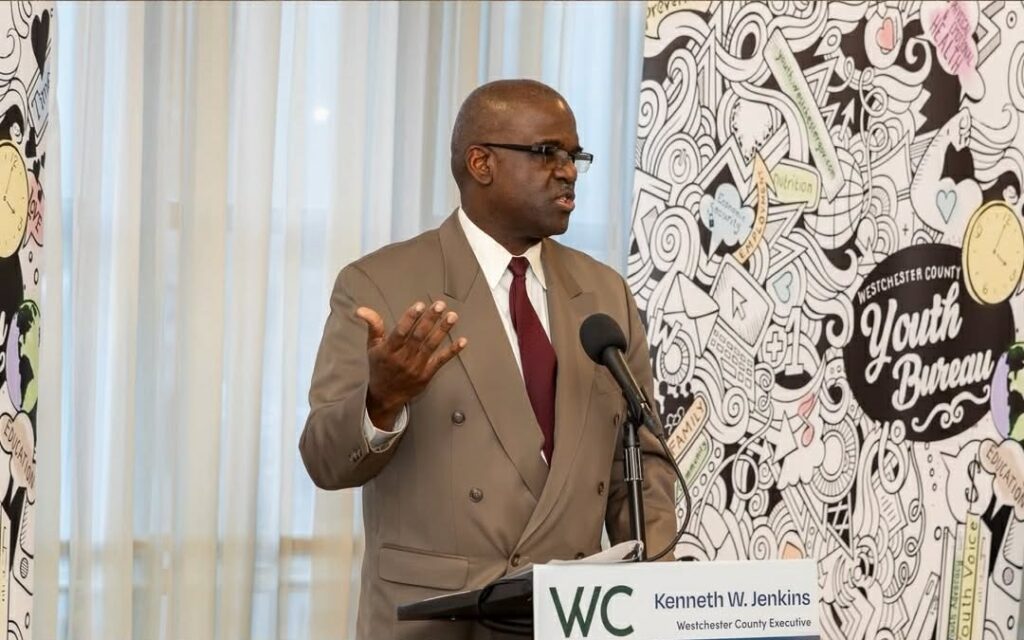
“It is often said that youth are the leaders of tomorrow. While this is meant to be a compliment, I would like to respectfully disagree. The young people we are honoring today are not waiting for tomorrow. They are not waiting for a degree, a certain age, or an invitation to care about their neighbors. They have looked at the challenges facing their communities, and they have stepped up now. Tonight, we aren’t celebrating their potential — we are celebrating their presence and their proven track record of action,” County Executive Ken Jenkins
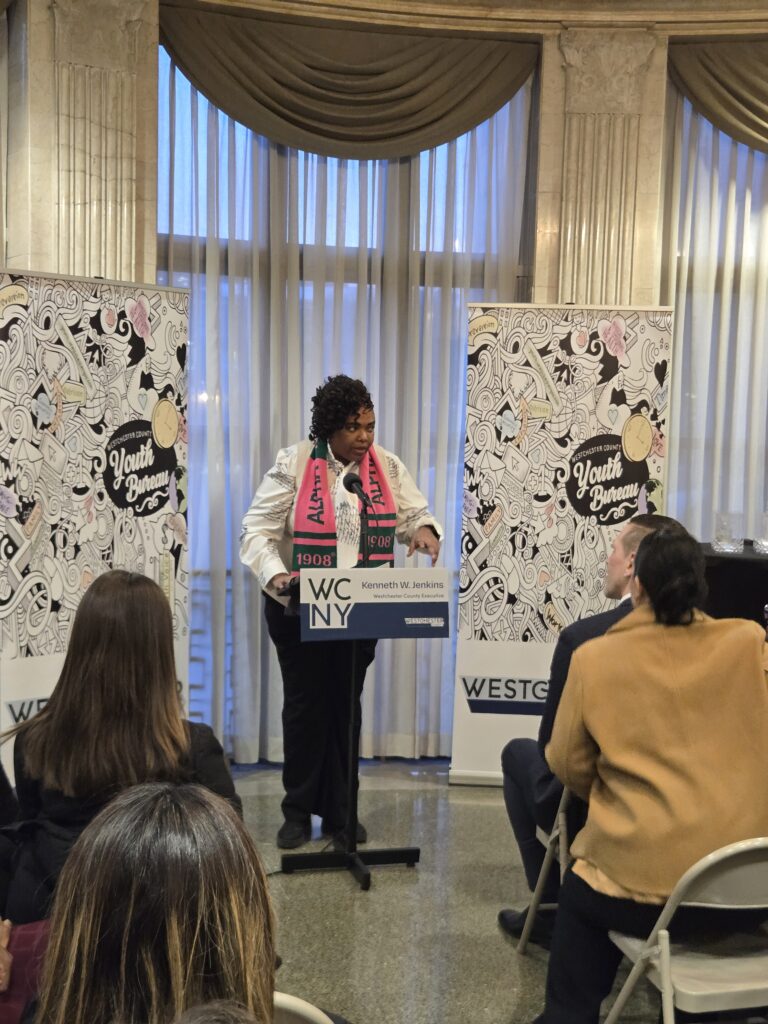
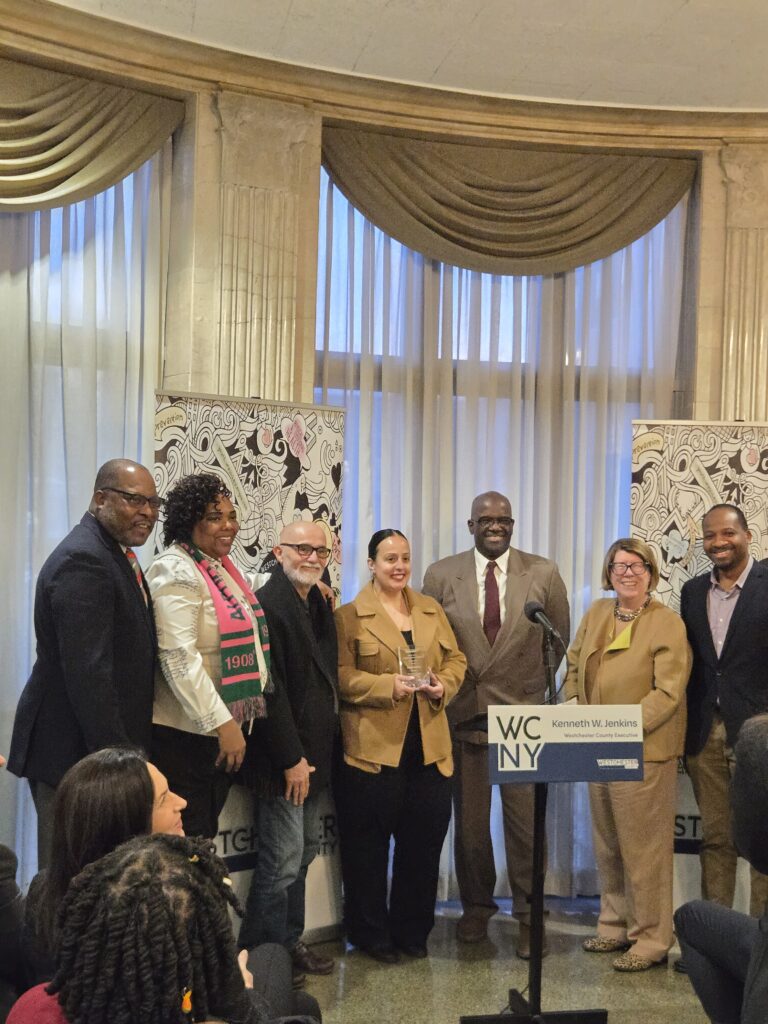
(White Plains, NY)— The Westchester County Youth Bureau and the Westchester County Youth Board hosted the annual Youth Service Awards ceremony on Thursday, February 12, 2025, to honor outstanding high school juniors and seniors who have distinguished themselves for their leadership and dedication to service and social justice. The ceremony took place in the Rotunda of the Michaelian Office Building in White Plains.
In addition to accolades from the Westchester County Youth Board members and their NYS Legislators, the 12 Youth Service Award recipients also received certificates from Westchester County Executive Ken Jenkins and the Westchester County Board of Legislators. All of the students who were recognized had an outstanding list of achievements, which included developing accessible sports programs for young people with disabilities, building a network of community volunteers, and using media and the arts to raise awareness of social issues. To reach their objectives, many had to face significant personal challenges with fortitude.
“Each year, the WCYB proudly salutes Youth Service Award recipients whose actions remind us of the power of compassion, integrity, and selfless service,” Westchester County Youth Bureau Executive Director Ernest McFadden said. “This award honors young people who consistently choose to uplift others, lead by example, and make a meaningful difference in our community. Their dedication to serving with humility and heart represents the very best of youth leadership and inspires us all to give back.”
“As Chair of the Westchester County Youth Board, it is my distinct honor and privilege to celebrate 12 extraordinary young people whose talent, character, and leadership inspire us all. With these leaders at the helm, Westchester County’s future is bright and promising, and I am confident they will continue to shape our community with vision, integrity, and purpose.” Westchester County Youth Board Chair Dr. Alexandria Connally said.
“What a blessing it was to represent Mount Vernon,” Youth Service Award recipient Eric A. Rodriques, who attends Mount Vernon STEAM Academy, expressed that he was “honored and grateful to receive this award.”
“I am truly honored to receive the Youth Service Award. I am very thankful that my achievements have been recognized by the Westchester County Youth Bureau as well as the elected officials. It is a blessing to represent Mount Vernon and to hear about the impressive achievements of the other honorees. This experience brought me great joy, seeing others succeed just as much, if not more than, myself. I hope we all continue down this path and create meaningful change in our respective communities. The reason for my achievements was never for recognition, but simply to be myself and serve others, which is why I am so honored and grateful to receive this award,” said Rodriques.
“Lastly, I am grateful to God, my family, my school, and the Mount Vernon Youth Bureau for supporting me and providing a platform that made everything possible.”
2025-2026 Youth Service Award Recipients:
Rafael Aldana-Diaz (Yonkers) – Saunders Trade & Technical High School
Rowan Dias (Scarsdale) – Deerfield Academy
Harrison Greebel (Scarsdale) – Scarsdale High School
Joshua Jones (Peekskill) – Peekskill High School
Adanhyr Morocho-Chuchuca (Sleepy Hollow) – Sleepy Hollow High School
Lily Mei Peckham (Bronxville) – Bronxville High School
Dana Proudian (Mamaroneck) – Rye Neck High School
Eric A. Rodriques (Mount Vernon) – Mount Vernon STEAM Academy
Leila Sadek (Yonkers) – Yonkers Montessori Academy
Micahia Simpkins (New Rochelle) – New Rochelle High School
Zior Williams (Mount Vernon) – Mount Vernon STEAM Academy
Chairwoman’s Award
Aiden Mendez (Ossining) – Ossining High School
“The recent Youth Service Awards ceremony was a powerful reminder of the impact young people are making across Westchester County right now. I was proud to stand alongside the Youth Bureau and Youth Board as we honored students who have demonstrated exceptional leadership and commitment to service,” said CE Jenkins
The ceremony serves as a platform to encourage youth civic engagement and highlight the positive impact of local teenagers.
For decades, the Klingons in Star Trek represented one of the most clearly defined warrior cultures in science fiction. Honor, lineage, loyalty, and courage were not just personality traits. They were the foundation of Klingon civilization. No character embodied that culture more clearly than Worf.
When Worf first appeared in Star Trek: The Next Generation, he introduced audiences to a civilization governed by a strict code of honor. Klingons did not define themselves through personal feelings or identity narratives. They defined themselves through bloodline, family houses, and deeds in battle.
A Klingon introduction was not casual. It was a declaration of lineage.
Worf often identified himself with the words, “I am Worf, son of Mogh.” That statement was more than a name. It was a declaration of ancestry and responsibility. In Klingon culture, a warrior carried the reputation of his entire bloodline.
This cultural tradition was displayed again decades later in Star Trek: Picard when Worf introduced himself with a formal declaration of lineage:
“I am Worf, son of Mogh, House of Martok, son of Sergey, House of Rozhenko, bane to the Duras family, slayer of Gowron.”
Every phrase reflects a core principle of Klingon identity. His biological father. His political house. His adoptive family. His enemies. His victories. In Klingon culture, identity is built through ancestry and accomplishment.
This structure made the Klingons one of the most compelling civilizations in science fiction. Their society resembled historical warrior cultures around the world where honor, family reputation, and courage defined social standing.
The Klingon philosophy expressed this worldview clearly. Their famous saying, “Today is a good day to die,” was never about glorifying death. It was a declaration that a warrior should live so honorably that he does not fear the moment when his courage is tested.
Because of this depth, Klingons became one of the most recognizable and respected cultures in the Star Trek universe.
Over time, some fans and cultural critics even observed subtle parallels between Klingon storytelling and real-world honor cultures. The emphasis on bloodline, clan loyalty, and warrior reputation resembled elements found in many historical societies, including African warrior traditions where lineage and family honor defined a person’s standing.
The character of Worf also carried another dimension. Raised by a human family yet fiercely loyal to Klingon traditions, his story explored the tension between assimilation into broader institutions and maintaining one’s cultural identity. That struggle made Worf one of the most respected characters in the entire franchise.
But the upcoming series Star Trek: Starfleet Academy appears to be taking Klingon representation in a different direction.
Instead of emphasizing the traditional warrior ethos that defined Klingon storytelling for decades, early discussions around the new show suggest a shift toward a more modern character framework. In particular, the introduction of new Klingon characters has sparked debate among fans who believe the portrayal reflects a broader trend in modern entertainment: the softening or feminization of traditionally masculine warrior archetypes.
For many viewers, the concern is not the presence of female characters or emotional depth. Klingon women have always been formidable figures within the franchise. Characters such as K’Ehleyr and Grilka were strong, commanding, and deeply rooted in Klingon warrior tradition.
The concern being raised by some longtime fans is different. They argue that the new portrayal appears to reshape the very tone of Klingon identity, presenting characters with a softer demeanor, less emphasis on martial discipline, and a personality structure that feels more aligned with contemporary human social dynamics than with the hardened warrior code historically associated with the Klingon Empire.
To these critics, the issue is not representation but cultural consistency.
Klingons were originally written as a civilization that stood in contrast to the Federation. The Federation represented diplomacy, restraint, and political order. Klingons represented strength, honor, and the uncompromising expectations of a warrior society.
That contrast created philosophical tension that made the storytelling compelling.
When that warrior identity is softened or reinterpreted through a modern lens, many fans believe something important about the Klingon mythology is lost.
The early reaction to Star Trek: Starfleet Academy has reflected a broader frustration among longtime fans of the Star Trek franchise. Even before the series fully launched, trailers, casting announcements, and early promotional images triggered waves of negative commentary across fan forums, YouTube reviews, and social media. Critics of the new direction argue that the show appears disconnected from the cultural foundations that originally defined the universe. Comment sections across fan communities have been filled with complaints about the tone, the writing direction, and what some viewers describe as a continued departure from the core themes that made earlier series successful. In many discussions, viewers compare the new series to earlier eras of Star Trek—particularly the storytelling seen in shows featuring characters like Worf—and argue that the newer productions prioritize contemporary messaging over the mythological consistency that once grounded the franchise. Whether that criticism proves fair over time remains to be seen, but the early ratings reactions and audience feedback make one thing clear: the new show enters the franchise facing a skeptical and divided fan base.
Franchises endure for generations because they maintain the internal logic of the worlds they create. Audiences may welcome new characters and evolving storylines, but they also expect the foundational cultures of those worlds to remain recognizable.
The Klingons once represented one of the most disciplined and honor-driven warrior civilizations in science fiction.
The debate now unfolding among fans is not simply about a television show. It is about whether one of the most iconic warrior cultures in modern storytelling is being evolved—or quietly rewritten.
Because in the original vision of Star Trek, the Klingons were never meant to mirror everyone else.
The Democratic primary for the United States Senate seat in Texas has produced more than a simple election result. It has revealed something deeper about the Democratic Party’s internal direction and the distinction between national visibility and electoral success.
Dallas Congresswoman Jasmine Crockett entered the race with significant name recognition. Since arriving in Congress in 2023, she has become one of the most visible Democratic voices in Washington, gaining national attention through televised hearings, media appearances, and viral exchanges with political opponents.
That visibility led many observers to believe she would enter the Texas Senate race with a clear advantage. In the modern political environment, national exposure often translates into fundraising power and grassroots enthusiasm. Crockett had both.
But elections test something different from visibility. They test coalition building.
Texas State Representative James Talarico ultimately defeated Crockett in the Democratic primary, securing the nomination for the general election. His campaign focused less on national political battles and more on building a statewide coalition that could appeal beyond the party’s activist base.
That distinction proved decisive.
While Crockett commanded strong support among progressive voters and activists who follow national political debates, Talarico’s campaign emphasized a broader strategy—speaking to suburban voters, faith communities, and moderates who are often decisive in statewide elections.
The result exposed a familiar pattern in modern American politics. Media prominence does not automatically translate into electoral reach. A candidate may dominate online conversations and still struggle to assemble the coalition required to win across a large and politically diverse state.
After the race was called, Crockett raised concerns about voting issues in Dallas County, suggesting that confusion around polling locations may have affected turnout in areas where she expected stronger support. Her campaign sought to extend voting hours in some locations, but the request was denied by the courts.
Even if those concerns are debated, the broader outcome of the race appears settled.
For the Democratic Party, the meaning of the Crockett defeat goes beyond one candidate. It reflects an ongoing debate about political strategy.
In recent years, Democrats have often elevated candidates who generate national attention and energize the party’s progressive base. That strategy can be powerful in congressional districts or heavily Democratic states. But statewide races in politically competitive states require a different formula.
Texas has not elected a Democratic senator since 1988. Any candidate hoping to change that reality must build a coalition that extends well beyond urban Democratic strongholds.
Talarico’s victory suggests that some Democratic voters are reconsidering how that coalition should be built. The party appears to be experimenting with a different political approach—one that prioritizes broad appeal over national media influence.
For Crockett, the loss is not the end of her political relevance. She remains a sitting member of Congress and one of the most recognizable Democratic figures to emerge in recent years. Her influence in national political conversations is unlikely to disappear.
But the Texas primary offers a reminder that political fame and political viability are not always the same thing.
For Democrats nationwide, the Crockett defeat raises a broader question that will continue to shape future elections: whether political energy alone is enough to win competitive races, or whether the party must recalibrate its approach to build broader coalitions capable of winning power.
Public debate often reduces complex policy questions to moral slogans. The current fight over gender-related medical treatments for minors has fallen into that pattern. If someone supports a pause in these treatments, they are accused of discrimination. If they question the science, they are told they are denying care. But slogans are not policy, and accusations are not evidence. The real question is much simpler: when medical evidence is uncertain, and the patient is a child, what is the responsible course of action?
Across much of Europe, national health systems have already taken a more cautious approach. After a multi-year investigation into youth gender medicine, the Cass Review concluded that the scientific evidence supporting puberty blockers and hormone treatments for minors remains limited and uncertain. The review recommended restricting those treatments primarily to research settings while stronger evidence is gathered.
Following that review, the United Kingdom moved to restrict the routine use of puberty blockers for minors. Health authorities in Sweden and Finland issued similar guidance, recommending psychological counseling and mental health support as the first line of treatment while limiting medical interventions to rare, carefully evaluated cases.
These were not political activists making decisions. These were national medical authorities reviewing available evidence and concluding that caution was warranted when dealing with children and potentially irreversible medical interventions.
Yet in New York, the policy direction is moving in the opposite direction. Recently, Letitia James warned hospitals that pausing gender-related treatment programs for minors could violate the state’s anti-discrimination laws. Her office specifically pushed NYU Langone Health to resume its youth gender treatment program after the hospital paused services for minors amid federal policy changes and legal uncertainty.
The state argues that denying these treatments could constitute discrimination because gender identity is a protected category under New York law.
But that argument raises a fundamental legal question. Is every medical restriction discrimination?
American law has long recognized that children require special protections in medical decision-making. Courts routinely uphold limits on procedures involving minors because children cannot fully understand long-term medical consequences. In Parham v. J.R., the United States Supreme Court recognized that minors lack the maturity and experience necessary to make many complex medical decisions on their own and affirmed the state’s role in protecting children’s welfare in medical settings.
This principle is not controversial. It governs pediatric medicine every day. Children cannot consent to sterilization procedures. They cannot consent to many experimental treatments. They cannot consent to many forms of elective surgery without strict oversight.
These restrictions are not discriminatory. They are safeguards-common in pediatric medicine to protect children and ensure responsible care.
When hospitals pause medical programs because of emerging evidence, liability concerns, or lawsuits alleging harm, that is also normal medical practice. Hospitals pause clinical trials, surgeries, and treatment protocols whenever safety concerns arise.
And New York now has a concrete reason why this cannot be dismissed as theoretical.
In Westchester County, a jury awarded $2 million to Fox Varian after finding malpractice connected to a double mastectomy performed when the patient was a minor who later detransitioned. The case was argued on medical standards of care, not ideology. A jury heard expert testimony and concluded that the professionals involved failed to meet the required standard. That verdict underscores the importance of cautious, evidence-based decision-making in pediatric treatments.
That verdict does not ban anything statewide, but it does expose a reality policymakers should not ignore. When the standard of care fails in cases involving children and irreversible procedures, the consequences are permanent and borne by the patient.
In any other area of pediatric medicine, a verdict like that would trigger caution. Hospitals would review protocols. Screening standards would be reassessed. Consent procedures would be strengthened. Medical directors would pause programs until safety questions were addressed.
These restrictions are not discriminatory. They are responsible medicine that prioritizes safety over ideology, which is essential for public trust.
The danger of the current political framing is that it seeks to turn caution into a civil rights violation. If every pause in pediatric medicine is labeled discrimination, doctors and hospitals may face legal pressure to continue treatments even when the evidence is uncertain, and courts are already hearing claims of harm. Medicine should never operate under that kind of pressure. Its first obligation has always been simple: do no harm.
Children deserve compassion and support as they navigate identity and development. They deserve counseling, mental-health care, and safe environments where difficult questions can be explored without stigma.
But compassion should never replace caution when the science remains unsettled. A pause is not a rejection of patients. It is recognition that when the patient is a child and the evidence is still evolving, the responsible course is to slow down.
Protecting children from uncertain and potentially irreversible medical outcomes is not discrimination. It is responsible medicine. Recognizing when to pause or limit treatments based on evolving evidence is a safeguard, not an act of discrimination, and it prioritizes patient safety over ideological pressures. It is responsible medicine.
The physician whose research helped bring scientific precision to early chemotherapy
Cancer touches nearly every family in America. If it has not reached your own household, it has likely reached someone close to you. A parent, a sibling, a friend who suddenly finds themselves sitting in a doctor’s office while the word chemotherapy enters the conversation, and instantly the future begins to look different.
Chemo drugs travel through hospitals across the world every day. They have extended and saved millions of lives. What most people do not realize is that some of the methods doctors use to test and refine those treatments were shaped by an African American physician whose name rarely appears in history books.
Her name was Dr. Jane Cooke Wright.
Long before oncology became a formal medical specialty, before cancer research developed the structure and institutions it has today, Dr. Wright was already studying how chemotherapy drugs interacted with human tumor cells grown in laboratory cultures and asking questions that helped physicians treat cancer with greater precision.
To understand how she arrived at that work, you have to begin inside a Harlem household where education, discipline, and medicine formed the rhythm of everyday life.
Jane Wright was born into a family that believed knowledge carried obligations. Her father, Louis T. Wright, had trained at Harvard Medical School and became one of the most respected surgeons practicing at Harlem Hospital in the early twentieth century. At a time when the barriers facing Black physicians remained immense, Dr. Louis Wright built a career defined by skill, persistence, and a commitment to expanding medical opportunity for others who would follow. He was the first African American physician appointed to a staff position at a New York City municipal hospital, and in 1929, he became the city’s first Black police surgeon.
The intellectual center of the household came from her mother, Corinne Cooke Wright, a schoolteacher. In many Black professional homes during that era, teachers shaped the culture of learning that surrounded children from their earliest years. Books were always nearby, and questions were always welcome. Education was not treated as a luxury or a steppingstone but as a responsibility that opened doors history had long tried to keep closed.
Jane Wright grew up inside that environment, although medicine did not immediately appear to be the path she imagined for herself. At the Ethical Culture Fieldston School, she served as yearbook art editor, captained the swim team, and studied German. When she graduated and enrolled at Smith College on a full academic scholarship, it was not to study science.
She went to study art.
“I was planning to become a renowned artist,” she told Ebony magazine in 1968.
It was not until her junior year at Smith that her father persuaded her to consider medicine. By some accounts, she was initially reluctant, not wanting to stand in the shadow of his already formidable career. But something shifted. She graduated from Smith in 1942 and turned toward the scientific world that had surrounded her since childhood. The shift represented a redirection of her creative ambition. The same eye for detail, the same discipline of observation, carried forward into a different kind of work.
Wright entered New York Medical College, where she was one of the few Black students. She was elected vice president of her class and president of the honor society, and in 1945, she graduated with honors. She completed an internship at Bellevue Hospital and a residency at Harlem Hospital, where she rose to chief resident.
In 1949, she joined her father at the Cancer Research Foundation he had established at Harlem Hospital, and the work that would define her career began.
Her father’s work had already placed cancer research inside the daily life of the family. During the middle decades of the twentieth century, oncology remained a young field. Physicians knew certain chemicals could slow or shrink tumors, yet treatments were unpredictable and often used when few other options remained.
Dr. Jane Wright entered research during those uncertain years and began working alongside her father, studying the effects of chemotherapeutic agents. The laboratories where they conducted experiments in the 1940s and early 1950s carried the sounds and textures familiar to scientists of that era. Glassware clinked softly against sinks, and metal equipment hummed under fluorescent lights. Researchers moved between benches carrying trays of tissue samples while physicians debated how best to treat patients whose illnesses resisted nearly every available therapy.
When Dr. Louis Wright died in 1952, the research program he had helped build faced a turning point. Scientific work rarely pauses for long. Experiments continue, data must be analyzed, and someone has to ask the next question.
Dr. Jane Wright stepped forward. At thirty-three years old, she was named director of the Harlem Hospital Cancer Research Foundation.
The years that followed would define her career and influence the future of cancer treatment. Rather than accepting the uncertainty surrounding chemotherapy, Dr. Wright began exploring how physicians might study cancer drugs more carefully before using them in patients.
Her research focused on how chemotherapy drugs interacted with tumor tissue grown in laboratory cultures. By observing how cancer cells responded to different medications outside the body, physicians could gain clues about which treatments might work and which might fail. She was among the first to test anticancer agents on human tissue cultures rather than relying solely on laboratory mice, an approach that helped lay the groundwork for what would later become known as personalized medicine.
In 1951, her research helped demonstrate that the drug methotrexate could be effective against solid tumors, including breast cancer.
Until that point, most chemotherapy research had focused on cancers of the blood and lymphatic system. The finding that a drug could act against solid tumors represented an important step forward.
Those experiments offered a new way of approaching chemotherapy. Instead of relying entirely on trial and error, doctors could begin examining the biological behavior of tumors when exposed to specific drugs. Wright and her colleagues also studied how combinations of medications might work together and how dosages could be adjusted more precisely.
In 1964, she developed a nonsurgical method using a catheter system to deliver heavy doses of anticancer drugs to previously hard-to-reach tumors in the kidneys, spleen, and elsewhere. The technique expanded the reach of chemotherapy beyond what surgery or conventional delivery methods could accomplish.
Medical progress often arrives quietly. Researchers publish findings and physicians share ideas at conferences. Hospitals adopt new practices gradually until methods that once seemed experimental become part of everyday medicine.
The work Dr. Wright helped pioneer spread in exactly that way. Over time, her research contributed to approaches that helped make chemotherapy more systematic and more informed by laboratory science.
By the early 1960s, Dr. Jane Wright had become widely respected within the growing field of oncology.
Physicians across the country were organizing their research efforts into professional networks that focused specifically on cancer treatment. In 1964, she joined six colleagues in founding the American Society of Clinical Oncology, serving as the organization’s first Secretary-Treasurer. She was the only woman and the only African American among the seven founders. ASCO would grow into one of the world’s leading communities of cancer researchers and physicians.
The historical timing of that moment carries its own significance. When those physicians gathered to shape the future of oncology, the United States had not yet passed the Civil Rights Act of 1964. A Black woman scientist helped build one of the most influential cancer research organizations in the world while the country itself still struggled to guarantee equal rights under the law.
Dr. Wright’s career continued to expand through research, teaching, and leadership roles in academic medicine. In 1967, she became professor of surgery, head of the Cancer Chemotherapy Department, and associate dean at New York Medical College, one of the highest academic positions held by a Black woman physician during that era. She directed cancer chemotherapy research at Harlem Hospital and served on the National Cancer Advisory Board, helping guide the direction of cancer research and policy in the United States.
In 1964, President Lyndon B. Johnson appointed Dr. Wright to the President’s Commission on Heart Disease, Cancer, and Stroke, where her recommendations helped lead to the creation of regional cancer treatment centers across the United States. She also led delegations of oncologists to China, the Soviet Union, and countries in Africa and Eastern Europe, and directed medical missions in Ghana and Kenya in the late 1950s and early 1960s.
Recognition followed Dr. Wright’s work as the years passed. In 1971, she became the first woman elected president of the New York Cancer Society, a milestone that reflected the respect she had earned among her peers. Over her forty-year career, Dr. Wright published more than one hundred and thirty-five scientific papers and contributed to nine books. Universities and medical institutions honored her contributions with awards and honorary degrees.
Yet colleagues often described her as someone more interested in the work itself than in public attention. Dr. Wright maintained a reputation for discipline and precision in the laboratory and for steady composure in clinical settings where patients and families faced difficult decisions.
Her daughters later recalled a mother who expected excellence and independence from the people around her. Education remained central to the household she created, echoing the environment in which she herself had grown up.
In 1947, Jane Wright married David D. Jones Jr., a Harvard Law School graduate. The couple raised two daughters while Wright continued building her career in academic medicine. Jones died in 1976, and Wright spent the remaining decades of her career as a single mother balancing research, teaching, and family.
The Wright household reflected the rhythms familiar to many families shaped by demanding professions. Conferences, research projects, and hospital responsibilities filled much of Dr. Wright’s schedule, yet intellectual curiosity remained a constant presence in family life.
As teenagers, the Wright daughters once told reporters they had little interest in following their parents into medicine. Young people often imagine futures that move in different directions from the examples set before them.
Life eventually led them toward professions connected to healing.
Jane Wright Jones, M.D., became a psychiatrist. Alison Jones, Ph.D., pursued a career as a clinical psychologist. Their work carried the family legacy into the study of the human mind and the emotional pressures people carry through their lives.
Viewed across generations, the Wright family story reveals a remarkable arc. A teacher helped shape the intellectual foundation of a household. A surgeon advanced medical care during an era of limited opportunity for Black physicians. A daughter helped refine chemotherapy treatment and contributed to the development of modern oncology. The next generation turned toward psychiatry and psychology, studying how the mind responds to trauma, stress, and confinement.
Four women stand prominently within this story. Corinne Cooke Wright created the educational culture of the family. Dr. Jane Cooke Wright helped advance cancer treatment. Her daughters, Jane and Alison, devoted their professional lives to understanding mental health.
Each generation carried forward the idea that knowledge should serve a purpose beyond personal achievement.
Dr. Jane Cooke Wright lived long enough to watch oncology evolve far beyond the field she entered early in her career. Advances in genetics, imaging technology, and targeted therapies transformed cancer treatment in ways researchers of her generation could only begin to imagine.
Yet many of those developments grew from the scientific groundwork laid by physicians who studied chemotherapy carefully during the mid twentieth century. Wright’s research formed part of the scientific foundation that helped physicians study chemotherapy more systematically.
Dr. Wright died on February 19, 2013, at the age of ninety-three, in New Jersey, leaving behind a legacy that continues to influence cancer medicine around the world.
Today, patients still sit in oncology clinics waiting to hear which treatments might help them fight the disease. Nurses prepare chemotherapy infusions while doctors study laboratory results and imaging scans. Families gather around kitchen tables discussing difficult choices and hoping for good news.
In those quiet moments, the work of Dr. Jane Cooke Wright remains present even when her name is not spoken.
The scientific discipline she brought to chemotherapy helped physicians move closer to understanding how cancer behaves and how it might be treated more effectively. Her influence lives quietly in hospitals, laboratories, and research centers across the globe.
Many people whose lives have been touched by cancer may never learn her story.
Yet the legacy of a physician from Harlem continues to travel through modern medicine, present in the chemotherapy treatments that have helped millions of patients live longer lives.
Derek H. Suite, M.D.
Derek H. Suite, M.D., is a board-certified psychiatrist, CEO and Founder of Full Circle Health, and host of The SuiteSpot, a daily inspirational podcast exploring science, spirituality, and human performance. Dr. Suite is a graduate of the Columbia School of Journalism in New York and a guest contributor to Black Westchester Magazine.
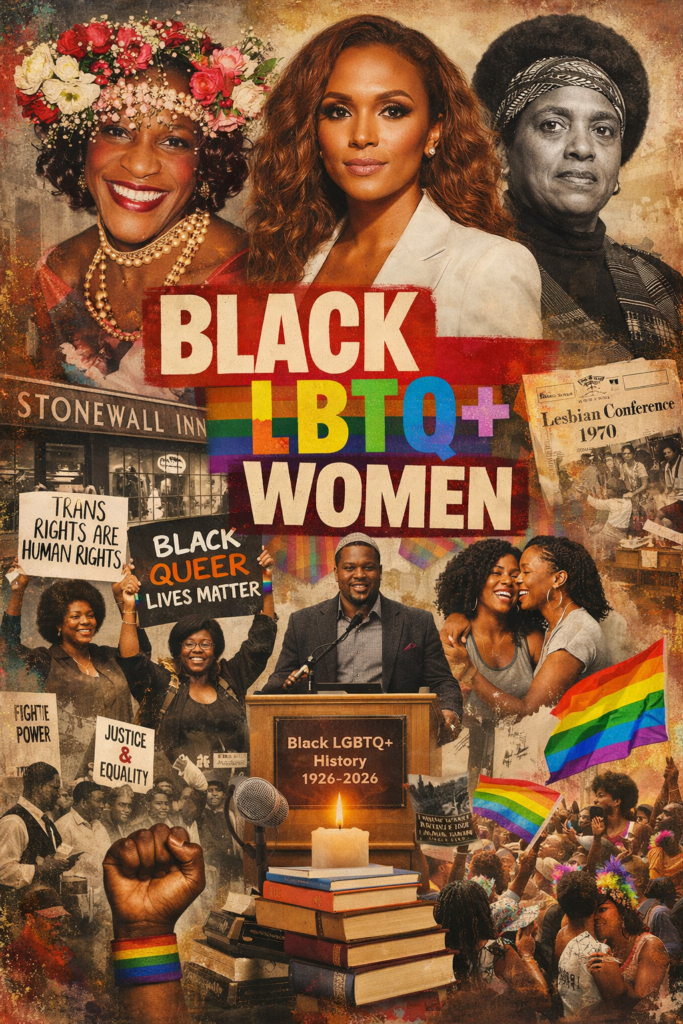
In 2026, we celebrate progress — but we must also confront omission. This Women’s History Month, as institutions post polished tributes and curated timelines, one truth remains: Black LBTQ+ women have always been here, and their contributions, most of the time, are minimized, overlooked, or ignored.
LBTQ+ refers specifically to Lesbian, Bisexual, Transgender, and Queer Women. It does not include the “G” for gay men, because this conversation centers on women — particularly Black women — whose stories have been sidelined even within broader LGBTQ+ narratives. Their lives exist at the intersection of race, gender, and sexuality. That intersection has historically made them both indispensable and invisible. Especially in Westchester County, New York.
Consider Marsha P. Johnson, a Black transgender woman whose presence at the 1969 Stonewall uprising in Manhattan helped ignite the modern LGBTQ+ rights movement. Many say she threw the first brick that started the event to begin with. Or Janet Mock, a writer and advocate who reshaped national conversations about trans womanhood, media representation, and self-definition. Or Audre Lorde, the self-described “Black, lesbian, mother, warrior, poet,” whose essays and poetry challenged America to confront racism, sexism, and homophobia simultaneously.
These women are not side notes in history. They are architects of it.
Black LBTQ+ women have organized protests, written manifestos, taught classrooms, led churches, raised families, shaped culture, and transformed language. They have been involved in every facet of American life — from civil rights to literature to journalism to grassroots activism. And yet, for decades, many people tried not to talk about them. Their stories were deemed “too complicated,” “too controversial,” or simply erased.
Last week, at the Grinton I. Will Library in Yonkers, I presented on Black LGBTQ+ history from 1926 to 2026. I spoke about how times have sort of changed — how representation has expanded and how visibility has grown. But I also acknowledge reality: even today, times have not changed as much as we would like to believe. Violence persists. Black trans women are still being murdered.
This Women’s History Month, remembering Black LBTQ+ women is not an act of charity. It is an act of historical accuracy.
When governments use force, the relevant question is not whether the adversary is hostile. The relevant question is whether the action taken produces a better outcome than the alternatives available at the time. Congress was briefed before and after the strike on Iran. According to Secretary of State Marco Rubio and Speaker Mike Johnson, lawmakers were told that Israel intended to strike Iran regardless of American participation, that U.S. intelligence assessed Iran had delegated automatic retaliation orders, and that American forces in the region would likely be targeted immediately if Israel acted. The administration argued that waiting for the first blow would have produced higher American casualties. Therefore, striking first was described as a defensive necessity.
That argument rests on imminence. Not hostility. Not long-term rivalry. Imminence. If retaliation against American forces were effectively automatic once Israel moved, the president’s authority as commander in chief would strengthen. If the threat was indirect or conditional, the constitutional footing becomes more contested.
The administration has also stated that it operated within the War Powers Resolution. Congressional leadership and the Gang of Eight were notified. Formal notification was delivered within the required forty-eight-hour window after hostilities began. No president of either party has accepted the War Powers Act as fully constitutional in limiting executive authority, but administrations have generally complied with its reporting requirements. In this case, the White House argues that it met those requirements. Compliance with reporting timelines, however, is not the same as prior authorization. That distinction is central to the dispute.
Senator Warner’s objection is confusing because it appears to separate a threat to Israel from a threat to the United States. Historically, American strategic doctrine has treated serious threats to Israel as threats to U.S. interests. Israel’s security has long been viewed as intertwined with American deterrence, intelligence cooperation, and regional balance. That strategic alignment is not new.
But strategic alignment and constitutional thresholds are not identical. A threat to Israel may be a threat to American interests. It is not automatically an imminent armed attack on the United States under Article II. The administration’s justification, therefore, depends on a narrower claim: that once Israel acted, Iran would immediately strike American personnel and assets. If that intelligence assessment is correct, the threat was operational and immediate. If it is not, the constitutional case weakens.
The administration further described the mission as limited. The objective, lawmakers were told, was to degrade ballistic missile launch capability, manufacturing infrastructure, drone systems, and naval assets that threaten shipping lanes. Not regime change. Not occupation. Not nation-building. Limited missions are historically more defensible under Article II authority. Expanding missions are not.
Public explanations, however, have referenced nuclear capability, missile stockpiles, naval threats, and rhetoric welcoming regime change. When stated objectives move, clarity declines. When clarity declines, escalation becomes more likely. History suggests that conflicts expand less from the original design than from evolving rationales under pressure.
Congress now faces its own institutional test. Speaker Mike Johnson has indicated that, after what he heard in the classified briefings, he does not believe a new War Powers resolution will pass in Congress. He has argued that limiting the president’s authority mid-operation would be dangerous and that the administration acted within its constitutional lane. That position signals that at least one chamber’s leadership is unlikely to curtail the executive at this stage.
This matters because the separation of powers is not enforced by theory. Votes enforce it. If Congress does not assert its authority through binding action, then the executive interpretation prevails by default. That has been the pattern across administrations of both parties.
The proper evaluation is empirical. Did acting first reduce American casualties compared to waiting? Will the targeted capabilities be degraded durably? Does the mission remain limited in scope and duration? Or does it create new obligations and risks that did not previously exist?
Speeches will not judge this moment. Outcomes will judge it. If American casualties are minimized, if the operation remains limited, and if regional escalation is avoided, the administration’s calculation will appear strategically sound. If objectives expand, instability deepens, or constitutional boundaries erode further, critics will argue that short-term tactical logic produced long-term costs.
Foreign policy is not measured by intent. It is measured by consequence. The question is whether this action leaves the United States more secure than restraint would have. That answer will not come from the briefing room. It will come from what happens next.
Whenever American forces engage in combat abroad, the same constitutional alarm is triggered: Who has the authority to take the nation into war?
With the recent military operation in Iran, critics immediately declared that President Donald Trump violated the War Powers Resolution. Supporters responded that he acted within his authority as Commander-in-Chief. As is often the case in Washington, certainty arrives long before careful analysis.
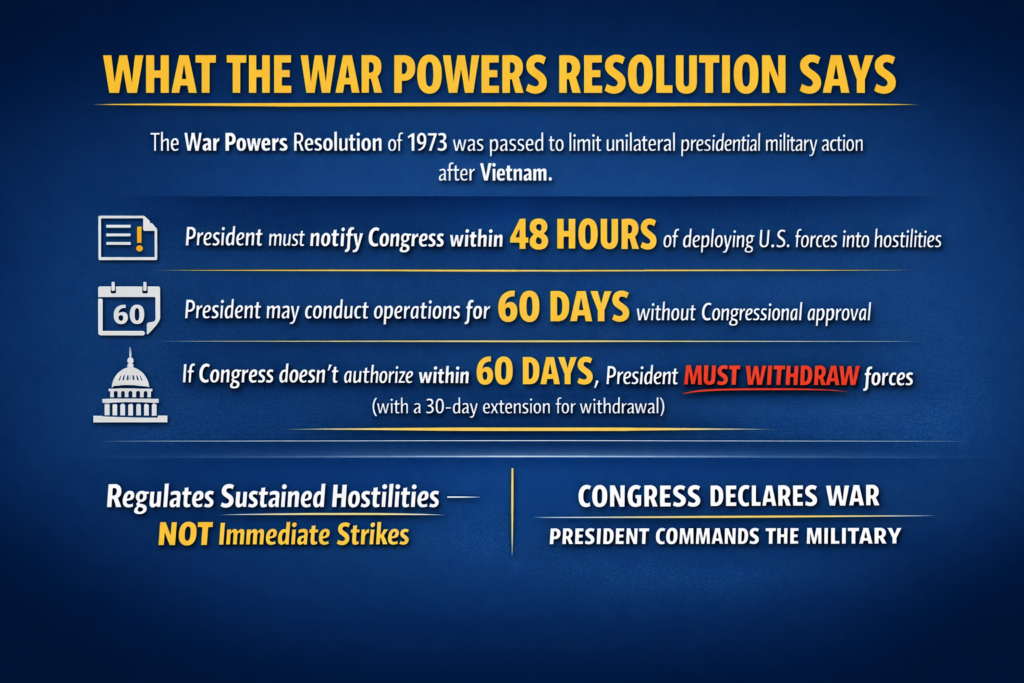
The War Powers Resolution of 1973 was passed after Vietnam, as Congress attempted to reclaim authority it believed had shifted to the executive branch. The law does not prohibit a president from initiating military action. It requires notification to Congress within forty-eight hours and allows military engagement for up to sixty days without formal authorization. If Congress does not approve continued hostilities within that period, forces are to be withdrawn.
The law regulates duration, not immediacy.
If the administration notifies Congress and the operation remains within the 60-day window, then, under the statute itself, the president is operating within the temporary authority the law permits. That may not satisfy those who believe Congress should vote before any military strike occurs, but disagreement with the structure of the law is not proof of violation.
The constitutional argument strengthens not on day one, but on day sixty-one.
If hostilities continue beyond the statutory limit without congressional authorization, the issue moves from interpretation to confrontation. At that point, Congress must decide whether it will assert its authority through funding restrictions or formal disapproval. Historically, that is where institutional resolve often weakens.
This debate is not new, nor is it unique to one administration.
President Barack Obama authorized military action in Libya in 2011 without a declaration of war. His administration argued that the operation did not constitute “hostilities” under the War Powers Resolution because U.S. forces were in a supporting role. That interpretation was controversial, yet Congress ultimately did not force withdrawal.
Obama also initiated airstrikes against ISIS in Iraq and Syria beginning in 2014 without seeking a new declaration of war. Instead, he relied on the 2001 and 2002 Authorizations for Use of Military Force passed after 9/11 and during the Iraq War. Drone campaigns in Yemen, Pakistan, and Somalia were similarly conducted under existing authorizations rather than new congressional declarations.
No modern president has relied on a formal declaration of war for major military engagements. Over decades, Congress has objected rhetorically but rarely exercised its most powerful tool — control over funding — to halt operations.
Over time, practice becomes precedent.
The deeper issue, then, is structural. Has Congress gradually ceded its war-declaring authority through inaction? If so, outrage directed at a single president misses the institutional reality that both parties have operated within — and benefited from — expanded executive authority.
The Constitution assigns Congress the power to declare war and the president the authority to command the military. The War Powers Resolution attempted to mediate that tension by creating a clock. Whether that clock has real force depends not on presidential rhetoric, but on congressional enforcement.
The outcome now hinges on duration and escalation. If the Iran operation remains limited and concludes within the statutory framework, it will join the long list of executive actions that tested but did not legally exceed the boundaries of the War Powers Resolution. If it evolves into sustained conflict beyond the sixty-day threshold without authorization, then the constitutional confrontation becomes unavoidable.
In American government, power rarely shifts because one branch acts boldly. It shifts because another branch chooses not to respond.
The law provides the framework. The outcome will reveal whether that framework still governs — or whether precedent has quietly rewritten it.
References
U.S. Constitution, Article I, Section 8 (Congressional War Powers) U.S. Constitution, Article II, Section 2 (Commander in Chief Clause) War Powers Resolution of 1973, 50 U.S.C. §§ 1541–1548 Authorization for Use of Military Force (AUMF), Pub. L. 107–40 (2001) Authorization for Use of Military Force Against Iraq, Pub. L. 107–243 (2002) Congressional Research Service Reports on Presidential War Powers and the War Powers Resolution Obama Administration Office of Legal Counsel Memorandum on Libya (2011) Congressional debates on ISIS authorization (2014–2016)