Home Blog Page 117

Pete Rock And Common Release Mini-Documentary, ‘The Auditorium Vol.1’

Common and Pete Rock have released a short film chronicling the making of their critically acclaimed project, The Auditorium Vol. 1, Jayquan reported on RocktheBells.com, on Wednesday, October 9th. “This is what I was born for, this is what I live for, this is what brings me some of the greatest joy in my life,” Common says in the film’s intro. “That being said, I knew that I was inspired to do an album that would have the spirit of what we know to be pure soulful, Boom Bap Hip Hop.”

The 15-minute Vevo-produced project includes performances and behind-the-scenes footage. Pete says, “I prepared my ears for this kind of thing.” No matter how a music sounds, I’ll be able to notice the elements because I can detect what’s absent. When we are sampling and chopping, it’s similar to assembling a jigsaw. The parts can be matched. Watch the documentary below.

Common and Pete Rock collaborated on their studio album, The Auditorium Vol. 1. It was Common’s fourth album published under Loma Vista Recordings when it was released on July 12, 2024. With co-production from Tuamie and guest appearances from Jennifer Hudson, PJ, Posdnuos, Bilal, and others, Pete Rock served as the album’s sole producer.

Pete Rock’s production has propelled million-selling, chart-topping, award-winning hits from Nas, Public Enemy, The Notorious B.I.G., and Kanye West to Mick Jagger, Mary J. Blige, Madonna, and Lady Gaga; and his signature style—collage compositions imbued with complex harmony and melody—makes him one of the most influential and innovative figures in the history of popular music. Multi-hyphenate rapper-actor-producer-author-activist Common has created an unparalleled body of work: 15 landmark albums, standout performances in films from “American Gangster” and “Just Wright” to “Selma” and “The Hate U Give,” and most recently on Broadway performing in “Between Riverside and Crazy” and coproducing the revival of “The Wiz.” His Primetime Emmy, three Grammys, and Oscar for Best Original Song mean that Common has now transcended his EGO and is already shopping for a T that fits.

Yet this producer and MC, though they traveled in the same creative circles and soul group for three decades, collaborated only two times—on a notable song they made together in 1994 and another in 1998. Given their independent, interstellar trajectories, there was no reason their paths should cross, until Common’s course was altered by the gravity of a big event: the Hip-Hop 50th Anniversary concert at Yankee Stadium in August 2023. Common was a featured performer, but his epiphany came as a fan: “I stood out in that crowd and watched for five-and-a-half hours. I’ve never done that in my life. Just to see EPMD, to see Lil Kim, to see Mobb Deep, Snoop, Ice Cube, Run DMC, Nas, Lauryn Hill, and Fat Joe. It just made me realize how much I love the art form. It made me want to rap.”

The next month, Common found himself in Pete Rock’s studio north of New York City. “We caught up with each other and I just started playing music,” says Pete. In those first moments, the two highly-favored sons of hip-hop realized they were coming from a similar place of gratitude and enthusiasm for the genre. Common recalls thinking: “We don’t have to reach to make it sound like a throwback. We don’t have to reach to try to make it sound like it’s new and young. We’ve just got to be who we are and do what we love.” Then came Common’s second, more urgent realization: “I can’t wait to leave here and go write.”

“We just became glued to each other,” Pete says. “The recording process wasn’t long at all. It took about a couple of weeks to get the first five songs done. And the way we finished it was heroic.”

Though Pete experienced the pace of their work as brisk, Common remembers the time as one of intense deliberation. “It took time for Pete to dig into these records and find the right sample,” Common says. “Sometimes he would hook it up right then and there, but sometimes he waited ‘till he felt it was the right time and the right expression. And it’s that time, that care, that diligence that comes through in the music that we make.”

Common wrote steadily, recording his vocals in the familiar sanctum of Electric Lady Studios. Several more visits, a back and forth of ideas over text and phone, and the 15 tracks of The Auditorium, Vol. 1 coalesced. “I was reaching for the euphoria of what we did in the 90s, but updated,” Pete says. “The feel of the album is 90s, but it’s not 90s at all. It’s new music.” 

You can cop your copy of “The Auditorium, Vol 1” on their website or anywhere music is sold! #SupportRealHipHop!

Congressional 17 District Race Up For Grabs According To Recent Poll

1

New Emerson College Polling/PIX11/The Hill surveys of New York’s 17th and 18th congressional districts find close elections for the two US House seats.

In the race for Congress in the lower Hudson Valley‘s 17th district (which includes all of Rockland and  Putnam County, as well as most of Northern Westchester County, and portions of southern Dutchess County) 45% support incumbent Republican Congressman Michael Lawler, while 44% support former congressman Mondaire Jones. Three percent support Working Families Party Anthony Frascone, and 7% are undecided.

“Mondaire Jones is leading among young voters under 40, 51% to 40%, and those in their 40s, 45% to 41%, but trails among voters over 50, 49% to 40%,” Spencer Kimball, executive director of Emerson College Polling, said. “The Working Families Party candidate also pulls 6% among voters under 40.”

Lawler has a 47% favorable rating in the district, while 40% have an unfavorable view of him. Thirteen percent are not familiar with him. Jones has a 40% favorable rating, while 40% have an unfavorable view of him. Twenty percent are not familiar with Jones. 

Lawler’s razor-thin 1-point lead is within the survey’s plus or minus 3.8 percent margin of error, which means the race is up for grabs.

Mondaire Jones was first elected in 2020 to succeed the retiring Representative Nita Lowey. In the aftermath of the 2020 redistricting cycle, 18th district incumbent Sean Patrick Maloney announced his intention to run in the new 17th district instead of his existing seat; Jones subsequently opted to run in the 10th district to avoid a primary fight. However, Maloney lost to Republican Mike Lawler in the general election; Lawler subsequently became the first of his party to win this seat since 1981.

In a separate Emerson College poll just north in the 18th District (includes all of Orange County, and most of Dutchess and Ulster Counties. The district includes the cities of Newburgh, Beacon, Kingston, and Poughkeepsie) Democratic Rep. Pat Ryan leads Republican rival Alison Espito 48% to 43%, with nearly 10 percent undecided. That’s just outside the margin of error, still a competitive race.

“There is a sharp gender divide in the 18th district: men break for Esposito 52% to 40%, while women break for Ryan, 54% to 34%,” Kimball added. 

A majority of voters (52%) have a favorable view of Ryan, while 37% have an unfavorable view of him and 11% are not familiar with the congressman. Forty-seven percent have a favorable view of Esposito, while 30% have an unfavorable view of her. 

The presidential election is neck-and-neck in both NY17 and 18. In the 17th district, 49% support Kamala Harris, and 49% support Donald Trump for president. In the 18th district, 48% support Donald Trump, while 47% support Harris. 

The top issue for NY17 voters is the economy (32%), followed by immigration (20%), housing affordability (13%), crime (11%), and threats to democracy (10%). The top issue for NY18 voters is the economy (39%), housing affordability (16%), immigration (14%), threats to democracy (11%), and crime (6%). 

Voters were asked if the number of migrants seeking sanctuary in the United States is a crisis, a problem but not a crisis, or not a problem at all. A majority of voters in both districts think it is a crisis: 56% in NY17 and 53% in NY18. Thirty-four percent in NY17 and 35% in NY18 think it is a problem but not a crisis, while 10% in NY17 and 13% in NY18 think it is not a problem at all. 

Both contests are among 7 competitive House races in New York’s suburbs and upstate that could determine which party controls the House of Representatives.

Mount Vernon City School District Will Hold Community Career Fair

The Mount Vernon City School District (MVCSD) will hold a career fair on Thursday, October 17, 2024. The career fair, open to high school students and the community, will feature jobs from within the school district, local employers, and the New York State Department of Labor.

The career fair will be held on Thursday, October 17th, from 3 to 5 p.m. at Mount Vernon High School, 100 California Road, Mount Vernon. Please share with all young people who may be looking for a job or career!

Crisis at the New Rochelle Police Department By the Editorial Board of New RoAR News

3

Is Anyone Taking This Seriously?

Facts:

On  June 5, 2020, New Rochelle Police Officer Alec McKenna shot and killed Kamal Flowers, a Black resident of New Rochelle, under suspicious circumstances.  Officer McKenna had followed a car in which Flowers was a passenger from downtown until the car stopped on Potter Avenue.  Flowers then got out of the car and ran onto a dark side street.  Officer McKenna followed him and killed him.  There were no witnesses.  McKenna said Flowers threatened him with a gun.  The video from a neighboring building was inconclusive. An internal NRPD investigation found that McKenna followed all standard procedures, but it did not explain why McKenna followed the car or why he chased Flowers—a passenger, not the driver—when he ran away, setting up a fatal confrontation.  McKenna remains on the force.

On the afternoon of July 3, 2023, NRPD Detective Steven Conn shot and killed Jarrell Garris, a Black New Rochelle native, in front of St. Catherine AME Zion Church on Lincoln Avenue.  Garris had allegedly eaten some fruit at the nearby New Rochelle Farms market and left without paying.  Both the store owner and Detective Conn noted before the shooting that Garris appeared to be having mental health issues.  Two officers were talking with Garris who was quietly walking away, when Conn arrived on the scene, ran over, placed a handcuff on Garris, punched him in the face, and, along with another officer, wrestled him to the ground.  When Garris appeared to reach for the other officer’s holstered gun, Conn shot him in the neck.  An investigation by the New York State Attorney General found that Conn could likely justify the shooting in court as “self-defense,” but criticized Conn’s needless use of physical force to restrain Garris and the NRPD’s training on managing people with mental health issues who are accused of “petty offenses.”  Conn remains on the force and faces an internal investigation by the NRPD.  The NRPD police union issued a statement calling Garris a “violent criminal” and blaming him for his own death.

On May 29, 2024, NRPD Lieutenant Sean Kane, the leader of the Special Investigations Unit, videotaped himself handling a bag of white powder in his patrol car just before finding a similar bag under the car of Ivin Harper, a Black New Rochelle native, and then having Harper arrested.  Harper filed a complaint, and when the video was discovered, Kane was suspended, the case was referred to the District Attorney for investigation, and the drug charges against Harper were dismissed.  It is unknown how many other people might have been framed over the years by NRPD officers who were not caught on tape.

In 2020, after the police killings of Kamal Flowers, George Floyd, Breonna Taylor, and many other Black people across the country, then New York Governor Andrew Cuomo ordered every local government in the state to create a reform plan to address issues of racism in the policing of Black communities.  After intense pressure from New Rochelle residents, the City Council agreed in 2021 to form a “Community-Police Partnership Board” (CPPB) and directed the CPPB to propose a structure for an independent Civilian Complaint Review Board (CCRB) within a year.  More than two years later, the CPPB proposed a virtually powerless CCRB, which is now being considered by the City Council.  Most of the police members of the CPPB opposed the creation of any CCRB at all.

At the quarterly meeting of Citizens for a Better New Rochelle on September 25, Police Commissioner Robert Gazzola dismissed calls for enhanced training of New Rochelle police officers.  He said the suspension of Lieutenant  Kane would be “serious training for everyone else,” and that “just that alone is going to be enough.”  Gazzola also said that all the officers involved in the Garris killing had been thoroughly trained in de-escalation and mental health responses, that “there was probable cause to make an arrest–it was a lawful arrest,” and that Conn “did not escalate in my opinion, just looking at the video.”

NRPD Police Commissioner Robert Gazzola

Two Black men shot dead by NRPD officers in four years, a third Black man framed on drug charges by a senior NRPD officer, a department that openly resists any public accountability, and a commissioner who treats all this as business as usual.

What is going on in the NRPD?  Is this the kind of policing New Rochelle wants and deserves?  Who is setting standards for the NRPD and enforcing them?  The Police Commissioner?  The City Manager?  The City Council?  The Mayor?  Anyone?

New Rochelle needs a police department where officers are well trained and sensitive to the needs of the communities they serve, and where officers who are corrupt or violent are held accountable.

Make your voice heard!  Contact the mayor, your council member, and the acting City Manager.

Or show up at the City Council’s next monthly Citizens To Be Heard session:

Tuesday, October 8, at 7 pm

City Hall, 515 North Avenue

(Anyone can sign up to speak to the Council and the community for 3 minutes.)

Crisis at the New Rochelle Police Department originally ran Monday, October 7th on New RoAR News

Youth Shelter Of Westchester 46th Anniversary Gala

0

The Youth Shelter Program of Westchester (YSOW) celebrated its 46th Anniversary Gala, on Friday, September 27th, at the Greentree Country Club located at 538 Davenport Avenue in New Rochelle, NY. This year’s event honored the Sills Family Foundation as the Community Honoree; Wayne Davis, Community Manager for Community and Business Development at JPMorgan Chase, as the Corporate Honoree; Joseph D. Roberto, Chair of PCSB Community Foundation and retired Chairman, President and CEO of PCSB Bank, as the Individual Honoree; and New York State Assemblyman J. Gary Pretlow as the Reginald D. Lafayette Servant’s Heart Honoree.

“We celebrated 46 years of building futures for justice-involved youth at our upcoming gala,” said Executive Director Joanne Dunn. “The Youth Shelter Program of Westchester deeply appreciates the continued support as we advance our mission advocating for a justice system that prioritizes rehabilitation and second chances for our youth while providing them a path toward a brighter future.”

The Sills Family Foundation is dedicated to ensuring that marginalized families have the tools and support they need to live up to their highest promise. The Foundation’s grantmaking initiatives focus on families impacted by incarceration and criminal justice reform, support for families and children in low-income and underserved communities, and reduction of community violence and early education. Additional Foundation committees also focus on environmental justice, climate change, and arts and culture programs that support social justice ideals. Since launching its first formal grantmaking process in 2003, the Foundation has contributed nearly $30 million to nonprofits working in these areas across the United States, with a special focus on New York and California.

Wayne Davis is a Community Manager at the Mount Vernon Chase branch for Community and Business Development. In this role, Davis is a local ambassador for Chase, building and nurturing relationships with key community leaders, nonprofit partners, and small businesses at the neighborhood level. Davis hosts financial health workshops, facilitates nonprofit partnerships, and offers community programming. He is committed to helping advance racial equity by supporting Black and Latinx communities with tools and resources to help them improve their financial well-being.

Joseph D. Roberto is a recently retired Chairman, President, and Chief Executive Officer of PCSB Bank, a $2 billion commercial bank headquartered in Westchester County. During his tenure as CEO from 2012 to 2023, Roberto consistently supported initiatives to foster a culture of diversity, equity, and inclusion within PCSB Bank. Notably, he established the PCSB Community Foundation following the bank’s 2017 stock conversion, providing nearly $2 million in grants and sponsorships to deserving nonprofit organizations. As the Foundation’s current Chair, Roberto remains committed to empowering organizations that significantly improve the lives of residents in the Lower Hudson Valley. Outside of his banking career, Roberto actively participates in various nonprofit endeavors, serving on the boards of the Putnam Hospital Center, the Boys and Girls Club of Mt. Vernon, and the Corporate Council of St. Christopher’s Inn.

J. Gary Pretlow is a current New York State Assembly member who has represented the 89th Assembly District since 1992, which includes Mount Vernon and Yonkers. Assemblyman Pretlow currently serves as Chairman of the Committee on Racing and Wagering and is also a member of the Assembly Committees on Ways and Means, Rules, Codes, Insurance, and Assembly Steering Committee. In addition, Assemblyman Pretlow is a member of the Black and Puerto Rican Legislative Caucus, the NYS Senate and Assembly Hispanic Task Force, and Treasurer of the NYS Association of Black and Puerto Rican Legislators, Inc. During his tenure, Assemblyman Pretlow has helped push through significant legislation such as Cynthia’s Law, which establishes the reckless assault of a child as a Class D Felony and raises awareness for shaken baby syndrome by establishing an educational campaign to inform the public of the harm that may result from shaking as a young child. Assemblyman Pretlow has also proudly sponsored a law that legalizes and implements consumer protections for interactive fantasy sports in New York, which is anticipated to generate approximately $4 million for state education aid.

This year’s program included an awards presentation celebrating this year’s honorees, fabulous food, and exciting surprises. The keynote speaker was DJ Envy, DJ, Hall of Famer, Best Selling Author, Actor, and one of the three hosts of the syndicated radio show The Breakfast Club, alongside Charlamagne tha God, on Power 105.1 FM.

The 46th Anniversary Gala was made possible thanks to the generous support of our sponsors: Inspirational – BJ’s Renovation, JPMorgan Chase, Darren M. Morton, NewYork-Presbyterian Westchester, PCSB Community Foundation; Focused – AT&T, Gilbane Family Foundation, Jeanne Radvany; Builder – Yonkers Family YMCA and Orange Bank & Trust.

The Youth Shelter Program of Westchester (YSOW) is a not-for-profit residential alternative to incarceration for young men 16-21. Since 1975, YSOW has provided a structured environment designed to foster growth and rehabilitate court-involved youth from the Westchester communities with educational, vocational, cultural and life skills. YSOW offers a job-readiness program, on-site educational and clinical services, and coordinates with various community providers to access legal, medical, and mental health services. To learn more about YSOW, please visit their website at www.ysow.org.

The Ta-Nehisi Effect: Coates, CBS, and the Clash Over Black Voices on Palestine

The recent interview between Ta-Nehisi Coates and CBS Mornings anchor Tony Dokoupil has sparked an essential conversation about whether Black voices have the right to speak out on issues of global injustice, particularly in Palestine. For many Black Americans, witnessing oppression abroad feels deeply personal, resonating with the painful historical struggles we’ve endured in our own country. Coates’ reflections on Palestine—and his choice to share the voices of Palestinians—echo a long-standing tradition of solidarity between the Black American experience and the Palestinian fight for justice.

The Black struggle in America and the Palestinian struggle have a shared history. In the aftermath of the 1967 Arab-Israeli War, Black Power and Civil Rights activists saw their own battles for freedom reflected in the Palestinian cause. Leaders like Malcolm X, Martin Luther King Jr., Muhammad Ali, and Jesse Jackson expressed empathy for Palestinians, identifying with fellow people of color facing colonialism, systemic racism, and dehumanization. They recognized a universal fight for human rights and dignity that transcends borders and binds oppressed peoples together.

During the interview, when Coates described how his Palestinian tour guide couldn’t access certain places or even drive down certain streets due to his ethnicity, I was immediately reminded of my own family’s history. My parents and grandparents faced the same daily humiliations under Jim Crow and apartheid-like conditions in the United States. The trauma of being denied basic freedoms because of one’s race is all too familiar to Black Americans. Yet, when Coates shared this powerful moment, Dokoupil’s response—“Why is that?”—was a stark reminder of how our experiences and the parallels between Black and Palestinian oppression are often dismissed or ignored. Such a response seemed to trivialize a painful reality that has spanned over five decades, failing to acknowledge the shared history of suffering under white supremacy and state-sanctioned discrimination.

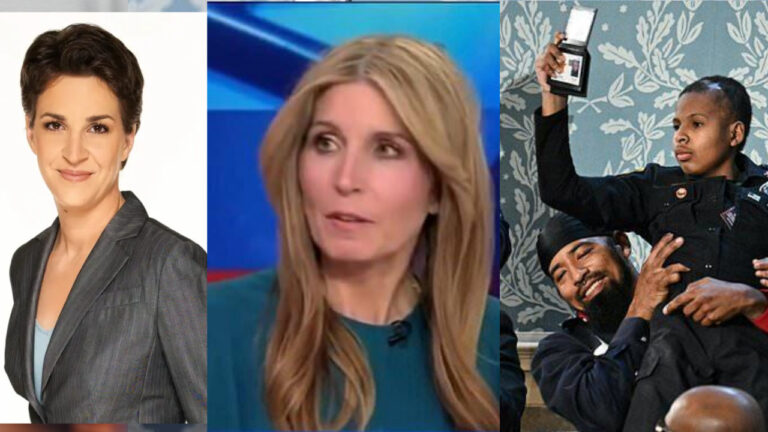
What struck me most in watching this exchange, however, was the silence of Gayle King and Nate Burleson, two Black anchors who sat quietly as Coates faced an intense and at times dismissive critique. This silence highlighted a hard reality we, as Black people, must confront: we have grown too comfortable in white institutions, hesitant to challenge racism or injustice when it disrupts the narratives of those institutions—especially when they are the ones writing our paychecks. Coates, a respected journalist, faced an attack on his character, a stark reminder of the consequences we face when we lack independent Black institutions, particularly in media. It also reflects the unfortunate failure of some Black leaders and pastors to honor the legacy of the Civil Rights and Black Power movements, movements that once championed speaking truth to power without fear or favor.

As I write this on October 7, I extend my deepest sympathies and prayers to the families of the hostages and to the countless innocent lives lost in this conflict. I denounce Hamas and all organizations that engage in acts of terror, including those within the Israeli government, that perpetuate violence. We must stand firm in condemning any group that uses terror as a tool, regardless of who they claim to represent, as these acts inevitably harm innocent civilians—especially women and children, who bear the brunt of this violence. Reports indicate that over 30,000 Palestinians were killed, with over 70 percent of women and children have lost their lives in this prolonged conflict. This staggering and heartbreaking tragedy should weigh heavily on us all.

As a follower of the scriptures, I am compelled to speak the truth and demand justice for all the innocent lives impacted, Palestinian and Israeli. Ecclesiastes 3:17 reminds us, “God will bring into judgment both the righteous and the wicked, for there will be a time for every activity, a time to judge every deed.”

It is our duty to uphold this call for justice, to ensure that we do not allow the suffering of the vulnerable to continue unchallenged. We must act with compassion and a commitment to truth, advocating for a peaceful and just resolution that honors the dignity and sanctity of every human life.

In defending his book, Coates made a simple yet profound point: mainstream American media often amplifies Israel’s perspective, frequently sidelining the voices and lived experiences of Palestinians. He also observed that there are very few, if any, Palestinian or Arab newscasters in major American media—a noticeable absence that reflects a deeper issue. He’s absolutely correct: representation matters, and it brings diverse perspectives that are shaped by unique lived experiences. Coates’ book does not attempt to resolve the complex and enduring Israeli-Palestinian conflict; rather, it reflects his own observations and the stories of the people he encountered. By sharing these narratives, Coates does not offer an extremist view but instead strives to bring balance to a conversation that American media often frames one-sidedly.

Screenshot of CBS Morning show

Through his work, Coates challenges us to recognize the humanity in those whose stories we rarely hear, inviting us to broaden our understanding of a conflict that impacts countless lives. His insights encourage readers to engage with perspectives that are often marginalized, pushing us to see the complexities and pain in a struggle that, like all human conflicts, is far from black and white.

For Black Americans, Coates’ stance is a call for solidarity with other oppressed peoples. Our own history of slavery, Jim Crow laws, and systemic discrimination provides a unique understanding of what it means to fight for freedom and dignity. His views are not anti-Israel but anti-discrimination in all its forms. His criticism is not aimed at a specific state but at any system built on ethnic supremacy. This perspective reflects Coates’ lived experiences as a Black man in America, underscoring a commitment to justice that transcends borders.

The reality is that, while we may see Black faces in prominent positions, we still lack the independent power structures necessary to stand up for justice, free from the constraints of institutions that prioritize profit over truth. We have a duty to rebuild Black-led institutions that place community and truth above convenience. Let us embrace the radical legacy of our forebears in the Civil Rights and Black Power movements, who taught us that our role is not just to represent our people but to fight for our values.

In closing, I urge everyone to support Ta-Nehisi Coates’ work by buying his new book, The Message. It’s available on Amazon and other major retailers. Coates amplifies stories that challenge us to confront injustice and to stand in solidarity with those denied their freedom. Whether in Ferguson or Gaza, Birmingham or Bethlehem, the call for justice is universal. It is our responsibility to amplify it—loudly, and without apology.

PBP Radio Episode 410

Black Westchester presents The People Before Politics Radio Show Episode 410 With ya host Damon K. Jones and AJ Woodson giving you that Real Talk For The Community since 2014

Black Westchester presents the People Before Politics Radio Show every Sunday night, 6-8 PM, simulcasting live on Facebook, X (formerly Twitter), LinkedIn, Instagram, and YouTube and archived on BlackWestchester.com. Giving you that Real Talk For The Community since 2014.

To support the Black Westchester and the People Before Politics Radio Show, which provides the News With The Black Point Of view and gives you the real talk for the community for free, make a donation via PayPal at www.PayPal.me/BlackWestchesterMag. In the words of Ray Charles, “One of these days, and it [might not be] long, You’re gonna look for [us], and [we’ll] be gone.” Support independent, Black-free media!

As always, you can follow us on Facebook, InstagramLinkedIn, and YouTube

Contributions and Donations can be made via PayPal.

MV Mayor Shawyn Patterson-Howard and Montefiore Announce Plans, Backed by $41 Million NYS Capital Investment, For Transformation of Montefiore Mount Vernon Hospital

0

Guided by extensive community engagement and spearheaded by Mayor Shawyn Patterson-Howard and Montefiore leadership, this transformative project prioritizes equitable healthcare access tailored to the needs of Mount Vernon residents

Mount Vernon, NY – On Monday, September 30th Mount Vernon Mayor Shawyn Patterson-Howard, in partnership with Montefiore Health System revealed transformative plans for Montefiore Mount Vernon Hospital designed to meet the community’s unique healthcare needs and establish a new benchmark for accessible care. Backed by a $41-million capital investment from New York State, Montefiore Mount Vernon has laid out plans to become a sustainable, community model for both inpatient and outpatient care. This extensive plan underscores Montefiore’s commitment to leading the future of medical care and its dedication to the Mount Vernon community.

“This is more than a financial investment — it’s a commitment to collaboration and continued advocacy for the health, wellbeing, and future of Mount Vernon,” said MV Mayor SPH. “This transformation will provide our residents with state-of-the-art facilities and comprehensive care, underscoring our collective dedication to a healthier future for our city. With the support of Senator Jamaal Bailey, Assemblyman J. Gary Pretlow, and $41M in secured funding from New York State, Montefiore will revitalize and expand services at Montefiore Mount Vernon Hospital to address our community’s healthcare needs. We have come a long way, and I am excited about the direction we are going. FORWARD TOGETHER.” 

“Over the last couple of years, we have engaged with our patients, community members, and local leaders to truly understand and address the specific healthcare needs of Mount Vernon,” stated Regginald Jordan, Vice President for Clinical Services & Executive Director, Montefiore Wakefield Hospital and Montefiore Mount Vernon Hospital. “This plan is a direct outcome of listening to those voices and constant support from our local and state officials. We are deeply grateful to Mayor Shawyn Patterson-Howard for her leadership and to the community at large for their trust and collaborative spirit. This initiative goes beyond mere infrastructure; it’s about building on Montefiore’s ongoing commitment to deliver exceptional, accessible healthcare that resonates with the needs of our communities.”

The comprehensive revitalization strategy focuses on expanding and modernizing critical areas of the hospital. Key projects include the redesign of the Emergency Department (ED). Currently, the ED can accommodate 20,000 visits each year. With the planned upgrades, it will be able to accommodate 50,000 visits, marking a 150% increase in capacity.

The transformation plan addresses the complex challenges involving transferring patients to other facilities due to a lack of operating rooms (ORs) and ORs doubling as a Gastroenterology Unit. Under these plans, Montefiore will expand the operating rooms and will outfit them with state-of-the-art equipment, thus reducing the need to transfer patients.

The plan also includes the modernization of the Family Health Center, including improvements to the lobby, exam rooms, and support centers, to enhance the patient experience. These investments will not only increase access to care but also qualitatively improve the environment that patients need and deserve.

“Montefiore’s approach to transforming Montefiore Mount Vernon Hospital has exemplified what it means to lead with inclusivity and community engagement,” said Frances-Ann Lightsy and Takisia Whites, Co-Presidents of the Montefiore Mount Vernon Community Advisory Board. “Their dedication to incorporating input from community members has ensured that the development not only reflects but actively promotes our collective needs and values. We extend our gratitude to Montefiore for their commitment to making this process as inclusive and community-driven as possible, and for their investment in the well-being of the City of Mount Vernon.”

Other elected officials shared their support and praise:

“When the residents of Mount Vernon spoke, Montefiore not only listened, they acted expeditiously. As healthcare is redefined, we look at access and equity as the centerpieces for a healthy community, especially for those from underserved communities,” said New York State Senator Jamaal T. Bailey. “I applaud Governor Hochul, Montefiore leadership, and my colleagues in government for consistently fighting for the healthcare facility that Mount Vernon deserves. I’m excited about the work that was done collaboratively so that we can unveil this new transformative plan for Montefiore Mount Vernon Hospital, which will serve as a model to others. It truly shows what can happen when you listen to the needs of the community to deliver the best compassionate care that residents in Mount Vernon and beyond deserve.”

“Today’s announcement is a landmark moment for healthcare in our district,” said New York State Assembly Member J. Gary Pretlow. “This vision not only promises enhanced healthcare services for our residents but also signifies a major step forward in our ongoing efforts to ensure everyone in our community has access to the high-quality care they deserve. I commend Mayor Shawyn Patterson-Howard and Montefiore for their leadership on this issue.”

“Having grown up in Mount Vernon and walked these streets with my aging parents, I know firsthand how essential it is to expand healthcare services here,” said Westchester County Executive George Latimer. “I commend Mayor Shawyn Patterson-Howard for her visionary leadership and Montefiore’s commitment to shaping a positive future for Montefiore Mount Vernon Hospital. This transformative plan not only addresses the vital needs of residents, but also secures the financial sustainability required to deliver world-class healthcare for generations to come.”

Senior Pastor, Dr. W. Franklyn Richardson, Grace Baptist Church remarked, “The enhancements at Montefiore Mount Vernon Hospital underscore a powerful commitment to ensuring that every member of our community must have access to superior healthcare. This development is crucial for those in underserved positions and reflects a profound dedication to addressing and rectifying healthcare disparities.”

“Montefiore’s commitment to enhancing healthcare access in Mount Vernon represents a pivotal shift towards greater health equity,” said Reverend, Dr. Stephen Pogue, Pastor of Greater Centennial AME Zion Church and President of the Save & Transform Mt. Vernon Hospital Coalition. “Our community’s most underserved members will greatly benefit from this initiative, which promises to broaden the availability and improve the quality of healthcare services. I am deeply thankful to Montefiore and Mayor Shawyn Patterson-Howard for prioritizing the needs of those who have historically been left behind in our healthcare system.”

“The transformative upgrades at Montefiore Mount Vernon Hospital bring a wave of optimism and significant improvements in addressing health equity,” said Judith Watson, RN, BSN, MPH, CEO, of Westchester Community Health Center. “This development is crucial as it enhances access to primary and specialty care services in Mount Vernon and throughout Westchester County. I am deeply thankful to Mayor Shawyn Patterson-Howard and Montefiore for their dedication to reducing health disparities and promoting a healthier future for all community members.”

Montefiore Health System also invested 20 million dollars in a new medical records system EPIC which puts Mount Vernon Hospital on the same system as the rest of Montefiore and all the major hospitals in the region, Mayor Shawyn Patterson-Howard informed Black Westchester.

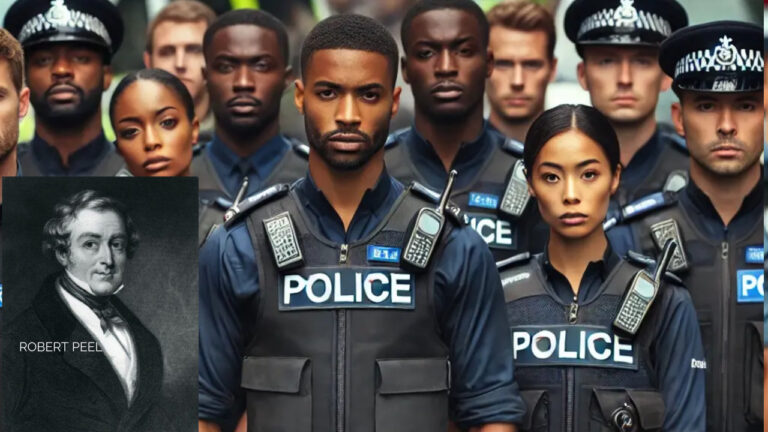
Beyond Symbolic Change: Why the George Floyd Act Falls Short in Transforming Community Policing

The Urgent Need for Police Reform

In the wake of George Floyd’s tragic death in May 2020, the nation erupted in calls for justice and comprehensive police reform. His death became a symbol of the systemic issues in policing, particularly the disproportionate use of violence against Black Americans. However, since George Floyd’s death, many other Black men across the country have been killed by police, reigniting outrage and reinforcing the urgent need for meaningful reform. These tragic incidents have only added to the collective demand for real solutions—solutions that hold law enforcement accountable and protect communities from excessive force and extrajudicial killings of Black Americans.

The introduction of the George Floyd Justice in Policing Act was a response to this national outcry. The bill seeks to increase police accountability, enhance transparency, and reform policing policies on a national scale. But as someone who has spent 33 years in law enforcement, I can tell you that we need to be honest about what legislation like this can—and cannot—accomplish. Legislation alone is not enough, and the families of those who have suffered from police violence do not need political rhetoric; they need real, actionable change.

The George Floyd Justice in Policing Act is an essential legislation that proposes significant reforms. It calls for measures like banning chokeholds, restricting the use of no-knock warrants, and increasing the transparency of police misconduct through a national database. It also seeks to address the issue of qualified immunity, which has long shielded officers from civil lawsuits in cases of excessive force.

The reality is that all politics is local, and for the George Floyd Act to bring about widespread, meaningful change, local governments—at the city, county, and state levels—must take the lead in implementing critical policy reforms, establishing civilian oversight mechanisms, and incorporating accountability measures in police contracts. Without strong local action, the bill’s impact will be fragmented, and true reform may remain elusive.

These are all necessary reforms that could meaningfully impact policing nationwide. However, activists and supporters of this bill must be transparent about its limitations. The constitutional structure of the United States, particularly the 10th Amendment, places strict limits on the federal government’s ability to enforce reforms at the local, county, and state levels. Local and state laws govern most policing, and the federal government cannot simply mandate changes for all law enforcement agencies nationwide.

The 10th Amendment: A Barrier to Nationwide Reform

The 10th Amendment of the U.S. Constitution plays a pivotal role in limiting the federal government’s ability to impose reforms on local police departments directly. The amendment reserves all powers not explicitly granted to the federal government to the states or the people, including the authority over public safety and policing. This division of power makes it constitutionally impossible for federal legislation like the George Floyd Act to directly enforce reforms in the over 18,000 local, county, and state police departments across the country.

As a result, the George Floyd Act applies only to federal law enforcement agencies such as the FBI or DEA and cannot mandate changes at the local level. This leaves the Act toothless for most city, county, and state law enforcement personnel. While the federal government can incentivize reform through conditional funding, the ultimate decision to adopt these reforms rests with state and local governments.

Advocates of the bill need to emphasize this limitation more clearly. While the Act sets important federal standards, the actual enforcement of reforms in local police departments will depend on state and municipal leaders choosing to adopt these standards through their own legislative processes.

Federal Influence: Incentives, Not Mandates

Since the federal government cannot directly impose reforms on state and local police departments, the George Floyd Act relies on conditional spending to encourage the adoption of its provisions. This strategy leverages federal funding—such as COPS grants and Byrne Justice Assistance Grants—to incentivize police departments to implement reforms, including:

  • Banning chokeholds and carotid artery restraints.
  • Implementing body cameras for officers.
  • Restricting no-knock warrants in drug cases.

While this method gives the federal government some influence over local policing practices, it does not guarantee change. Local governments and police departments can only accept federal funding if they comply with the conditions, effectively bypassing the reforms. Departments may opt out of these grants in wealthier areas or states with solid political opposition to federal oversight, leaving significant gaps in the Act’s intended coverage.

This voluntary nature of compliance underscores the need for local governments to take proactive steps in implementing reforms. Federal funding can serve as a useful tool to encourage change. Still, without local action, the George Floyd Act’s impact will be uneven, and many of its provisions may not be adopted in jurisdictions that need them most.

Local Action is Critical: “All Politics is Local

The principle that “all politics is local” is especially true regarding police reform. While national legislation can set the stage for change, real progress must happen on the ground within the cities, counties, and states where police departments operate. The federal government’s inability to mandate reforms at the local level makes it even more vital that local and state governments embrace the responsibility of implementing policies that increase accountability, transparency, and community trust.

1. Policy Reforms at the Local and State Level:

Local governments must take the initiative to legislate reforms, such as banning chokeholds, implementing de-escalation training, and ensuring the use of body cameras. City councils and state legislatures play a pivotal role in setting these standards, which can be tailored to meet the specific needs of their communities. The federal government cannot effectively impose these policies but must be driven by local leaders who are closer to the concerns and realities of their residents.

2. Civilian Review Boards:

One of the most effective tools for increasing police accountability at the local level is the establishment of civilian complaint review boards (CCRBs). These independent bodies, comprised of community members, provide oversight of police misconduct investigations and can help restore public trust by ensuring that complaints are thoroughly and fairly investigated.

The George Floyd Act encourages the creation of CCRBs but cannot require them across the board. Local governments must pass ordinances establishing these boards and granting them the necessary powers, such as subpoena authority and investigative independence. Civilian oversight is critical to ensuring that police departments remain accountable to their communities, and local action is essential to making this a reality.

3. Accountability in Collective Bargaining Agreements:

Police unions play a significant role in shaping police departments’ internal policies, mainly through collective bargaining agreements (CBAs). These agreements often include provisions that can hinder accountability, such as lengthy appeals processes for disciplinary actions or restrictions on releasing officer misconduct records.

Local governments must renegotiate CBAs to include accountability measures that align with the goals of the George Floyd Act. These measures may include provisions that make it easier to discipline officers for misconduct, require transparency in disciplinary proceedings, and limit the protections that shield officers from facing consequences for excessive use of force or other misconduct. Reforming these agreements is a local issue, and city and county officials must work with unions to prioritize community safety and accountability over institutional protections.

Importance of Local Leadership

Local leadership is paramount for the George Floyd Act to bring about meaningful and lasting change. Federal legislation can only go so far; the real impact will be determined by how willing local governments are to adopt, implement, and enforce the reforms proposed in the bill. In many cases, the success of these reforms will hinge on local elected officials, from mayors and city councils to county commissioners and state legislators, taking bold steps to prioritize **police accountability and public safety**.

If local politicians genuinely support oversight and accountability, they will legislate Civilian Complaint Review Boards (CCRBs) and include accountability measures in collective bargaining agreements with Police Benevolent Associations (PBAs). However, legislative action alone is insufficient. 

Community involvement is crucial for meaningful reform. Grassroots organizations, civic leaders, and local advocacy groups must actively hold their governments accountable, ensuring that reforms are passed and effectively enforced. This multifaceted approach includes pushing for greater transparency in police department operations and advocating for the establishment of independent oversight bodies like CCRBs. It also involves demanding reforms to collective bargaining agreements prioritizing public trust over protecting officers accused of misconduct.

Engaged citizens should organize community forums to discuss policing issues and proposed reforms, monitor the implementation of new policies and procedures, and encourage diverse community representation in police hiring and training processes. Furthermore, fostering ongoing dialogue between law enforcement agencies and the communities they serve is essential. This can help build mutual understanding, address concerns proactively, and develop collaborative solutions to public safety challenges.

Ultimately, creating a more accountable and transparent policing system requires a sustained effort from elected officials and engaged citizens. By working together, communities can help shape law enforcement practices that uphold justice, respect civil rights, and maintain public safety for all residents. This collaborative approach ensures that reforms are not just words on paper but tangible changes that improve the relationship between law enforcement and the communities they are sworn to protect and serve.

The Silent Crisis: Deprived Masculinity is a Mental Condition Among Black Men

In American society, the role of the father is often taken for granted. Yet for many Black men growing up in single-mother households, the absence of a strong, positive male figure is a silent crisis that shapes their mental health, identity, and the future of their families. This “deprived masculine mental illness” has ripple effects, not only affecting individual men but also their relationships, children, and communities.

For many Black men raised without fathers, the journey to manhood is fraught with emotional confusion. These men often absorb emotional traits from their mothers, learning to navigate the world in ways that may clash with societal expectations of masculinity. Emotions such as heightened sensitivity, passivity, or emotional dependency—traits that can be adaptive in a maternal context—may leave these men ill-prepared for challenges requiring assertiveness, emotional control, and leadership. This emotional dysregulation often spirals into frustration, anger, or retreat, creating barriers to personal and professional success.

In today’s society, there’s a noticeable lack of examples of strong, positive Black male leadership, especially in politics, business, schools, our public sector, and mainstream entertainment. Unlike men from other ethnic groups who can proudly embrace their cultural identity, Black men often feel pressured to prioritize universal appeal over their own community’s interests. This expectation has become a diminishing factor in our sense of masculinity, yet it’s frequently normalized.

Where is the everyday Black man celebrated in American society, or better yet, in Black society? Today’s fractured Black culture often elevates unrealistic representations of Black men. The most visible Black employee is often the athlete, but even then, they are typically employed and owned by white-dominated companies.

While undoubtedly successful Black men are in leadership positions, they are rarely portrayed or celebrated in mainstream culture as ideal role models. For a young Black man growing up without a father figure at home, this lack of representation further limits his exposure to examples of healthy, successful masculinity in action. The scarcity of these figures, both in the immediate family environment and in broader society, makes it even more challenging for him to develop a clear, positive understanding of manhood.

Without a strong male role model, young Black men lack a blueprint for healthy masculinity. They are left to find their own path, often seeking out unhealthy sources to define what it means to be a man. Media, peer groups, and street culture can fill the void, but these influences tend to glorify toxic masculinity—emphasizing dominance, emotional detachment, and aggression. The result? Men who overcompensate by adopting hyper-masculine traits to hide their insecurities, or those who withdraw from relationships and responsibilities altogether.

The effects of this deprived masculinity are stark. Many of these men develop distorted views of women, rooted in unresolved childhood conflicts with their mothers. They may idealize or resent women, contributing to relational dysfunction, misogyny, and trust issues. Narcissism, a common coping mechanism, manifests as an inflated sense of self, entitlement, and emotional detachment, making it difficult for these men to form healthy, respectful relationships.

Perhaps most alarming is how this crisis perpetuates itself. Men who have never seen fatherhood modeled effectively are more likely to become absentee fathers themselves, continuing the cycle of emotional neglect and instability. The resulting intergenerational trauma spreads through entire communities, weakening family structures and perpetuating cycles of dysfunction, all while society watches silently.

But this is not a crisis without solutions. Addressing deprived masculine mental illness in Black men requires a holistic approach, starting with providing rites of passage workshops for both young and older Black men. These workshops could serve as formal transitions into manhood, offering education on emotional regulation, responsibility, fatherhood, and leadership. For older men, they would provide the opportunity to unlearn unhealthy behaviors and re-engage with positive masculinity, ultimately allowing them to mentor younger generations.

The role of the church in this healing process is critical, but it must go beyond traditional messages of faith and redemption. The Black church has long been a source of strength for African American communities, and it holds the power to reshape how Black men see themselves. The church must prominently promote a Black Jesus Christ, putting forth an image that Black men can identify with. By seeing themselves in the divine, Black men can begin to understand their worth, their strength, and their capacity for leadership. A Black Jesus serves as the ultimate model of compassionate, assertive masculinity—one who exemplifies strength through vulnerability and leadership through service. The church has a unique opportunity to inspire Black men to reclaim their roles as leaders in their families and communities by reinforcing their divine potential.

In addition to rites of passage and spiritual mentoring, community mentorship programs remain one of the most effective ways to step in where fathers are absent. By pairing young boys with positive male mentors, we can provide the emotional support, guidance, and modeling of healthy masculinity that so many are missing.

Fatherhood education is another vital tool. We must teach men about the importance of emotional regulation, responsibility, and leadership within the family. Programs that focus on the development of fatherly responsibilities can break the cycle of absenteeism, showing men how to embrace their role as leaders in their homes and communities.

Finally, we must address the stigma surrounding mental health in Black communities. Many men, particularly those from marginalized backgrounds, are reluctant to seek help. Culturally sensitive mental health interventions that address the unique pressures and struggles of Black men are critical. Mental health services must be reframed as a strength, not a weakness, providing men the tools they need to navigate their internal struggles while embracing healthy masculinity.

The silent crisis of deprived masculinity among Black men is a deep-rooted issue that cannot be ignored. With rites of passage workshopschurch mentorship with a Black Jesus as a modelfatherhood education, and mental health support, we can break the cycles of dysfunction and build a stronger foundation for future generations of Black men. The time to act is now.

4o