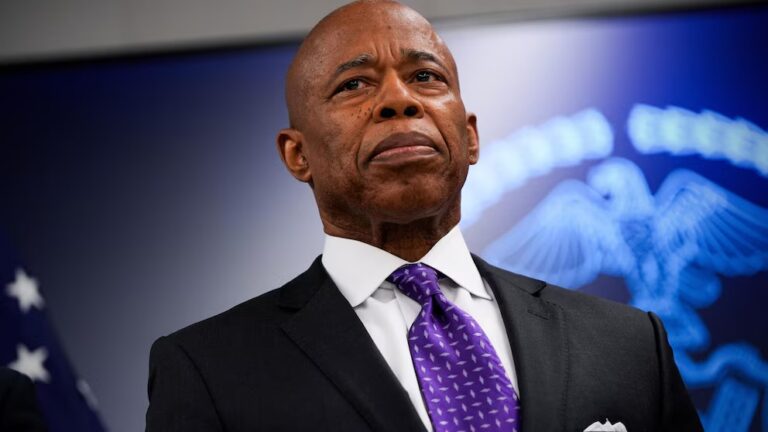
New York, NY – Recent developments in the federal corruption case against New York City Mayor Eric Adams have raised concerns about potential political motivations influencing the prosecution. Internal communications among prosecutors, coupled with high-profile resignations within the Department of Justice (DOJ), have intensified the debate over the integrity of the legal proceedings.
The DOJ released internal communications among prosecutors involved in Mayor Adams’ bribery case, shedding light on internal disagreements regarding the prosecution’s direction. The department criticized the U.S. Attorney’s Office for the Southern District of New York for its handling of the case, suggesting that the prosecution prioritized public spectacle over constitutional order. These revelations have fueled speculation about potential political biases influencing the case.
Resignations Signal Deepening Controversy
The controversy escalated with the resignation of key DOJ officials. Danielle Sassoon, the acting U.S. Attorney for the Southern District of New York, resigned after refusing to comply with orders to dismiss the charges against Mayor Adams. In her resignation letter, Sassoon expressed concerns about dismissing the indictment for reasons unrelated to the case’s merits, highlighting potential political considerations. Similarly, Hagan Scotten, a lead prosecutor in the case, resigned, emphasizing that prosecutorial power should not be used to influence elected officials.
Recommendations for Dismissal Amid Political Concerns
Adding to the complexity, Paul Clement, a court-appointed attorney reviewing the case, recommended dismissing the charges against Mayor Adams with prejudice, effectively preventing future prosecution on these charges. Clement argued that the case had been tainted by the appearance of political influence and that allowing the possibility of future prosecution could undermine public trust in the judicial system.
Mayor Adams Maintains Innocence Amid Allegations
Mayor Adams has consistently denied any wrongdoing, refuting allegations of accepting bribes or illegal campaign contributions from Turkish nationals. He has characterized the legal proceedings as politically motivated attempts to undermine his administration. Despite the indictment, Adams has vowed to remain in office and defend himself against the charges.
Implications for the Justice System and Political Landscape
The unfolding situation has significant implications for the perception of impartiality within the justice system and the political climate in New York City. The internal disputes and resignations within the DOJ have sparked discussions about potential political interference in legal prosecutions and the need for safeguards to maintain the integrity of judicial processes. As the case progresses, the final decision on the charges against Mayor Adams will be closely watched for its impact on public trust in legal and political institutions.
The presiding judge’s forthcoming decision on whether to dismiss the charges with or without prejudice will play a pivotal role in determining the case’s trajectory and its broader implications for governance and justice in New York City.
Recent Developments in Mayor Eric Adams’ Corruption Case
In today’s hyper-partisan political climate, division has become the norm, overshadowing the fundamental purpose of government: serving the American people. Both Republicans and Democrats have spent years vilifying each other, making it seem as if cooperation is impossible. But the reality is, bipartisanship is not just preferable—it’s necessary for true progress.
For Democrats, the past several years have been defined by their opposition to Donald Trump. They have called him every name in the book—even comparing him to Hitler—and yet, he still won both the popular vote and the electoral college. To continue down this road of relentless attacks is not just ineffective—it is political suicide. The real question is: Who are they doing this for? Have they forgotten that independent voters ultimately decide who gets into the White House? Instead of addressing the concerns of working-class Americans, Democrats have built their platform around hating one man, and history has proven that focusing on tearing down an opponent rather than offering real solutions does not win elections.
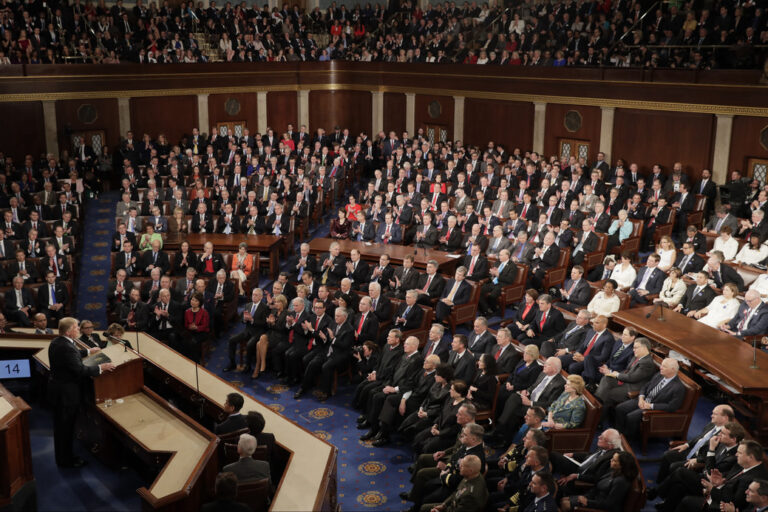
The debacle at the President’s recent address to Congress is a prime example of this political blindness. Their obsession with sticking to the “Hate Trump” and “Trump is Bad” narrative has made them incapable of reading the room. And not being able to read the room is a political failure. The American people are watching, and instead of showing leadership, Democrats displayed chaos, reinforcing the very reasons why so many voters are turning away from them.
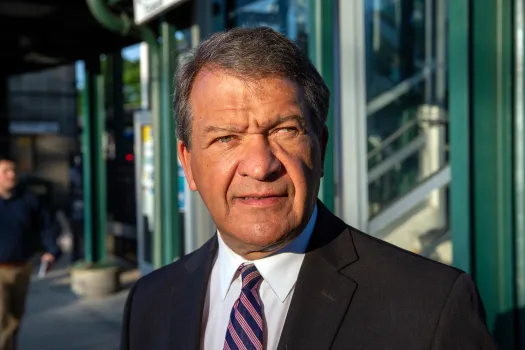
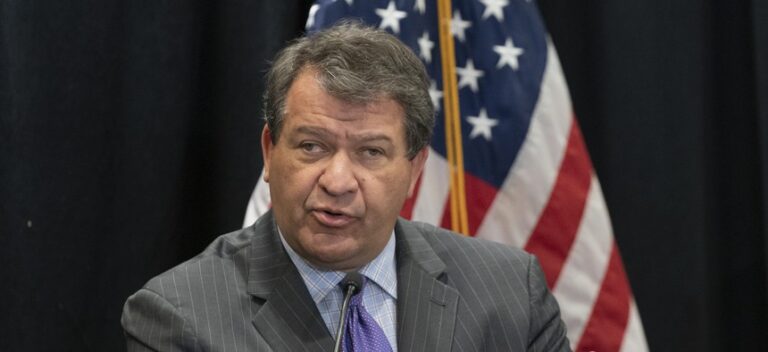
Congressman George Latimer, Congressional District 16, New York
Even though I didn’t agree with some of Congressman George Latimer’s campaign rhetoric during his bid for the 16th Congressional District of New York, I have to give him credit for accurately reading the room regarding the Democrats’ behavior at the recent presidential address to Congress. Latimer, as quoted by Axios, acknowledged the inappropriateness of the disruptions, stating, “When a president—my president, your president—is speaking, we don’t interrupt, we don’t pull those stunts.”
Now, I know we can easily point fingers at Republicans for similar behavior, but if you vote for Democrats, what Republicans do shouldn’t be an excuse. I guess we’ve conveniently forgotten Michelle Obama’s famous quote: “When they go low, we go high.” Now, it seems, when they go low, we just act stupid.
In this context, “reading the room” refers to Latimer’s ability to recognize the importance of maintaining decorum during the presidential address and understanding how the public would perceive such disruptions. His statement reflects an awareness that respect and order should be upheld, regardless of political affiliation. The fact that he—a Democrat—could see this while so many in his party could not speaks volumes. Instead of pushing an agenda of governance and solutions, they once again resorted to theatrical stunts, proving they are more interested in political showmanship, likes on social media than leadership.
Beyond their public outbursts, the Democrats’ “doom and gloom” strategy and deliberate misrepresentation of legislation are even more alarming. Instead of engaging in honest debate, they frame every Republican policy as an existential threat to democracy, relying on fear tactics rather than constructive dialogue. If a piece of legislation is flawed, the logical approach would be to improve it—that’s what lawmakers are elected to do: negotiate, refine, and craft laws that serve all Americans.
As President Trump stated in his speech to Congress, “There is nothing I can do to make them like me.” True to form, the Democrats proved him right, handing him the high ground moving forward. Rather than working towards solutions, they choose to distort facts, mislead the public, and reject Republican-led initiatives outright, no matter their merit. This isn’t governance—it’s obstruction for the sake of political theater
A growing problem for Democrats is their treatment of dissenting voices within their own party. Those who hold differing opinions are often vilified, canceled, or labeled as traitors. Black Democrats, in particular, may be smeared as “Uncle Toms” for expressing independent views.
The Democratic Party has created an echo chamber where disagreement is met with personal attacks rather than open debate. This approach alienates supporters and contributes to declining approval ratings. A Quinnipiac poll shows Democratic approval in Congress at a historic low of 21%, while Republican approval has surged to 40%.
Instead of encouraging discussion, Democrats increasingly rely on bullying tactics to silence opposition. The party that once championed free thought and open-mindedness now embodies the very suppression it claims to oppose.
First, it was Barack Obama publicly degrading Black men on a national stage. Now, it’s preachers calling other Black people Uncle Toms simply because they have different political views. The hypocrisy is glaring. How can we preach diversity to the white man while suppressing diversity of thought within our own community? True diversity isn’t just about race—it’s about ideas. Telling Black people that they must all think the same way is nothing more than modern political slavery. It strips away individuality and reduces an entire race to a voting bloc, rather than a community of free-thinking individuals capable of forming their own opinions.
This mindset isn’t just harming their political chances—it’s destroying their presence in the social media and podcast space. One of the main reasons Democrats are losing in this arena is their tendency to alienate Democratic-leaning voices who dare to challenge them. Joe Rogan, once a self-described liberal, was pushed away simply for having different views. Rather than engaging in dialogue, Democrats attempted to cancel him, turning him into a powerful independent voice that now attracts millions of listeners from across the political spectrum. The same happened with Elon Musk, who was once a Democrat but is now public enemy number one. Instead of understanding his concerns or finding common ground, they launched personal attacks, pushing him further to the right.
Even longtime Democratic supporter and sports analyst Stephen A. Smith has criticized how Democrats treat each other. The phrase “Democrats eat their own” has been repeated often, and they continue proving it true. By silencing dissent within their own ranks, they are not fostering unity—they are creating a party that punishes free thought and alienates anyone who dares to question the status quo.
Democrats also seem to have forgotten that elections are not won solely by appealing to their most radical base. They have alienated moderate Democrats and independents—the very people who determine elections. When independent voters see a party obsessed with Trump rather than economic stability, national security, and real policy solutions, they turn away. Trump won because these voters saw through the noise and focused on results. Insulting Trump voters, ridiculing Black conservatives, and demonizing differing opinions doesn’t change minds—it solidifies opposition. If Democrats want to win again, they need to stop trying to destroy their opponents and start offering better solutions.
Bipartisanship is not about abandoning principles; it is about finding common ground for the greater good. Some of America’s greatest legislative achievements—the Civil Rights Act, major infrastructure projects, and economic reforms—were the result of both parties working together. This is the type of leadership voters expect. Instead, we now see lawmakers more focused on performance politics than actually governing. Theatrics may win applause on social media, but it doesn’t build roads, create jobs, or strengthen the economy.
On November 5, the people made their choice, electing a Republican president and giving the GOP control of both the House and Senate—for the same reasons we’re seeing play out now. Yet, Democrats continue repeating the same mistakes, expecting different results—a textbook definition of insanity. This isn’t just bad strategy; it’s starting to look like a political mental health crisis within the party, where emotion overrides logic, and outrage replaces governance.
It’s not hard to see: if Democratic leadership keeps prioritizing partisan battles over real progress, they risk alienating the very voters who ultimately decide elections. The future of American leadership won’t be determined by who yells the loudest, curses the most, dances to Kendrick Lamar songs, or posts out-of-touch social media rants, but by who actually delivers results. Until our leaders grasp this reality, they will keep failing the very people they claim to represent.
Diversity isn’t just about race—it’s about thought. And the moment we forget that, we become the very thing we claim to stand against.
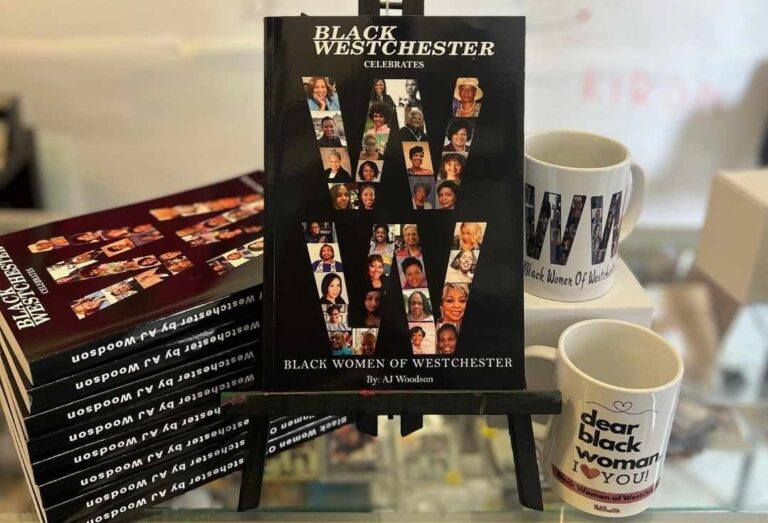
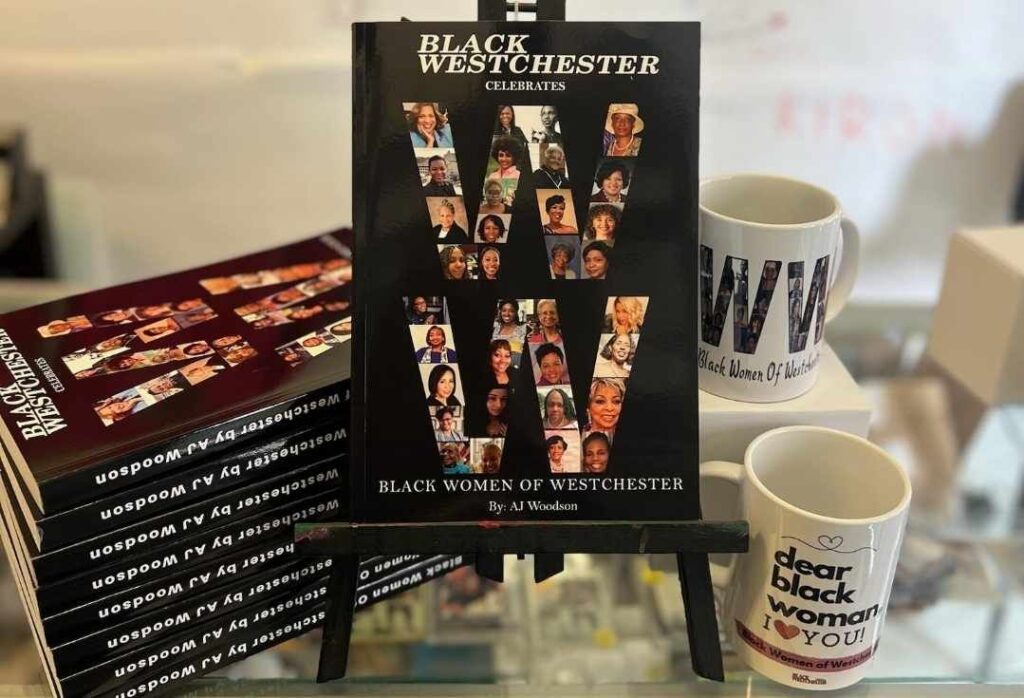
Sunday, March 8th, is International Women’s Day (IWD). IWD has been around for over a hundred years, as have many of the issues still impacting women’s advancement. Since 1911, IWD has belonged to all who care about women’s equality. In celebration of IWD, I share an excerpt from my book, “Black Westchester Celebrated Black Women Of Westchester,” to highlight Black Women’s achievements in Westchester County. Below is a timeline of just some of the many Black Women in Westchester who made history. It is just a small representation of the many women of African descent who have made and are making a significant difference in their communities. While we celebrate Black History Month in February and Women’s History Month in March, Black Westchester believes Black History and Women’s History should be celebrated 365 days a year. This timeline is meant to do just that.
1828
Briarcliff Manor resident Sojourner Truth became the first African-American woman to win a lawsuit against a white man.
1864
Amanda Foster co-founded The Foster A.M.E. Zion Church in Tarrytown. It is the oldest black church in Westchester County and possibly one of the oldest in the state.
1912
Beatrice Jackson-Conway became the first Black girl to graduate Washington Irving High School in Tarrytown.
1916-1918
Madam C.J. Walker, the first Black female millionaire, built her estate, Villa Lewaro, on North Broadway in Irvington. The mansion is an astounding testimony to the genius of Vertner W. Tandy, New York’s first certified black architect. The 32-room mansion includes exquisite stained-glass windows, vaulted ceilings, marble staircases, and intricate ceiling moldings. Villa Lewaro was placed on the National Register of Historic Places in 1976. Villa Lewaro was the intellectual gathering place for notable leaders of the Harlem Renaissance, such as James Weldon Johnson, Zora Neale Hurston, W. E. B. Du Bois, and Langston Hughes.
1919
On May 25, 1919, haircare entrepreneur Madam C.J. Walker, who invented, patented, and brilliantly marketed hair and cosmetics for women of color, died in Irvington. At that time, she was regarded as the wealthiest African-American woman in America. In 1917, she joined the executive committee of the New York Chapter of the NAACP.
Early 1920’s
Ella Fitzgerald, dubbed “The First Lady of Song,” Ella Fitzgerald (1917–1996) was the most popular female jazz singer in the United States for more than half a century. As an African American woman, she experienced not only the adulation of this country but also some of its most hideous and persistent moral defects. Raised in Yonkers, Ella lived and worked at a time when, for her, entrance to most white-owned clubs was through the back door. She literally conquered the bigoted, the insensitive, and the racist with love through song while serving as an ambassador for both music and our country.
1923
New Rochelle resident Anna Jones became the first African American woman to be admitted to the New York State Bar
1939
While further up the Hudson valley, about an hour north of Westchester in Dutchess County, I include this because of its significance. Jane Bolin became the first Black woman to serve as a judge in the United States when she was sworn into the bench of the New York City Domestic Relations Court on Saturday, July 22, 1939 – at the age of 31 – paving the way for our first Black Woman to serve as a justice of the United States Supreme Court, Ketanji Onyika Brown Jackson 83 years later. Brown was nominated on February 25, 2022, confirmed by the United States Senate on April 7th, and sworn into office on June 30th. Bolin was also a first black woman to graduate from Yale Law School in 1931, the first to pass the New York state bar examination in 1932, and the first to join the New York City Law Department. For twenty years, Bolin was the only black female judge in the country.
1940
On Tuesday, June 11, 1940, Cecil H. Parker integrated Mount Vernon schools by becoming the first full-time Black teacher.
1942
On July 7, 1942, the White Plains Supreme Court awarded a Black teenage girl $300 in damages after she was discriminated against when she was barred from entering a Mount Vernon skating rink.
1943
Hastings On Hudson resident Mamie Phipps Clark was the first Black woman to earn her Ph.D. in experimental psychology, which she did from Columbia University. She and her husband, Kenneth B. Clark, founded the Northside Center for Child Development, which helped thousands of emotionally troubled children living in Harlem. The couple’s research on black children’s perceptions of themselves was instrumental in the 1954 Brown v. Board of Education Supreme Court decision that found segregation in public schools unconstitutional
1946
New Rochelle native Ellabelle Davis – one of the first African-American women to perform in the world’s greatest concert halls – was voted “Most Outstanding Singer of the Year” by the American League of Composers. She was the first African American to play the lead role of Aida during her 1946 performance at the Opera Nacional in Mexico. She resumed her role as Aida at Ma Scala in 1949 and recorded for Decca in February 1950. Posthumously and opera based on David was performed in 2009, and she was inducted in the New Rochelle Walk of Fame in 2011
1955
On July 26, 1955, nine women met and organized a section of the National Council of Negro Women for Westchester County, N.Y. The Westchester Section was chartered on August 29, 1955, by the National President and CEO of NCNW, Vivian C. Mason. For almost 70 years, the Westchester Section has continued to grow and thrive. The Westchester branch of the NCNW is a voluntary nonprofit membership organization helping women to improve the quality of life for themselves, their families, and the community.
In 1955, Port Chester resident Dr. Joyce Yerwood, after spending 18 years in Westchester County, she moved her medical practice (opened in 1937) to Stamford, Connecticut, becoming the first female African American physician in Fairfield County. In 1939, she founded the Little Negro Theater performing arts group. As the group grew, she bought a storefront in Stamford, which became Stamford Negro Community Center in 1943. The center moved to its current location in 1975, and it was renamed the Yerwood Center. With a career that spanned five decades, Yerwood used her practice to provide quality medical care for low-income families. Her impactful work sat at the intersection of social justice and health equity.
Also in 1955, Yvonne DeMarr-Jones became the first Black teacher in Elmsford
Rose Kittrell became the first African-American Woman to open a state–chartered school in White Plains
1960’s (I could not find the exact year)
Mary Ellen Cooper became the first Black woman to serve on the Mount Vernon School Board
1963
In 1963, tackling threats to civil liberties, Lester Brown – along with her husband Robert Sumner Brown, a native of Rye who made history becoming the first African American appointed to the Local Draft Board of White Plains – was also engaged in Rye organizations that defended equal rights for African Americans and also for women. She met obstacles head-on, chairing “a brotherhood seminar of civic leaders of Westchester,” which boldly asked the question, “Is Rye really facing the problem of discrimination?”
1965
Betty Shabazz, educator, civil-rights advocate, and widow of Malcolm X, moves to a two-story home in Mount Vernon shortly after her husband, Malcolm X, is assassinated. She later relocates to Yonkers. Shabazz was helped financially after Malcolm X’s death by black celebrities, like the wife of actor Sidney Poitier, who threw a fund-raising party for the young widow. Eventually, she was able to buy a home to raise her six girls, and then the royalty checks from “The Autobiography of Malcolm X” began pouring in.
Also in 1965, Rita Gross Nelson became the first woman of color to serve as a patrol cop in Westchester County. She became the first Black woman to serve as a patrol cop in Yonkers, blazing a trail for others, including Fredricka Hreyo, the second Black woman to join the force.
1968
In October 1968, Actress Ellen Holly – a longtime White Plains resident – became the first black actress to be cast as a recurring cast member on daytime TV. Holly played Carla Gray on One Life to Live, a role she played from 1968 to 1980 and again from 1983 to 1985.
1971
Pearl C. Quarles served on the New Rochelle Board of Education from 1971 through 1980. She became the first African-American to serve as its President.
1973
On August 27, 1973, Carole J. Morris founded the Mount Vernon Neighborhood Health Center
1974
In 1974, at the age of 15, Stephanie Mills was cast as Dorothy in the original Tony Award-winning Broadway production of The Wiz.
1976
Alice C. Scott of Mount Vernon and Joan Mosley of Greenburgh founded and started The Westchester Black Women’s Political Caucus, Inc. (WBWPC), in Joan Mosley’s Greenburgh home.
Lois Bronz made history was elected the first black and first woman to The Town of Greenburgh Town Board. She served in this position until 1993, when she left to become a member of the Westchester County Board of Legislators
1977
Dr. Marie E. Lane Cobb became the first African-American woman named Director of a Department of the Westchester County Government when she was named Director of Women and Youth Health Services in 1977
1980
Nancy E. Fitch became the first female to serve as Mount Vernon City Clerk
1983
September 17, 1983, Vanessa Williams became the first African American winner of the Miss America title when she was crowned Miss America 1984
Dr. LaRuth Gray served as the first Black woman superintendent of New York’s Abbott Union Free School District in Irvington from 1983 through 1989. In February 2025, Westchester County honored Dr. La Ruth Gray with the Cecil H. Parker Award for Education.
Also, in 1983, Debbie Allen became the first Black woman to win a Golden Globe for Best Actress in a Television Series – Musical or Comedy. She won for her role as Lydia Grant in FAME.
1986
June 19, 1986, Delores Johnson became the first female Captain in the New Rochelle Police Department
1988
Yonkers native Mary J. Blige signs recording deal with Uptown Records
1989
Brenda Dowery made history when she was appointed the first African-American Mount Vernon Associate Judge by Mayor Blackwood (who was the first African-American Mayor of Mt. Vernon)
1991
Symra Brandon made history as Yonkers’ first African-American Councilwoman. She served six terms until she was term-limited in 2003.
Notable Mention: Lorraine Lopez made history as Yonkers’ first Latina Councilwoman in 1999
1992
Andrea Stewart-Cousins became the first African-American to serve as Director of Community Affairs for the City of Yonkers
Yolanda Robinson became the first African American Reporter/Anchor for News 12 Westchester
1993
The Honorable Rhoda C. Quash was the first African-American woman elected to the New Rochelle City Council and served for six years, representing Council District 3 (1993-1999). She was a 30-year resident of the city and lived at Risley Place for over 20 years until her passing in May 1999. On April 18, 2013, Risley Place received a secondary naming as “R.C. Quash Place” her honor
The Honorable Ruth Hassell-Thompson became the first African American Woman elected as a Mount Vernon Councilwoman. Three years later in 1996, she made history again as the first African-American Council President
Maureen Walker made history when she became the first woman, the first African-American, and the first person of Caribbean descent to be elected to serve as Comptroller in the City of Mount Vernon.
1994
Lois Bronz makes history as the first African American woman to be elected to serve on the Westchester County Board of Legislators
Alfreda Williams became the first African American to be elected Greenburgh Town Clerk
Sarah Louise “Sadie” Delany and Annie Elizabeth “Bessie” Delany, known as the Delany Sisters, at the age of 105 and 103 respectively, became internationally known after the Guinness Book of World Records recognized the sisters as the world’s oldest authors in 1994
Saturday, October 29, 1994, pioneering dancer, choreographer, and teacher Pearl Primus of New Rochelle dies at home. She was 74
1995
Dr. Brenda Smith became the First African American Woman Principal of Mount Vernon High School
1996
Vinnie Bagwell created a bronze statue entitled “The First Lady of Jazz, Ella Fitzgerald” in her honor. It stands in Yonkers Metro-North Railroad Station Plaza, located at 5 Buena Vista Avenue.
Appointed by then New Rochelle Mayor Tim Idoni in 1996, Judge Gail B. Rice was the first African American woman to preside over the New Rochelle City Court. In January 2020, upon her retirement, she was succeeded by her son, former Councilman Jared Rice.
In 1996, Robin Douglas launched The African American Chamber of Commerce for Westchester & Rockland (AMCCWR)
In 1996, LaFern Joseph Brothers founded Sisters In Support, a Peekskill-based nonprofit group that aids minority women & families while concurrently sponsoring the Harriet Tubman Underground Railroad Tour
1997
Ethel Jackson released her 1997 memoir, “My Memories of 100 African-American Peekskill Families,”
2002
Lois Bronz made history as the first African American chair of the Westchester County Board of Legislators. She served as chair from 2002-2004
Dr. Brenda Smith made history again, this time becoming the First African American Female Superintendent in Mount Vernon, a position she held until 2007.
2004
Phylicia Rashād became the first black woman to win the award for best leading actress in a play in the 2004 annual Tony awards in New York. Although she may be best known for her role as Clair Huxtable on the sitcom The Cosby Show, Rashād made history when she won the coveted Tony Award for her role as Lena Younger in Lorraine Hansberry’s A Raisin in the Sun.
Cynthia Hood shattered the glass ceiling several times in the City of White Plains, first by becoming the first African American Female Detective in the White Plains Police Department in 2004, then the first African American Sergeant in 2005, and the First African American Detective Sergeant shortly afterward.
2006
In 2006, the Union Child Day Care Center in Greenburgh, which was established in 1966, was renamed The Lois Bronz Children’s Center (LBCC)
January 2009, after the passing of M. Paul Redd, Sr., Ms. Sandra Blackwell became the publisher and editor of The Westchester County Press, the county’s sole voice in Black Media for decades.
2011
Sorraya Sampson became the first Black Woman President & CEO of the Urban League of Westchester
November 2014 Nadine Hunt-Robinson became the first African-American woman elected to serve as White Plains Common Council
On December 13, 2011, Jennifer Carpenter became the first Black Female Supervisor in the Mount Vernon Police Department when she was promoted to sergeant.
2015
September 21, 2015, Ms. Tamika Y. Rose made history by opening the first African-American Female Minority owned insurance brokerage business in Elmsford at 75 No. Central Avenue.
October 2015, Dr. Belinda S. Miles was installed as the 3rd president of Westchester Community College, making history as the first African American and first female to be appointed to this prestigious assignment.
Dr. Evelyn Collins founded the Performing and Visual Arts Magnet School – formerly known as Nellie A Thornton High School – in Mount Vernon, NY, in 2015. On Tuesday, June 23, 2020, the school was officially changed to the Denzel Washington School of the Arts (DWSA). The school grew a grade each year until it reached capacity as a secondary school in July 2020.
2016
February 5, 2016, Stephanie G. Vanderpool made history as the first African American Woman appointed to the role of Commissioner of Assessment and Taxation (City Assessor) in the City of Mount Vernon.
March 2016, MaryAnn Carr made history when she was elected the first African American to serve on the Town Board in Bedford
April 2016 Nichelle Johnson Muhammad is appointed Mount Vernon City Court Judge by then Mayor Richard Thomas. In November 2016, she made history as the first Muslim judge elected to Mount Vernon City Court
Friday, May 6, 2016, NYS Senator Andrea Stewart-Cousins is inducted into Westchester Women’s Hall of Fame during 7th Annual “In The Company of Women” Luncheon at the Westchester Marriott, 670 White Plains Rd., Tarrytown
November 8, 2016, Yonkers resident Justice Janet C. Malone became the first Black Female Justice elected to the New York State Supreme Court, Ninth Judicial District, and the First Barbadian-born Female Jurist
2017
Biondi School Inducted Judith Johnson, Member of New York State’s Board of Regents, into Its Black History Wall of Fame on February 10th
Billboard ranked Mary J. Blige as the most successful female R&B/Hip-Hop artist of the past 25 years.
Mary J. Blige made history as she scored an Oscar nomination for both her performances in the original song in the film Mudbound. With Best Original Song and Best Supporting Actress nominations, she was the first performer to be nominated for both singing and acting in a film.
On Friday, February 9, 2018, Kathie Davidson became the first African-American Administrative Judge of New York state’s Ninth Judicial District.
May 2018, the New York Liberty moved from Madison Square Garden to the Westchester County Center, marking the first time in over two decades that a professional sports league has called the county home. Their season tipped off on Sunday, May 20
Villa Lewaro – the estate of Madam C.J. Walker, the first Black female millionaire – was purchased by the New Voices Foundation. The Foundation offers women of color entrepreneurs access, capital, and expertise to scale their businesses through funding, networking, and learning opportunities. A planning and advisory team that includes preservationists, historians, and other groups continues to explore possibilities and provide recommendations for the Foundation’s rehabilitation and future use of the property. The Foundation offers women of color entrepreneurs access, capital, and expertise to scale their businesses through funding, networking, and learning opportunities. A planning and advisory team that includes preservationists, historians, and other groups continues to explore possibilities and provide recommendations for the Foundation’s rehabilitation and future use of the property.
December 16, 2018, noted Civil Rights and Union Icon Doris Turner Keys passed away at 88
2019
On January 9, 2019, NYS Senator Andrea Stewart-Cousins makes history as the first woman and first African American woman when she was formally elected Senate majority leader by her colleagues
March 12, 2019, Joan Grangenois-Thomas was elected Village of Port Chester Trustee. She is the first woman of color and only the second woman in almost twenty years to serve on this Board.
October 2019, Lisa Willis made history as the first woman ever to become an assistant coach for the Westchester Knicks. W. K. is a member of the G League of the NBA’s New York Knicks. The former NY Liberty WNBA player is the first female coach in the franchise’s 73-year history, as there were 11 women on NBA benches as assistant or player development coaches that season, and two, including her, in the NBA G League.
October 4, 2019, Krista Mann became the first Black female Lieutenant of the Mount Vernon Police Department when she was promoted by then-mayor André Wallace
Saturday, October 19, 2019, the Mount Vernon City School District dedicated its newly renovated Woods Auditorium in the Denzel Washington School of the Arts at Nellie A. Thornton Campus to Phylicia Rashad, a longtime Mount Vernon resident, Rashad is a trailblazer, from her role as the grounded working mother Clair Huxtable in “The Cosby Show” to her groundbreaking Tony Award as the first woman of color to win a Best Actress award.
November 2019, Shawyn Patterson-Howard became the first African American woman elected Mayor of the city of Mount Vernon. She also shattered the glass ceiling as the first African American woman to be elected mayor in Westchester County’s 43 municipalities.
November 2019, Tasha Freeman-Diaz became the first Black person, man or woman, to represent District 3 in the Yonkers City Council. Three years later, in January 2022, she was elected Yonkers City Council Majority Leader
When Michelle Nicholas became the executive director of Girls Inc. Westchester in 2019, she made history as the nonprofit’s first person of color, first immigrant, and its youngest-ever director.
December 2019, Mount Vernon native Sochie Nnaemeka becomes New York Working Families Party State Director
2020
Monday, January 6, 2020, Nadine Hunt Robinson made history again as she became the first African-American woman to serve as White Plains Common Council President.
January 2020, Deborah Norman is appointed Mount Vernon’s first female Fire Commissioner.
Spring 2020 – For the first time in the City of Yonkers’ history, there were two women of color, Karen Best & Verris Shako, on the ballot for the Yonkers City Court Judge. On Tuesday, June 23rd, Best and Shako won the Democratic Primary and went on to make history as the first two African-American women elected to serve on the bench in Yonkers
Notable Mention: In 2019, Elena Goldberg Velasquez became the first Latina elected to serve as a Yonkers City Court Judge
Summer 2020 – Grammy Award-winning, Oscar-nominated singer, songwriter, actress, producer, and philanthropist Mary J. Blige teamed up with Fantinel Winery in 2020 to create a line of wines – Sun Goddess Wines – that are absolutely made for sipping in the summer sunshine. The collection includes a Rosé and Italian Sauvignon Blanc.
Marvise Rainey became the first African American Policewoman in the Village of Ossining
January 2021: NY Senate Majority Leader Andrea Stewart-Cousins served twice as acting lieutenant governor of New York under Governor Kathy Hochul for 16 days in 2021 after former Governor Andrew Cuomo resigned and again between April and May 2022 following Lt. Gov. Brian Benjamin’s resignation, April 12, 2022. Stewart-Cousins is the first Black woman to serve as the New York lieutenant governor, although in an acting capacity.
On Monday, April 5, 2021, Omayra Andino became the first Woman, first Black, and first Latina mayor of the village of Tuckahoe.
Efua Forson, the valedictorian at Mount Vernon STEAM Academy, is the first female student of color in the district’s documented history to be accepted with a full ride to Harvard University.
June 2021, Lakisha Collins-Bellamy is elected the first African American and Woman of Color to be elected President of the Yonkers City Council.
On July 7, 2021, Chief Judge Janet DiFiore and Chief Administrative Judge Lawrence K. Marks designated Hon. Kathie E. Davidson as Dean of the New York State Judicial Institute, a statewide judicial education and research center focused on the latest developments in the law and other disciplines that influence the law.
Saturday, August 28th, Black Women from Westchester including members of the Westchester Black Women’s Political Caucus (WBWPC), Sister 2 Sister International (STSI) and the Westchester branch of the National Council of Negro Women (NCNW) and other Westchester activists joined thousands of marchers in Washington, D.C., for the March On Washington For Voter’s Rights, nearly six decades after the Rev. Martin Luther King Jr. delivered his “I Have a Dream” speech. They organized the bus ride from the Cross Country Shopping Center parking lot in Yonkers to the historic event, continuing the great efforts made by Black activists to expand civil rights and protect the right to vote.
September 2021, White Plains-based choreographer and educator Sidra Bell became the first African-American woman to create a dance for the New York City Ballet. Her work, “Suspended Animation,” debuted Sept. 30th at The Koch Theater for the ballet’s Fall Fashion Gala
November 2021 – Vivian McKenzie is elected the first African American Woman Mayor of City of Peekskill
2022
January 1st is first time in Yonkers history that a majority of the City Council is Black people or People of Color. The third time with a majority of women serving on the City Council and first time the Council is majority Black women or woman of color, Shanae Williams, follows a rich tradition of Black council members in District 1; Corazon Pineda-Isaac, a Latina who recognizes herself as a member of the African Diaspora- District 2; Tasha Freeman-Diaz, the first Black person, man or woman to represent District 3; and Lakisha Collins-Bellamy, the first Black person, man or woman, to be elected City Council President.
February 16, 2022, February 16th, Tajian Nelson makes history as the first African-American Female Westchester County Board of Election Commissioner after being unanimously selected by the Westchester County Democratic Party’s Executive Committee. She replaces Reginald Lafayette, who died in January. Nelson has worked at the board under Lafayette for years.
The Harriet Tubman – The Journey to Freedom sculpture was on display at Renaissance Plaza in White Plains from April 1st – June 30th. The City of White Plains was the only location in southern New York State to host the “Harriet Tubman – The Journey to Freedom” sculpture in 2022 after being installed in Peekskill through the month of February.
May 15, 2022
Mary J. Blige received the Icon Award at the 2022 Billboard Music Awards held at the MGM Grand Garden Arena in Las Vegas on Sunday, May 15th
June 2, 2022, Yonkers renamed a street to honor the city’s first Black female police officer, a native who many regarded as “Yonkers’ Mother.” Horatio Street between Dunbar and Clement Street is now also known as Rita Gross Nelson Way.
June 2022 Khaleelah Higgins-Brown opens the first Black-owned Comic Book Store in Westchester County, Mrz. Hulk 4 Life Comics and Cards at 5 W. Prospect Avenue in Mount Vernon
December 5, 2022, Leilani Yizar-Reid – founder of River Rise, LLC, a wellness advocacy organization that provides holistic and wellness programs for youth and families in Westchester – makes history when she is sworn in as the first African American Woman elected to the Village of Mamaroneck Board of Trustees.
2023
On January 3rd, Danielle Browne became the Youngest City Council President in the history of the city of Mount Vernon
On Tuesday, November 7th, Namasha H. Schelling made history as the first African-American to serve on the Pound Ridge Town Board, despite being targeted with hate rhetoric and signs popping up all across Pound Ridge. She may possibly be the first Black elected official in the town of Pound Ridge, period.
November 4, 2025, Danielle R. Browne makes history again when she is elected the youngest City Court Judge in the City of Mount Vernon
2026
January 22, 2026—The Coast Guard commissioned its 61st fast response cutter (FRC), Coast Guard Cutter Olivia Hooker, on Jan. 22 in Pascagoula, Mississippi.
February 2026—Lieutenant Khalia MC Carter became the first African-American woman ever promoted to Lieutenant in the 177-year history of the Peekskill Police Department. Today, she serves as Commanding Officer of the Community Policing Unit and as the department’s Grants Administrator, helping turn critical funding into real programs and results, including support for initiatives like the K-9 Unit, Domestic Violence Initiative, child passenger safety, traffic enforcement, and data-driven policing.
March 19, 2026—Janie McKennie and Michel Yant-Terry became the first Black Female Police Captains in the Mount Vernon Police Department. Both women will serve as Commanding Officers of the Detective and Patrol Divisions, respectively, starting Friday, March 20th.
The book, Black Westchester Celebrates Black Women Of Westchester, is available on Amazon, or email BlackWestchester@gmail.com to purchase your autographed copy directly from us.
With all the efforts to whitewash and even downright erase our history, Black Westchester is committed to continuing to document and celebrate because not only is African American History, American History, but it is to be celebrated 365 days a year.
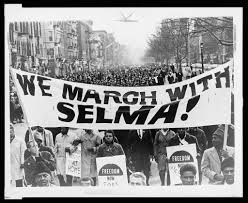
On March 7th in Black History, the most significant event is “Bloody Sunday” in Selma, Alabama, 1965, where state troopers violently attacked peaceful civil rights marchers protesting for voting rights, drawing national attention to the brutality faced by African Americans seeking to register to vote; this event was a key turning point in the Selma to Montgomery marches. Today is the 60th Anniversary.
On March 7, 2015, President Barack Obama delivered remarks and then President Obama, First Lady Michelle Obama, and the First Family were joined by former President George W. Bush, former First Lady Laura Bush, Rep. John Lewis, former foot soldiers, and other dignataries in marching across the Edmund Pettus Bridge to commemorate the 50th Anniversary.
Thousands of marchers, led by Martin Luther King Jr., completed the first leg of the five-day Selma-to-Montgomery march. Marchers were protected by federalized Alabama National Guardsmen and U.S. Army troops. Selma-to-Montgomery march ended with a rally of some fifty thousand at Alabama capitol. One of the marchers, a white civil rights worker named Viola Liuzzo, was shot to death on U.S. Highway after the rally by white terrorists. Three Klansmen were convicted of violating her civil rights and sentenced to ten years in prison.
State and local police used billy clubs, whips, and tear gas to attack hundreds of civil rights activists beginning a march from Selma, Alabama, to the state capitol in Montgomery. The activists were protesting the denial of voting rights to African Americans as well as the murder of 26-year-old activist Jimmie Lee Jackson, who had been fatally shot in the stomach by police during a peaceful protest just days before.
The march was led by John Lewis of the Student Nonviolent Coordinating Committee (SNCC) and the Reverend Hosea Williams of the Southern Christian Leadership Conference (SCLC). The marchers crossed the Edmund Pettus Bridge and found themselves facing a line of state and county officers poised to attack. When demonstrators did not promptly obey the officers’ order to disband and turn back, troopers brutally attacked them on horseback, wielding weapons and chasing down fleeing men, women, and children. Dozens of civil rights activists were later hospitalized with severe injuries.
Horrifying images of the violence were broadcast on national television, shocking many viewers and helping to rouse support for the civil rights cause. Activists organized another march two days later, and Dr. Martin Luther King Jr. urged supporters from throughout the country to come to Selma to join. Many heeded his call, and the events helped spur the passage of the Voting Rights Act of 1965 three months later.
March 7, 1859 – The Acting Commissioner of General Lands for the United States, J.S. Wilson, stated that blacks were not citizens of the United States and, therefore, were not legally entitled to preempt public lands.
March 7, 1927 – Supreme Court decision (Nixon v. Herndon) struck down Texas law which barred Blacks from voting in “white primary.”
March 7, 1942 – First cadets graduated from flying school at Tuskegee. On March 7, 1942, the first five Black military pilots graduated from Tuskegee Army Air Field in Alabama. The graduates were: Captain Benjamin O. Davis Jr, 2nd Lt. Lemuel R. Curtis, 2nd Lt. Charles DeBow, 2nd Lt. George Spencer Roberts, and 2nd Lt. Mac Ross. The graduates became known as the Tuskegee Airmen.
March 7, 1950 – Retired Professional Football Player Franco Harris was born to an African American father and an Italian mother. His professional career lasted for 13 seasons, 12 of which he spent with the Pittsburgh Steelers. During this time, his statistics were in the top of the league, and he was an invaluable asset to his team. He helped them win four Super Bowls in 1975, 1976, 1979, and 1980. In their very first victory in 1975, the Steelers defeated the Minnesota Vikings 16-6. Harris was named the Most Valuable Player of the tournament, making him not only the first African American but also the first Italian American to be given this honor. He was very popular with Italian Americans in Pittsburgh, who called themselves “Franco’s Italian Army” and wore his jersey number “32” on their helmets.
March 7, 1985 – The charity single “We Are the World” was released. The song was written by Michael Jackson and Lionel Richie and raised funds for African famine relief. It was an immediate media sensation. It sold an astonishing 800,000 copies in three days and ultimately raised more than $60 million for African famine relief and inspired other musician-driven charitable efforts. Lionel Richie, Stevie Wonder, Paul Simon, Kenny Rogers, James Ingram, Tina Turner and Billy Joel sing the first verse; Michael Jackson and Diana Ross sing the first chorus; Dionne Warwick, Willie Nelson and Al Jarreau sing the second verse; Bruce Springsteen, Kenny Loggins, Steve Perry and Daryl Hall sing the second chorus; Jackson, Huey Lewis, Cyndi Lauper, and Kim Carnes sing the bridge. “We Are the World” concludes with Bob Dylan and Ray Charles singing a full chorus, Wonder and Springsteen duetting, and ad libs from Charles and Ingram.
March 7, 2008 – Rev. Margaret Fountain-Coleman made history as the First African-American Woman elected Village of Tuckahoe Trustee.
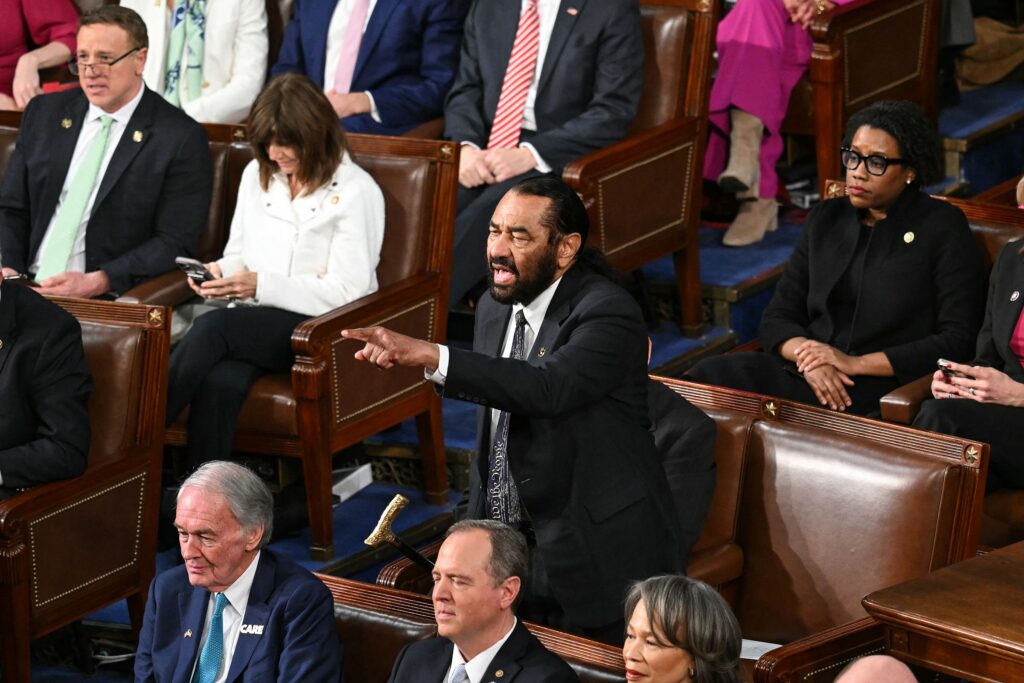
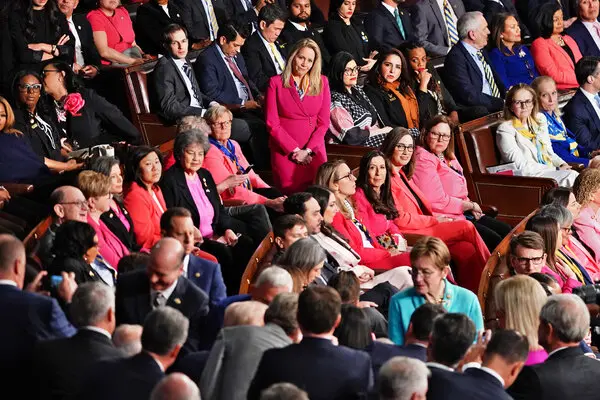
Rep. Al Green (D-Texas) heckled President Trump early in his speech, leading to Green’s removal from the House chamber where the president was addressing a joint session of Congress. Trump sought to continue his address without answering Green, but the Democratic congressman did not sit down.
Several other Democrats stood up and exited the chamber during President Trump’s address to a joint session of Congress on Tuesday, protesting his administration’s actions after six weeks in office. The first group of Democrats to walk out included Reps. Jasmine Crockett (Texas), Maxwell Frost (Fla.), Melanie Stansbury (New Mexico), LaMonica McIver (N.J.) and Lateefah Simon (Calif). A few removed their outer business wear to reveal black T-shirts with messages to the president on their backs. Florida Rep Maxwell Frost’s shirt said, “No Kings live here,” while others read, “RESIST,” in bold white letters.
Congressman George Latimer, who represents NY-16, tells Axios he felt the disruptions were “inappropriate,” telling Axios, “When a president — my president, your president — is speaking, we don’t interrupt, we don’t pull those stunts.”
As the speech continued for more than an hour, Democrats continued to pour out, including Reps. Mark Pocan (Wisc.), Lloyd Doggett (Texas), Judy Chu (Calif.), Ayanna Pressley (Mass.), Veronica Escobar (Texas), Pramila Jayapal (Wash.), Ilhan Omar (Minn.), Jamie Raskin (Md.) and Jared Huffman (Calif.).
Ten Democrats joined with House Republicans on Thursday to censure Rep. Al Green for his protest during President Donald Trump’s address to Congress this week — a formal condemnation of the Texas Democrat’s actions.
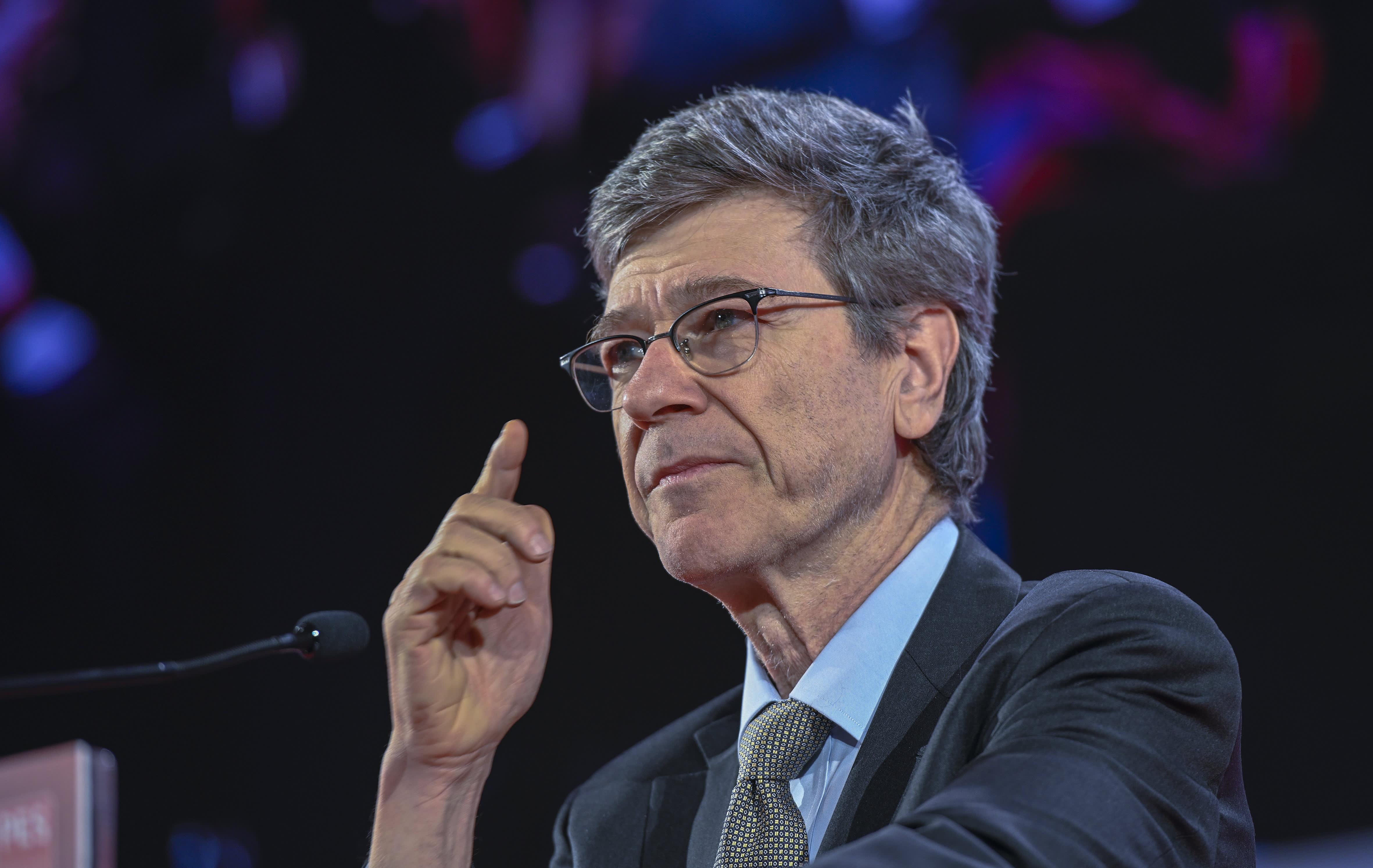
Former U.S. President Donald Trump is once again at the center of global geopolitics, reshaping the course of conflicts in Ukraine and the Middle East. In a 21 February speech in the European Parliament, Economist Jeffrey Sachs, a longtime critic of American foreign policy, has argued that Trump’s return could bring major shifts—ending the war in Ukraine and challenging the long-standing U.S. approach to Israel’s regional ambitions. However, Sachs warns that behind these changes lies a deeper strategy, particularly regarding Israel’s long-term plans for Palestinian territories and its broader geopolitical objectives.
Trump’s Foreign Policy Shift: Ending the Ukraine War
According to Sachs, Trump’s stance on Ukraine is primarily driven by pragmatism rather than ideology. The war in Ukraine, a direct result of U.S. efforts to expand NATO eastward, has been costly and strategically unsuccessful. Unlike the Biden administration, which has aggressively backed Ukraine with military aid and economic sanctions against Russia, Trump sees the conflict as a losing battle.
Sachs argues that Trump’s transactional approach to foreign policy makes him more likely to seek a negotiated settlement with Russia rather than prolong a costly proxy war. While some European leaders view this as abandonment, Sachs believes it presents an opportunity for Europe to reclaim its sovereignty in foreign policy. He warns that the U.S. has historically used Europe as a pawn in its geopolitical chess game, and Trump’s withdrawal from certain commitments could actually force Europe to develop its own diplomatic and security strategies.
Israel’s Long-Term Vision: A U.S.-Backed Expansion
While Trump’s potential disengagement from Ukraine marks a shift in one region, his unwavering support for Israel signals continuity in another. Sachs highlights that Trump’s relationship with Israeli Prime Minister Benjamin Netanyahu has been one of mutual benefit. Netanyahu’s long-term goal has been the expansion of Israeli control over Palestinian territories, particularly the West Bank and, more recently, Gaza.
Trump’s controversial suggestion that the U.S. should “own” Gaza by turning it into a military-controlled zone, as well as his endorsement of continued Israeli settlement expansion, aligns with Netanyahu’s broader plan to prevent the formation of a viable Palestinian state. Sachs points out that Netanyahu has long sought to manipulate U.S. foreign policy to serve Israel’s interests, particularly by encouraging American military action against Iran and supporting regime change operations in the Middle East.
Sachs’ Warning: America’s Role in Israel’s Wars
Sachs is one of the few prominent voices openly criticizing how Israel has shaped U.S. policy for decades. He argues that Netanyahu and his allies in Washington have successfully pushed for wars that serve Israeli interests, including the U.S. invasion of Iraq in 2003 and ongoing efforts to undermine Iran. Sachs recently went viral for calling Netanyahu a “deep, dark son of a bitch” in a video shared by Trump, accusing him of dragging America into endless conflicts.
Sachs also highlights how U.S. military aid to Israel has remained a priority, regardless of which party controls the White House. The recent $3 billion arms deal to Israel, which bypassed congressional oversight, exemplifies how deeply entrenched the military-industrial complex is in Washington. Despite global calls for restraint, the U.S. continues to supply Israel with advanced weaponry, ensuring that its military operations in Gaza and the West Bank can continue unchecked.
Europe’s Dilemma: Breaking Free from U.S. Influence
For Sachs, the biggest challenge facing Europe is its inability to establish an independent foreign policy. Throughout the Ukraine war, European leaders have followed Washington’s lead, often at the expense of their own economic and security interests. Now, with the possibility of Trump returning to office, Europe faces an uncertain future.
If Trump ends the war in Ukraine, Sachs argues that Europe must be prepared to engage directly with Russia and reassess its defense strategy. At the same time, Europe must also reconsider its stance on Israel. Unlike the U.S., which has consistently vetoed UN resolutions supporting Palestinian statehood, Europe has the power to push for a two-state solution. Sachs urges European leaders to stop blindly supporting U.S. policies and instead advocate for diplomatic solutions that align with their own regional stability interests.
Conclusion
Trump’s return to the political stage is poised to disrupt global power structures. While his withdrawal from the Ukraine conflict may pave the way for peace, his unwavering support for Israel’s territorial ambitions could escalate tensions in the Middle East. Sachs’ warning is clear: the U.S. has long prioritized its own imperial strategies over genuine diplomacy, and without a course correction, the world will continue to be shaped by war and geopolitical manipulation. For Europe, this moment presents a crucial opportunity—to either break free from American influence or remain a secondary player in the next chapter of global conflicts.
With Trump’s recent victory in the presidential election and Republicans securing majorities in both the House and Senate, Democrats face an uphill battle to regain political standing. But losing their sense of humanity is not the way to do it. Human beings are wired for tribalism. From our earliest days, our ancestors formed groups for survival, where loyalty meant protection and betrayal could mean death. In the modern world, this tribal instinct has transformed into a political partisanship so extreme that it can override even the most fundamental aspects of human empathy. When loyalty to a party becomes more important than recognizing shared struggles, we are no longer engaging in politics—we are succumbing to a dangerous, self-imposed blindness.
Nothing illustrated this disturbing reality more than the refusal of Democrats to stand, clap, or acknowledge the guests honored by President Donald Trump—Americans who had suffered profound tragedy or triumphed against the odds.
What should have been a moment of shared humanity turned into a psychological case study on how political identity can override moral instincts and values.
The Guests Who Deserved Recognition—But Were Ignored
The individuals honored by Trump were not political figures. They were not policymakers pushing an agenda. They were survivors, victims, and heroes:
The family of Laken Riley, a young woman brutally murdered, sparking a national debate on violent crime and immigration.
The family of Jocelyn Nungaray, a 12-year-old girl murdered, allegedly by men in the U.S. without legal status.
The family of Corey Comperatore, the firefighter killed in the assassination attempt on Trump.
Marc Fogel, a teacher imprisoned in Russia for nearly three years before being freed.
DJ Daniels, a young boy diagnosed with terminal brain cancer, given only months to live, who defied all expectations. In recognition of his resilience, Trump made him an honorary Secret Service officer.
Payton McNabb, a former North Carolina high school athlete who was severely injured by a transgender opponent during a volleyball match in 2022.
These individuals, by any normal human measure, deserved recognition—not as political pawns, but as people who had faced extraordinary challenges. Yet,Democratic politicians sat frozen, refusing to acknowledge them.
Moral Disengagement—How People Justify Ignoring Suffering
Why do people sometimes turn a blind eye to suffering, even when it’s right in front of them? Psychologist Albert Bandura’s concept of moral disengagement explains how individuals rationalize behavior that contradicts their own moral values. Instead of feeling guilt or empathy, they mentally distance themselves from the situation, allowing them to ignore or even justify actions they might otherwise condemn.
During Trump’s event, Democratic politicians who refused to stand may have experienced moral disengagement in action. Rather than acknowledging the human suffering being highlighted, they likely reframed the situation in a way that aligned with their political beliefs. Their internal dialogue may have sounded something like this:
“Trump is just using these people for political gain.”
“This whole thing is a partisan stunt.”
“I refuse to play into his agenda.”
By shifting the focus away from the actual individuals involved and onto Trump’s motives, they were able to sidestep any personal conflict. If they saw the guests as mere political props rather than real people, it became easier to dismiss them.
Moral disengagement works by creating psychological barriers that separate people from their natural sense of empathy. In this case, those barriers allowed certain politicians to prioritize party loyalty over the simple act of recognizing another human’s hardship. Rather than confronting the uncomfortable truth that their political stance might conflict with their moral instincts, they found justifications that eased their discomfort.
This mental detachment isn’t unique to politics—it happens in everyday life. People disengage morally when they dismiss the suffering of those outside their social or political group, when they dehumanize opponents, or when they justify harmful actions in the name of a greater cause. The ability to rationalize inaction or indifference is a powerful psychological tool, one that can keep people firmly in their ideological bubbles—even at the cost of their own humanity.
A Moment of Reflection—Have We Become Too Partisan to Be Human?
What we witnessed was not just another display of political theater—it was something far more troubling. It was a stark reminder of how partisanship can override the most basic expressions of human decency.
This should alarm everyone, regardless of political affiliation. When elected officials can suppress their natural instincts of empathy, not because they disagree with a policy but because they fear how it might look to their base, we have to ask ourselves: what else will they ignore?
If standing in recognition of a child who defied terminal cancer is now considered a political act, what does that say about the state of our discourse? If acknowledging a grieving family, mourning the assassination of a loved one, is seen as aligning with the opposition, then what does that say about our leadership? If even the release of an unjustly imprisoned American cannot be met with bipartisan relief and celebration, then have we reached a point where we are no longer a country bound by shared values, but merely divided factions clinging to political survival?
This moment revealed something deeper than mere division; it showed us that for too many in power, winning is more important than decency. Political survival matters more than moral clarity. And we, as a society, are at risk of losing something fundamental—our ability to see one another as human beings first.
In recent years, an alarming ideological divide has emerged regarding the emotional well-being of young women. Multiple studies, including the 2024 American Family Survey, indicate that liberal women report significantly higher rates of depression, loneliness, and dissatisfaction with life compared to their conservative counterparts.
Only 12% of young liberal women report being “completely satisfied” with life, compared to 37% of conservative women. Liberal women are two to three times more likely to express dissatisfaction with life, even when controlling for factors such as education, income, race, and age—indicating that ideology itself significantly influences mental health.
Many Black women who embrace liberal values such as feminism, and independence are facing a parallel mental health crisis. While these ideological shifts have fostered empowerment in some areas, they have also been linked to lower marriage rates, increased loneliness, and higher levels of depression. Since marriage and religious participation are significant protective factors for emotional well-being—and both are declining among liberal and Black women—this group may be at even greater risk of experiencing emotional distress.
The Cultural Shift Among Black Women and Its Emotional Consequences
Over the past few decades, Black women have increasingly aligned with liberal political and social ideologies. Over 90% of Black women consistently vote Democrat, and they are the fastest-growing demographic of college-educated women, a group that tends to lean liberal. Many have embraced modern feminist ideologies that emphasize career ambition, financial independence, and the rejection of traditional gender roles.
While these changes have led to economic and professional gains, they have also contributed to declines in marriage rates, religious participation, and community-based support systems—all of which positively influence mental health. Black women, who already face unique societal challenges, are disproportionately experiencing the downsides of these social trends, with higher rates of depression, anxiety, and loneliness.
Marriage Rates and Emotional Well-Being
One of the clearest divides between liberal and conservative women is marriage rates. Conservative women are 20 percentage points more likely to be married, and marriage is strongly associated with higher life satisfaction, better mental health, and lower stress levels.
For Black women, the statistics are even more striking. Only 26% of Black women are married, compared to 51% of White women and 58% of Asian women. Additionally, Black women have the highest rates of single motherhood, with 70.4% of Black children in the United States being born to unmarried mothers. This reflects a significant increase over the past decades; for instance, in 1965, about 24% of Black infants were born to single mothers, which leaves them more likely to bear emotional and financial burdens alone. Even those who do marry face a higher risk of divorce, which adds to their emotional distress.
Considering that marriage offers stability, companionship, and emotional support, the low marriage rates among both liberal and Black women likely contribute significantly to their higher levels of depression and loneliness.
The Decline of Religious Participation
Another critical factor contributing to the mental health crisis among liberal and Black women is the reduction in church participation. Faith-based communities offer a sense of belonging, purpose, and social support; however, religious attendance has significantly decreased in recent years.
Over 50% of conservative women attend church weekly, while only 12% of liberal women do. Since attending church is strongly associated with lower rates of depression and greater life satisfaction, this decline has left many women without an essential support system.
Historically, Black churches have played a crucial role in providing community, guidance, and emotional resilience. However, as participation in these churches among Black Americans—especially younger generations—has decreased, many Black women are now facing life’s challenges without the traditional support networks their grandmothers once counted on.
Without strong religious or marital support, many young Black women find themselves socially disconnected, making them more vulnerable to loneliness, anxiety, and depression.
Social Media, Catastrophizing, and Emotional Exhaustion
Liberal women—particularly Black liberal women—tend to engage more with negative narratives about their lives and society, a situation often worsened by social media. Social scientists like Jonathan Haidt, Jean Twenge, and Matthew Yglesias have studied the psychological effects of catastrophizing—the tendency to view life events through an excessively negative lens.
As Yglesias put it, “Mentally processing ambiguous events with a negative spin is just what depression is.”
For Black women, social media highlights this issue, often exposing them to content that underscores systemic racism, oppression, economic challenges, and gender inequalities. While these are genuine issues, continual exposure to narratives of victimhood and helplessness—particularly in the absence of robust personal support systems—can result in chronic stress, hopelessness, and emotional fatigue.
Studies also show that liberal women use social media more frequently than conservative women, which may further fuel feelings of helplessness and anxiety.
The Loneliness Epidemic
The 2024 American Family Survey revealed that 29% of liberal women reported feeling lonely several times a week or more, compared to just 11% of conservative women.
Loneliness is a significant predictor of depression and life dissatisfaction. For Black women, who may have fewer strong personal relationships due to declining marriage rates and religious participation, this issue is even more pronounced.
Key Takeaways
Liberal women, especially Black liberal women, face significantly higher rates of depression and dissatisfaction with life than their conservative counterparts. Social integration is vital for mental health, yet declining marriage rates and reduced religious participation among liberal and Black women have resulted in increased loneliness and emotional distress. Addressing this crisis requires more than just therapy or raising mental health awareness; it calls for the restoration of robust social support networks.
Rebuilding Social Support for Liberal and Black Women
The mental health crisis among liberal and Black women cannot be addressed through therapy and self-care alone. While professional mental health resources are essential, they do not substitute for the deeper sense of purpose, stability, and support that strong relationships, marriage, and faith-based communities have historically offered. Over the past few decades, cultural narratives surrounding marriage, family, and faith have changed significantly, particularly within progressive and Black communities. Independence and self-sufficiency are often emphasized, sometimes at the expense of traditional relationship structures. While these values have their merits, the emotional and psychological benefits of committed relationships and spiritual engagement have been largely overlooked. The decline of these support systems has left many women without the foundational structures that contribute to long-term mental well-being.
To restore balance, a broader cultural shift must reintroduce marriage and long-term commitment as sources of strength and fulfillment rather than constraints. Marriage should not be dismissed as outdated or unnecessary but rather recognized as a key pillar of emotional support, partnership, and stability. Negative stereotypes surrounding marriage in liberal and Black communities have contributed to its decline, with many viewing it as either inherently oppressive or unattainable. Changing this perspective requires emphasizing that healthy, supportive, and fulfilling partnerships serve as a foundation for personal well-being and generational stability.
Rebuilding trust in faith-based and community organizations is just as essential. Historically, churches and religious communities have offered guidance, mentorship, and a sense of belonging. These institutions encourage resilience, social connection, and meaning—elements vital for emotional well-being. Instead of seeing faith as restrictive or outdated, efforts should focus on modernizing its presentation and making it more accessible to younger generations so that its benefits stay relevant in today’s society.
In addition to marriage and faith, creating new spaces for meaningful community engagement is important. Unmarried women need supportive networks that nurture emotional connections, mentorship, and encouragement. Programs like mentorship initiatives, relationship workshops, and faith-based fellowships can facilitate these connections, helping to reduce loneliness and promote personal growth. When women have access to strong community ties, they cultivate a deeper sense of belonging and purpose that goes beyond individual achievements.
This cultural shift is not about imposing traditional values but broadening choices. Women should have the chance to explore the mental and emotional benefits of marriage, faith, and strong community ties rather than dismissing them outright. They can rebuild the social support structures that foster happiness, resilience, and long-term well-being by restoring balance to these conversations.
References
1. 2024 American Family Survey. (2024). Trends in Marriage, Religion, and Well-Being Among American Women.
2. Haidt, J. (2019). *The Coddling of the American Mind: How Good Intentions and Bad Ideas Are Setting Up a Generation for Failure*. Penguin Press.
3. Twenge, J. (2017). *iGen: Why Today’s Super-Connected Kids Are Growing Up Less Rebellious, More Tolerant, Less Happy—and Completely Unprepared for Adulthood*. Atria Books.
4. Yglesias, M. (2021). *The Mental Toll of Over-Negativity in Social Discourse*. Slow Boring.
5. Pew Research Center. (2022). Religious Participation Among Black Americans: Trends and Implications.
6. U.S. Census Bureau. (2023). Marriage and Divorce Rates by Race and Ethnicity in the United States.
7. National Institute of Mental Health. (2023). Social Isolation and Mental Health: The Impact of Loneliness on Well-Being.
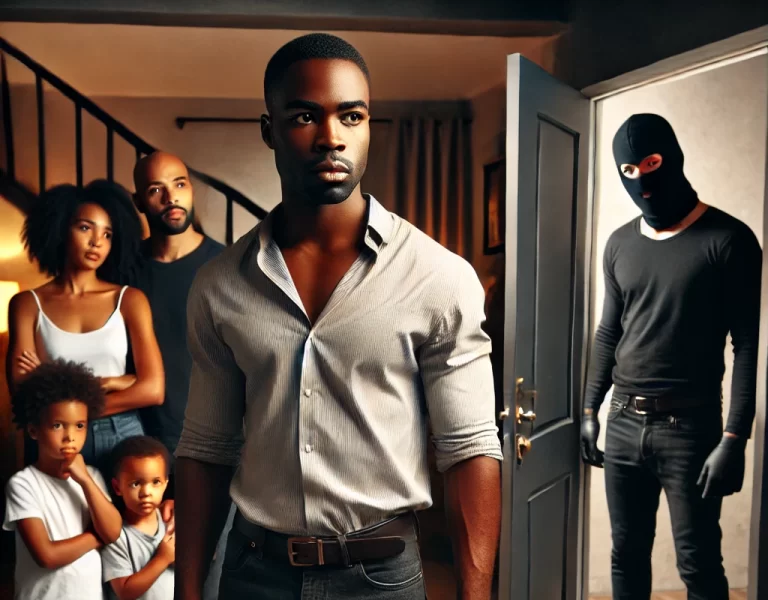
Imagine this: you hear a crash downstairs in the middle of the night, and your heart races as you realize someone has broken into your home. Worse yet, they’re armed. In that terrifying moment, your instinct is to protect yourself and your family. But under California’s newly proposed Assembly Bill 1333, you may have to pause and ask yourself—will I go to prison for defending my home?
AB 1333, introduced by Assemblymember Rick Chavez Zbur, a Democrat from the 51st Assembly District, proposes significant changes to California’s self-defense laws, especially concerning justifiable homicide. The bill aims to eliminate legal protections for homeowners who use deadly force to protect themselves, their families, and their property. By requiring homeowners to demonstrate that they had “no other option” but to resort to lethal force, this legislation effectively shifts the burden from criminals to law-abiding citizens.
A Dangerous Shift in Self-Defense Laws
For decades, the Castle Doctrine has protected Californians by recognizing that a person’s home is their ultimate line of defense. If someone unlawfully enters your home, the law assumes you have the right to defend yourself without hesitation. AB 1333 threatens that right by imposing a requirement for homeowners to demonstrate that using force was necessary—and possibly even that they attempted to retreat beforehand.
This is not just misguided—it’s dangerous. In real-life home invasion situations, every second counts. Asking a homeowner to pause and consider whether the force they use will stand up in court could mean the difference between life and death. Even worse, it sends a message to criminals that the law is on their side side.Empowering the Criminals, Disarming the Victims
One of the most alarming aspects of AB 1333 is that it grants intruders more rights than homeowners. Should a homeowner be required to retreat if a criminal breaks into their home armed with a weapon? Should they be forced to prove in court that they had “no alternative” but to protect themselves? This bill emboldens intruders by suggesting that homeowners are legally vulnerable if they defend themselves.
Moreover, violent crime is increasing in California. Home invasions, armed robberies, and burglaries have become more common. Yet, instead of enacting laws to protect victims, AB 1333 does the opposite—it makes it more difficult for them to defend themselves while creating more legal loopholes for criminals.
Democratic Supermajority and the Push for AB 1333
It comes as no surprise that AB 1333 has gained momentum in Sacramento. The California State Legislature is largely dominated by Democrats, who hold a supermajority in both the Assembly and the Senate. With 60 Democrats in the Assembly and 30 in the Senate, they have the power to pass legislation without relying on any Republican votes. Assemblymember Rick Chavez Zbur, the bill’s author, is a prominent member of this Democratic supermajority, and his proposal aligns with their broader agenda to impose stricter regulations on self-defense laws.
This political landscape shows that bills like AB 1333, despite their clear dangers to homeowners, can be passed with minimal resistance. When one party holds unchecked power, laws that infringe upon individual rights—especially the right to self-defense—are more likely to be enacted. California residents need to recognize this and stand against lawmakers who prioritize ideology over public safety.
A Slippery Slope Toward Criminalizing Self-Defense
Supporters of the bill argue that it seeks to prevent unnecessary killings. However, in reality, it discourages victims from defending themselves and creates a dangerous legal gray area where prosecutors can scrutinize a homeowner’s split-second decision to use force.
What happens if a homeowner, fearing for their life, shoots an armed intruder, only to be prosecuted for failing to “retreat” first? What if a family defends themselves against a violent attacker and then spends years in court proving their actions were justified? AB 1333 directly attacks the right to self-defense and puts innocent people in legal jeopardy for protecting their own lives.
The Right to Self-Defense Must Be Protected
Homeowners should not doubt their right to defend themselves. California lawmakers must acknowledge that AB 1333 is a reckless proposal that prioritizes the rights of criminals over law-abiding citizens. Instead of undermining self-defense protections, the state should strengthen them to ensure homeowners never hesitate in life-threatening situations.
It’s time for Californians to take a stand. AB 1333 must be stopped before it turns every home invasion into a legal nightmare for the victim and empowers those who commit crimes.
The right to self-defense is not merely a privilege; it is a fundamental human right. Any law that undermines this right jeopardizes everyone.
As a retired law enforcement officer with 33 years of experience, I advocate for sensible gun laws and the right to own registered firearms for the protection of myself, my family, and my home. When laws are enacted that regulate and restrict how I defend my home and family from an unlawful intruder, it exemplifies the government overreaching at its worst.
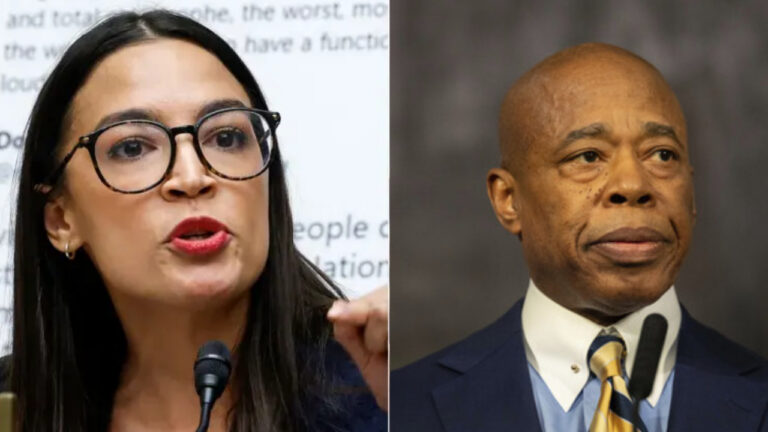
At a congressional hearing meant to address the impact of sanctuary city policies on crime and municipal resources, Congresswoman Alexandria Ocasio-Cortez (D-NY) diverted her line of questioning away from pressing concerns about illegal immigration and public safety. Instead, she chose to interrogate New York City Mayor Eric Adams about his ongoing legal troubles.
Rather than engaging in a discussion about the rise in crime associated with illegal migrants—an issue central to the hearing—Ocasio-Cortez focused on allegations of bribery, campaign finance fraud, and conspiracy against Adams. The mayor, currently facing legal scrutiny, repeatedly declined to provide direct answers, citing respect for the judicial process. However, Ocasio-Cortez insisted that his refusal to respond directly was inappropriate.
A Contentious Exchange
The heated exchange began with Ocasio-Cortez asking Mayor Adams whether he was aware of a January 31st, 2025, meeting between his attorneys and federal prosecutors. Adams, maintaining a defensive stance, emphasized that the case was before a judge and that he would not discuss private attorney-client communications in a public forum.
“You said the only way you can’t answer a question is to plead the Fifth. I am answering your question,” Adams insisted.
Ocasio-Cortez pressed further, asking whether Adams’ attorneys had met with New York City officials and whether any discussion had taken place about a potential arrangement with the Trump administration in exchange for leniency in his case. Adams denied any such agreement or quid pro quo, repeatedly asserting that his legal team was handling the matter appropriately.
A Missed Opportunity While Crime Rages On
The mayor voluntarily attended the hearing, which was intended to address the growing strain of illegal immigration on major cities like New York. Yet, instead of focusing on solutions to crime, resource depletion, and overwhelmed city services, Ocasio-Cortez prioritized questioning Adams about his personal legal issues.
The shift in focus frustrated some members of the committee, who saw it as an attempt to distract from the main issue at hand. Congressman Timmons directly called out the misplaced priorities of some Democrats, stating that the only mayor who stood up to the Biden administration on the migrant crisis—Adams—was conveniently targeted with legal troubles shortly after.
Even more striking was the fact that Democrats on the committee completely missed the point of the hearing. Instead of addressing the concerns of everyday Americans, who are deeply worried about the crime and violence stemming from unchecked migration, some members took the opportunity to discuss Elon Musk—a topic that had absolutely nothing to do with the hearing’s purpose. When billions of tax dollars and public safety were at stake, their decision to fixate on a billionaire entrepreneur instead of the actual crisis at hand was both tone-deaf and an insult to taxpayers.
Mayor Adams’ Outspoken Warnings on the Migrant Crisis
It is no secret that Mayor Eric Adams has been one of the most outspoken Democratic leaders when it comes to the burden of illegal migration on New York City. Since the migrant crisis intensified, Adams has consistently warned about the crippling financial toll it has placed on the city’s budget and the severe strain on public safety.
The cost of housing and providing services for migrants has skyrocketed, forcing the city to cut funds from essential programs, including education, law enforcement, and healthcare. Adams repeatedly pleaded with the Biden administration for federal aid to manage the crisis, but his calls for help largely went unanswered. Left to shoulder the burden alone, his administration struggled to maintain order and protect public safety while resources were stretched thin.
Rather than recognizing the mayor’s challenges in handling a crisis of national proportions, Ocasio-Cortez chose to attack him during the hearing, further exposing divisions within the Democratic Party.
Congressman Timmons: “The Only Mayor Who Spoke Out Was Indicted”
During the hearing, Congressman Timmons of South Carolina addressed the elephant in the room—the political consequences of speaking out against Biden’s immigration policies. While other mayors, including Chicago’s Brandon Johnson and Boston’s Michelle Wu, avoided directly blaming the Biden administration for their migrant crises, Adams was the only mayor who openly criticized the president’s policies.
“Did you see what his administration did to political opponents? Did you see what they did to President Trump?” Congressman Timmons stated during the hearing. “I guess you’re standing up for your people—I admire that.”
He then made a striking observation:
“The only one of you that stood up to the previous administration was under investigation shortly thereafter. Weird how that happens.”
Timmons’ remarks underscored the perception that Adams was politically targeted for daring to challenge Biden’s handling of the border crisis while other Democratic mayors remained silent. His comments further fueled suspicions that Adams’ legal troubles were, at least in part, a form of political retaliation.
The Gang Problem Tied to Migrant Crime
While city leaders struggle to maintain order, violent gangs have taken advantage of the migrant crisis to expand their criminal enterprises in New York. Among the most notorious is Tren de Aragua, a Venezuelan gang that has been linked to shootings, extortion, drug trafficking, and forced prostitution. Their presence has been traced to city migrant shelters, where they are believed to recruit new members.
Another violent group, Los Diablos de la 42, operates primarily in Times Square, where they have been involved in armed robberies and thefts. Reports indicate that they have targeted children in migrant shelters, coercing them into criminal activity.
Meanwhile, MS-13, already infamous for its brutal violence on Long Island, has been known to recruit recent immigrants, particularly vulnerable young men, into its ranks. The Latin Kings, another long-standing gang in New York, continue to exploit immigrant communities for new members while engaging in drug trafficking and violent crimes.
Despite mounting evidence of gang-related crime in New York, Ocasio-Cortez ignored this reality at the hearing, opting instead to engage in political theater rather than addressing the growing public safety crisis.
Democrats Eating Their Own
Ocasio-Cortez’s questioning of Adams exemplifies an ongoing trend within the Democratic Party—internal scrutiny that weakens their own leaders rather than focusing on broader policy issues. With crime, homelessness, and illegal migration placing unprecedented strain on major cities, many expected more productive discussions on how sanctuary city policies have contributed to the crisis.
Instead, the hearing showcased political infighting, with one of New York’s most high-profile progressive leaders choosing to target another Democrat rather than addressing urgent citywide concerns.
Adding to the political turmoil, Ocasio-Cortez was one of the first New York elected officials to publicly call for Mayor Adams’ resignation. Her push to remove him from office gained traction, even leading New York Governor Kathy Hochul to consider an unprecedented move to forcibly oust Adams. However, after significant pushback from Black elected officials and the broader Black community—who demanded that the people of New York City be the ones to decide Adams’ fate—Hochul ultimately backed down and rescinded her consideration.
Out of Touch With New Yorkers
Polling has consistently shown that New Yorkers are deeply concerned about the rise in crime linked to illegal migration. A recent Siena College poll revealed that 82 percent of New Yorkers view the recent influx of migrants as a serious problem, and nearly 80 percent support the deportation of undocumented migrants who have been convicted of a crime, including 69 percent of Democrats and 71 percent of Latinos. Despite this overwhelming sentiment, Ocasio-Cortez continues to defend policies that exacerbate the crisis, choosing to grandstand in political theater rather than address the safety and security concerns of her constituents.
Instead of using her platform to push for real solutions—such as ensuring law enforcement has the tools to combat migrant-related crime, securing the border, or aiding overwhelmed city services—Ocasio-Cortez is more focused on political showboating. She, along with other Democrats on the panel, completely missed the point that the American people care about crime and violence—not Elon Musk.
The political battle within the Democratic Party continues, but for many New Yorkers, the biggest question remains: When will their leaders prioritize real solutions over political grandstanding?