
Women’s Month Spotlight: Celebrating Cynthia Hood – 1st African American Female Detective In White Plains PD

Date:

On this day in Black History, on March 14, 2005, Detective Cynthia J Hood was promoted to the Rank of Sergeant, making her the first and only female of African American descent ever in the history of the City of White Plains Police Department to hold this position.

Cynthia J. Hood shattered the glass ceiling several times, the first time in 2003 when she was appointed the first African American Female Detective, then again in 2005 when she was promoted to the first African American female Sergeant and as the first African American Detective Sergeant in the history of the White Plains Police Department.  

Cynthia J. Hood started her career in law enforcement on November 17, 1986, when she first joined the City of White Plains Police Department and was sworn in as a Police Officer. 

She held various positions throughout her career, working in the Patrol Division, Traffic Division, Undercover Narcotics Unit, Minority Recruiting, and Administration. She was chosen to be a member of the department’s first Bike Patrol Unit, where she completed extensive training with the New York City Police Department. This was the beginning of her historical career with the White Plains Police Department, as she is proud to have been the FIRST female assigned to this unit. She has had an abundance of training and was certified by the New York City Police Department’s Detective Bureau as a Sex Crimes and Child Abuse Investigator. She also showed her expertise on the shooting range, receiving a marksmanship award for exceptional firearms skills. 
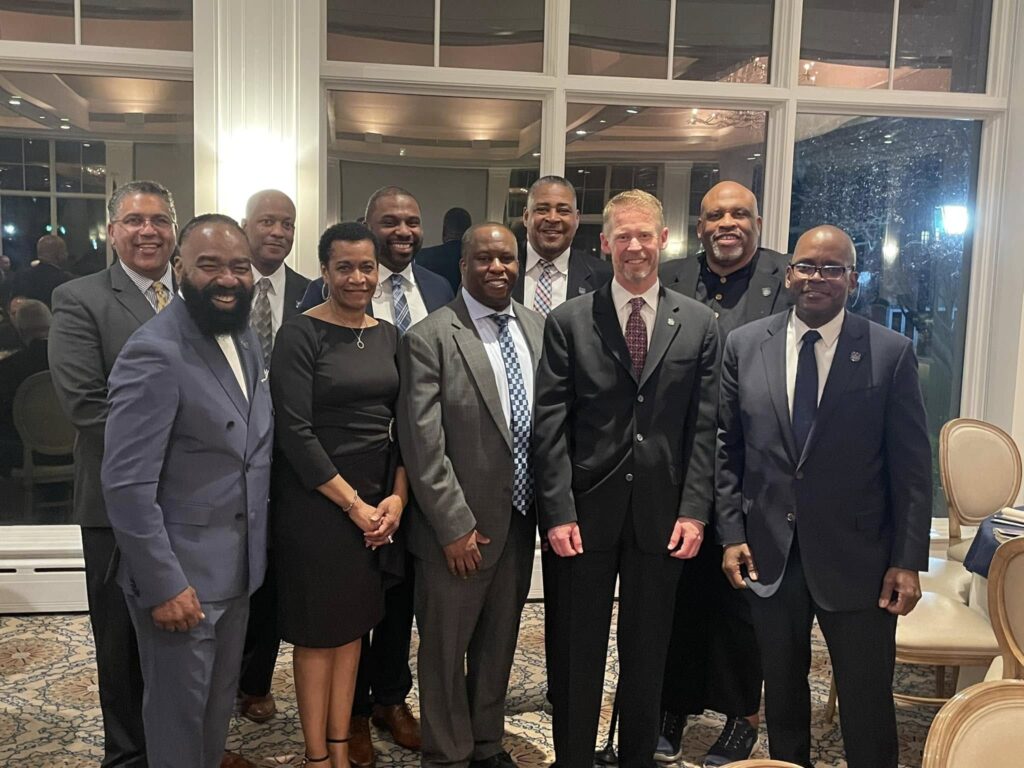
Otis Cruz, NR Police Commissioner Neil Reynolds, WRGA President Paul Hood, Cynthia Hood, Steve Sexton, David A. Gibson, Howard Tribble, Daymon S Yizar, and I had the opportunity to engage with our friend and new WCCOPA President Erik Grutzner at the Westchester County Chiefs of Police Association Annual Installation & Dinner Gala, April 26, 2024

On December 8, 2003, she was appointed to Detective 3rd grade, becoming the Department’s FIRST African American female promoted to this position. After a short assignment as a Patrol Supervisor, she was transferred to the Detective Division, where she was assigned to the Victim’s Services unit.

On March 13, 2005, she was promoted to the Rank of Sergeant. This promotion, as well as her Detective appointment, was historically significant because she is the first and only female of African American descent ever in the history of the City of White Plains Police Department to have held both of these positions. It would be 17 years later before another African American female would be promoted to Sergeant.
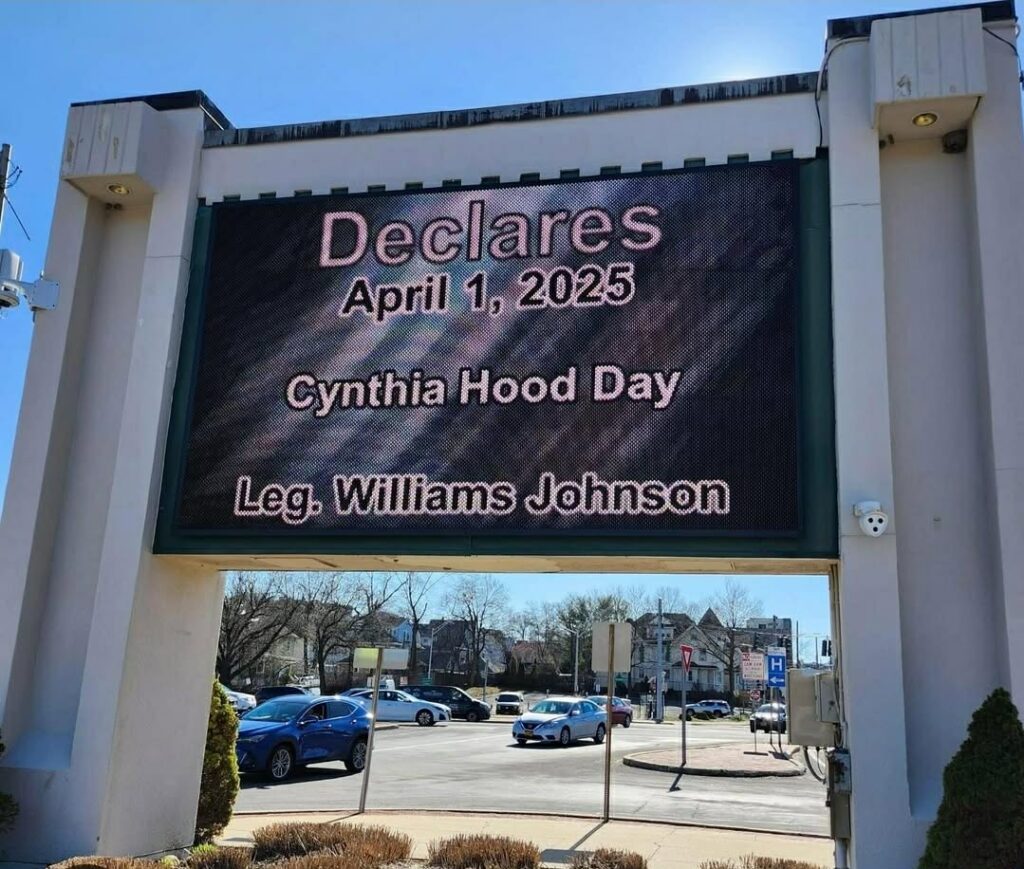
As a Detective Sergeant, she was assigned to the Community Advocacy and Strategic Initiatives Division (CASI), where she supervised the Victim Services Unit, working with crime victims and victims of Domestic Violence. One of the highlights of her career and supervising this unit was collaborating with a team of 9 agencies, allowing her to develop and implement the White Plains Police Department’s Reentry Program, assisting male inmates transitioning back into the White Plains community after incarceration, resulting in lower rates of recidivism, and providing the necessary resources for them to be productive members of their community.

On November 17, 2006, Detective Sergeant Hood retired after twenty years of dedicated service to the city of White Plains. Retired Det/Sgt. Cynthia Hood has been a member of the Westchester Rockland Guardians Association and currently holds the position of Treasurer.

Black Westchester celebrates Cynthia J. Hood for shattering glass ceilings and paving the way for other African American Women in Law Enforcement!
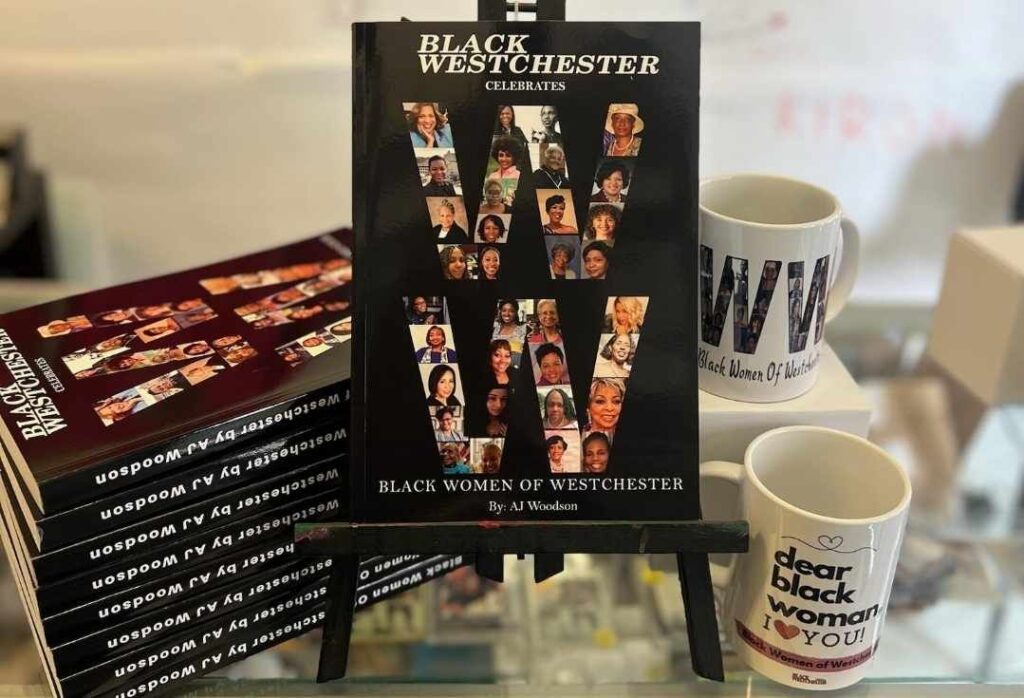
Excerpt from the book, “Black Westchester Celebrates Black Women Of Westchester,” available on Amazon or email BlackWestchesterMag@gmail.com to purchase your autographed copies.

AJ Woodson
AJ Woodson
AJ Woodson is the Editor-In-Chief and co-owner of Black Westchester, Host & Producer of the People Before Politics Radio Show, An Author, Journalism Fellow (Craig Newmark Graduate School of Journalism), Rap Artist - one third of the legendary underground rap group JVC FORCE known for the single Strong Island, Radio Personality, Hip-Hop Historian, Documentarian, Activist, Criminal Justice Advocate and Freelance Journalist whose byline has appeared in several print publications and online sites including The Source, Vibe, the Village Voice, Upscale, Sonicnet.com, Launch.com, Rolling Out Newspaper, Daily Challenge Newspaper, Spiritual Minded Magazine, Word Up! Magazine, On The Go Magazine and several others. Follow me at Blue Sky https://bsky.app/profile/mrajwoodson.bsky.social and Spoutible https://spoutible.com/MrAJWoodson

LEAVE A REPLY

Please enter your comment!
Please enter your name here

Share post:

BW ADS

spot_img
spot_img
spot_img
spot_img
spot_img
spot_img
spot_img
spot_img
spot_img
spot_img
spot_img
spot_img
spot_img
spot_img
spot_img
spot_img

Black 2 Business

Latest Posts

More like this
Related

Money vs. Power: The Lesson Media Companies Should Learn From The Breakfast Club’s Netflix Deal

A line from the political drama House of Cards captures a truth that applies far beyond politics. The character Frank Underwood once said: “Money is the McMansion in Sarasota that starts falling apart after 10 years. Power is the old stone building that has stood for centuries.” That quote perfectly explains the debate surrounding the recent distribution changes involving The Breakfast Club and its move into a deal connected to Netflix through its parent distribution network. At first glance, deals like this appear attractive. Large platforms offer guaranteed revenue, global distribution, and the prestige of being connected to one of the world's largest...

The Death of Black Owned Media: The Last Piece of Black Ownership at BET Is Gone

The recent buyout of Tyler Perry’s ownership stake in BET+ marks more than a corporate restructuring. It signals the end of the last remaining piece of Black ownership connected to the BET ecosystem. With Paramount Global purchasing Perry’s stake, the streaming service is now fully controlled by the same corporation that already owns Black Entertainment Television. BET+ is expected to be folded into Paramount+ as part of the company’s broader strategy to consolidate its streaming platforms. For many viewers, this may look like a routine business decision. Large media companies restructure assets all the time. But the symbolism of this particular transaction is difficult to ignore. Tyler Perry’s investment in BET+ represented the final direct ownership link between Black capital and the BET brand. While BET itself had long been part of a corporate media structure, Perry’s stake in the streaming platform meant that a major Black creator still held equity in a piece of the distribution system tied to the network. That is no longer the case. With the buyout complete, the entire BET ecosystem now sits fully inside Paramount Global’s corporate portfolio. What once stood as a Black-owned media institution has become another brand within a multinational entertainment conglomerate. This distinction matters because ownership and representation are not the same thing. Black culture remains one of the most powerful forces in global entertainment. Black actors, writers, directors, musicians, and producers continue to shape popular culture at every level. But influence does not equal ownership. Ownership determines who controls the platform. Ownership determines who captures the long-term economic value created by media. Ownership determines who ultimately decides what content is produced and how it reaches audiences. This does not mean Black creators will disappear from television or streaming platforms. Black culture will continue to drive audiences, shape trends, and influence global entertainment. The real question is not whether Black content will exist. The real question is what kind of Black content will be produced — and who will decide what stories are told. Who will control how our history is portrayed?Who will shape the narratives about our communities?And what will our children be taught about our culture through the media they consume? Major studios and networks understand the economic value of Black cultural influence. But when ownership of the platforms sits entirely outside the community, the power to define the message no longer belongs to the culture that created it. For decades, BET symbolized something larger than entertainment. It represented the possibility that Black entrepreneurs could build and control a national media platform. Even after the network itself became part of a corporate structure, Tyler Perry’s stake in BET+ maintained at least some connection between Black ownership and the distribution of Black-focused content. That connection is now gone. Major Media Platforms Owned by Paramount Paramount Global owns one of the largest entertainment portfolios in the world. Its holdings include broadcast networks, cable channels, streaming services, movie studios, and global distribution arms.  Broadcast Networks CBS CBS News CBS Sports CBS Television Stations Streaming Platforms Paramount+ Pluto TV CBS News 24/7 CBS Sports HQ Cable Networks Paramount Media Networks controls a large group of cable brands including:  BET BET Her MTV VH1 Nickelodeon Nick Jr. Comedy Central Paramount Network TV Land Logo CMT Pop TV Smithsonian Channel Showtime The Movie Channel Flix Film and Studio Businesses Paramount...

Security Questions Emerge After Police Kill Man Linked to Rep. Jasmine Crockett

A deadly police shooting in Dallas has raised new questions after authorities confirmed the man killed had previously worked security at events connected to U.S. Representative Jasmine Crockett. The man, identified in reports as Mike King, was shot and killed by Dallas Police Department officers following a tense standoff earlier this week. While police say the shooting occurred after the suspect pointed a gun at officers, the revelation that he had previously worked security connected to a member of Congress has triggered scrutiny over vetting and security practices. What Happened According to police, officers were attempting to arrest King on a warrant related to impersonating a law enforcement officer. Authorities tracked him to a parking garage near Children’s Health Hospital in Dallas, where he barricaded himself inside a vehicle. A SWAT response team was called to the scene. After negotiations failed, officers deployed tear gas to force him out of the vehicle. Police say that when King exited the car, he emerged holding a firearm and pointed it toward officers. Officers opened fire.King was pronounced dead at the scene. No officers were injured during the incident. A Security Contractor With Political Connections Investigators later confirmed that King had previously provided security services at events involving Rep. Jasmine Crockett, a first-term Democratic congresswoman representing parts of Dallas and surrounding areas. Reports indicate King operated a company that connected off-duty police officers with private security jobs, including political events. Campaign finance records and public documentation reportedly show payments for security services linked to Crockett’s events within the past year. There is currently no indication that Crockett or her office were aware of any criminal investigation involving King prior to the incident. Her office has not issued a formal statement about the situation as of this writing. Allegations of Police Impersonation The warrant that led police to King was connected to allegations that he had been impersonating a law enforcement officer. Investigators say he was suspected of using: A replica undercover police-style vehicle Stolen or altered license plates Multiple aliases Authorities are still investigating the full scope of those allegations. Questions About Security Vetting The incident has raised broader questions about how private security contractors are vetted for political events, particularly for elected officials who frequently rely on private firms rather than government protective services. Members of Congress typically do not receive full-time federal protection unless they hold leadership roles or face specific threats. As a result, many campaigns and offices hire private security contractors for events. The Dallas shooting has now sparked debate over whether additional background checks or licensing requirementsshould be implemented for individuals providing security for elected officials. The Larger Debate For critics, the situation highlights what they see as a growing problem with the loosely regulated private security industry. Others argue the focus should remain on the circumstances of the police encounter itself, noting that officers say the shooting occurred only after the suspect pointed a weapon at law enforcement during an active standoff. The investigation into the incident is ongoing. What is clear is that the case now sits at the intersection of law enforcement, political security, and public accountability—a combination that almost guarantees continued scrutiny in the days ahead.

Badge & Barrier Breakers: The Black Women Who Paved the Way in Westchester Law Enforcement.

Black women have played a vital role in shaping...