




Dr. Patricia Bath invented the Laserphaco Probe, a device that used laser technology to remove cataracts more precisely and less painfully than any previous method. She was the first African American woman to complete a residency in ophthalmology, the first Black woman on the surgical staff at UCLA Medical Center, and the first African American woman to receive a medical patent. She co-founded the American Institute for the Prevention of Blindness and spent decades insisting that eyesight was a basic human right. Her name belongs in medical history. It is there.
But long before the patent, long before a beam of light passed through a clouded lens in an operating room, Patricia was a child in Harlem watching how her parents, Rupert and Gladys, navigated the world.
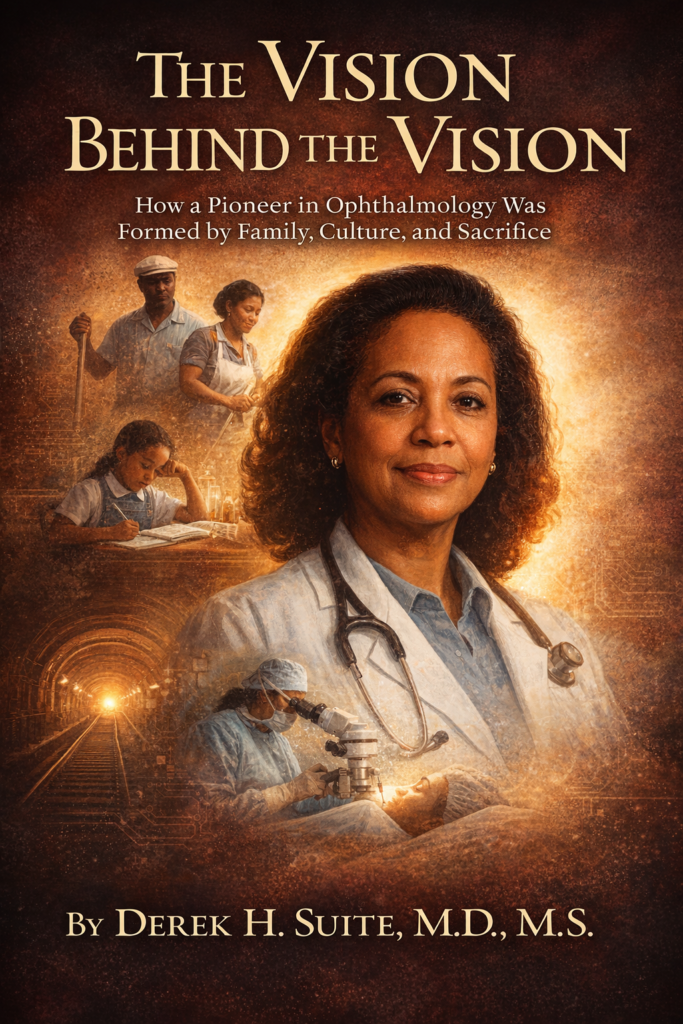
That is where the story resonates for me.
Rupert Bath left Trinidad as a young man. Think about what that means for a moment. A Black man leaving a small island for a country he had never touched, carrying whatever he could fit and whatever he had been taught. Trinidad produces a particular kind of discipline. It is a small country with a large sense of itself, a place where people learn early that the world will not come to you and that readiness is not optional. West Indian families have long understood migration as a strategy, a widening of reach rather than a loosening of roots. But strategy does not describe what it feels like to stand on a deck and watch your coastline disappear. That part takes courage. It takes faith in something you cannot yet see.
Rupert Bath did not know what he was carrying. He did not know that the discipline shaped in him by his homeland, the composure, the refusal to accept limitation, would pass through him into a daughter who would change how the world sees. He was most likely in survival mode, thinking about work and putting himself in position so that something better might follow.
In New York, he found work as a merchant seaman. Consider the labor. A Black man from the Caribbean, working the ships, sleeping in quarters built for function rather than comfort, moving through waters and ports that did not welcome him warmly. Later, he came ashore and became one of the first African American motormen in the New York City subway system. He was underground now, guiding trains through tunnels beneath a city that was still adjusting to the sight of Black authority in municipal roles. The job required steadiness and control. Thousands rode through those tunnels each day without knowing who sat at the controls, without wondering what it cost him to be there, without imagining what he had crossed to arrive at that seat.
Children absorb what they see at home. Patricia Bath watched her father prepare for work, carry himself through scrutiny, and return without complaint. She learned early that being first in a family means the household runs on a quiet discipline that no one outside ever sees.
Gladys Bath came from a different road entirely, and it had been longer. Her history was rooted not in a single ocean crossing but in centuries on American soil. She was descended from African slaves and Cherokee Native Americans, two peoples whose displacement and survival are woven through the founding contradictions of this country. Her lineage carried enslavement and removal, reconstruction and resistance. That history forged something under longer pressure, an endurance that knows what it means to build where you have been broken.
Mrs. Bath worked as a domestic laborer. I want to stay with that for a moment, because the phrase moves quickly and the reality did not. It meant rising before her own household was awake and traveling long distances to neighborhoods where the homes were larger, and the pay was modest. It required cleaning floors on her hands and knees, scrubbing kitchens and bathrooms in houses that belonged to other families, making their comfort visible while her labor remained invisible. The work was physical in a way that accumulates in the body, and the hours were unforgiving. And when Mrs. Bath came home, she asked Patricia Bath about homework.
Gladys Bath did not know she was building a prodigy. She did not have that language or that luxury. She had wages, and she had a child, and she believed that if she stretched the first far enough, the second would have a chance.
She bought books, funded schooling, and purchased a chemistry set that cost more than convenience would have advised, placing it on a kitchen table in Harlem. Patricia Bath sat at that kitchen table and worked with the chemistry set the way her mother worked at everything—seriously. Years later, the world would call her a pioneer. In that apartment, she was a girl whose mother had made room for her to become one.
Scenes like this have unfolded in many Black households where a mother comes home tired and still asks about homework. A father works nights and makes time to catch up. A child studies late into the evening hours. The pattern is familiar, which sometimes makes it easy to glide past. When I slow down and look at it, I see parents who knew exactly what they were doing. They could not promise their daughter a future, but they could prepare her for one.
West Indian families tend to treat education as an inheritance, something you carry forward and build on. African American families shaped by exclusion tend to treat it as proof that something essential could not be destroyed. Both traditions demand excellence. One says go further than I went. The other says reclaim what was taken from us.
In that Harlem apartment, both traditions lived under the same roof. A father, from Trinidad, who had crossed an ocean because he believed geography should not limit his children. A mother whose people had survived on this land for centuries and who understood that opportunity in America was never given freely but had to be constructed, sometimes from wages that barely covered the week. The cultural convergence showed up in the Bath household, where expectations for excellence ran high. Homework mattered, reading mattered, and curiosity was treated as preparation for something the household could feel coming. The girl at the kitchen table absorbed the lessons without needing them named.
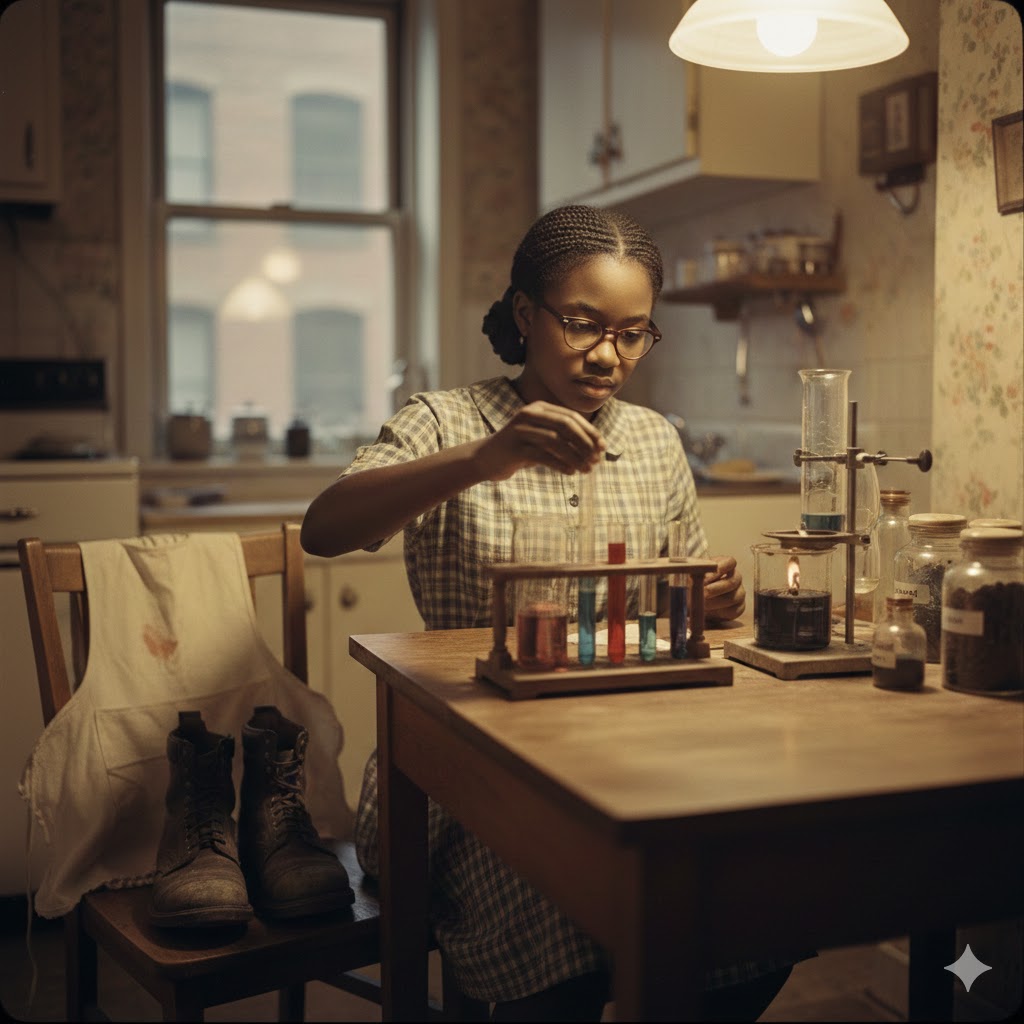
By the time Patricia Bath was a teenager, she was conducting cancer research and earning a National Science Foundation scholarship. The New York Times wrote about her work before she finished high school. When I read that detail, I think about her evenings at that kitchen table years before the article appeared.
Her medical training unfolded in a field that offered few openings for Black women, especially in surgical specialties.
At Howard University College of Medicine, she encountered disparities in eye care that would shape her life’s direction. Blindness rates among Black patients were dramatically higher than among white patients, a disparity widely attributed to unequal access to early eye care. She was struck by how preventable many cases of blindness were if patients had received basic care earlier. She carried that finding into ophthalmology and became the first Black woman to serve as a resident in the specialty at New York University. Recognition moved unevenly, and credit did not always arrive in proportion to contribution, but Patricia kept moving.
Success did not insulate her from dismissal. It required her to outpace it. And outpacing, for Patricia Bath, meant not only performing at a higher standard but expanding the definition of what ophthalmology could be and whom it could serve.
The connection to her father becomes clearer over time.
Rupert Bath guided trains through dark tunnels so people above ground could move freely. Dr. Patricia Bath guided beams of light through clouded lenses so patients could see again. Both relied on technical mastery and carried responsibility in environments that were still adjusting to their presence.
When Dr. Bath developed the Laserphaco Probe, cataract surgery shifted in precision and reach. Through the American Institute for the Prevention of Blindness, she practiced what she called community ophthalmology, a model that blended public health, clinical care, and outreach in underserved communities.
Dr. Bath insisted that eyesight belongs among basic human rights.
That insistence did not emerge from abstraction. It came from a Trinidadian father who had crossed water because he believed geography should not determine what a person can become. It came from an African American mother whose people knew, across generations, what it meant to be denied access to care, to education and to the full exercise of citizenship. In many ways, community ophthalmology grew out of that household. Two people who spent their lives unseen, underground, on their knees, raised a daughter who became one of the most visible figures in her field and used her visibility to advocate for patients who were often overlooked.
What I keep coming back to is how much was passed down without anyone seeing it at the time. A young man leaves Trinidad without knowing he is carrying the seed of a prodigy. A woman scrubs floors in homes she will never own without knowing she is shaping a gift the world will one day receive. Neither of them had the luxury of seeing the full picture. They were focused on Monday and the next shift. They had a daughter who needed books and a kitchen table where she could work. The marvel is that two disciplined, hardworking people, one steering trains beneath a city and one cleaning homes above it, could help shape a mind that would change how millions see.
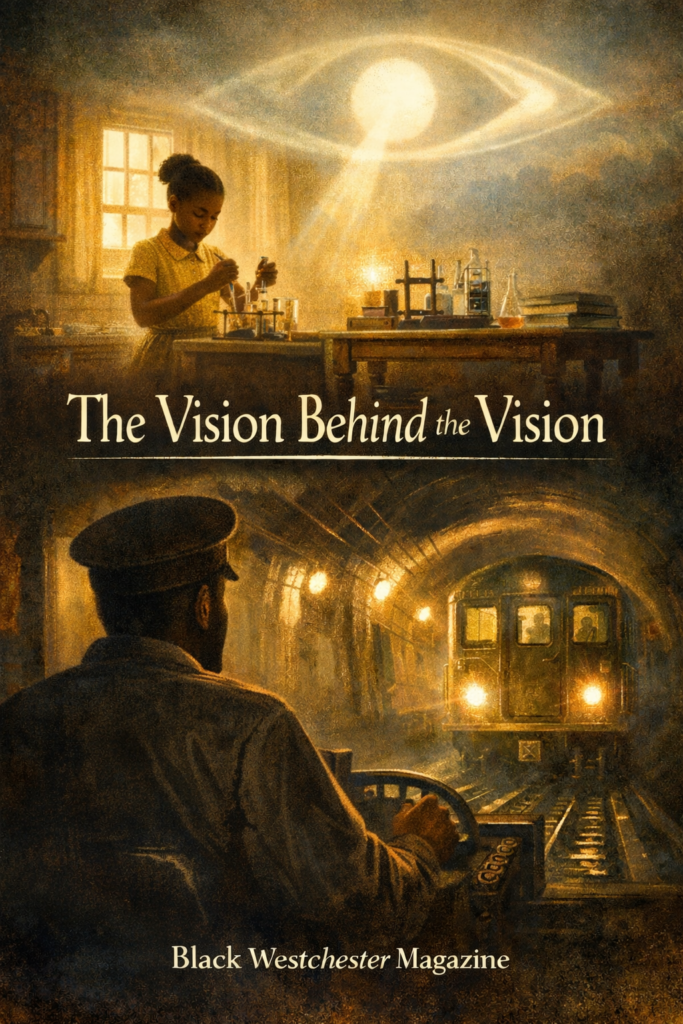
That arithmetic is worth sitting with.
Trains and mops and homework questions do not look like genius while they are unfolding. They look like ordinary life. Years later, the result stands in a surgical suite holding a patent.
We tend to remember the breakthrough. The preparation behind it fades more quietly. I have seen this in clinics and classrooms. A name rises, and the household that shaped it remains unnamed. And the thing is that they would have it no other way.
Dr. Patricia Bath died on May 30, 2019, at the age of seventy-six, from complications related to cancer. Her work continues in operating rooms and in patients who see clearly because of the Laserphaco Probe and because she insisted that access to sight should not depend on wealth or geography.
Dr. Bath’s story is secure in medical history. The fuller story includes a father who carried Trinidad into New York without diminishing either place and a mother whose African and Cherokee lineage had taught her that a child’s mind is worth every sacrifice a household can make.
In Black and Brown communities across this country, parents are performing that same arithmetic right now. Stretching wages toward tuition. Driving long shifts so a child can study late. Building scaffolding that will never receive applause but will hold the weight of everything that follows. Dr. Bath’s story belongs to medical history, and it also belongs to them.
Dr. Bath helped the world see more clearly, but her parents saw her clearly first.
When I think about her life, I return to the journey. Patricia Bath was being prepared for that operating room long before she ever entered it. Steady hands guided her there, in tunnels and kitchens, long before the world knew her name.

Derek H. Suite, M.D., is a board-certified psychiatrist, CEO and Founder of Full Circle Health, and host of The SuiteSpot, a daily inspirational podcast exploring science, spirituality, and human performance. Dr. Suite is a graduate of the Columbia School of Journalism in New York and a guest contributor to Black Westchester Magazine.














Dr. Suite –
Bravo. A wonderful tribute to an extraordinary pioneer. Thank you for sharing this story about Dr. Patricia Bath. I now know her name because of this article.
Responding from Trinidad. I can relate because I am aware of the parental sacrifice that saw me achieve my goals as a young woman.
As an aside are you related to the Suite family of Trinidad
Thank you, Dr. Suite, for illuminating the foundation beneath Dr. Patricia Bath’s legacy and showing how the discipline and sacrifice she witnessed at home shaped the focus she carried into her pioneering and distinguished career in ophthalmology. That same purpose defined her commitment to preventing blindness and expanding access to ophthalmologic care in underserved communities.
A well deserved tribute!
Some truly marvellous work on behalf of the owner of this internet site, utterly great content.