



Yonkers is the third-largest city in New York State, and its mayor, Mike Spano, just sent a signal that should make New York City pay attention to regional economic strategies. When he publicly invited NYC businesses to relocate or expand in Yonkers, he wasn’t looking for a headline. He was stating a truth that cities with strong economies understand and ideological administrations often ignore: businesses respond to incentives, not speeches. Entrepreneurs respond to cost, not political branding. Markets react to stability, not theatrics. And at the very moment New York City prepares to swear in a mayor who proudly calls himself a democratic socialist, the logic behind Spano’s message becomes even sharper.
Business leaders across the five boroughs have already expressed concerns about the incoming administration’s direction. Small business owners are uneasy about proposals such as city-run grocery stores. Real estate leaders warn that regulatory uncertainty is already slowing down investment conversations. Retail groups point out that rising costs could destroy thin-margin businesses. Whether one agrees with these anxieties is irrelevant. They exist. They are real. And they represent feedback from the very people who create jobs, sign paychecks, lease space, and sustain New York City’s tax base.
Spano is responding to that feedback with clarity. While New York City leans harder into ideological messaging, Yonkers is leaning into predictability. While New York City talks about taxing and constraining its producers, Yonkers is offering itself as a place where businesses can operate with confidence. While activists celebrate policy experiments, Spano is positioning his city as a location where rules remain consistent and growth is encouraged rather than punished. None of this is partisan. It is practical governance based on cause and effect. Cities that focus on economic outcomes will grow. Cities that prioritize rhetoric over results will decline.
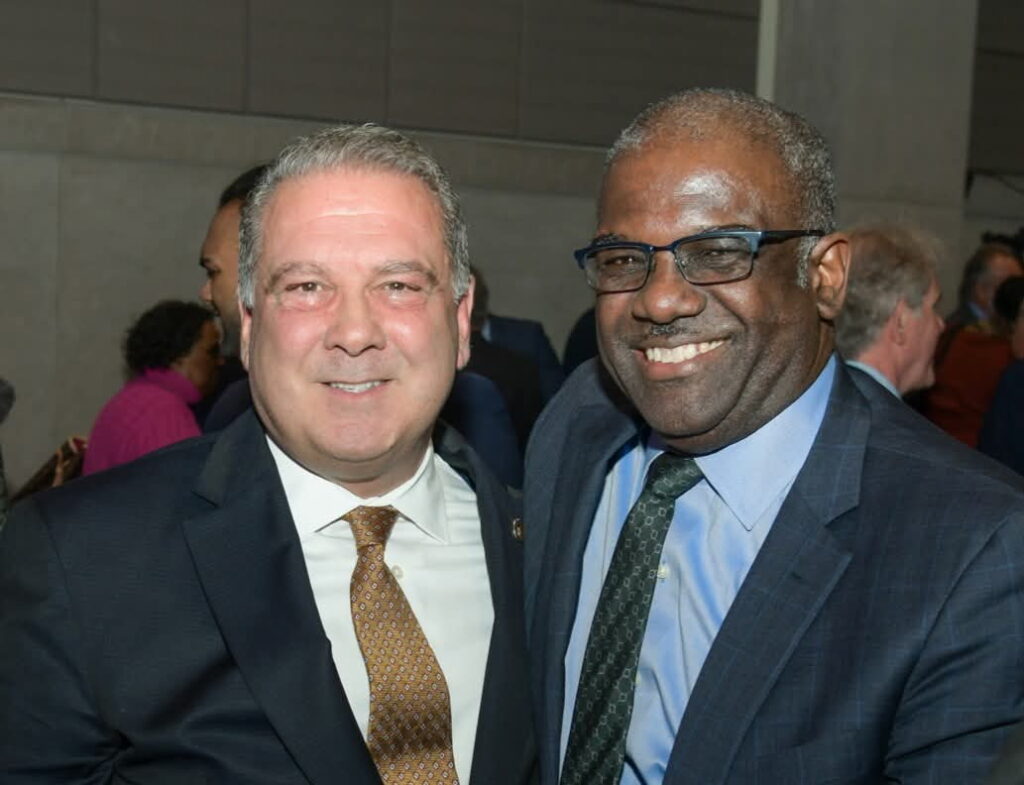
We recently came to the same conclusion about Westchester County Executive Ken Jenkins. His leadership style—steady, pragmatic, and in constant communication with the business community—is fundamentally different from the confrontational tone emerging from Mamdani’s political circle. Jenkins understands that development requires stability. Investors do not build in regions where leadership treats them as adversaries. His approach is a significant reason Westchester continues to attract new projects, while New York City risks becoming inhospitable to future growth. The difference between Jenkins and Mamdani is not ideological preference. It is measurable in outcomes.
Spano’s message also aligns with a more profound truth that New York City continues to overlook: most Fortune 500 CEOs who work in Manhattan already live in Westchester. Their families, schools, social circles, and tax footprints are already north of the city line. This means the psychological barrier to shifting operations—or opening a second headquarters—in Westchester is significantly lower than political pundits want to admit. Executives are far more likely to invest and expand where they already reside than where they feel politically targeted. When the people making billion-dollar decisions already reside in your county, you don’t have to convince them to leave New York City—you only have to give them an economic reason to stay and expand.
And this is precisely what Mamdani’s rhetoric risks becoming: the excuse.
Spano’s message fits into a broader trend forming across Westchester. While New York City experiments with sweeping ideological shifts, the suburban region is positioning itself as the calm alternative. Companies do not wait for laws to change before making decisions. They respond to anticipation, to tone, to signals about the cost of doing business. Economic decisions always happen before political ones. When companies begin exploring relocation or expansion in places like Yonkers, White Plains, or New Rochelle, the long-term effects immediately begin shaping employment, commercial property values, municipal budgets, and neighborhood futures.
This dynamic matters deeply for Black New Yorkers. Economic turbulence hits our community first and hardest. When companies relocate or slow hiring, Black workers are the ones who lose opportunities. When commercial corridors decline, it is Black neighborhoods that see vacancies. When tax revenue shrinks, it is programs serving marginalized communities that sustain the deepest cuts. This is why governance cannot be judged by how it sounds, what ideology it affirms, or what political tribe it impresses. It must be judged by what it produces. Outcomes—not intention—determine who benefits and who pays the price.
Spano’s invitation to businesses is not an attack on New York City. It is a warning rooted in economic logic. If a government increases the cost of doing business, fewer businesses will stay. If it creates regulatory uncertainty, investment will slow. If it elevates ideology above pragmatism, the results will expose that mistake. New York City can deny this reality or confront it. Yonkers and Westchester already have.
The combination of Ken Jenkins and Mike Spano—one overseeing the county’s economic environment, the other running its largest city—forms a powerful alternative for companies uneasy about Mamdani’s rhetoric. White Plains already functions as the business hub of Westchester and the largest corporate center outside Manhattan. Yonkers brings population density, workforce access, transit connectivity, and expansive redevelopment opportunities. Add the fact that the region’s highest-earning executives are already Westchester residents, and the competitive threat to New York City becomes undeniable.
If Mamdani continues signaling policies that appear hostile to producers and investors, he will accelerate a migration that is already quietly forming. Companies will not announce dramatic exits. They will simply expand elsewhere. They will hire elsewhere. They will invest elsewhere. They will pay taxes elsewhere. In time, that shift weakens the very foundation of what New York City claims it wants to protect.
If New York City refuses to adjust its posture, it risks being outpaced not by Florida or Texas, but by its own neighbor just twenty minutes north. Jenkins and Spano understand a truth NYC leadership has forgotten: outcomes determine prosperity. Rhetoric does not. If New York City ignores that truth, it will face declining investment, shrinking jobs, and increasing instability, losing its economic edge to regions that prioritize results over words.
There is no emotion in that conclusion. Only math. Only logic. Only outcomes.