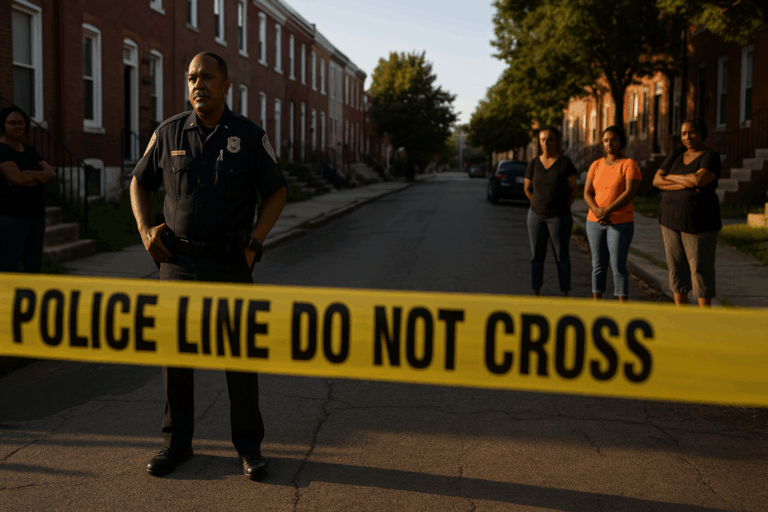
Mount Vernon residents awoke to disturbing news this weekend after police confirmed that a woman was found dead inside a vehicle along the Cross County Parkway. The details remain scarce, but investigators have labeled the death as suspicious, sparking unease in a community already fatigued by ongoing concerns about crime, violence, and public safety.
The incident is not isolated. Across Westchester and the nation, headlines have been dominated by violent episodes that demand a broader conversation about the trajectory of crime in America. Just hours away in Brooklyn, a mass shooting inside a nightclub left three people dead and nine others injured. On the national stage, the Trump administration has responded to growing violence in Washington, D.C. by calling in the National Guard from multiple states. These stories, while separate, are part of the same troubling narrative: the persistence of crime and the failure of leadership to create sustainable solutions.
Local Shock, National Pattern
In Mount Vernon, the woman’s death feels like a grim reminder of vulnerabilities residents face every day. Families worry not only about isolated tragedies but also about the compounding effects of systemic neglect—understaffed police departments, inadequate mental health services, and political dysfunction that leave communities exposed.
Nationwide, these same themes echo. Major cities like New York, Chicago, and Philadelphia continue to battle surges in violent crime. Federal policymakers point to poverty, drugs, and illegal guns as root causes, while community activists argue that decades of neglect and broken institutions lie at the heart of the problem.
Leadership Without Outcomes
What is clear is that political leaders are long on rhetoric but short on results. Whether it is New York City’s “mass shooting response plan” or the federal government’s decision to militarize Washington, D.C., these moves appear reactive rather than preventative. Mount Vernon’s tragedy illustrates the local cost of this national failure: another life lost, another family shattered, and another community left with questions.
A Call for Serious Solutions
The death on the Cross County Parkway should not be dismissed as just another crime story. It should be a wake-up call that connects Mount Vernon to a broader national crisis. Communities cannot afford band-aid solutions or political finger-pointing. They need comprehensive policies that address the root causes of crime, restore accountability in leadership, and strengthen the trust between citizens and law enforcement.
Until leaders shift from symbolic gestures to concrete outcomes, stories like the woman found dead in Mount Vernon will continue to haunt both local communities and the national conscience.
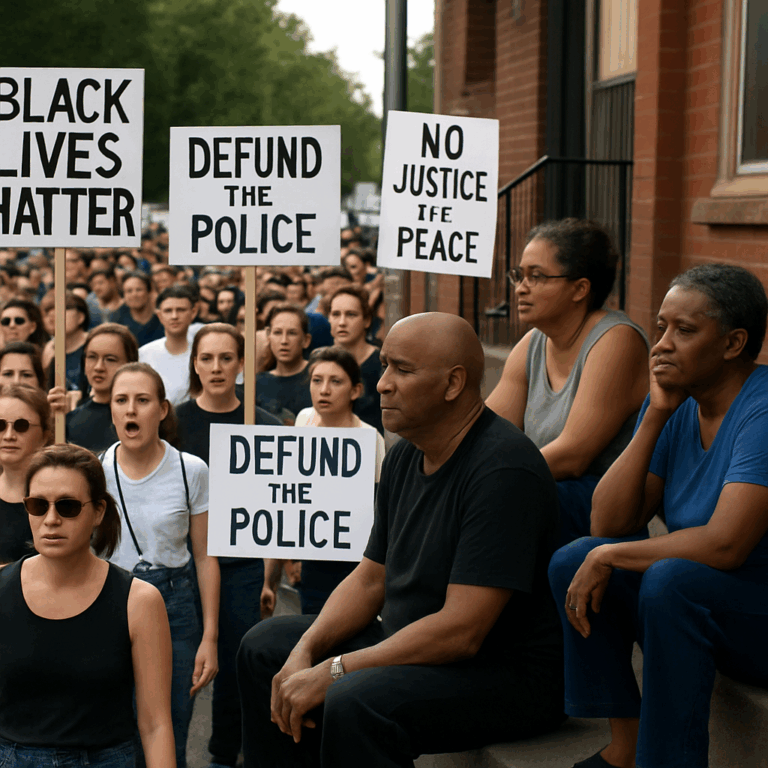
When you look at the protests shaking America’s cities, you have to ask a simple question: whose interests are really being served? Because in far too many cases, the issues paraded through the streets in Black neighborhoods are not the priorities of the people who actually live there. They are the pet causes of progressive activists, imported from the outside and imposed on communities that never asked for them.
Take Washington, D.C. as an example. Black residents have been vocal about wanting safer streets. Many welcomed the presence of additional police after years of shootings, robberies, and carjackings that made daily life unbearable. But when the cameras rolled, what did the world see? A sea of mostly white, progressive protesters railing against “police occupation.” The question is not whether they had a right to protest, but what business they had turning Black neighborhoods into backdrops for their own political theater.
This pattern is nothing new. In city after city, so-called “grassroots” movements are anything but. Professional signs, coordinated chants, free legal aid for those arrested, buses to shuttle in protesters — these things don’t just happen. They cost money. And that money often comes from wealthy interests far removed from the daily struggles of Black families.
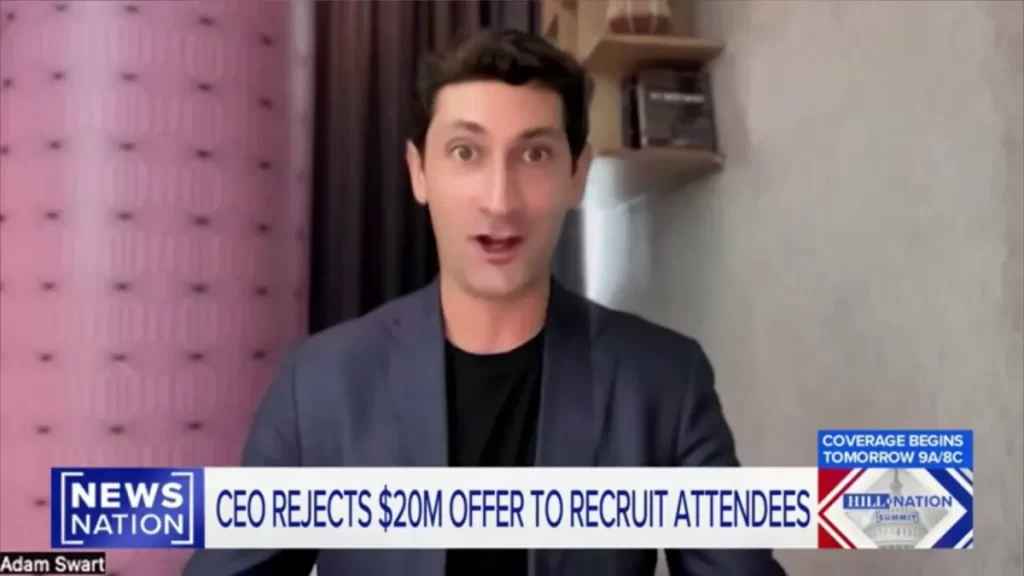
Adam Swart of Crowds on Demand recently confirmed the existence of this hidden economy. His firm has made millions by renting out activists and assembling crowds for political causes. He openly described how billionaires funnel money through nonprofits and advocacy groups, creating “Russian doll networks” of influence where the true funders stay hidden. If you think the protest outside your window is a spontaneous uprising, think again — it might just be a corporate strategy meeting with better signage.
The tragic result is that authentic Black voices are drowned out. Real concerns — safe neighborhoods, functioning schools, jobs that sustain families — are buried under progressive talking points about defunding police, gender-neutral bathrooms, or climate action plans that have little to do with everyday survival. The activists fly home after the march; the residents are left behind to deal with the crime, the unemployment, and the failing infrastructure.
And we need to be honest about what’s really happening: rich white people are using Black communities to push their anti-government agenda, while the communities themselves suffer. Black leaders remain silent, not because they don’t see the problem, but because the same money funding these manufactured protests is also funding their campaigns and organizations.
This game is cruel but predictable. Keep Black neighborhoods in peril. Allow crime to flourish. Drive down property values. Then swoop in as developers and buy land cheap. Build more low-income housing, concentrate more poverty, and import more dysfunction. The cycle repeats itself, and each time, the community sinks deeper while someone else cashes out.
That’s why Black people have to beware. Our pain has been monetized. There are protest profiteers — white and Black — who are making millions off our struggle while nothing changes in our neighborhoods. They get richer with every march, every speech, every grant, while the same broken schools, unsafe streets, and crumbling families remain. Our suffering has become a business model, and too many have found that keeping us in crisis pays better than solving the crisis.
The measure of these protests is not in their slogans but in their results. And the results are clear: they silence rather than empower. They divert attention from the problems that matter most. And they treat Black communities not as partners in shaping solutions but as convenient stages on which outsiders can act out their moral posturing.
If Black America is to move forward, it must do so by asserting its own priorities — not those imported from activist circles and billionaire-funded networks. The real issues — education, safety, economic opportunity, and family stability — must take precedence over outside agendas designed to advance careers, win elections, or check ideological boxes.
The bottom line is simple: the loudest voices in the protest do not always belong to the people most affected by the problem. Until we stop letting others profit from our pain, Black communities will continue to be treated as political props instead of respected as self-determining citizens.
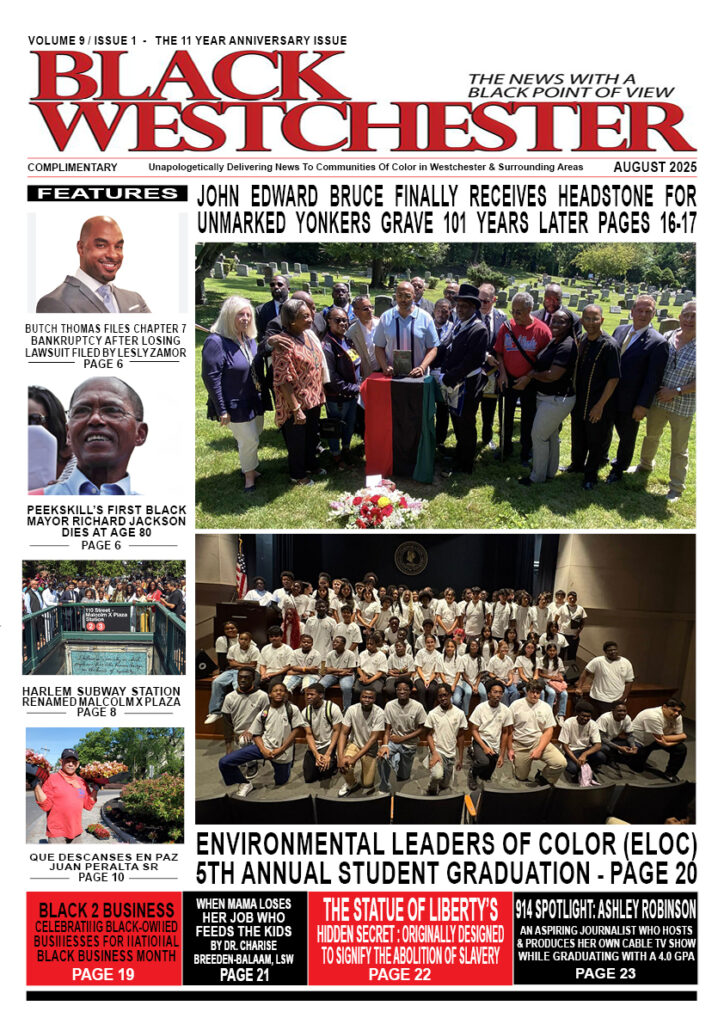
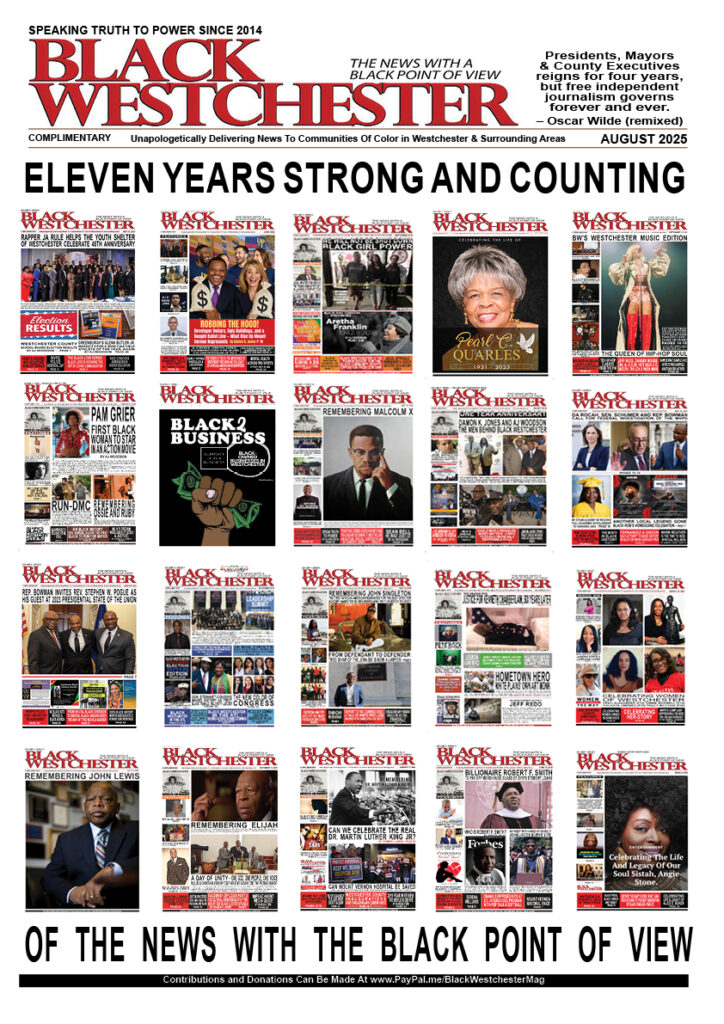
Welcome to the digital edition of the June 2025 Pre-Primary Edition.
As always, we would like to take this opportunity to thank all our readers, listeners, supporters, sponsors, contributors, and advertisers for their support in our efforts to deliver “News With The Black Point Of View” since 2014. We are always looking for writers, photographers, and interns. Email BlackWestchesterMag@gmail.com to inquire.
Send us your feedback and let us know what you think of this issue. Also, let us know what subjects/topics you would like to see us cover in the future, and send your letters to the editor to BlackWestchesterMag@gmail.com.
To support the Black Westchester, which provides the News With The Black Point Of view and gives you the real talk for the community for free, make a donation via PayPal. In the words of Ray Charles, “One of these days, and it [might not be] long, You’re gonna look for [us], and [we’ll] be gone.” Support independent, Black-owned, Free Media! At Black Westchester, we always put People Before Politics!
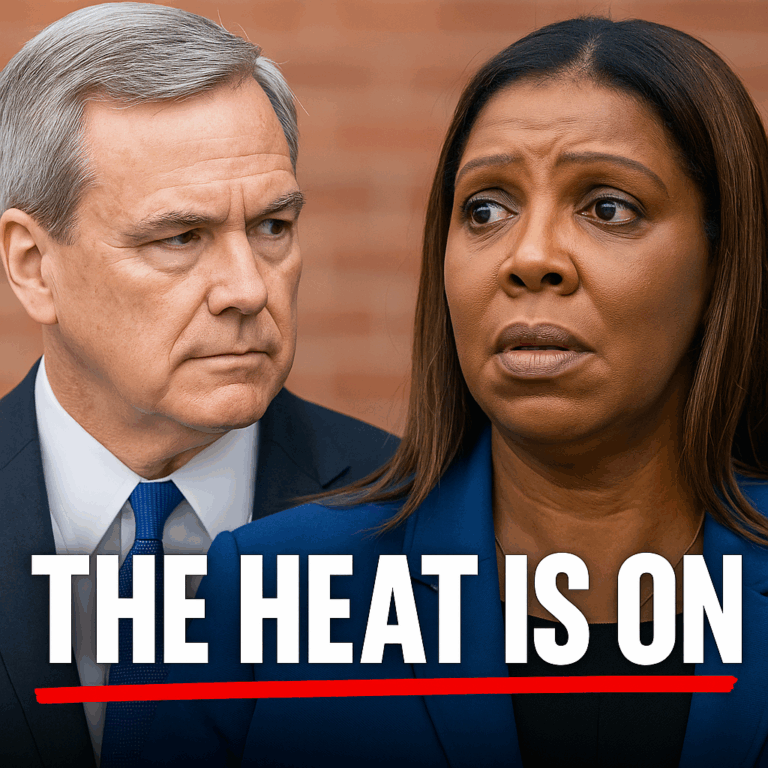
Brooklyn, NY — The federal investigation into New York Attorney General Letitia James has taken a dramatic turn as reports claim Special Prosecutor Ed Martin was spotted outside James’s Brooklyn residence this week. Martin, who was appointed by the Justice Department to oversee the case, is leading a probe into allegations of mortgage fraud involving both James’s Brooklyn property and a Virginia home.
Allegations at the Center
At issue are claims that James misrepresented the size and structure of her Brooklyn multi-family property, allegedly describing it as a four-unit building when records suggest it is larger. Investigators are also examining her purchase of a home in Norfolk, Virginia, where James reportedly listed the property as her primary residence despite serving as New York Attorney General. Critics argue that these misrepresentations may have been used to obtain more favorable mortgage terms, raising the possibility of charges such as bank fraud, wire fraud, and false statements to financial institutions.
In addition, federal prosecutors are looking into whether James abused her power while in office by weaponizing lawsuits against political opponents and potentially violating federal civil rights laws.
Martin at the Scene
While mainstream outlets have not confirmed it, multiple reports from the New York Post and partisan outlets like the Gateway Pundit claim Ed Martin was personally seen outside James’s Brooklyn home. If accurate, this signals the investigation has moved from the paperwork stage to direct scrutiny of James’s personal property.
Political and Legal Fallout
James has denied any wrongdoing. Her attorneys have characterized the probe as politically motivated retaliation, pointing to her high-profile lawsuits against former President Donald Trump, the National Rifle Association, and other powerful figures.
Still, the optics are striking: the same Attorney General who built her career prosecuting Trump for allegedly misrepresenting assets is now facing similar accusations herself.
What Comes Next
With subpoenas already issued and Martin reportedly appearing at her residence, the investigation is escalating quickly. Whether this case results in formal charges or is dismissed as political theater, the spotlight is squarely on Letitia James.
For now, the only certainty is that the process is heating up—and James is no longer the one holding the prosecutor’s pen.
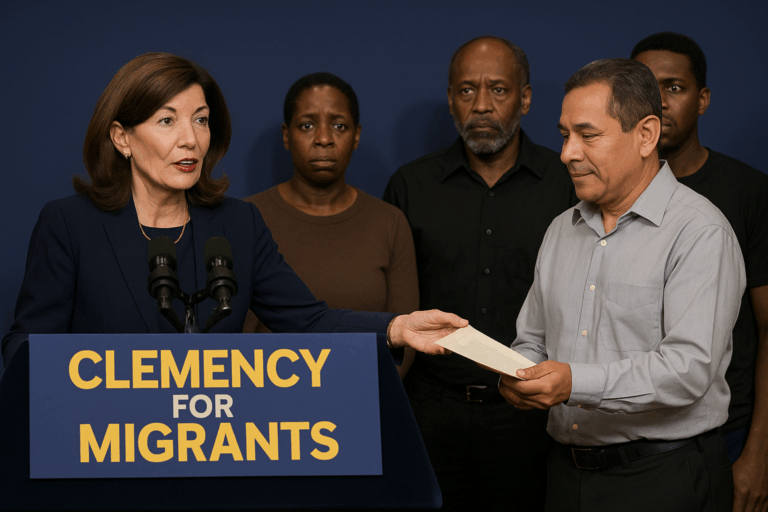
Governor Kathy Hochul’s recent decision to pardon a group of migrants with decades-old convictions has been praised as compassion. For those individuals, it is life-changing: clemency shields them from deportation and gives them a chance to rebuild.
But clemency is supposed to be about principle — that justice should be tempered with mercy when people demonstrate rehabilitation. The real question is whether that principle is being applied fairly. In New York, it is not.
Hochul’s announcement came as immigration dominates headlines. By pardoning migrants, she signals solidarity with advocacy groups and positions herself as humane in the middle of a political storm. But when mercy is granted for political optics, it ceases to be about justice.
Meanwhile, thousands of Black New Yorkers — citizens whose families have lived here for generations — remain trapped by old convictions. They bore the brunt of mass incarceration, discriminatory policing, and harsh sentencing laws. They, too, have served their time and rebuilt their lives, but their records still block housing, jobs, and professional licenses.
Why do they continue to wait for mercy while the governor highlights migrants?
The Facts on Migrant Clemency
The migrants Hochul pardoned are not recent border crossers. Most are long-term residents — often lawful permanent residents with green cards — who became deportable only because of old convictions. Without clemency, ICE could use those convictions to expel them, even after decades of lawful residence. With clemency, that basis for deportation is removed.
This does not make an undocumented immigrant legal. If a person never had status, a pardon cannot create it. But for lawful residents, clemency can prevent “double punishment” — prison followed by exile.
The Double Standard
No one argues that mercy for rehabilitated migrants is wrong. The problem is selective mercy. Migrants are elevated as symbols of compassion, while Black residents with the same or lesser records are invisible. If rehabilitation is the principle, it must apply universally. If politics decides, it will always be applied selectively.
If Albany is serious about fairness, then clemency must also address the tens of thousands of Black New Yorkers still shackled by old drug convictions and minor offenses that destroyed families and futures. These men and women have gone decades without reoffending, yet they remain marked for life while politicians chase headlines elsewhere.
The uncomfortable truth is that Black communities no longer generate the same political spotlight. Migrants are today’s cause célèbre; Black citizens are yesterday’s crisis. And so mercy is granted not by principle, but by convenience.
The Cost of Hypocrisy
This selective compassion has consequences. It undermines trust in the justice system and deepens cynicism in communities who have heard endless talk of “equity” but rarely see it delivered. Clemency should never be a tool for press releases. It should be the restoration of justice for those who have earned it.
Governor Hochul’s pardons for migrants may have changed lives, but they expose a glaring hypocrisy. Clemency is good. Clemency is necessary. But when it is granted to some and withheld from others — migrants over Black New Yorkers, politics over principle — it ceases to be justice.
If justice is blind, then mercy cannot play favorites. Until the same compassion shown to migrants is extended to Black citizens who carried the weight of broken policies for decades, clemency in New York will remain less about fairness and more about politics.
The media wasted no time branding the Alaska summit between Donald Trump and Vladimir Putin a “failure.” Why? Because there wasn’t a signed peace deal on the spot. That’s the kind of shallow analysis we’ve come to expect — headlines crafted for outrage clicks rather than serious thought. But let’s be honest: two and a half hours of talks between the U.S. and Russia on Ukraine, trade, and global security is not failure. It’s diplomacy. And diplomacy is measured in outcomes, not soundbites.
History offers plenty of proof. FDR met with Stalin, Nixon with Mao, Reagan with Gorbachev. None of these men were “good guys.” Some were dictators, some war criminals. But those meetings changed the trajectory of history because the alternative — endless hostility — costs more lives, more money, and more instability. Talking with your adversary doesn’t mean you approve of them. It means you’re serious about preventing further bloodshed.
Putin himself admitted in Alaska what many critics refuse to acknowledge: if Trump had been president in 2022, the war in Ukraine would likely never have happened. That’s not Trump’s boast — that’s Putin’s own statement. The deterrence worked. The war escalated under Biden, not Trump. That’s a fact.
The media wants quick optics: a treaty signed, flags waving, problem solved. That’s not how conflict resolution works. Peace talks are a process. Reagan didn’t walk out of his first summit with Gorbachev holding the INF Treaty. But without those initial talks, the Cold War might never have ended.
Trump and Putin sat down for 2 hours and 30 minutes. They discussed Ukraine, NATO, economic cooperation, and even the Arctic. Trump pledged to brief Zelensky and NATO — meaning this wasn’t some backroom deal, but an attempt to bring stakeholders closer to an outcome. Even incremental progress saves lives. Thousands die each week in Ukraine. Every step toward dialogue means fewer coffins, fewer broken families, fewer wasted billions of taxpayer dollars.
Let’s also deal with the hypocrisy. When Obama sat with Raul Castro in Cuba, the press called it a bold move for diplomacy. When Trump sits with Putin, the same media screams betrayal. You can’t have it both ways. Either diplomacy is worth pursuing no matter who is president, or we admit that these attacks are less about peace and more about politics.
So the real question isn’t whether Trump “should” meet with Putin. The question is: do you prefer endless war, or do you prefer a shot at peace? Outcomes are what matter. If negotiations slow the killing, if they open trade, if they stabilize relations, that’s progress — even if it doesn’t fit the media’s instant-gratification storyline.
Calling the Alaska summit a “failure” says more about the critics than about the talks themselves. Failure is letting wars drag on with no effort to stop them. Failure is choosing political purity over human lives. Diplomacy, no matter how messy or incomplete, is the only path that has ever led to peace.
And on that front, Alaska was not failure. It was a beginning.
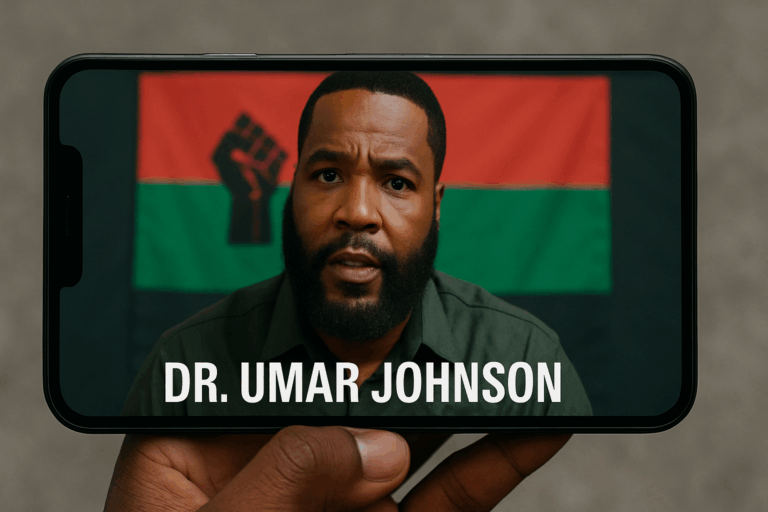
For over a decade, Dr. Umar Johnson has been one of the most polarizing figures in Black America. Known as the self-proclaimed “Prince of Pan-Africanism,” Johnson has built his reputation on fiery lectures, unapologetic racial commentary, and an ambitious dream: to create the Frederick Douglass Marcus Garvey (FDMG) Academy, a school dedicated to the education and empowerment of Black boys.
But today, that dream is hanging by a thread.
A School Facing Auction
On August 13, 2025, reports surfaced that the FDMG Academy campus in Wilmington, Delaware, is facing a sheriff’s sale due to unpaid vacant property registration fees and outstanding utilities. According to Johnson, the city of Wilmington posted the notice of auction directly on the building rather than contacting him by mail, phone, or email. If the debt isn’t settled by August 25, 2025, the property could be sold at auction, effectively ending Johnson’s long-promoted project.
Johnson claims the city is targeting the academy with escalating fees, noting that the vacant property charge is set to jump from $5,000 to $12,000 annually this fall. He argues that such costs are punitive and discriminatory, designed to push the institution into foreclosure.
Frozen Finances
The auction threat comes on the heels of another setback. In July, Johnson revealed that both his personal and the school’s bank accounts had been frozen following alleged hacking attempts. He described the episode as “funny business,” suggesting that shadowy forces are working to sabotage his efforts. The freeze cut off access to funds, donations, and operating capital—making it nearly impossible to address mounting expenses tied to the academy.
The Bigger Picture
For years, Johnson has rallied supporters to invest in his vision of a Pan-African educational institution, one that would liberate Black boys from what he calls the “mis-education” of America’s public school system. He has framed the FDMG Academy as more than a school; to him, it is a cornerstone of Black independence, family restoration, and cultural pride.
But critics have long questioned Johnson’s financial transparency, leadership style, and ability to deliver on promises. The looming auction of the Wilmington property now raises an unavoidable question: can the project survive, or is it yet another cautionary tale of a big idea undone by money and management?
A Call to Action
Johnson has responded to the crisis by calling on his supporters for immediate donations and direct action. He has urged them to protest at Wilmington City Hall and is considering legal action against the city. Framing the battle as part of a larger war against systemic racism, Johnson insists the academy’s survival depends not just on him, but on the collective will of the Black community.
What’s Next?
As the deadline approaches, Johnson finds himself in perhaps the most precarious moment of his public career. If the FDMG Academy is sold at auction, it could mark the end of his decades-long effort to build an independent educational institution. If he can rally enough support to stave off the sale, however, Johnson may emerge with his movement reinvigorated—proof, in his view, that the struggle for Black liberation is alive and well.
For now, one thing is certain: the clock is ticking, and the fate of Dr. Umar Johnson’s dream is on the line.
Anchorage, Alaska — In their first official summit in years, U.S. President Donald Trump and Russian President Vladimir Putin held extensive talks in Alaska, a symbolic location chosen for its shared history between the two nations. The meeting, described by both leaders as “constructive” and “trustworthy,” marked the most direct engagement between Washington and Moscow since bilateral relations hit a low point during the Cold War.
A Meeting of Neighbors
President Putin opened his remarks by emphasizing the geographical closeness of Russia and the United States, separated by only a narrow stretch of the Bering Strait. He highlighted the cultural and historical ties rooted in Alaska’s Russian heritage, from Orthodox churches to place names, and recalled the cooperation during World War II when Alaska served as a key hub for the U.S.-Soviet air bridge supplying the fight against Nazi Germany.
“Alaska symbolizes our common heritage,” Putin said, noting memorials in both Russia and the U.S. honoring pilots from both nations who died in joint missions. “This history of allyship should help us rebuild trust today.”
Ukraine at the Center
The central focus of the summit was the ongoing war in Ukraine. Putin acknowledged the devastation the conflict has caused, describing it as “a tragedy and a terrible wound.” He repeated Moscow’s position that a durable settlement must address Russia’s “legitimate security concerns” while also ensuring Ukraine’s security.
“We are sincerely interested in putting an end to it,” Putin said, adding that he hopes the agreements reached with Trump will “pave the path towards peace.”
Trump, in turn, stressed that progress had been made but cautioned that “there’s no deal until there’s a deal.” He pledged to update NATO leaders, Ukrainian President Volodymyr Zelensky, and other allies on the talks, while noting that both sides were closer than ever to potential breakthroughs.
“I think we’re going to stop thousands of people a week from being killed,” Trump said. “President Putin wants to see that as much as I do.”
Trade, Business, and Cooperation
Beyond Ukraine, both leaders expressed optimism about reviving U.S.-Russia economic ties. Putin pointed to a 20% increase in trade under Trump’s administration and highlighted opportunities in technology, space exploration, and Arctic cooperation. Trump echoed this sentiment, noting the presence of Russian business representatives at the talks.
“We’ve become the hottest country anywhere in the world in a very short period of time,” Trump said, promising that American companies were ready to expand dealings with Russia if conditions improved.
Looking Ahead
The meeting also carried political symbolism. Both leaders framed the summit as a long-overdue reset after years of strained relations. Putin remarked that if Trump had been president in 2022, the war in Ukraine might have been avoided entirely — a claim Trump himself has frequently made.
In closing, Trump suggested the possibility of a future meeting in Moscow, joking that he might “get a little heat” for the idea but not ruling it out.
For now, the Alaska summit represents a tentative first step toward de-escalation. Whether it produces a lasting breakthrough on Ukraine or broader U.S.-Russia cooperation remains to be seen, but both Trump and Putin presented the encounter as a hopeful pivot from confrontation to dialogue.
Gloucester Township, New Jersey, has taken a bold step that too many communities avoid for fear of backlash. In the wake of a chaotic night where more than 500 teenagers disrupted a public drone show and forced over 100 police officers to respond, the township passed the Minors and Parent Responsibility Act. Under this new ordinance, parents of repeat juvenile offenders can face fines of up to $2,000 and even 90 days in jail for failing to stop their children from breaking the law. The covered offenses range from violent crimes like assault and drug dealing to chronic truancy and public disturbances.
Critics immediately cried foul, saying older teens should bear full responsibility for their own actions. But that argument ignores a basic truth that Thomas Sowell has repeated for decades: the family is the first and most important institution in society, shaping values and behavior long before any government program or public policy can. When the family fails to provide discipline, accountability, and moral guidance, society pays the price. Gloucester’s law is less about punishing parents and more about restoring the natural order of responsibility that begins at home.
The ordinance does not target parents whose children make a single mistake. It focuses on households where the same problems repeat over and over, where lack of discipline has become a pattern rather than an exception. Without consequences for parents, the cycle of neglect continues unchecked. Those costs are borne not just by victims of juvenile crime, but by the entire community in the form of lost safety, overburdened police, and wasted public resources.
This type of law is needed in the Black community more than anywhere else. The statistics are sobering. National data shows that Black youth are incarcerated at a rate of 293 per 100,000 compared to just 52 per 100,000 for white youth. In 2023, Black teens aged 10 to 17 were arrested for felonies at more than four times the rate of Hispanic youth and nearly ten times the rate of white youth. In major cities like Chicago, New York, and Baltimore, young Black males make up a fraction of the population but the majority of juvenile violent crime arrests. These numbers are not the result of some mystery—they often reflect homes where consistent parental engagement and discipline are absent.
Yes, we can argue the racism issue. We can acknowledge that bias exists in policing, in sentencing, and in the broader justice system. But racism does not stop parents from teaching their children how to behave, not to commit crimes, and to respect others and their belongings. It does not prevent a mother or father from instilling boundaries, values, and respect for the law inside their own home. Excusing destructive behavior on the grounds of systemic racism does nothing to change that behavior, and it leaves communities stuck in the same cycle year after year.
As I argued in a recent article about a viral street fight in Mount Vernon, New York, where teenagers and even adults brawled in broad daylight, this breakdown of behavior is not about poverty alone. It is about permissiveness. It is about a subculture that glorifies violence, disrespects authority, mocks discipline, and rewards chaos — often with adults cheering from the sidelines. That incident, like so many others, exposed a deeper crisis: too many young people are growing up with sneakers on their feet, smartphones in their hands, and absolutely no moral compass to guide them. And when that becomes normalized, it’s not just misbehavior — it’s cultural decay.
Again, even in this incident, Black leaders were silent. Black pastors were silent. Nobody had the testicular fortitude to say it plain: parents must be held accountable for their children’s bad behavior or move to another city. If they said that, they’d be afraid of losing votes. It’s easier to co-sign chaos and out-of-control youth to keep your job than to tell the truth and make your community a safe place to live. That is the moral bankruptcy at the root of our leadership crisis.
History proves this is not just about race. During the 1950s and early 1960s — when racism was more open and vicious — the Black community had far lower out-of-wedlock birth rates, stronger two-parent households, and lower rates of violent crime among youth. Family structure, not government programs, held the line. When the structure collapsed, so did the standards.
The economic consequences of tolerating juvenile crime are enormous. Businesses leave. Property values drop. Jobs dry up. Neighborhoods become places people want to escape, not invest in. Every police response, court appearance, and detention bed costs taxpayers thousands of dollars — money that could have been spent on schools, parks, or job training.
If parents are struggling to control their children, they should not wait until the police or courts become involved — they should actively seek help. That means turning to counseling, mentorship programs, parenting workshops, and community support networks before a child’s behavior spirals out of control. But this is not solely the parents’ burden to bear. It is also the responsibility of leaders and elected officials to ensure those services actually exist and are accessible. Empty speeches and campaign promises mean nothing if families have nowhere to turn in times of crisis. A community that demands accountability from parents must also demand that its leadership provide the tools and resources necessary to make that accountability possible.
And yet, in too many neighborhoods, the so-called “leaders” protect dysfunction under the banner of “not snitching” or avoiding public criticism. That misplaced loyalty shields the worst behavior and punishes the law-abiding majority. A community that refuses to confront its own problems has already surrendered its future.
Other cities have proven that parental accountability works. In North Tonawanda, New York, a parental responsibility law coincided with a sharp drop in juvenile incidents. In California’s Fairfield-Suisun district, truancy laws that held parents responsible improved attendance and reduced school fights. Where the standard is enforced, behavior changes. Where it’s not, chaos reigns.
Accountability laws like Gloucester’s change the incentives. They make it clear that allowing a child to drift into trouble is not a private matter — it is a public problem that will have consequences for everyone involved. If parents know they will be held legally responsible, they are far more likely to intervene early, set boundaries, and monitor their children’s actions before they spiral out of control. That is not criminalizing parenting; it is reinforcing the fact that parenting is a job with real responsibilities.
Will such laws solve every problem in communities struggling with youth crime? Of course not. But they are a needed correction to a culture that has normalized excuse-making for bad behavior and shifted the blame to “the system” while ignoring the role of the home. As Sowell would remind us, intentions do not matter nearly as much as results. Gloucester Township’s ordinance, if enforced fairly and consistently, could produce the most important result of all: safer streets, stronger families, and fewer young people starting life on the wrong side of the law.
Accountability starts at home. Until that principle is restored, no amount of government spending, activist slogans, or after-school programs will reverse the damage. Gloucester Township has shown the courage to act on that truth. The Black community should not only pay attention — it should demand the same.
One of the most persistent myths in American political discourse is that Black Americans broadly support defunding the police. That may play well online or on cable news, but serious polling paints a different picture: Black residents in high-crime areas overwhelmingly want effective policing and stronger community-law enforcement relationships—not fewer officers.
Pew Research finds that 58% of Black adults in urban areas want more police presence, not less. Gallup reports over 80% want police to spend the same or more time in their neighborhoods. These are real voices from streets where crime is a daily threat.
Yet while residents prioritize realistic safety, too many politicians—yes, too many Black politicians too—have leaned into “Defund” rhetoric to build national platforms and fundraising networks. They speak to donors far removed from day-to-day street life and then return to the status quo. The outcome? An even wider gap between political theater and ground-level reality.
Bail Reform: Good Intentions, Bad Outcomes
From my 33 years in law enforcement, bail reform stands out as a cautionary tale. It was sold as compassionate meant to help low-level, non-violent offenders who couldn’t afford bail. But in too many cases, it let violent repeat offenders loose on the streets of Black communities. The intention was kindness; the result was chaos. Instead of selectively freeing low-level offenders and connecting them with resources, the reforms were applied so broadly that violent criminals returned to inflict more harm on the communities the policy was supposed to protect.
The Black community has never had time to breathe because decisions about public safety in our neighborhoods are too often made by people who don’t live there and don’t face the consequences. Worse, many of our own Black politicians are powerless to stop it — not because they don’t see the damage, but because their campaign funds come from the very organizations that push these bad policies. And those organizations build their platforms on emotional appeals instead of on practical, proven outcomes that actually make life better for Black people.
America’s Black neighborhoods don’t just need policing… they need everything else that supports it.
Systemic failures—decades of underfunded schools, mental health deserts, lack of job training, poor infrastructure—have created environments where crime takes root. A Wharton study makes this crystal clear: even among similarly middle-class neighborhoods, gun homicide is over four times higher in predominately Black neighborhoods than white ones, largely due to underinvestment and residential segregation.
Black households are also more likely to experience crime, both property and violent, than white households — a reality rooted in these same systemic shortfalls.
No Conspiracy, Just Neglect
Let’s be real: there’s no white supremacist plot driving crime in Black neighborhoods. The conspiracy is something far uglier and more insidious — we fail over and over to address root causes, and it’s far easier to blame a political party or racist white people than to fix the problem.
When leaders treat public safety like a fundraising stunt, they leave families behind. Businesses close. Schools decay. And every day, the ledger is written in grief and bodies.
The Real Fix? Integrated, Sustainable Solutions
Residents demand more than policing; they want safer streets backed by functioning systems — well-funded schools, access to mental health care, job programs, safe housing, and restorative community relationships. These aren’t easy or glamorous policies, but they’re what actually work.
If Democratic and Black leaders are going to push back against the White House’s actions, then the question becomes: What is their plan? Because opposing someone else’s approach without presenting a serious alternative is not leadership, and Black communities can’t afford more leadership that leaves them less safe.
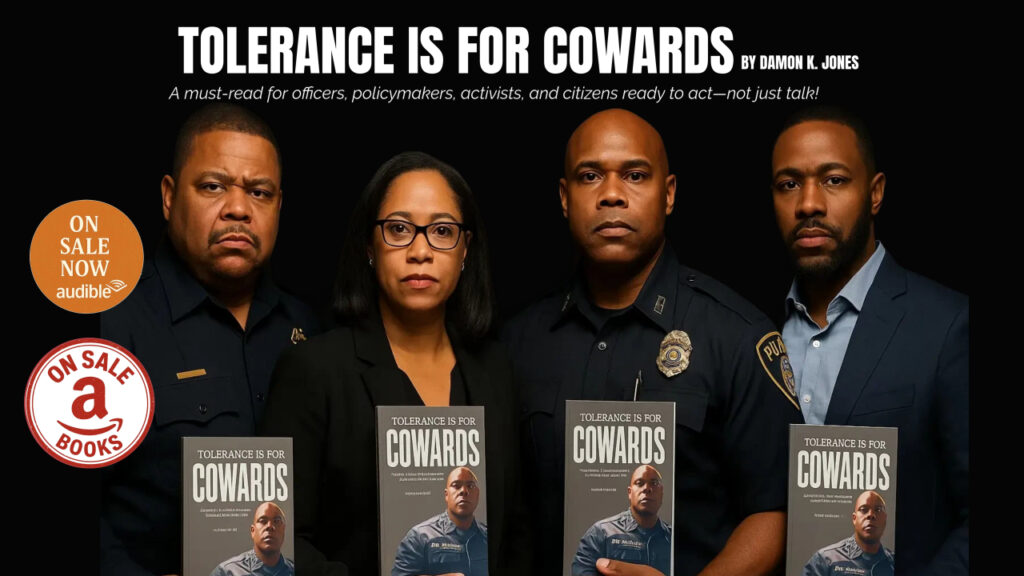
America doesn’t need more slogans—it needs courage, accountability, and action. In “Tolerance Is for Cowards,”veteran law enforcement expert Damon K. Jones delivers a hard-hitting blueprint to end the cycle of police misconduct, political cowardice, and systemic failure in public safety—especially in Black communities.
With over 33 years of frontline experience, Jones exposes the myths that paralyze real reform and offers a groundbreaking vision: the Extended Policing Strategy (EPS). This strategy shifts policing from a warrior mindset to one of community collaboration, economic investment, mental health support, and structural accountability.
This is not a book of complaints—it’s a battle plan for transformation. It challenges Black police officers to step up. It calls out politicians who confuse photo-ops with leadership. And it dismantles the false choice between safety and justice.
Whether you’re a policymaker, police chief, activist, or concerned citizen, “Tolerance Is for Cowards” is the essential guide to building a system that serves with integrity—not intimidation.