The Municipal Housing Authority for the City of Yonkers (“MHACY”) is soliciting proposals from qualified landscape architecture firms for final design and construction documents to implement portions of a recently-completed Green Infrastructure Plan at various sites as specified in this Request for Proposal (“RFP”).
Proposals must be submitted no later than 5:00 PM (EST) on January 11, 2024. Awardees will be interviewed and selected no later than January 31, 2024. Questions regarding this RFP should be directed to procurement@mhacy.org, cc kmagoolaghan@mulfordcorporation.com.
MHACY is an equal opportunity employer and does not discriminate on the basis of race, sexual orientation, color, national origin, sex, religion, age, disability or family status.
MHACY solicits and encourages the participation of minorities and small businesses in procurement. Contact, related to this procurement, with members of the Authority’s Board of Commissioners or the Authority’s officers and/or employees other than the contact person shown below, during the procurement process could result in disqualification of a proposal.
Contact related to this procurement, with members of MHACY’s Board of Commissioners, or MHACY’s officers and/or employees other than the contact person show above, during the procurement process could result in disqualification of a proposal.
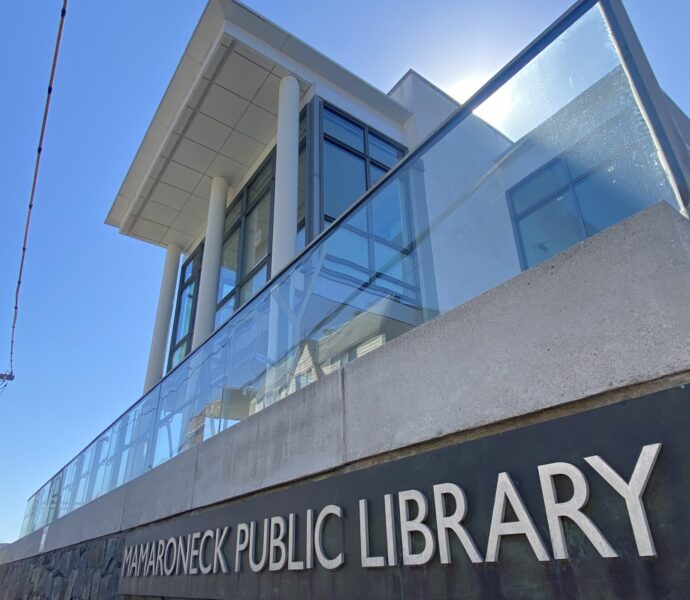
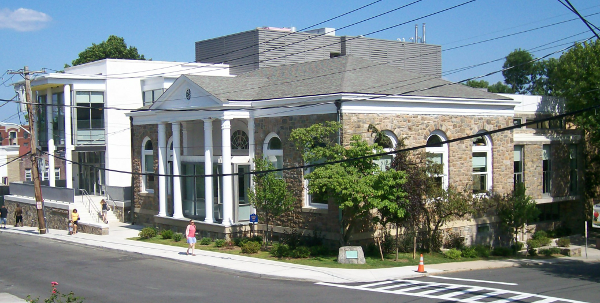
Defendant, who resigned from the library in March after 27 years, allegedly spent library funds on personal expenses for nearly seven years
WHITE PLAINS, N.Y. – Westchester County District Attorney Miriam E. Rocah announced today that the former business manager of the Mamaroneck Public Library was arraigned on a felony charge of stealing approximately $44,769 from the library between 2016 and 2023.
“We are committed to seeking accountability for the alleged betrayal of trust by a lifelong Mamaroneck resident who held a position of leadership in the community,” DA Rocah shared with Black Westchester.
The defendant, Mary Soto, 62, of Mamaroneck, was arrested on December 14th by the Westchester County District Attorney’s Office and arraigned before Judge Christie L. Derrico in Mamaroneck Village Court on the charge of Grand Larceny in the Third Degree. The defendant’s next court date is January 25, 2024.
As alleged in the felony complaint, between May 2016 and February 2023, the defendant stole approximately $44,769 from the library’s bank accounts in the form of credit card and recurring debit transactions, for personal expenses. The defendant resigned from the library in March after 27 years.
The case is being prosecuted by Assistant District Attorney Renee Hassel of the Public Integrity and Law Enforcement Integrity Bureau in the Trials and Investigations Division.
The charges against the defendant are merely accusations, and the defendant is presumed innocent unless and until proven guilty.
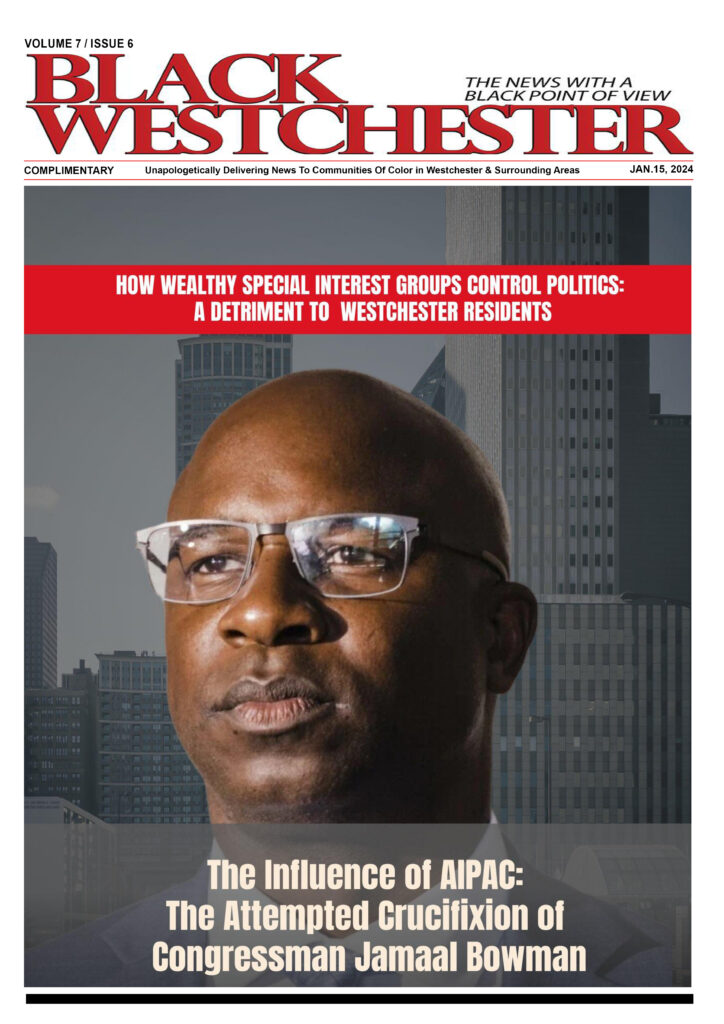
In the current campaign funding landscape, wealthy special interests such as GOP-funded AIPAC wield significant influence, often setting the political agenda to the detriment of regular Westchester residents. These organizations primarily comprise Wall Street millionaires and corporations seeking to control our cherished district’s political power and direction.
Research reveals that the rich typically hold distinct political values compared to the general public, especially on issues like taxation, unemployment, education, and the minimum wage. Their disproportionate influence on legislative direction, especially in matters of economic justice, makes it exceedingly challenging to enact reforms that benefit the working class and the poor.
This has led to a situation where politicians in Westchester may claim to be progressive while accepting substantial donations from GOP-funded organizations like AIPAC, effectively diverting taxpayer dollars overseas. Meanwhile, average Westchester residents grapple with high inflation, taxes, and the unaffordability of living in the very county they work in. The county’s underprivileged face homelessness, food inequity, failing schools, and wealth disparities, all within Westchester itself.
This unfair system of political financing disproportionately affects low-income individuals, women, and ethnic minorities. A specific group of affluent white men, the majority of major donors in our elections, primarily controls it. This means that ordinary people like Ray-ray, Grandma, or June Bug can’t compete with these wealthy white donors. In this system, the average working class is used for their votes, while the rich and wealthy set the political agenda. As a result, a small minority holds substantial power, making it less likely that elected officials will address the needs of low-income Black, Brown, Latino, and White communities, which contributes to the observable disparities in our cities.
I already know what the haters will say. What about the Justice Democrats? After reviewing the Justice Democrats PAC’s website, it’s evident that their content and commitment are inclusive for all Americans. AIPAC’s website prioritizes exclusivity to one agenda; as I see it, the Justice Democrats’ agenda is more inclusive to all Americans like better schools, fair trade, medical for all, a working social security system, free public college and trade school, and ensuring the average worker receives a living wage. Not just giving masses of money to candidates to support more and more of our tax dollars overseas. What raises concern is the fact that in 2022, the United States allocated over $3.3 billion in foreign assistance to Israel while pressing domestic issues like homelessness remain unaddressed, with the government often citing budget constraints.
If someone suggests lowering the allocation to $1 billion and channeling the remaining $2 billion to help disadvantaged communities within the U.S., does this automatically label them as anti-Israel? If you’re reading this and live in Mount Vernon, Yonkers, Peekskill, Ossining, or Greenburgh, wouldn’t allocating $2 billion from your tax dollars to your community be advantageous? This is a political debate concerning the control of the distribution of wealth, resources, and services, an issue that affects Black, Brown, Latino, and economically disadvantaged white Americans.
It’s essential to remember that these funds come from hard-working American taxpayers who might not see a direct return on their investment. This isn’t about being anti-Israel but rather questioning the allocation of resources in a way that serves the best interests of all Americans. The debate revolves around responsible resource allocation and ensuring that taxpayer dollars benefit both international commitments and pressing domestic needs.
When organizations like AIPAC explicitly target Black and Brown congressional candidates that address the needs of their districts, questions arise about why we allocate substantial resources overseas when many average Americans struggle to afford their rent. This further exacerbates the lack of racial diversity in public office, as candidates of color often face difficulty raising the necessary funds to run for office without access to wealthy, primarily White donors. Addressing the influence of big-money organizations is crucial to fostering a more equitable and inclusive political system in Westchester that truly represents the interests of all its residents.
The influence of wealthy special interests, as exemplified by organizations like AIPAC, is now profoundly impacting the political landscape in Westchester’s 16th Congressional District. This influence, primarily driven by affluent white individuals and corporations, shapes policy agendas and funding priorities that often do not align with the needs and interests of average Westchester residents. As a result, this system disproportionately affects low-income individuals, women, and ethnic minorities, hindering their representation in public office and exacerbating social inequalities. It is crucial to address the pervasive influence of big money organizations to create a more equitable and representative political system in Westchester.
“It’s all about the Benjamins, baby,” US Congresswoman Omar tweeted, referencing Puff Daddy’s 90s song about money. When pressed for an explanation, she clarified that she was referring to the financial influence exerted by groups like AIPAC.
AIPAC proudly boasts on its website that it outspends any other Political Action Group in America. This excessive involvement of AIPAC in Democratic primaries, like the one in Westchester, poses a substantial obstacle to critical policies such as universal healthcare, effective climate action, and workers’ rights. When Democrats who receive funding from AIPAC label themselves as progressive, it amounts to mere political rhetoric and foolery! In reality, AIPAC opposes the very democratic principles we advocate for. Rather than promoting progress, AIPAC stands as a hindrance to the values we hold dear.
Beware of the disturbing reality: some Democrats backed by GOP millionaires are channeling millions to right-wing organizations like AIPAC while carefully selecting Democrats to primary progressive individuals of color. AIPAC, despite its connections with insurrectionist Republicans, is now openly targeting Black members of Congress, all while concealing its close ties to Republican fundraising networks. This is nothing short of accepting “blood money,” and any Democrat who embraces such funding cannot genuinely be considered progressive; they are effectively Republicans in disguise!
Their embarrassment over Trump may have driven many Westchester Republicans to vote Democratic. However, it’s becoming clear that this embarrassment may fade over time. This is evident from an incident where a Westchester AIPAC supporter sent out an email urging Republicans to change their party registrations to Democrat to vote out Congressman Jamaal Bowman. As of now, George Latimer has not publicly denounced this supporter’s actions.
The most disheartening aspect of this situation is witnessing Black, Brown, and Latino communities enthusiastically rallying behind a candidate who receives funding from organizations like GOP-funded AIPAC, which don’t have their best interests at heart and endorse policies that perpetuate oppression and inequality. As usual, after they have given their support and convened people to vote for these candidates, they have the unmitigated gall to question why their communities continue to face high crime rates, poverty, and struggling education systems.
As we approach the end of June, it’s time for those with progressive values to take a stand and be honest about what’s truly unfolding. We face a crucial choice: either we witness the emergence of a new breed of hybrid GOP Democrats, representing primarily white areas of our county and offering mere crumbs to the leadership of color throughout the county, or we see the grassroots awaken, no longer swayed by deceptive leaders who seek to maintain their positions and favors. We, the people, have the power to stand up against the GOP-led AIPAC, which has lured Democratic candidates with a bag of gold, potentially undermining the multicultural, multiracial political system that so many had hoped for – one founded on equity and fairness.
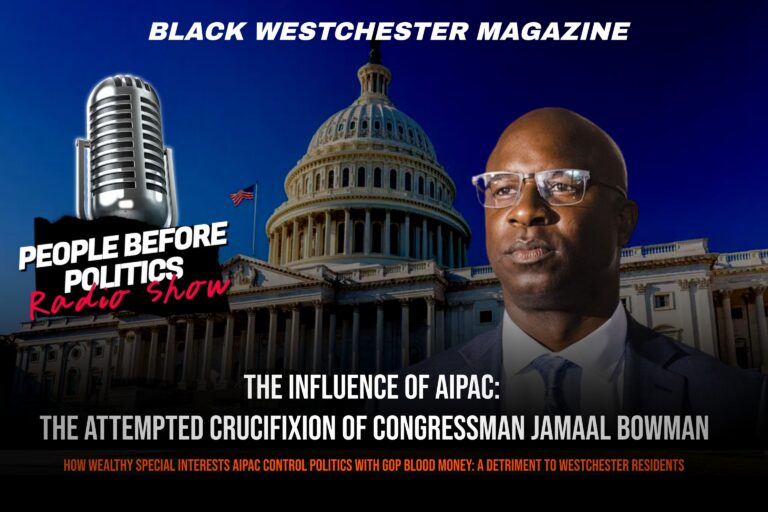
Welcome to a special edition of People Before Politics Radio’s Black Westchester Power Hour with Damon K. Jones and AJ Woodson talking about the CD-16 Congressional Showdown between Congressman Jamaal Bowman and challenger County Executive George Latimer and the influence of dark money from AIPAC to remove Bowman and other members of ‘The Squad.’
Black Westchester Magazine and the People Before Politics show have highlighted the negative impacts of Political Action Committees (PACs) on Black communities:
1. **Influence of Special Interests**: Some PACs receive funding from corporate interests or wealthy donors whose priorities do not align with the needs of Black communities. This can lead to policies and candidates that do not effectively serve the best interests of Black constituents.
2. **Polarization**: PACs often contribute to the polarization of American politics. They may finance attack ads and negative campaigning, which can further divide communities along racial and partisan lines.
3. **Distortion of Priorities**: In certain cases, PACs may redirect attention and resources away from issues that are crucial to Black communities, prioritizing the interests of their donors or other political objectives.
4. **Excessive Spending**: The influence of money in politics, often facilitated by PACs, can overshadow the voices of ordinary citizens, including Black communities, who may lack the same financial resources needed to engage effectively in the political process.
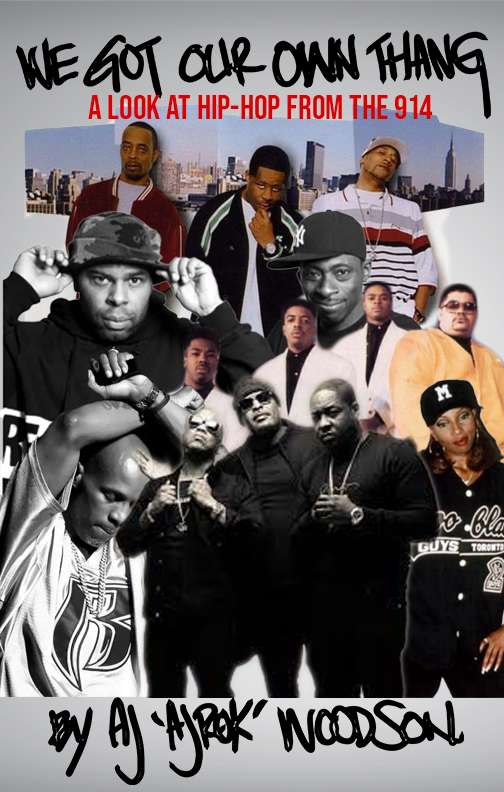
Finally, my new book, “We Got Our Own Thang: A Look At Hip-Hop From The 914,” is officially out in time for the holidays. After checking out all of the 50th-anniversary celebrations of Hip-Hop, I noticed one region that was often overlooked and underrepresented was the 914. So I present this literary offering to celebrate the role of 914 Hip-Hop in the 50 years of Hip-Hop! This is the latest in my series of books documenting Blacks in Westchester!
You can purchase your copy today on Amazon for $30.00, or you can order an autographed copy directly from me Via Venmo @AJ-Woodson-2 or PayPal http://PayPal.me/BlackWestchestackWestchesterMag or CashApp $MrAJWoodson, add $5 for postage and make sure you email me your mailing address, MrAJWoodson@gmail.com.
Book Summary: We Got Our Own Thang gives you a look at Hip-Hop from The 914 (Westchester County, New York). The book doesn’t only celebrate the superstars and rap legends that grace its cover, like DMX, Heavy D & The Boyz, Mary J. Blige, Grand Puba, Brand Nubian, Master Of The Ceremony, Pete Rock & CL Smooth and The Lox, but many of the early legends many outside the region may have heard of like the Legendary Collins Brothers who had the ‘King Kong Sound System’ and battled the legendary DJs like Kool DJ AJ and The L Brothers, of Graffiti Artists like REM 311 & LM444 who were highly respected in the 5 boroughs. The book highlights the contributions of individuals of The 914 in the 50-year history of Hip-Hop. The book documents how, while once only thought of as “Upstate New York”, Westchester “Westcheddar” County borders Hip-Hop’s Garden of Eden. Not trying to dispel the fact the Bronx is Hip-Hop’s birthplace or diss the other boroughs that didn’t recognize Westchester as a Hip-Hop equal. But to show and prove that what was going on in the Bronx hiccupped into the 914, especially its most southern cities like Mount Vernon and Yonkers, which unlike the boroughs or any other region don’t have to cross a bridge to get to the Bronx.
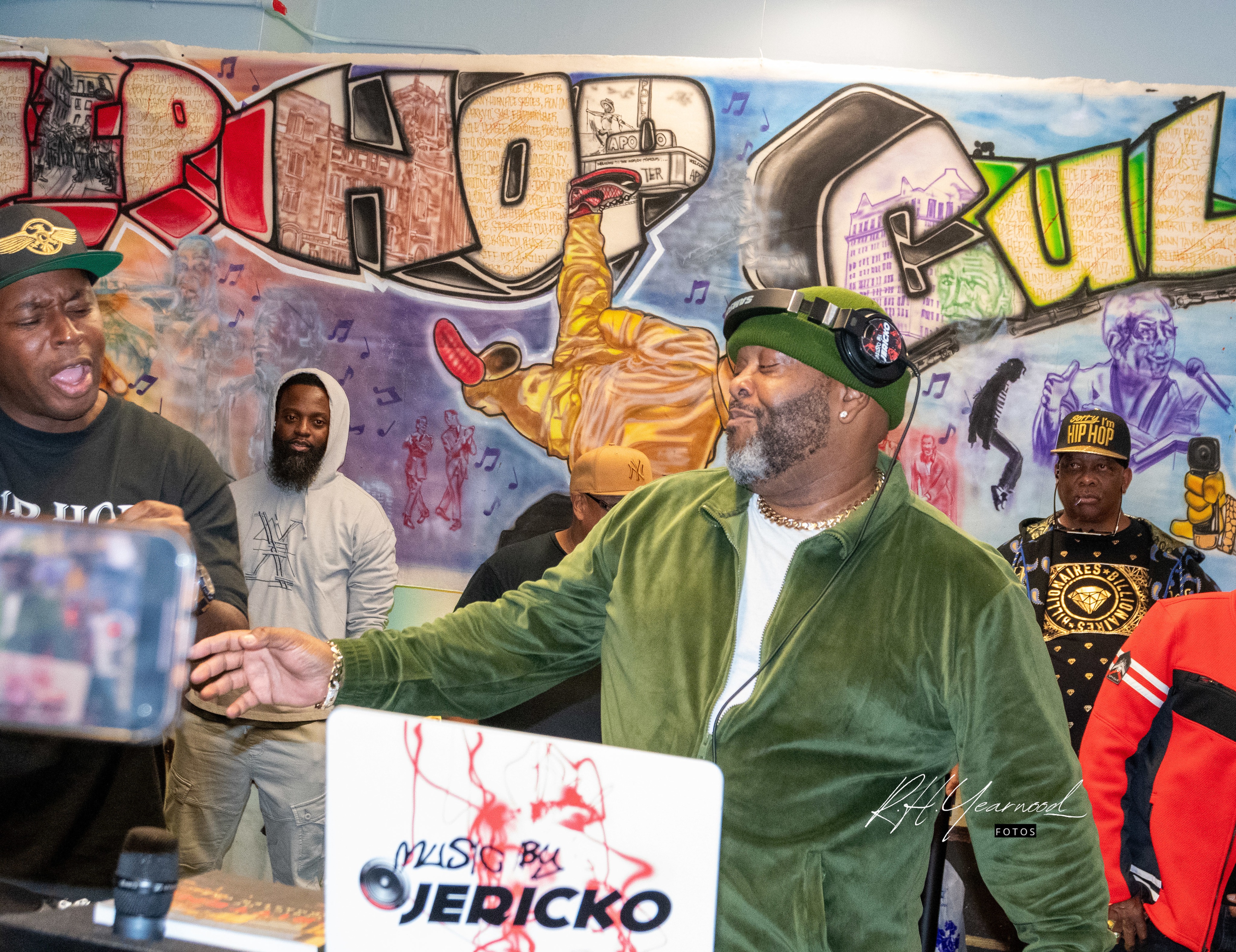
To tell the story, I enlisted the help of some respected voices in Hip-Hop including Ralph McDaniels of Video Music Box, DMC of the legendary RUN DMC, Kim Osorio (former Editor-In-Chief of the Source), Chuck ‘Jigsaw’ Creekmur (AllHipHop.com), Lord Jamar, Floyd Myers (Heavy D’s older brother), DJ Eddie F, Talent The Comedian, Tri-State Jericko, DJ Mark C of the legendary Collin Brothers, Bobbito aka Kool Bob Love, TQ – Top Quality, and A.L. Dre who illustrated Hip-Hop artists for The Last Word of the Source magazine, even an unexpected Hip-Hop head like the US Congressman of the region, Jamaal Bowman and others who share their memories, favorite songs or videos of 914 artists.
“I feel like artists from the 914 have always been an extension of Harlem and the Bronx. Collectively, the three regions qualify as “uptown,” and I think that was planted in my mind after seeing Heavy D in the “Uptown’s Kickin’ It” video. Personalities of the artists from Yonkers and Mount Vernon were always in line with us in the Bronx, they just had better houses and bigger backyards lol! The sound always felt raw but with just enough musicality to it. The 914 added a little “knock” to their boom bap. They needed a little more swing because they had more backyard barbecues to throw. I didn’t get to enjoy the 914 until I had a car and could drive there. The metro north was cleaner than the subway and the music was a reflection of that. They were the Hip-Hop of our cousins whose parents had better jobs,” Former Editor-In-Chief of The Source Kim Osorio – ‘Your favorite rapper’s favorite writer’ shared.
For several months, there have been rumors about Westchester County Executive George Latimer considering a challenge against the incumbent Congressman Jamaal Bowman.
Since Congressman Bowman’s victory over former Congressman Elliot Engel, doubts have emerged within the Democratic Party about his ability to maintain the congressional seat. As a newspaper publisher, it was fascinating to observe the passionate responses from various Democrats, including Black Democrats, in reaction to Bowman’s presence. This resistance is somewhat expected when a Black man disrupts the established party structure. Although the district elected him, some still see him as an outsider, leading to discussions about redrawing district lines as a potential solution.
The subsequent redistricting process in the 16th district resulted in significant changes, allowing a new candidate, potentially with a predominantly white voter base, to represent Westchester. Areas like Co-Op City, Baychester, Williamsbridge, and The Valley were removed from the district, consolidating it around the Wakefield neighborhood.
Within the Westchester political landscape, there seems to be a reluctance to fully endorse an outspoken Black man who steadfastly holds his beliefs. Congressman Bowman’s lived experience in this diverse community has profoundly shaped his perspective and underscores his commitment to serving all constituents. He has made remarkable progress in addressing the needs of his constituents, with a particular focus on historically underserved populations. With 13.2% of the district’s population living in poverty, Bowman’s empathetic approach aims to uplift the most vulnerable.
Notably, he stands as the sole Black elected official in Westchester who openly and publically advocates for studying Reparations for the descendants of enslaved people, a position that sets him apart from every elected official in Westchester, even the Black ones. This situation reflects the typical political dynamics where diverse perspectives can encounter challenges within the party, often revealing that promises of support can be empty.
According to reports, AIPAC’s super PAC began reaching out to George Latimer during the summer, coinciding with Congressman Bowman’s decision to boycott a congressional address by Israeli President Isaac Herzog. While AIPAC is renowned for its focus on Israel-related issues and has thrown its support behind Latimer’s candidacy, he has chosen to emphasize his progressive platform over his stance on Israel.
For those familiar with Westchester politics, it was evident that organizations like AIPAC were targeting Congressman Bowman due to his position on the Israel-Palestinian conflict. However, it was unexpected that George Latimer would become the executioner of their agenda-planned crucifixion of Jamaal Bowman. This development raises questions about the accessibility of free speech and thought in Westchester and American politics, where individuals might face consequences for not aligning with a specific narrative or may receive financial support for promoting a particular agenda.
Latimer’s initial campaign advertisements left no room for doubt about his alignment; they predominantly revolved around AIPAC, Israel, and its interests. Despite the diverse interests and needs of the 16th Congressional District, encompassing various ethnic groups, such as White (Non-Hispanic), Black or African American (Non-Hispanic), Hispanic, White (Hispanic), and Asian (Non-Hispanic), the millions of dollars in support from AIPAC seemed to divert attention from other pressing Westchester issues. Notably, concerns like homelessness, crime, violence, and failing schools, which George Latimer had passionately championed for years, seemed to fade into the background during his initial steps into the congressional race.
Certainly, it’s important to note that Westchester County, like many counties in New York, is home to a significant population of Asians, Arabs, Whites, and Blacks who practice Islam. Given this diversity, questions arise about George Latimer’s position on the Israel-Gaza conflict and the significant loss of life among Palestinians who are not affiliated with HAMAS. These individuals are not considered a threat to Israel and are simply trying to survive the conflict. It’s essential to avoid generalizations, just as it would be unfair to assume that all Black people are involved in gangs or have criminal records.
The Westchester Muslim community is estimated at approximately 10,000 people, and the United Nations Security Council has classified the Israel-Gaza conflict as a global threat due to Israel’s actions. The toll of the conflict includes the tragic loss of over 17,400 Palestinian lives in Gaza and more than 56,400 wounded since the war began. Additionally, the district’s cultural diversity is evident, with 35.7% of households reporting a non-English language spoken at home.
This situation brings to mind the age-old saying, “he who pays the piper calls the tune,” highlighting how influential political donors or backers, such as AIPAC, can shape politicians’ decisions and actions. AIPAC proudly discloses on its website that it has contributed a significant $17 million to both Republicans and Democrats.
The evolving political landscape raises questions about the acceptability of candidates openly declaring themselves as “pro-this” or “pro-that.” In the speaker’s 55 years of life, it has been a rare sight to witness a candidate openly embracing a “pro-Black” label as a positive attribute. In contrast, in Westchester, it has been more common to see Black politicians distancing themselves from such a label while proudly wearing the “pro-Israel” badge.
This juxtaposition reminds me of a tragic incident involving the killing of Mr. Kenneth Chamberlain by White Plains police. The incident, where racial slurs were used before his untimely death, initially received limited response from politicians, preachers, and the community. However, a few months later, when a swastika was drawn on a dumpster, there was an outpouring of condemnation. This contrast underscores the disparity in priorities when addressing racial injustices.
The disregard for Black interests and Black people appears to have reached a point where it was reported in Westchester that a Young Israel Synagogue of New Rochelle member sent out an email focused on defeating Congressman Jamaal Bowman in the Democratic primary to support Israel.
The email also stated, according to reports, “It is critically important that if you are a registered Republican, at least for this election, you should re-register as a Democrat so you can vote in the primary (against Bowman).” Did the writer of this email know that it is illegal to do what he suggested? Or is it merely a coincidence that former County Executive Robert Astorino tried to do the same to the then-Westchester Independence Party, with the court ruling it was illegal and removing 3,700 Republican staff, family members, and associates from the party’s enrollment?
George Latimer, a highly regarded figure with a 30-year career and widespread recognition across all ethnic lines, has aligned himself with a group willing to polarize Westchester politics to achieve its interests. While he may emerge victorious, one must question the potential toll on his soul, as his campaign has already begun to polarize Westchester politics along racial lines only a week into his announcement.
In an article published by City and State Magazine, George Latimer expressed his desire to avoid discussions centered on AIPAC or race. While I’ve known George for many years and hold him in high regard, it’s important to acknowledge that the assumption that AIPAC and its supporters would not be assertive in their support, making Israel the paramount issue, is a significant oversight in a district that is multi-cultural, multi-racial and multi-religion, my friend.
Moreover, stating that you have Black friends is viewed as a problematic statement, as it oversimplifies the complexities of racial dynamics and is insensitive. to Black people.
It leaves us wondering how many Black individuals, Black politicians, and Black pastors will stand with Latimer, either unaware or consciously choosing to ignore that Latimer represents something other than a progressive candidate this time. AIPAC and other interests that back him do not necessarily align with the values of Mount Vernon, Yonkers, Greenburgh, New Rochelle, or White Plains.
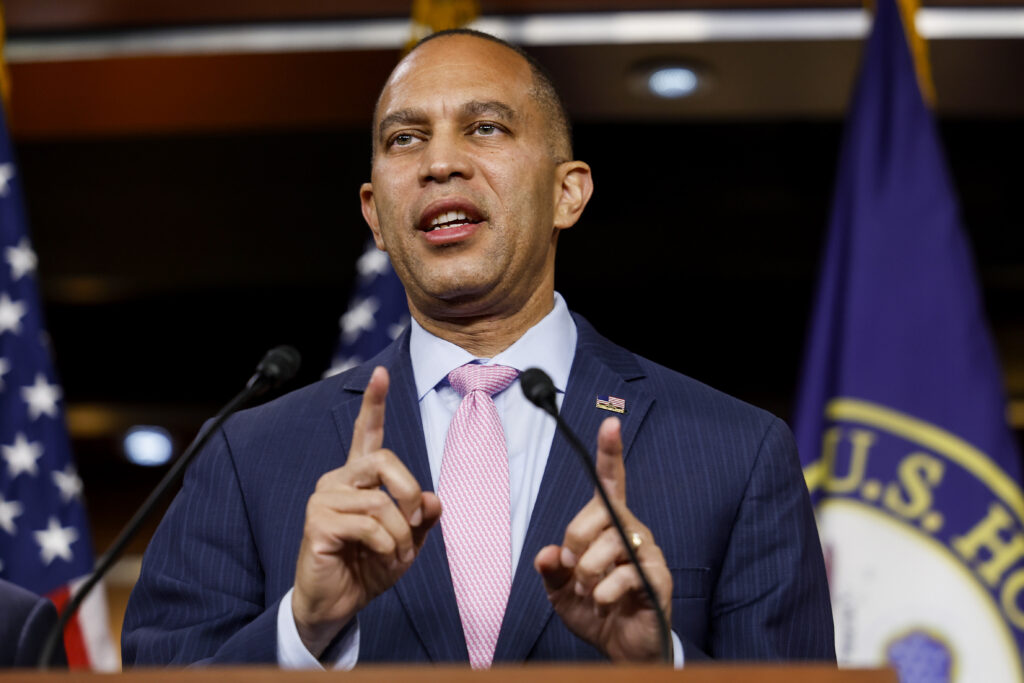
Minority Leader Hakeem Jeffries takes money from AIPAC
The sobering reality is that a strong Black man who speaks passionately about Black Love, Black Power, and Black issues like Reparations may not find a comfortable place in Westchester Politics. Many may silently accept financial support from AIPAC, resembling Judas betraying Jesus. Black political leaders like Hakeem Jeffries may not be significantly different from Judas in their silence regarding the attempt of removal of Black and brown congresspersons who do not conform to AIPAC’s agenda. We should not expect any other Congressional Democrat to support Bowman because they all have taken the bag of gold from AIPAC. The influence of big money on politics has undoubtedly led to the corruption of our American political landscape.
Ladies and Gentlemen of the Westchester Democratic Party, it’s crucial to recognize that your elected officials may not fully represent your interests; they are not as progressive as claimed, as organizations like AIPAC can exert substantial influence and control their campaigns and local and national agenda.
It is essential that we remain vigilant and engaged in the political landscape. The influence of influential organizations like AIPAC should not dictate the direction of our elected officials or compromise the values we hold dear. We must
Our voices, principles, and concerns deserve to be heard and prioritized by those representing all of us. We must demand transparency, accountability, and a commitment to our community’s diverse needs and interests. We should not accept the rustication of our Black elected officials who have voiced concerns of all Congressional District 16 by organizations like AIPAC and has no interest in the daily struggles, social issues, or anything else of this multi-racial, multi-religious district of Congressional District 16.
Let us strive for a political environment that truly reflects our values and serves the best interests of all Westchester residents. Together, we can ensure that our elected officials remain steadfast in their dedication to our community and its well-being.
Westchester County Legislator Damon Maher officially changed his political party affiliation from Democrat to the Working Families Party, on Wednesday, December 6th. He made the announcement in a statement.
“I am much more closely aligned with the WFP’s domestic agenda, which in fact is more in line with the stated Biden agenda than with that of many Democratic officials in our region,” Legislator Maher, who represents the 10th district (Eastchester, Tuckahoe, New Rochelle) until Dec. 31st, shared in his statement.
I will submit a voter registration form this morning changing my political party affiliation to the Working Families Party.
First, please know that my switch to WFP is certainly NOT based on its national organization’s foreign policy positions. Rather, I am much more closely aligned with the WFP’s domestic agenda, which in fact is more in line with the stated Biden agenda than with that of many Democratic officials in our region. Over the past two years especially, I have grown continually more alienated from suburban New York Democratic politicians, who are mostly good people but, in my view are often captive to a more cautious, corporate mindset.
My term in office at the County Legislature ends on Dec. 31, but there are still important days and hours of review and, I hope, some revision of the County Executive’s proposed budget for 2024. During this time, and in the long term as I continue as an activist looking forward with a progressive and anti-racist lens, I think the WFP will be a better space from which to advocate for…. Fair, affordable and integrated housing…. more aggressively pushing out the $200 Million we have appropriated in 2023-24 for Affordable Housing throughout the County…. expediting implementation of our Tenant Right to Counsel law and the promised amendment eliminating the sunset provision that the County Executive’s office inserted into the bill at the last moment.
Police Accountability…. insitutionalizing meaningful civilian oversight…. reducing rarely questioned increases in salaries, overtime and infrastructure for policing, punitive prosecuting and punishment.
Reducing income inequality and extreme wealth disparities with fair, progressive taxation.
More funding of academic or vocational education for 1-2 years beyond high school (e.g., free Westchester Community College and forgiving of debts owed to WCC).
More money for community-based nonprofits tackling the social and economic problems that harm our communities.
REAL environment initiatives encouraging less reliance of the private, one-person-commuting private car…. permanently lower or free county bus fares, true pedestrian and bicycle safety…. long-term strategy for car storage (aka parking) that encourages less, not more, private car use.
Stronger campaign finance laws…. putting serious funding into our Ethics Board or create an independent office of Inspector General or Comptroller…. curtailing big money from big real estate developers whose project are dependent on favorable actions by the various levels of government.
I look forward to working with you, my friends, on these and other crucial matters, now and after my term in office ends.
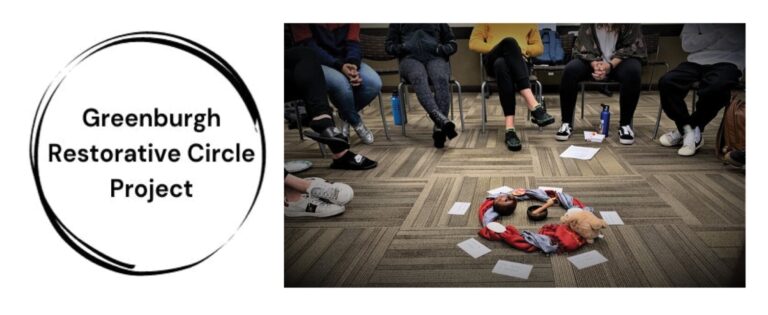
The Greenburgh Restorative Circle Project is a community-building initiative sponsored by local community organizations for advancing race equity. Greenburgh residents are invited to participate in Listening Circles that allow community members to share with each other how their racial and cultural identities affect their experience as residents and how the Town of Greenburgh is meeting its commitment to racial equity.
Sponsoring organizations include Restorative Justice Westchester (RJW), the Greenburgh Human Rights Advisory Committee, Showing Up for Racial Justice (SURJ) Westchester, and the Westchester Racial Equity Collective (WREC).
The goals of the circles are:
To build relationships that transcend racial and cultural barriers
To foster an environment of healing and reconciliation
To create a more inclusive Greenburgh
With roots in Indigenous cultures around the world, Listening Circles provides people an opportunity to speak and listen to one another in an atmosphere of decorum and equality and enables us to cultivate empathy, foster collective understanding, and share an emotional connection. Residents are invited to sign up for one Listening Circle session. Circles will be led by trained circle keepers using a restorative justice framework, grounded in shared values and agreements that all participants commit to upholding.
The project will also serve as a needs assessment for a wider approach to healing racial divisions in the town, contributing to a stronger, more cohesive community.
There are currently five opportunities to join a listening circle, hosted by community partners:
Greenburgh residents can register for one of the upcoming circles on Eventbrite or with the Greenburgh Public Library as indicated. Participants are encouraged to sign up for a location that you may not ordinarily attend. Participation is FREE and light refreshments will be served. Please register for only one circle.
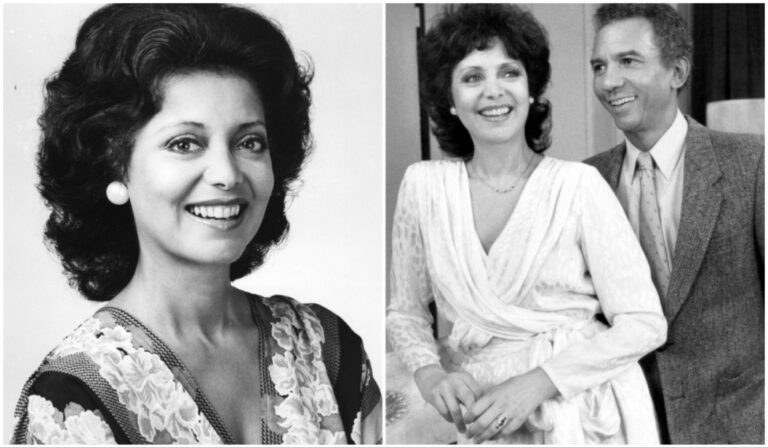
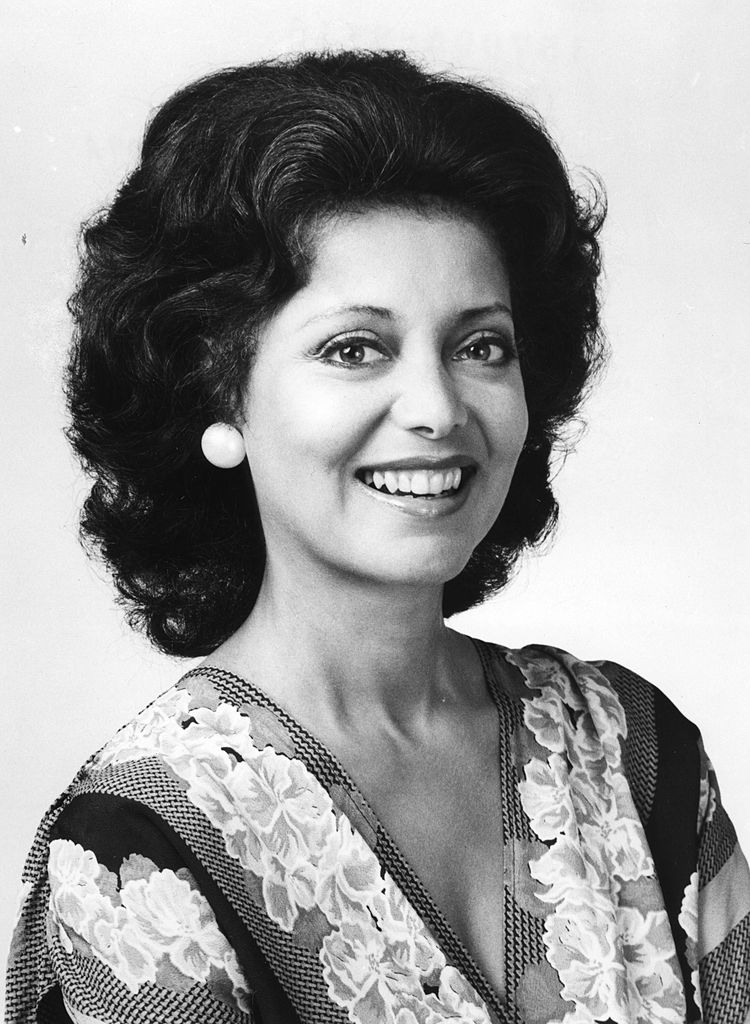
Ellen Holly, the first Black person to have a lead role in daytime television, died in her sleep Wednesday, December 6th at Calvary Hospital in the Bronx. She was 92. In October 1968, Actress Ellen Holly – a longtime White Plains resident – became the first Black actress to be cast on daytime TV as a recurring cast member. Holly played Carla Gray on ABC’s One Life to Live, a role from 1968 to 1980 and again from 1983 to 1985.
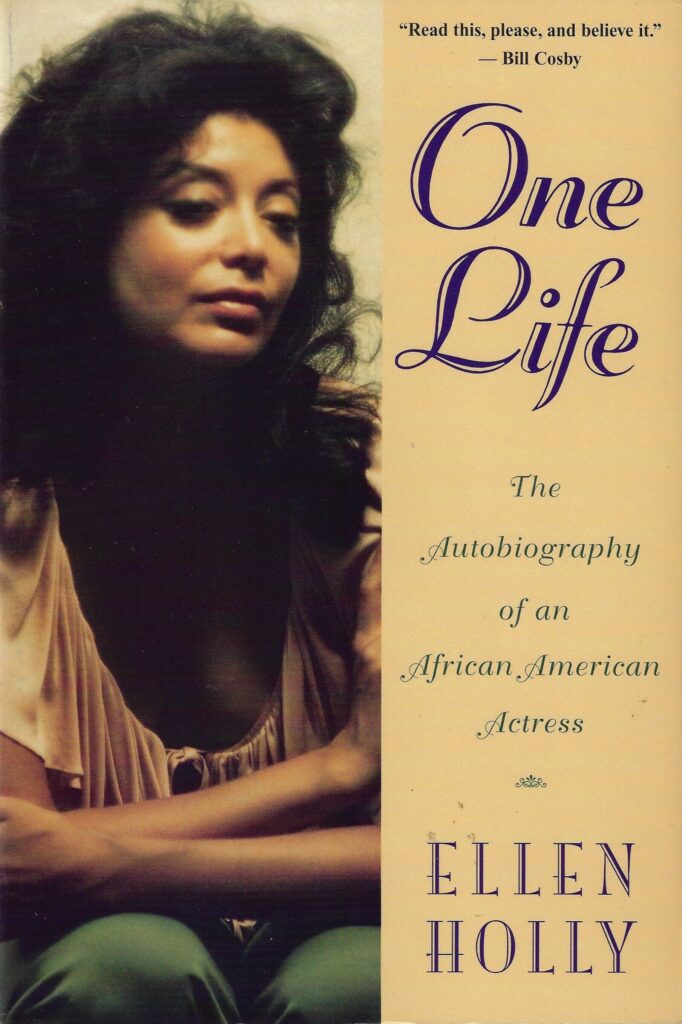
The actress was also a star of the stage (Broadway) and of film as well as a published author. Her autobiography One Life: The Autobiography of an African American Actress detailed her career and her historic Black family.
ONE LIFE TO LIVE – Airdate August 20, 1979. (Photo by ABC Photo Archives/Disney General Entertainment Content via Getty Images) ELLEN HOLLY
Holly was born on January 16, 1931, in Manhattan to parents William Garnet Holly, a chemical engineer, and Grayce Holly, a housewife and writer. Ellen Holly’s was a prominent Black family that included her paternal great-grandmother, Susan Smith McKinney Steward, the first African American woman to earn a medical doctorate (MD) in New York State and the third in the United States; her great aunt Minsarah Smith Thompson Garnet, a suffragette and the first Black female principal of a New York City school; Minsarah’s husband, the Rev. Henry Highland Garnet, an abolitionist who was appointed Minister (ambassador) to Liberia by President James A. Garfield; her great-grandfather the Rev. James Theodore Holly, the first African American to be ordained a bishop in the Protestant Episcopal Church and a prominent missionary to Haiti; and her great-great grandfather Sylvanus Smith, one of the leaders of the movement urging Black people to purchase land in Kings County, New York, in an area later known as the Weeksville settlement and a landowner there. Her maternal aunt Anna Arnold Hedgeman was the first Black woman to be in the cabinet of a New York City mayor (Robert F. Wagner Jr.), one of the lead organizers of the March on Washington and a founding member of the National Organization of Women.
Holly herself grew up in Richmond Hill, Queens. A graduate of Hunter College, she became a member of the Delta Sigma Theta Sorority, Inc. during her college years.
Holly began her acting career on New York City and Boston stages, earning instant critical acclaim. She made her Broadway debut in Too Late the Phalarope in 1956 and she went on to star in the Broadway productions Face of a Hero, Tiger Tiger Burning Bright and A Hand is on the Gate. From 1958 to 1973, she led productions of numerous Joseph Papp New York Shakespeare Festival productions. Throughout her years in the theater, she worked opposite such luminaries as Roscoe Lee Browne, James Earl Jones, Jack Lemmon, Barry Sullivan and Cicely Tyson. Holly also studied with dance pioneer Katherine Dunham and was passionate about the role of dance in revealing the richness of African-American culture.
Her first roles on television included appearances on The Big Story (1957), The Defenders (1963), Sam Benedict (1963), Dr. Kildare (1964) and The Doctors and the Nurses (1963 and 1964).
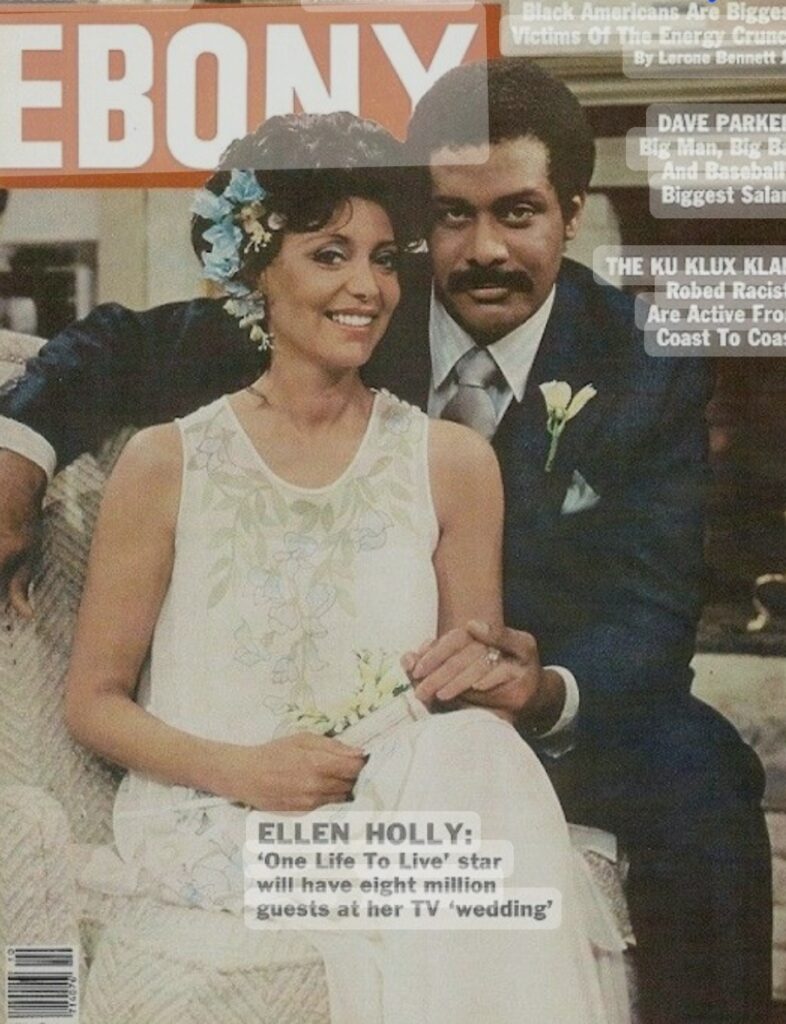
Holly played the groundbreaking character Carla Gray on the hit ABC show One Life to Live from 1968 to 1980 and 1983 to 1985. She was personally chosen for the role by television producer Agnes Nixon after she saw a New York Times opinion piece that Holly wrote called “How Black Do You Have To Be?” about the difficulty of finding roles as a light-skinned Black woman. The first time a Black person starred in a soap opera, it was a watershed moment, coming as it did during the turbulent and racially divisive 1960s. Carla’s attempt to come to terms with her racial identity and her love triangle with two doctors — one white, the other Black — helped launch viewership of the nascent soap opera into the stratosphere. Holly exploded onto the pages and covers of publications like Newsweek, TV Guide, Ebony, Soap Opera Digest and the New York Times. Soon there were Black story lines on All My Children and General Hospital, helping ABC to dominate daytime for two decades. In later years, Holly spoke out about being underpaid and other mistreatment she claimed she and some of her fellow Black cast mates received from show executives despite their contributions to the show’s success.
She continued to appear on the small screen, with a recurring role as a judge on The Guiding Light from 1988 to 1993 and In The Heat of the Night from 1989 to 1990 as well as the television movie 10,000 Black Men Named George, alongside Andre Braugher and Mario Van Peebles.
She also appeared on the big screen in Take a Giant Step, Cops and Robbers and Spike Lee’s School Daze.
An accomplished writer, over the years, Holly wrote numerous pieces for the New York Times. In 1996, her autobiography, One Life: The Autobiography of an African American Actress, was published. Reflective of a life dedicated to the arts and civil rights causes, in her final years she began preparations on a documentary about her life and the storied activism of her family.
In the 1990s, she took the civil service examination and became a librarian, serving as such for many years at White Plains Public Library. In her autobiography, she referred to her years there as some of the happiest of her life.
Holly had many friends and was a well-loved member of her White Plains community. She was predeceased by her younger sister, Jean H. Gant, and her niece, Holly Gant Jones. She Is survived by her grand-nieces Alexa and Ashley Jones (White Plains), daughters of her beloved niece, Holly Gant Jones, who predeceased her, and their father, Xavier Jones; first cousins Wanda Parsons Harris (Dayton, Ohio), Julie Adams Strandberg (Providence, Rhode Island), Carolyn Adams-Kahn (New York), Clinton Arnold (Los Angeles) and a host of other loving family members. She is sorely missed and mightily celebrated.
In keeping with Holly’s wishes, there will be no funeral. As an expression of sympathy, donations may be made to The Obama Presidential Center or St. Jude Children’s Research Hospital.
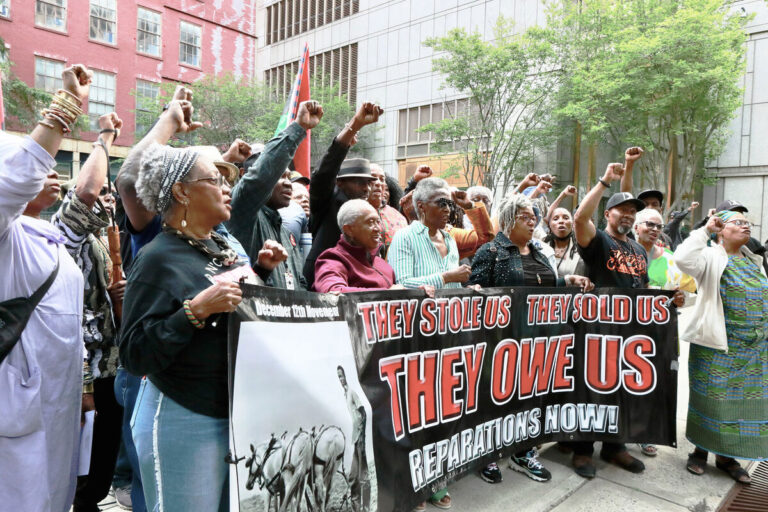
Several organizations and stakeholders in Westchester County have started a letter-writing campaign asking Governor Kathy Hochul to sign the bill that would establish a commission for the study of reparations to descendants of enslaved people before it expires at midnight on December 31, 2023.
The bill in question is Reparations Commission – A7691/S1163A, which was sponsored by Assembly Member Michaelle Solages and state Sen. James Sanders Jr., this bill would establish a commission to study the historical and lasting impacts slavery has had on Black New Yorkers and potential reparations for the legacy of slavery.
Below you can find the letter and information how to sign it and where to send it;
I am writing to invite you to join me in a letter-writing campaign to Governor Hochul asking her to sign into law – Bills A7691 / S1163A in favor of forming a reparations commission in NYS before the legislative session runs out at year-end.
These pivotal bills aim to establish a commission for studying and developing reparation proposals for African-Americans. This commission would delve into the impacts of slavery and persistent racial discrimination in New York State. It’s tasked with recommending forms of compensation and restitution, acknowledging the state’s role in perpetuating these injustices.
I have attached a template to this email. Here is a link to a digital copy.
I am sure that people could send postcards as well – just be sure to ask Gov. Hochul specifically to sign into law – Bills A7691 / S1163A in favor of forming a reparations commission. I am hopeful that you will consider sending a letter and urging friends, family, and community members to send letters as well. This is a landmark moment for New York State and we need to do all we can to take advantage of this moment in history.
Around 25 students gathered at Washington Square Park on Friday, December 1, 2023, in support of the bill that would establish a commission for the study of reparations to descendants of enslaved people.
At the rally, which was organized by the Student Government Assembly’s Diversity Committee, students demanded that New York Gov. Kathy Hochul sign the bill before it expires at midnight Dec. 31. If the bill is signed, New York will become the second state in the country to take a step toward reparations, with California having passed a similar bill in October 2020.
Black Westchester shares this information because we hear people complain about it, and are asking all of our readers, what are you going to do about it? If you believe this pass should pass, get up, get out, and do something. Maybe you didn’t know what to do. Well, this letter-writing campaign is something everyone can do. If the bill is not signed, it will have to go through the state senate and the assembly all over again in 2024, and there is no promise Democrats will be in control if others have their way, so you can continue to complain its not fair or sign, send and share this letter with others, the choice is yours!



![We Got Our Own Thang: A Look At Hip-Hop From The 914 [My New Book]](https://blackwestchester.com/wp-content/uploads/2023/12/Screenshot_20231204_151023_Messenger-768x607.jpg "We Got Our Own Thang: A Look At Hip-Hop From The 914 [My New Book]")