




You weren’t taught much about sleep disorders in school. Your doctor doesn’t have time to ask. And you’ve been conditioned to just push through. Here’s the menu of help most people don’t learn about–until they need it.
How many of you even knew there was a menu?
That’s what I ask my patients when we first talk about sleep disorders. Most look at me, confused. “A menu of what?” A menu of actual medical conditions. With names, diagnostic criteria, and treatments. Conditions that explain why you’ve been exhausted for years. Why can’t you stay awake in meetings? Why won’t your legs let you rest? Why eight hours in bed leaves you feeling like you got hit by a truck.
We don’t learn much about sleep disorders in health class. Most primary care doctors don’t have time to screen for them in a seven-minute appointment. And we’ve all been so thoroughly conditioned to “tough it out” that we genuinely believe chronic exhaustion is just life.
It’s not.
There’s a whole field of medicine dedicated to why you can’t sleep, or can’t stay awake, or can’t get the restorative sleep that is supposed to provide. Knowing that this menu exists should feel like relief, not fear.
Why We Don’t Know What We Don’t Know
You weren’t taught much about sleep disorders in school. And honestly? Many doctors weren’t either.
Sleep medicine wasn’t formally recognized as a specialty until 1991. Many practicing doctors today completed their training before sleep disorders were considered core medical education. Even now, medical schools dedicate just a few hours across four years to sleep health. Less time than they spend on rare tropical diseases, you’ll probably never encounter.
This isn’t about bad doctors. None of us got the education we needed on this. Your doctor probably cares deeply about your well-being; they just might not have been equipped by their training to recognize what your exhaustion is really telling them.
Which is exactly why you need to know this menu exists. Because if neither you nor your doctor learned about sleep disorders in school, and your appointment is only seven minutes long, something crucial could easily get missed.
Add to that the cultural conditioning to ‘tough it out’-especially in Black communities, where strength through suffering has been normalized. We inherit messages about not showing weakness or asking for help, and when we do speak up, our concerns are more likely to be dismissed. The result? Millions of Americans, particularly Black Americans, suffer in silence with conditions they don’t know have names.
Treatable conditions. Conditions that, once you know about them, can explain years of wondering ‘what’s wrong with me?’ So let’s fix that gap right now.
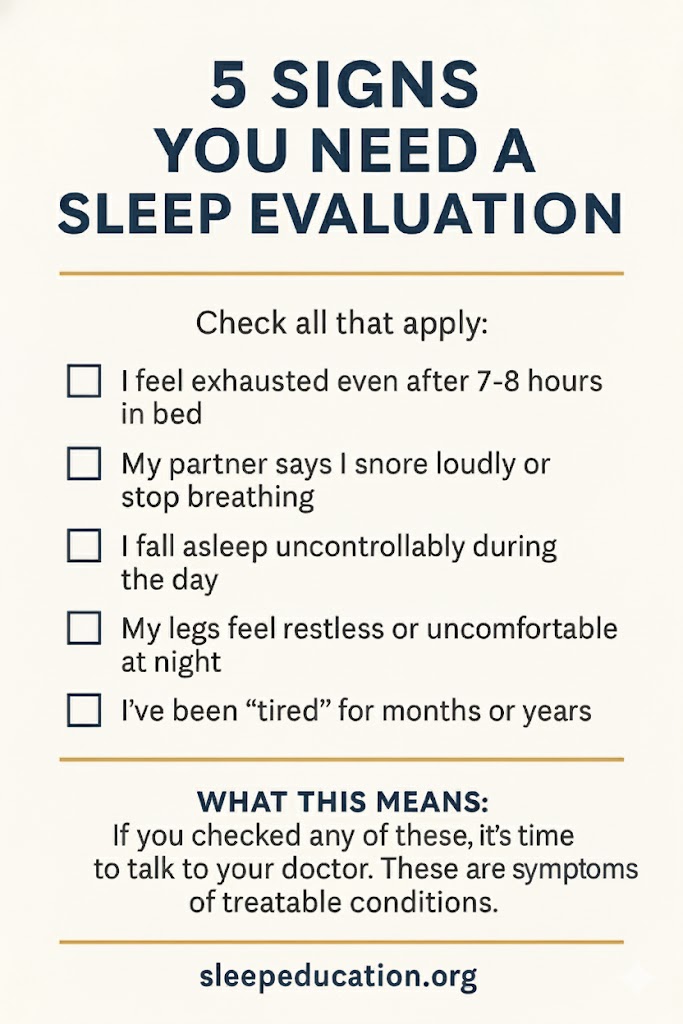
The Sleep Disorders Menu
When You Stop Breathing in Your Sleep
Marcus thought his snoring was just annoying his wife. What he didn’t know: his airway was collapsing 32 times every hour. Each collapse dropped his oxygen levels, triggering a micro-arousal in his brain, not enough to fully wake him, but enough to prevent deep, restorative sleep.
He’d wake up every morning with headaches, dry mouth, exhausted despite “sleeping” eight hours– feeling like he’d been in a fight. By the time Marcus came to see me, his primary care doctor had already run bloodwork. Everything was normal. His wife suggested he might be depressed. Marcus thought maybe this is just what 54 feels like.
It wasn’t age. It was obstructive sleep apnea.
Ironically, snoring sometimes gets treated as comedy material especially when recorded, but by the time it’s loud enough to be funny, it’s often loud enough to be dangerous. Untreated sleep apnea increases the risk of heart disease, stroke, and cognitive decline. CPAP therapy, oral appliances, positional therapy, and lifestyle changes can all help. Once Marcus started on CPAP, the change was dramatic. Three weeks later: “I didn’t know people could actually wake up feeling this good doc.” He’d been living that way for eight years.
When Your Brain Won’t Let You Sleep
Sarah lies in bed for two hours every night. Mind racing, body exhausted but wired. She’s tried everything: meditation apps, chamomile tea, blackout curtains, white noise machines. Nothing works consistently.
When Sarah came to see me, she’d already been on two different medications. They helped briefly, then stopped. The second made her groggy but didn’t improve her sleep. What Sarah had wasn’t general anxiety disorder. It was chronic insomnia disorder– a specific dysregulation of the sleep-wake system that requires different treatment.
Cognitive Behavioral Therapy for Insomnia (CBT-I) is the gold standard that even doctors aren’t always familiar with. More effective long-term than medication, with no side effects. Within six weeks of CBT-I, Sarah was falling asleep in under 20 minutes most nights.
“I can just… sleep now,” she told me. “I forgot that was even possible.”
When Your Legs Won’t Let You Rest
James first noticed it in his 30s. At night, his legs felt wrong–uncomfortable, an overwhelming urge to move. Only walking helped. Restless legs syndrome is a neurological condition linked to low ferritin (iron storage) or dopamine imbalance. Treatment can be remarkably effective. When I checked James’s iron levels, they were significantly low. After iron supplementation, his symptoms diminished significantly.
When Sleep Attacks Without Warning
If you experience overwhelming sleepiness that feels uncontrollable, even falling asleep during conversations or while driving, that’s not normal tiredness. That’s narcolepsy, a neurological condition where the brain can’t regulate sleep-wake cycles. Thousands live with it undiagnosed.
Next month, we’ll share a national sleep health advocate based in Westchester’s journey through 14 years of misdiagnosis before learning she had narcolepsy with cataplexy.
When Your Internal Clock Is Wrong
Teresa can’t fall asleep before 2 am. When she forces herself to bed at 10 pm, she lies there awake. Then her alarm goes off at 6 am. She doesn’t lack discipline, as one of her providers told her—she was suffering from Delayed Sleep Phase Disorder, a circadian rhythm condition. Light therapy, timed melatonin, and schedule adjustments can help. Over three months, Teresa’s natural sleep time shifted to midnight, manageable with her work schedule.
How to Know If You Should Dig Deeper
Ask yourself: Do I feel exhausted even after 7–8 hours in bed? Does my partner mention snoring or pauses in breathing? Do I fall asleep unintentionally during the day? Do my legs feel restless at night? Have I been tired for months or years?
If you answered yes to any of these, especially if it’s lasted more than three months, it’s time to talk to your doctor because you might have something easily fixable. Something that, if caught early, won’t lead to bigger medical issues. Sleep problems are a signal that we should never ignore.
How to Start the Conversation
Look, your doctor probably won’t ask about your sleep in detail; they’ve got seven minutes. Which means you have to bring it up.
What to say: “I’d like to talk about my sleep. I’ve been feeling exhausted despite getting enough hours, and it’s affecting my work, my relationships, and my safety. I’m wondering if there could be an underlying sleep disorder– and would like to get it checked out.”
If your doctor says, “everyone’s tired—just try turning off the TV,” push back: “I’ve already tried sleep hygiene basics, and my symptoms still persist. I’m concerned something medical is happening. Can we do a sleep assessment, or can you refer me to a sleep specialist?’
What Getting Help Actually Looks Like
If you’ve never been evaluated for a sleep disorder, here’s what happens: Your doctor asks about your sleep patterns, symptoms, and history. You might track your sleep for one to two weeks. If your symptoms suggest apnea or narcolepsy, a sleep study provides the diagnosis. Good news: these tests are often done at home now.
Once diagnosed, treatment is highly effective. CPAP for sleep apnea, CBT-I for insomnia, light therapy, and iron supplementation. These conditions respond well. One patient excitedly told me, “I forgot what energy felt like. Three years of my suffering solved in just a couple of weeks–wow!
Resources to Get Started
American Academy of Sleep Medicine – sleepeducation.org
National Sleep Foundation – sleepfoundation.org
Project Sleep – project-sleep.com
The Relief of Knowing
If you’ve been exhausted for months or years, you’re not weak or lazy. You might have a medical condition no one taught you to recognize.
The menu of sleep disorders exists. Treatments exist. Specialists exist. Help exists.
The hard part isn’t the diagnosis–it’s knowing to ask for one. Now you know. And knowing is where relief begins.
Next in the Series: “14 Years Misdiagnosed: Lauren Thomas’s Journey from Patient to National Advocate”
Derek H. Suite, M.D., is a board-certified and high-performance psychiatrist, a Columbia University faculty member, and the founder of Full Circle Health, a comprehensive mental health practice serving the tri-state area since 1999. He is the host of the daily inspirational SuiteSpot podcast. For questions about this monthly column, please email info@fullcirclehealthny.com
Medical Disclaimer: This article is for educational purposes only and does not replace medical consultation. Always consult your healthcare provider if you have concerns about sleep disorders or persistent sleep disruption.













This was an excellent read, because just like those people I feel the same way. I don’t feel the energy from waking up, and the restoration. I actually feel as tired as I was before I went to bed. Thank you for this incredible read, it makes me want to go to get my sleep checked out, and I know exactly where to start!!