






I arrived on March 30 at 5:30 p.m., just as registration opened, and before anything was even said from a microphone, the room was already speaking.
Not loudly. Not performatively. But clearly.
You could feel intention in the way people moved. Coats coming off, name tags pressed on, quiet greetings exchanged, but underneath all of that was something else. A kind of awareness. Like everyone understood, on some level, that this wasn’t going to be a surface conversation.
And I remember pausing before fully stepping in, just taking it in. Because you don’t get rooms like this often. Rooms where people aren’t there to be entertained or impressed, but to understand something that has been intentionally left unclear.
By the time the program began at 6:00, that energy had shifted into focus. The room settled. Not in a passive way, but in a present way. Like we had all agreed, without saying it out loud: we’re here for the truth.
And when Janet Rolon Fry,Tiffany S. Hamilton, and Cheryl Brannan, welcomed us, it wasn’t just an introduction, it was a grounding.
Because let’s be honest and I mean actually honest, not polite-conversation honest, menopause has been treated like a side note in women’s lives. Something to whisper about. Something to “get through.” Something to make smaller so it doesn’t make anybody else uncomfortable.
And that framing? That’s not accidental.
So when they stood there, holding space with intention, with care, with clarity, it mattered. Not just what they said, but how they made it clear that this conversation deserved to exist in full.
Jennifer Lewis, serving as host for the evening, understood that assignment. She guided the room with a presence that didn’t try to control the energy, it respected it. And that’s a difference people can feel, even if they don’t have the language for it.
Because this event wasn’t about packaging menopause into something digestible.
It was about telling the truth.
And when the speakers began, that truth showed up in layers.
Melissa Ferrara came with the kind of clarity that only comes from witnessing the same pattern over and over again, women being dismissed, misdiagnosed, or told their experiences don’t align with what’s “supposed” to happen. And she named it. Directly.
Honorable Judge Janet Malone didn’t just speak from a title, she spoke from a life of navigating systems that were never designed with her in mind and still finding ways to shift them. And in a moment that grounded the conversation even further, she acknowledged her husband in the room, recognizing his support and, in many ways, his quiet co-sign of the resilience it takes to move through these transitions. It was a reminder that while this is a women-centered conversation, support systems matter, and they show up in real ways.
Dr. Sharon Parish brought in the clinical lens, but without losing the humanity. And that’s important, because too often medicine removes the person from the experience. She didn’t. She made it clear that menopause isn’t something to “fix”, it’s something to understand.
Paulina Portero shared her story in a way that didn’t ask for sympathy, it offered perspective. When someone reframes what could have been a breaking point into a moment of return, that changes how people see what’s possible.
And Lauren Tetenbaum filled in the part of the conversation that gets ignored most often, the emotional and psychological reality. Identity shifts. Relationship shifts. Internal negotiations that women are expected to manage quietly. She gave language to that silence.
And let’s not overlook who was in the room.
Westchester County Legislator Jewel Williams Johnson of District 9 showed up, not symbolically, but intentionally. Because when leadership is present for conversations like this, it signals that this isn’t just personal, it’s structural.
But here’s the part that doesn’t always get named clearly enough: none of this happens without people deciding it should.

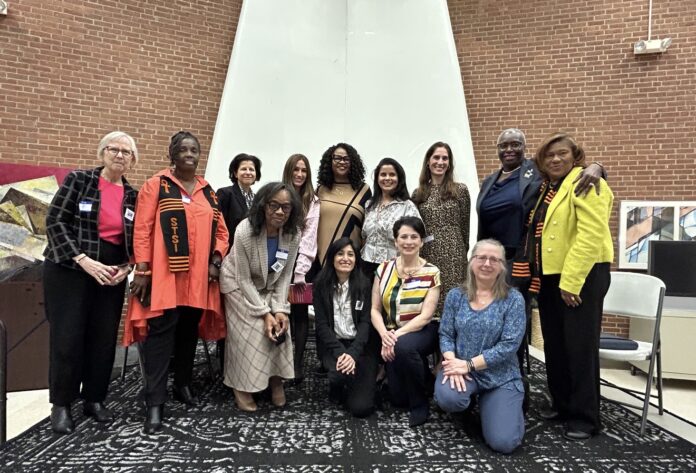
Jennifer Lewis, Tania Weiss, Beryl Weaver, Valya Dessaure, Lora Nelson, Kate Permut, Tanya Briendel, and Alisa Kesten, they didn’t just attend. They contributed to building a space where this conversation could exist the way it needed to.
Not perfectly. Not effortlessly. But intentionally.
And I’m especially grateful to WWA, the YWCA, and STSI for bringing this topic and this level of informed, necessary dialogue to the forefront. Because creating space for truth, especially around something that has been systemically minimized, is not light work.
It’s necessary work.
And sitting there, listening, I kept coming back to something simple: silence has never protected women. It has only made it easier to ignore them.
What happened in that room disrupted that pattern.
Not in a loud, attention-seeking way, but in a grounded, undeniable way.
The kind of truth that stays with you after the room empties. After the chairs are folded. After the conversations end, but the awareness doesn’t.
Because this was never just about menopause.
It was about agency.
It was about language.
It was about refusing to let something so universal remain so misunderstood.
And once truth is spoken clearly, consistently, and collectively, silence doesn’t get to take the lead anymore.