




The physician whose research helped bring scientific precision to early chemotherapy
Cancer touches nearly every family in America. If it has not reached your own household, it has likely reached someone close to you. A parent, a sibling, a friend who suddenly finds themselves sitting in a doctor’s office while the word chemotherapy enters the conversation, and instantly the future begins to look different.
Chemo drugs travel through hospitals across the world every day. They have extended and saved millions of lives. What most people do not realize is that some of the methods doctors use to test and refine those treatments were shaped by an African American physician whose name rarely appears in history books.
Her name was Dr. Jane Cooke Wright.

Long before oncology became a formal medical specialty, before cancer research developed the structure and institutions it has today, Dr. Wright was already studying how chemotherapy drugs interacted with human tumor cells grown in laboratory cultures and asking questions that helped physicians treat cancer with greater precision.
To understand how she arrived at that work, you have to begin inside a Harlem household where education, discipline, and medicine formed the rhythm of everyday life.
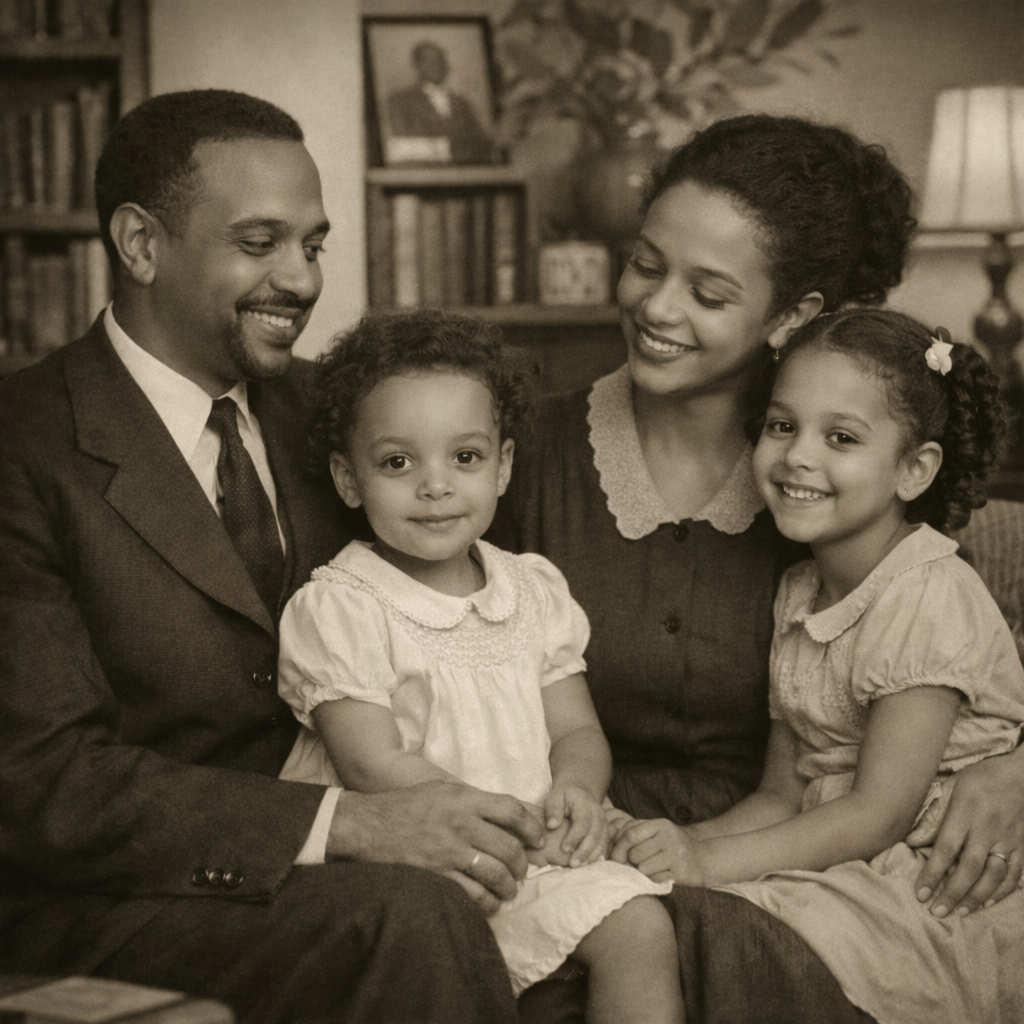
Jane Wright was born into a family that believed knowledge carried obligations. Her father, Louis T. Wright, had trained at Harvard Medical School and became one of the most respected surgeons practicing at Harlem Hospital in the early twentieth century. At a time when the barriers facing Black physicians remained immense, Dr. Louis Wright built a career defined by skill, persistence, and a commitment to expanding medical opportunity for others who would follow. He was the first African American physician appointed to a staff position at a New York City municipal hospital, and in 1929, he became the city’s first Black police surgeon.
The intellectual center of the household came from her mother, Corinne Cooke Wright, a schoolteacher. In many Black professional homes during that era, teachers shaped the culture of learning that surrounded children from their earliest years. Books were always nearby, and questions were always welcome. Education was not treated as a luxury or a steppingstone but as a responsibility that opened doors history had long tried to keep closed.
Jane Wright grew up inside that environment, although medicine did not immediately appear to be the path she imagined for herself. At the Ethical Culture Fieldston School, she served as yearbook art editor, captained the swim team, and studied German. When she graduated and enrolled at Smith College on a full academic scholarship, it was not to study science.
She went to study art.
“I was planning to become a renowned artist,” she told Ebony magazine in 1968.
It was not until her junior year at Smith that her father persuaded her to consider medicine. By some accounts, she was initially reluctant, not wanting to stand in the shadow of his already formidable career. But something shifted. She graduated from Smith in 1942 and turned toward the scientific world that had surrounded her since childhood. The shift represented a redirection of her creative ambition. The same eye for detail, the same discipline of observation, carried forward into a different kind of work.
Wright entered New York Medical College, where she was one of the few Black students. She was elected vice president of her class and president of the honor society, and in 1945, she graduated with honors. She completed an internship at Bellevue Hospital and a residency at Harlem Hospital, where she rose to chief resident.
In 1949, she joined her father at the Cancer Research Foundation he had established at Harlem Hospital, and the work that would define her career began.
Her father’s work had already placed cancer research inside the daily life of the family. During the middle decades of the twentieth century, oncology remained a young field. Physicians knew certain chemicals could slow or shrink tumors, yet treatments were unpredictable and often used when few other options remained.
Dr. Jane Wright entered research during those uncertain years and began working alongside her father, studying the effects of chemotherapeutic agents. The laboratories where they conducted experiments in the 1940s and early 1950s carried the sounds and textures familiar to scientists of that era. Glassware clinked softly against sinks, and metal equipment hummed under fluorescent lights. Researchers moved between benches carrying trays of tissue samples while physicians debated how best to treat patients whose illnesses resisted nearly every available therapy.
When Dr. Louis Wright died in 1952, the research program he had helped build faced a turning point. Scientific work rarely pauses for long. Experiments continue, data must be analyzed, and someone has to ask the next question.
Dr. Jane Wright stepped forward. At thirty-three years old, she was named director of the Harlem Hospital Cancer Research Foundation.
The years that followed would define her career and influence the future of cancer treatment. Rather than accepting the uncertainty surrounding chemotherapy, Dr. Wright began exploring how physicians might study cancer drugs more carefully before using them in patients.
Her research focused on how chemotherapy drugs interacted with tumor tissue grown in laboratory cultures. By observing how cancer cells responded to different medications outside the body, physicians could gain clues about which treatments might work and which might fail. She was among the first to test anticancer agents on human tissue cultures rather than relying solely on laboratory mice, an approach that helped lay the groundwork for what would later become known as personalized medicine.
In 1951, her research helped demonstrate that the drug methotrexate could be effective against solid tumors, including breast cancer.
Until that point, most chemotherapy research had focused on cancers of the blood and lymphatic system. The finding that a drug could act against solid tumors represented an important step forward.
Those experiments offered a new way of approaching chemotherapy. Instead of relying entirely on trial and error, doctors could begin examining the biological behavior of tumors when exposed to specific drugs. Wright and her colleagues also studied how combinations of medications might work together and how dosages could be adjusted more precisely.
In 1964, she developed a nonsurgical method using a catheter system to deliver heavy doses of anticancer drugs to previously hard-to-reach tumors in the kidneys, spleen, and elsewhere. The technique expanded the reach of chemotherapy beyond what surgery or conventional delivery methods could accomplish.
Medical progress often arrives quietly. Researchers publish findings and physicians share ideas at conferences. Hospitals adopt new practices gradually until methods that once seemed experimental become part of everyday medicine.
The work Dr. Wright helped pioneer spread in exactly that way. Over time, her research contributed to approaches that helped make chemotherapy more systematic and more informed by laboratory science.
By the early 1960s, Dr. Jane Wright had become widely respected within the growing field of oncology.
Physicians across the country were organizing their research efforts into professional networks that focused specifically on cancer treatment. In 1964, she joined six colleagues in founding the American Society of Clinical Oncology, serving as the organization’s first Secretary-Treasurer. She was the only woman and the only African American among the seven founders. ASCO would grow into one of the world’s leading communities of cancer researchers and physicians.
The historical timing of that moment carries its own significance. When those physicians gathered to shape the future of oncology, the United States had not yet passed the Civil Rights Act of 1964. A Black woman scientist helped build one of the most influential cancer research organizations in the world while the country itself still struggled to guarantee equal rights under the law.
Dr. Wright’s career continued to expand through research, teaching, and leadership roles in academic medicine. In 1967, she became professor of surgery, head of the Cancer Chemotherapy Department, and associate dean at New York Medical College, one of the highest academic positions held by a Black woman physician during that era. She directed cancer chemotherapy research at Harlem Hospital and served on the National Cancer Advisory Board, helping guide the direction of cancer research and policy in the United States.
In 1964, President Lyndon B. Johnson appointed Dr. Wright to the President’s Commission on Heart Disease, Cancer, and Stroke, where her recommendations helped lead to the creation of regional cancer treatment centers across the United States. She also led delegations of oncologists to China, the Soviet Union, and countries in Africa and Eastern Europe, and directed medical missions in Ghana and Kenya in the late 1950s and early 1960s.
Recognition followed Dr. Wright’s work as the years passed. In 1971, she became the first woman elected president of the New York Cancer Society, a milestone that reflected the respect she had earned among her peers. Over her forty-year career, Dr. Wright published more than one hundred and thirty-five scientific papers and contributed to nine books. Universities and medical institutions honored her contributions with awards and honorary degrees.
Yet colleagues often described her as someone more interested in the work itself than in public attention. Dr. Wright maintained a reputation for discipline and precision in the laboratory and for steady composure in clinical settings where patients and families faced difficult decisions.
Her daughters later recalled a mother who expected excellence and independence from the people around her. Education remained central to the household she created, echoing the environment in which she herself had grown up.
In 1947, Jane Wright married David D. Jones Jr., a Harvard Law School graduate. The couple raised two daughters while Wright continued building her career in academic medicine. Jones died in 1976, and Wright spent the remaining decades of her career as a single mother balancing research, teaching, and family.
The Wright household reflected the rhythms familiar to many families shaped by demanding professions. Conferences, research projects, and hospital responsibilities filled much of Dr. Wright’s schedule, yet intellectual curiosity remained a constant presence in family life.
As teenagers, the Wright daughters once told reporters they had little interest in following their parents into medicine. Young people often imagine futures that move in different directions from the examples set before them.
Life eventually led them toward professions connected to healing.
Jane Wright Jones, M.D., became a psychiatrist. Alison Jones, Ph.D., pursued a career as a clinical psychologist. Their work carried the family legacy into the study of the human mind and the emotional pressures people carry through their lives.
Viewed across generations, the Wright family story reveals a remarkable arc. A teacher helped shape the intellectual foundation of a household. A surgeon advanced medical care during an era of limited opportunity for Black physicians. A daughter helped refine chemotherapy treatment and contributed to the development of modern oncology. The next generation turned toward psychiatry and psychology, studying how the mind responds to trauma, stress, and confinement.
Four women stand prominently within this story. Corinne Cooke Wright created the educational culture of the family. Dr. Jane Cooke Wright helped advance cancer treatment. Her daughters, Jane and Alison, devoted their professional lives to understanding mental health.
Each generation carried forward the idea that knowledge should serve a purpose beyond personal achievement.
Dr. Jane Cooke Wright lived long enough to watch oncology evolve far beyond the field she entered early in her career. Advances in genetics, imaging technology, and targeted therapies transformed cancer treatment in ways researchers of her generation could only begin to imagine.
Yet many of those developments grew from the scientific groundwork laid by physicians who studied chemotherapy carefully during the mid twentieth century. Wright’s research formed part of the scientific foundation that helped physicians study chemotherapy more systematically.
Dr. Wright died on February 19, 2013, at the age of ninety-three, in New Jersey, leaving behind a legacy that continues to influence cancer medicine around the world.
Today, patients still sit in oncology clinics waiting to hear which treatments might help them fight the disease. Nurses prepare chemotherapy infusions while doctors study laboratory results and imaging scans. Families gather around kitchen tables discussing difficult choices and hoping for good news.
In those quiet moments, the work of Dr. Jane Cooke Wright remains present even when her name is not spoken.
The scientific discipline she brought to chemotherapy helped physicians move closer to understanding how cancer behaves and how it might be treated more effectively. Her influence lives quietly in hospitals, laboratories, and research centers across the globe.
Many people whose lives have been touched by cancer may never learn her story.
Yet the legacy of a physician from Harlem continues to travel through modern medicine, present in the chemotherapy treatments that have helped millions of patients live longer lives.

Derek H. Suite, M.D., is a board-certified psychiatrist, CEO and Founder of Full Circle Health, and host of The SuiteSpot, a daily inspirational podcast exploring science, spirituality, and human performance. Dr. Suite is a graduate of the Columbia School of Journalism in New York and a guest contributor to Black Westchester Magazine.
















Thanks in support of sharing such a pleasant idea,
article is fastidious, thats why i have read it fully