



When Americans stop believing the news, democracy loses its compass. A new Pew Research Center survey reveals that only 56 percent of U.S. adults now trust information from national news organizations — an alarming 11-point drop since March 2025. While local news outlets still command around 70 percent trust, even that number is slipping. The message is clear: Americans are tuning out not just politicians, but the people reporting on them.
This erosion of trust didn’t happen overnight. It’s the result of years of sensationalism, partisan spin, and corporate ownership that blurred the line between information and influence. The 24-hour news cycle turned every issue into a political soap opera, while genuine investigative reporting was replaced by “talking heads” selling outrage for ratings. Now, even credible journalism is viewed with suspicion because too many outlets forgot their first job — to inform, not indoctrinate.
That’s why millions of Americans have turned away from cable news altogether. Instead, they’re going straight to independent media creators on platforms like YouTube, Rumble, and Spotify — people who don’t answer to advertisers or party donors. Podcasters like Joe Rogan and commentators like Candace Owens now outpace CNN, MSNBC, and even Fox News in average viewership and downloads per episode. Owen’s “Candace” podcast alone reaches over 3 million daily downloads, while Rogan regularly draws audiences larger than the top-rated cable shows combined.
These shifts expose what the corporate media refuses to admit: the audience is hungry for authenticity, not scripted outrage. People no longer want talking points; they want conversations. They’re choosing unfiltered voices — even controversial ones — over polished anchors because they sense something real behind the mic. The irony is that mainstream media, in its pursuit of profit and political approval, created the very vacuum that independent journalism now fills.
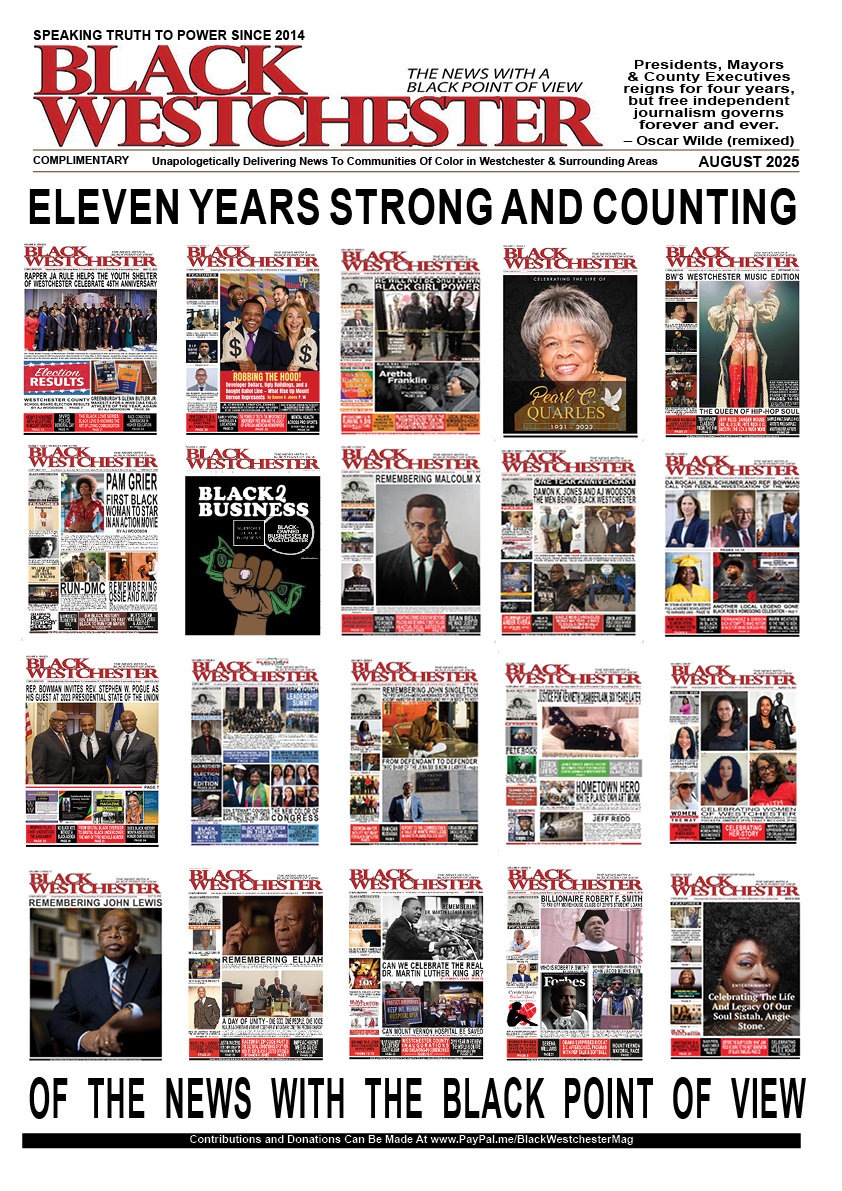
For the Black community, this crisis of trust hits harder. Our stories are too often filtered through national outlets that parachute in for chaos and leave before the context. Whether it’s police reform, education, or local economics, national news treats us as a headline, not a heartbeat. That’s why independent Black media — like Black Westchester Magazine — is vital. We investigate, connect policy to people, and tell the truth without permission from corporate sponsors.
But even local journalism faces a challenge. As Pew’s report shows, trust is eroding across the board. Readers no longer take headlines at face value — and that’s not entirely bad. It forces journalists to return to fundamentals: show the evidence, verify the facts, and let the audience decide. Credibility isn’t built through branding; it’s built through consistency.
In an era when politicians weaponize misinformation and social media floods the public square with confusion, truth has to fight for oxygen. The media’s survival — and its relevance — depends on restoring trust one story at a time. For those of us who still believe journalism is a public service, not political theater, the mission remains clear:
Present the data. Cite the sources. And never assume the audience will believe you — prove it.