







The Promise of Technology
Artificial Intelligence is present in every part of our lives—phones, jobs, and doctors’ offices. It’s more than a buzzword for Black communities: it’s a tool with the potential to close longstanding health gaps and save lives.
We know the story—hospitals closing in Black neighborhoods, long waits, insurance woes. AI-powered telehealth and symptom checkers can’t fix everything, but they help. If you’ve got a phone, you’ve got a lifeline. That means earlier warnings for diabetes, hypertension, or stroke—conditions that hit us hardest. Early detection saves lives, and AI makes that easier.
Personal Health That Speaks to Us
One-size-fits-all care never worked for us. AI can tailor guidance to your specific diet, stress levels, and family history. It reminds us to watch our salt intake, manage stress, and drink water—small habits that add up to longevity. Imagine an app that counts steps and knows the risks facing Black America. That’s the personalization we need.
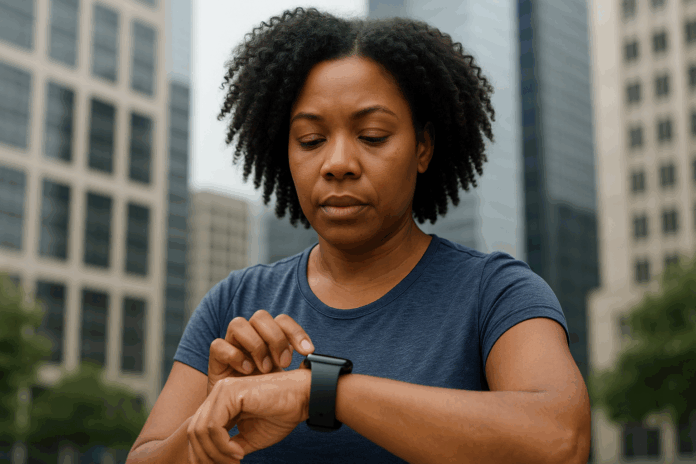
And now, with smartwatches and fitness trackers, we don’t even need to wait for a doctor’s visit to get vital health information. Our watches can monitor heart rate, sleep patterns, oxygen levels, and even detect irregular rhythms that could signal serious issues. For Black communities disproportionately affected by heart disease and hypertension, that kind of real-time monitoring is a game-changer.
We don’t talk about mental health enough. Too many suffer in silence. AI-powered chat tools and mood trackers aren’t therapy, but they lower the barrier to help. They offer a private, stigma-free way to check in daily. That first step can lead to real help—and that’s progress.
Protecting Ourselves from Misinformation
Our communities are too often targeted with misleading health advice. AI, when done well, can empower us by pointing to real answers. The difference between rumor and fact can mean healing or harm.
Community-Level Change
On a larger scale, AI can track the health of entire neighborhoods—showing where asthma is rising due to poor air quality, or where diabetes is prevalent because grocery stores are scarce. That data can fuel our fight for resources and give our leaders no excuse to look the other way.
We’ve seen the flip side, too. AI trained on biased data has already shortchanged Black patients—forcing us to be “sicker” before we get equal treatment. Chatbots have repeated racist medical myths. Even mental health AI has missed signs of depression in Black users because it wasn’t trained on how we speak.
That’s why, moving forward, we can’t just sit back and hope AI gets it right. We have to demand it. Demand inclusive data. Demand transparency. Demand equity.
AI won’t solve every health disparity. But used with accountability, it empowers us: to manage wellness, advocate for care, and build stronger communities.
It’s up to us: Will we demand AI serves our needs, or let others decide? Let’s challenge tech, advocate for inclusivity, and shape the future of Black health together.
The future of Black health is in our hands. Act now—advocate, get involved, and help lead the change toward fair, personalized care for our communities.