



A week before graduation from the New Orleans Police Department academy, 46-year-old recruit Larry Temah was arrested by federal immigration authorities.
Within hours, the story spread nationally — not as a hiring failure, but as a political talking point.
The narrative quickly became simple: an “illegal immigrant” was given a gun and badge by a police department in a sanctuary city.
But the facts are more complicated — and far more revealing about government systems than about ideology.
According to federal immigration authorities, Temah entered the United States legally in 2015 on a visitor visa. In 2016, he married a U.S. citizen and obtained conditional permanent residence, a common step in the immigration process. Years later, in 2022, immigration officials denied his permanent residency application after determining the marriage was fraudulent. After failing to appear for immigration hearings, a judge issued a removal order in absentia.
That is the immigration case.
Now comes the policing case — and that is where the real public interest lies.
Temah had not yet graduated from the academy. He was still a recruit. Like all recruits, he was issued a department firearm for training purposes. Federal officials arrested him before he became a sworn officer.
Immediately, the political debate shifted to a claim: how could a police department give a firearm to someone unlawfully present?
But this is where law and rhetoric separate.
The debate should not center only on whether a removal order is civil or criminal. The moment a police department places a firearm in the hands of a recruit, the issue shifts from immigration law to state power.
Police authority does not ordinarily possess firearms. It is a delegated force by the government — the legal ability to stop citizens, restrict movement, and, in extreme circumstances, take a life under color of law.
Federal statute 18 U.S.C. §922(g)(5) makes firearm possession by an unlawfully present person a felony if prosecutors prove knowledge of status. But even before a criminal court rules, the standard for police employment is far higher than the standard for civilian legality. Law enforcement agencies are expected to verify eligibility beyond a reasonable doubt because they are granting constitutional authority over the public.
The central question is not merely whether Larry Temah could lawfully possess a firearm.
The question is whether the government exercised due diligence before empowering someone with lethal authority.
Citizens do not grant police legitimacy — the state does. And when the state fails to confirm eligibility before delegating that power, the failure is institutional regardless of the recruit’s intent.
This case, therefore, is not simply an immigration controversy.
It is a vetting failure involving the transfer of sovereign forc
So the real issue is not ideology.
The real issue is verification.
Police hiring requires fingerprinting, federal background checks, and immigration status confirmation through federal databases. If a recruit with an active removal order passed screening, then one of three things happened:
Either the federal database did not properly flag the order,
or the information had not updated,
or the department relied on documentation that appeared valid.
The remaining question is not simply whether a database failed.
It is those who set the standard that allowed uncertainty to exist in the first place.
Police hiring is not ordinary employment. A city is not issuing a library card or a permit — it is granting the lawful authority to detain citizens and, if necessary, use deadly force. That authority demands certainty, not
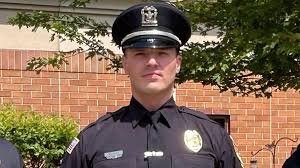
This is not the first time federal immigration authorities have arrested someone connected to a police department. In Hanover Park, Illinois, ICE arrested sworn officer Radule Bojovic despite him having passed background checks and already serving on the street. Unlike the New Orleans recruit who had not yet graduated, that case involved an active officer exercising police authority. Together, the incidents suggest the issue may extend beyond a single hiring decision and point toward a broader verification gap — one where departments rely on clearance systems that may not fully resolve immigration status before the state grants the power to enforce the law.
So the issue cannot be dismissed as a paperwork error.
Policies determine how much doubt is acceptable before the state grants power. If a recruit with a final removal order could advance to the last week of academy training, then the vetting threshold itself permitted unresolved status to be treated as cleared status. That is not merely administrative — it is a governance decision.
The sanctuary city debate, therefore, becomes relevant, not as a slogan but as a standard-setting environment. Not because sanctuary laws directly hired this recruit, but because policy climates influence verification rigor and institutional caution. When certainty is replaced with procedural compliance, risk expands.
The public questions should now be sharper:
What level of legal certainty is required before granting police authority?
Who is accountable when eligibility is assumed instead of confirmed?
And how many other sanctuary jurisdictions currently have non-citizens inside law enforcement positions under similar verification standards?
This case is no longer just about one recruit in New Orleans.
It raises a national question about the threshold required before the government delegates force in the name of the public.
A civilian unlawfully possessing a weapon is a legal matter.
The government empowering the wrong person to wield authority is a legitimacy matter.
Until those standards are clearly defined and uniformly enforced, the concern is not only what happened — but how often it could already be happening elsewhere.