



There is a boulevard in Harlem named for a man who once told the House of Representatives he would rather be censured than silent. Adam Clayton Powell Jr. Boulevard cuts through the neighborhood his namesake represented in Congress for 26 years, and it is worth asking what, exactly, the street sign still commemorates: a politician, or a model of Black political power that Harlem no longer has.
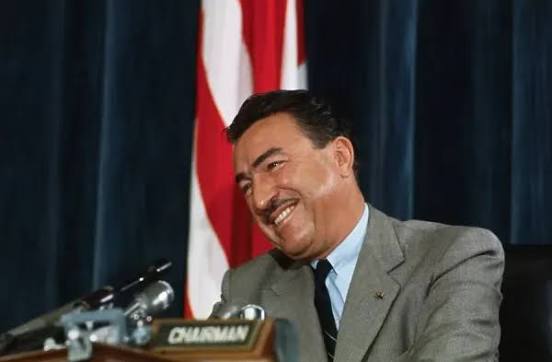
Powell became the first Black New Yorker elected to Congress in 1944, running from the Abyssinian Baptist Church — the largest Black congregation in the country at the time — into a newly drawn, majority-Black district built to give Harlem a voice of its own. He did not soften that voice to fit the coalition around him. He announced he would represent “the Negro people first and after that all the other American people,” and he meant it as a program, not a slogan. He forced open the whites-only facilities of the Capitol. He wrote the Powell Amendment, which denied federal funds to segregated institutions, and reintroduced it so many times that it became a permanent fixture of the civil rights fight until its substance was folded into the 1964 Civil Rights Act. And before Stokely Carmichael ever shouted the words to a crowd in Greenwood, Mississippi, it was Powell — at a 1965 Chicago rally and then in a 1966 Howard University commencement address — who put “Black Power” into the American political vocabulary, defining it as the right of Black people to build their own institutions rather than wait on white-controlled ones to let them in. That was not a rhetorical flourish. It was the design principle behind everything he built in Harlem. As chairman of the Education and Labor Committee, he moved more than fifty bills into law — minimum wage increases, school lunch programs, aid to the deaf, the scaffolding that would later become Medicare, Medicaid, and Head Start. He met with Nkrumah in Ghana and needled Eisenhower into integrating the armed forces. Harlem gave him nearly ninety percent of the Black vote and, when the House tried to expel him in 1967 over a corruption fight that reeked of retaliation, gave him eighty-six percent more in the special election held to spite him. The Supreme Court eventually ruled the expulsion unconstitutional. Powell did not need permission from a broader coalition to matter. He built the coalition around himself.
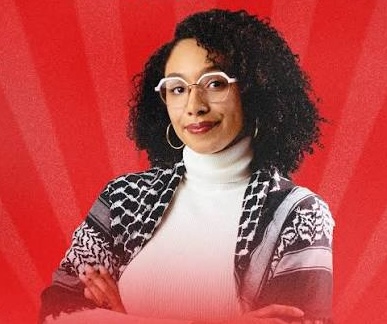
Eighty years later, the political lineage that runs through his old congressional turf — Powell to Charles Rangel to, eventually, Adriano Espaillat — has just produced its next chapter, and the contrast is instructive. Darializa Avila Chevalier, a twenty-something Democratic Socialists of America organizer, defeated the five-term incumbent Espaillat this summer in a primary for New York’s 13th District, which stretches from Powell’s old Harlem base up through Washington Heights, Inwood, and the West Bronx. She ran, credibly, as a champion of immigrant rights and against what she called “the politics of death” — militarism abroad, austerity at home. Mayor Zohran Mamdani, who built his own win on a multiracial, democratic-socialist coalition, endorsed her. She is, by every account, a serious and disciplined organizer.
She is also not the heir to Powell’s tradition of independent Black political power — and the race that put her in Congress makes that clearer than any commentary could. It was fought, ugly and explicitly, along ethnic lines: Avila Chevalier, who is Afro-Latina and the daughter of Dominican immigrants, says she was hit with birth-certificate demands and racial slurs from supporters of Espaillat, who is himself Dominican-American. Outlets covering the race described the contest as exposing anti-Haitian and anti-Black currents inside Dominican political circles in New York, and the Congressional Black Caucus itself has been reported to be absorbing a generational rift over exactly this kind of primary challenge. That is not the story of a community closing ranks behind a tribune the way Harlem closed ranks behind Powell in 1967. It is the story of Black political identity in northern Manhattan being contested, diluted, and subsumed into a broader ideological coalition — democratic socialism — whose energy comes as much from Mamdani’s citywide multiracial base as from anything rooted in Harlem’s own institutions.
That is the deeper shift: Powell’s power was institutional and self-generated. A church of thirteen thousand members, a newspaper he founded, a boycott machine he ran for two decades before he ever held office, a Harlem political base so loyal it survived his corruption scandals. He was not a junior partner in anyone’s coalition; national Democrats had to deal with him. Today’s version of Black political power in the same geography arrives as a plank in someone else’s platform — valuable to a citywide socialist movement insofar as it can be marshaled, but no longer the movement’s center of gravity. The seat exists; the independent institutional base that once made the seat formidable does not.
The numbers behind that shift are not flattering. A 2021 internal DSA membership survey — the same one that found 80% of members college-educated and more than a quarter earning six-figure incomes — put the organization at 85% white and just 4% Black. That is the coalition Black political power in northern Manhattan now has to negotiate with in order to get anything done: an organization whose own numbers show it is overwhelmingly white, asking a historically Black congressional seat to subordinate its independent identity to a movement it barely populates. Powell never had to ask a mostly white organization for a place at the table. He was the table.
The ideological gap is just as wide as the demographic one. Powell’s Black Power was explicitly about building up black people as the organizing category: build Black churches, Black newspapers, Black businesses, Black political machines, answerable to Black people first. Democratic socialism, as DSA itself defines it, organizes around class instead — capital versus labor, tenant versus landlord, worker versus boss — treating race as one form that class oppression takes rather than as its own axis of solidarity. That is a coherent political philosophy with a long American left tradition behind it, but it is not the philosophy that built Harlem’s political power in the first place, nor is it a neutral update of it. Powell wanted Black people to control Black institutions. The coalition Avila Chevalier answers to wants a multiracial working class to control shared institutions, with Black interests folded in as one constituency among several. Those are not the same project wearing different clothes; they are two different theories of where power should sit, and Harlem’s congressional seat has quietly changed hands between them.
The distinction is not about the size of government — Powell was one of the most effective builders of federal social programs Congress has ever seen, from the minimum wage to the legislative scaffolding under Medicare, Medicaid, and Head Start. It is about who is holding the lever. Powell used the federal government the way he used his pulpit and his newspaper: as an instrument Harlem pulled on its own terms, answerable to Harlem, chaired by a Harlem man who could not be primaried out of his own church. Black Power, in his formulation, meant Black people forcing recognition and equal standing on their own terms — not waiting to be included in someone else’s program. Socialism, as a governing philosophy, asks people instead to invest their trust in collective institutions administered on their behalf — a redistribution machine run by a coalition, decided by majority vote inside that coalition. Even when the outcomes align, the posture is different: one is a demand for independent standing; the other is a request for a larger, more generous seat inside somebody else’s house. Harlem’s political tradition was built on the first. It is now represented by the second.
None of this is really Avila Chevalier’s fault, and it would be lazy to make her the villain of a decline that predates her by decades. Powell’s own model of Black institutional power — grounded in an era of legally enforced segregation that produced, almost as a byproduct, a dense and captive set of Black-led churches, newspapers, and businesses in a handful of neighborhoods — was already fraying by the 1970s, as integration dispersed exactly the concentrated constituencies that had made men like Powell possible. Rangel held the seat for decades but never wielded it as a standalone power center the way Powell had. The transformation of a majority-Black Harlem into a demographically mixed, heavily Dominican and increasingly gentrified district was already most of the way to completion before Avila Chevalier ever organized her first tenant meeting. She is a symptom of the change, arguably one of its more talented political operators, not its author.
But a symptom is still worth naming. What Powell offered Harlem was leverage that ran through nobody else — he could not be primaried out of his own church, his own newspaper, his own boycott network. What today’s Harlem gets is a voice that is talented, sincere, and entirely contingent on the health of a citywide coalition led by other people, subject to being outflanked in the next cycle by whoever assembles the next winning combination of renters, socialists, and immigrant-rights voters. That is not a value judgment on socialism, or on immigrant solidarity, both of which have their own claims on justice. It is a judgment on independence. Powell’s Harlem could set its own terms. The 13th District’s Harlem now negotiates its terms as part of somebody else’s majority.
Keep the faith, baby, Powell used to say. The faith he meant was in Black political self-determination as an end unto itself — not a faction inside a larger movement, but a force other factions had to answer to. Measured against that standard, and only against that standard, something has indeed been lost between the boulevard and the district it now names.