


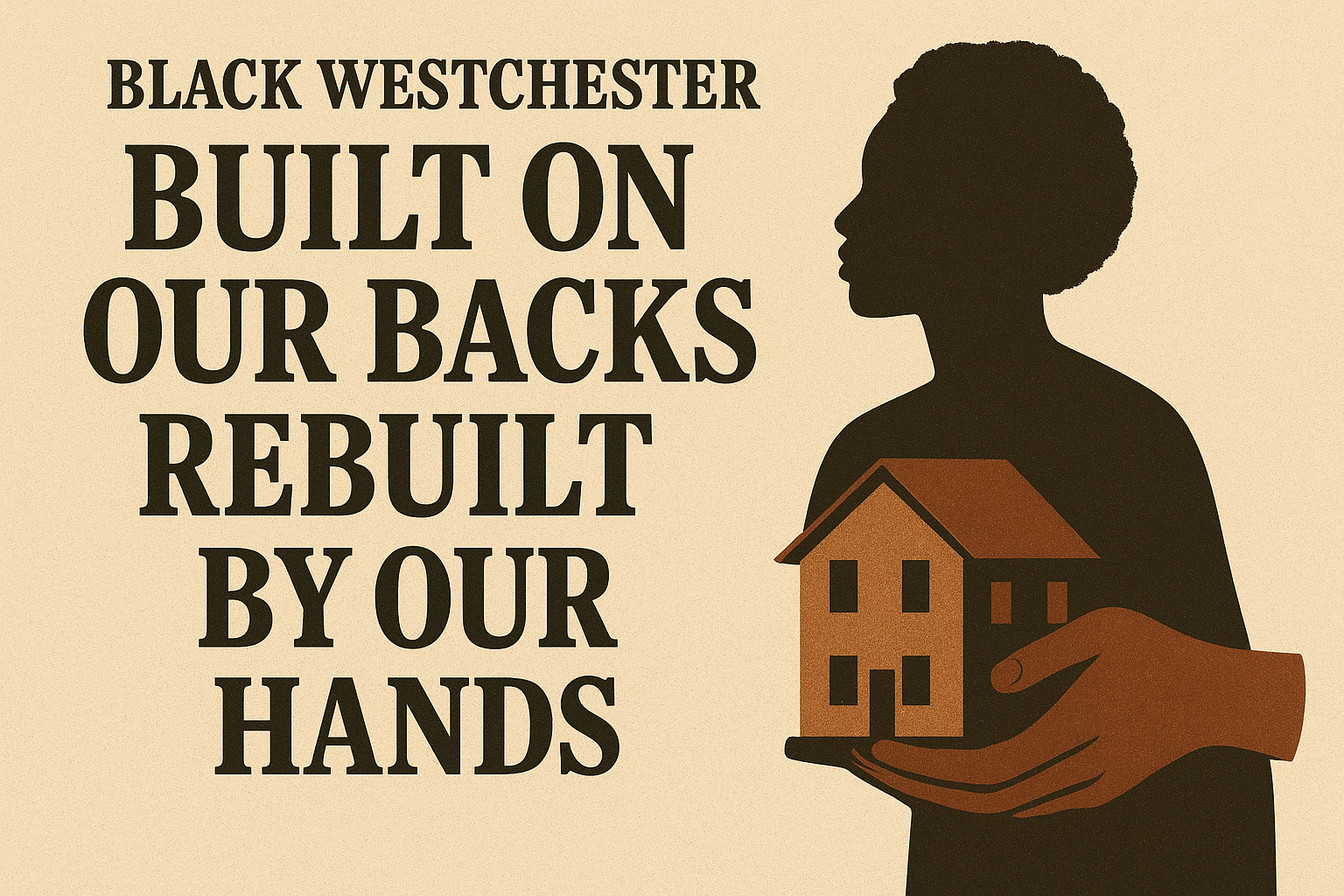




Across this nation, and right here in New York City, we are standing in the middle of what economists call a “correction.”
But let’s call it what it is: a storm.
And while corporate America has umbrellas made of bonuses and buyouts, working people, especially Black and Brown families, are out here trying to keep from drowning.
In October 2025, U.S. employers announced 153,074 job cuts, the highest in over twenty years.
Through the first ten months of this year, more than 1.09 million layoffs have been recorded, a 65 percent increase from 2024.
By midsummer, the total had already reached 744,000, nearly double the year before.
And every month, 1.1 percent of employed Americans lose their jobs.
Instability has become the new normal.
Companies are cutting deep:
Intel 27,000. UPS 34,000. GEICO 30,000. Microsoft 15,000.
Disney, Boeing, BP, Estée Lauder, Nestlé, Nissan, tens of thousands more.
These are not just statistics. These are parents, neighbors, elders, and college graduates suddenly wondering how to pay rent, how to keep the lights on, and how to hold on to dignity.
And for Black America, the cuts hit even harder.
We’ve seen this movie before and we know how it ends if we don’t write a new script.
The Land and the Labor That Built New York
Before there was a skyline, there was a people, the Lenape Nation, caretakers of this land.
Then came the ships. Then came the chains.
Enslaved Africans built the walls, docks, and roads that became the bones of this city.
Between 1626 and 1827, nearly 15 percent of New Yorkers were enslaved Africans, constructing City Hall, Trinity Church, and even the original Wall Street.
That’s not trivia, that’s truth.
So when politicians today say “New York was built by immigrants,” we must correct the record.
Immigrants helped grow the city, yes, but it was Indigenous stewardship and enslaved African labor that made it possible.
We cannot build a future while denying the foundation.
48 Percent, Yet Barely Acknowledged
When New Yorkers elected Zohran Mamdani in 2025, it was a moment of change.
According to El País, 48 percent of Black voters and 62 percent of Latino voters helped put him in office.
In Harlem, voter turnout among Black women rose 8 percent from the last election, a quiet revolution of ballots and belief.
Yet, in his victory speech, he said, “New York was built by immigrants.”
The applause was loud, but the silence afterward was louder.
Because we know this city was built first by those who had no choice, the Lenape, the enslaved, and the descendants who still carry the weight.
When our labor builds the foundation but our names are left out of the story, it’s not just an omission, it’s a continuation of erasure.
The Hierarchy Is Holding But We Don’t Have To
Let’s be honest: America’s economy wasn’t designed for equality.
It was designed for hierarchy and the higher you climb, the fewer of us they let in.
This year alone, over 300,000 Black women lost jobs or were impacted by DEI cutbacks.
Corporations called it “cost-saving.”
What they really meant was: “You were never meant to stay.”
But the women they’re cutting are the ones holding companies, and communities, together.
Teachers, social workers, managers, mothers, the ones balancing books and holding hope.
They call it “the pipeline problem.” I call it the courage gap because it takes courage to keep us in the room when we start telling the truth.
When One of Us Falls, the Block Feels It
In New York, a layoff doesn’t stop at one paycheck.
When one person loses a job, five lives feel it.
The bodega misses a regular.
The daycare loses tuition.
The church plate gets lighter.
The energy of the whole block shifts.
We don’t just lose income, we lose stability, structure, and pride.
And that’s why this “correction” can’t be met with isolation.
It demands collaboration.
Wake Up, People: It’s Time to Build Together
We are too spread out.
Too divided by borough, by background, by illusion.
This storm is not going to pass, it’s going to reshape the coastline.
We need to wake up, pool resources, and build community infrastructure that can withstand what’s coming.
- We need Neighborhood Resource Hubs — places where people can find jobs, trade skills, and share food.
- We need Community-Owned Co-ops — stores, farms, and laundromats that circulate dollars right back into the block.
- We need Ownership Education — workshops teaching our kids to start LLCs, not just look for jobs.
- We need to Fund Each Other — susu circles, micro-grants, block investments because survival will be collective or it won’t be at all.
Hope is not enough anymore.
We need strategy, solidarity, and shared sacrifice.
Black and Brown People Are the Blueprint
Even with budgets cut and systems failing, we’re still leading, in classrooms, nonprofits, and neighborhoods.
That’s not luck; that’s lineage.
We are the continuity of survival.
But resilience without rest becomes burnout.
Strength without structure becomes struggle.
It’s time to turn that endurance into infrastructure.
When we invest in Black women, we stabilize entire ecosystems.
When we empower the working class, we protect democracy itself.
Hope, New York Style
Hope in New York walks fast, talks straight, and gets things done.
Hope isn’t hashtags, it’s hands.
It’s people building something out of nothing, again.
Our ancestors built worlds out of tenement kitchens.
We can build an economy out of shared vision.
If this system won’t hold us, we’ll build one that will.
Because our power has never come from permission, it’s always come from people.
The Storm Is Here
This system was not built for us to thrive but that has never stopped us from rising.
From the Lenape Nation who first cared for this land, to the enslaved Africans who built its bones, to the Black and Brown New Yorkers who keep it breathing, we have weathered every storm.
Now we must build the ark.
Together.
Wake up. Pool your resources. Rebuild your block.
Because this storm isn’t passing, it’s testing what we’ve built.
And the only way we survive is together.
Sources & Supporting Information
- U.S. Layoffs Reach 20-Year High – Times of India (Nov 2025)
- AI Wreaks Havoc on U.S. Jobs – New York Post (Nov 2025)
- Top Industries for Layoffs in 2025 – Visual Capitalist
- Who Voted for Mamdani – El País (Nov 2025)
- Slavery in Early New York – New-York Historical Society
- Community Economic Development Toolkit – Institute for Cooperative Economics
- Start a Worker Cooperative – Start.coop
- NYC Worker Cooperative Development Initiative
- Workforce Development Resources – Co-op Careers