








The crisis facing Black boys in America isn’t a lack of representation—it’s a lack of masculine, spiritual structure. They are not failing because they aren’t exposed to diversity. They are failing because they aren’t rooted in discipline, purpose, and divine leadership. And the unfortunate truth is this: the man who had the greatest platform to speak to that crisis refused to do so.
Barack Obama could have used his presidency—and his post-presidency influence—to restore the cultural image of the Black man: not as a caricature, not as a stereotype, but as a leader, builder, and protector. Instead, he consistently elevated narratives that had little to do with the unique challenges facing Black boys.
Read: The Silent Crisis: Deprived Masculinity is a Mental Condition Among Black Men
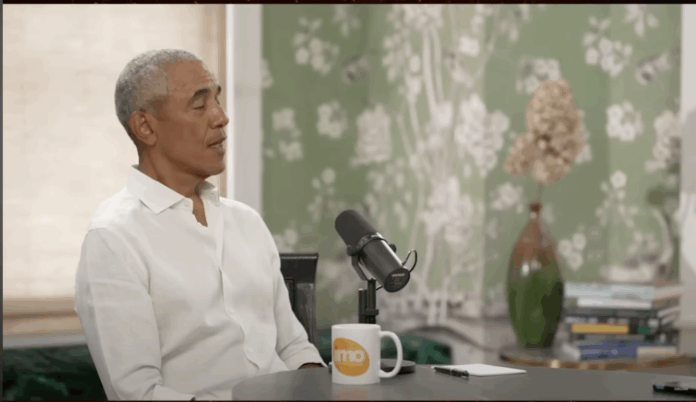
Take his recent comments on Michelle Obama podcast, youtube show, where he said:
“One of the most valuable things I learned as a guy was I had a gay professor in college… who became one of my favorite professors… and would call me out when I started saying stuff that was ignorant. You need that… to show empathy and kindness. And by the way, you need that person in your friend group so that if you then have a boy who is gay or non-binary or what have you, they have somebody that they can go, okay…”
This was during a discussion on fatherhood and male mentorship—a moment that could have been used to speak directly to the needs of fatherless Black boys, or to the restoration of Black male responsibility. But instead, the conversation veered toward identity politics. Again.
It’s not that diversity doesn’t matter. It’s that Black boys are not getting what they need. They don’t need to be softened. They don’t need emotional validation at the expense of structure. They need to be taught how to be fathers, husbands, protectors of the community, and defenders of the faith. And for that, they need masculine role models—not token symbolism, not inclusion narratives, but real men who embody spiritual authority, economic stability, and moral conviction.
In my 33 years in law enforcement—working at the Westchester County Department of Corrections—I’ve seen this problem up close. Time after time, when programs are brought in to speak to incarcerated Black men or at-risk youth, it’s not Black men doing the talking. It’s white women. Or Black women. Well-meaning, yes—but missing the point. Then, when a woman tries to speak directly to these boys, they call it “mansplaining.” But you wouldn’t need to “mansplain” if you had men talking to the boys. The scriptures teach us: Iron sharpens iron. That’s the problem—we’ve removed iron from the process. We’ve ousted Black men from mentoring, training, and correcting Black boys. And Obama’s repeated remarks reflect that same agenda—one that undermines masculine leadership by replacing it with emotional messaging.
When Black men didn’t support Kamala Harris during the 2020 primary, he labeled them sexist and misogynistic, ignoring the reality that many of us are looking for policy, not pageantry. We want political solutions that strengthen our ability to lead families, run businesses, and protect our neighborhoods. Instead, we were dismissed as a problem for simply demanding to be seen.
And now they wonder why they’re losing men—especially Black men. It’s not because we’re anti-gay. It’s not because we’re misogynistic. It’s because our masculinity is never affirmed, never prioritized, never respected. In fact, it’s treated like a threat to be managed. And that message—repeated over and over—has done real damage to the mental, spiritual, and psychological development of our boys. They’re growing up in a world that tells them they’re dangerous by nature, and disposable by design. And no one seems to care.
Read: Why are Black Men Invisible and missing from the National Health Care Agenda
In Jesus and the Divine Black Masculinity, I make it clear: masculinity isn’t a flaw to be fixed—it’s a calling to be fulfilled. Our standard isn’t set by entertainers, influencers, or sanitized political slogans. It’s set by Jesus. A man of unwavering discipline, moral clarity, spiritual authority, and sacrificial leadership. He didn’t compromise truth to be accepted. He didn’t shrink back to avoid offense. He stood, spoke, built, and bore the weight of responsibility. That’s the example our boys need. And if we truly claim to follow Christ, then why aren’t we training our young men to be like Him?
Obama had the chance to be that kind of leader. He chose instead to be liked. But we can’t afford to follow that path. Because if we don’t raise our boys in the image of God, the world will raise them in the image of dysfunction—and then monetize their confusion.
This isn’t about exclusion. It’s about restoration. It’s about calling Black men back to their God-given identity—not to please culture, but to rebuild it.
🔥 Black Men, It’s Time to Reclaim the Blueprint. 🔥
The world is confused about manhood—but Jesus wasn’t.
📖 Jesus and Divine Black Masculinity by Damon K. Jones is not just a book—it’s a spiritual blueprint for men who are tired of being told who they are by broken systems, failed culture, and empty politics.
This book is for the man ready to:
✔ Lead with purpose
✔ Provide with power
✔ Protect with love
✔ Walk in divine order
If you’re a Black man, father, mentor, or leader—this is the book you’ve been waiting for.
If you’re raising or guiding young Black boys—this is the foundation they need.
💥 Stop chasing validation. Start walking in your calling.
💥 Stop surviving. Start building.
➡️ Order your copy of Jesus and Divine Black Masculinity on Amazon today.
Step into the role God designed you to lead.



Hey, this is really good. Taught in Paterson, NJ and in Northern State Prison. There is just a huge lack of boring, stable, Black men who model the behaviors we are looking for. Black mentors that do their jobs. I am not that religious so I would propose sports, outdoor activities, construction hobbies, and automotive repair.
Black Masculinity is a treasure that needs to be developed.