








By Damon K. Jones | Publisher, Black Westchester Magazine
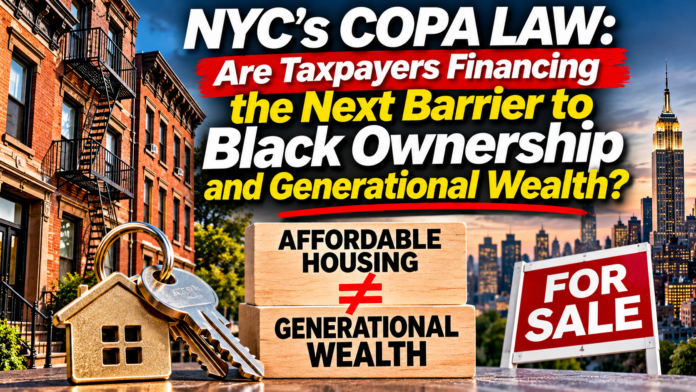
On November 10, 2026, New York City Mayor Zohran Mamdani signed the Community Opportunity to Purchase Act (COPA) into law. Supporters are celebrating it as a victory for affordable housing and tenant protection. But while everyone is celebrating, I have a question that Black New Yorkers should be asking. How does this legislation help Black families become property owners, build businesses, and create generational wealth?
For generations, Black Americans were denied opportunities to purchase property, obtain mortgages, and accumulate wealth through real estate. Now we have a law giving qualified nonprofit organizations purchasing advantages that ordinary private investors, including Black entrepreneurs, do not receive. I find that troubling, especially when we are constantly discussing the racial wealth gap and the need for Black economic independence.
We cannot keep talking about building Black generational wealth while supporting policies that may make private property ownership more difficult.
What COPA Means for Black Private Investors
COPA gives qualified nonprofits and certain approved partnerships priority opportunities to purchase eligible multifamily properties, particularly distressed buildings and properties with specified affordable housing restrictions. These organizations receive purchasing rights that ordinary private buyers do not automatically receive.
Think about a Black entrepreneur who has worked for years, established good credit, saved money, and finally secured financing to purchase an apartment building. That investor wants to rehabilitate the property, provide quality housing, hire local workers, and eventually pass the investment down to their children.
Under COPA, a qualified nonprofit gets the first opportunity to pursue certain eligible properties. The private investor can still purchase buildings when the law’s procedures permit but does not receive the same independent purchasing preference.
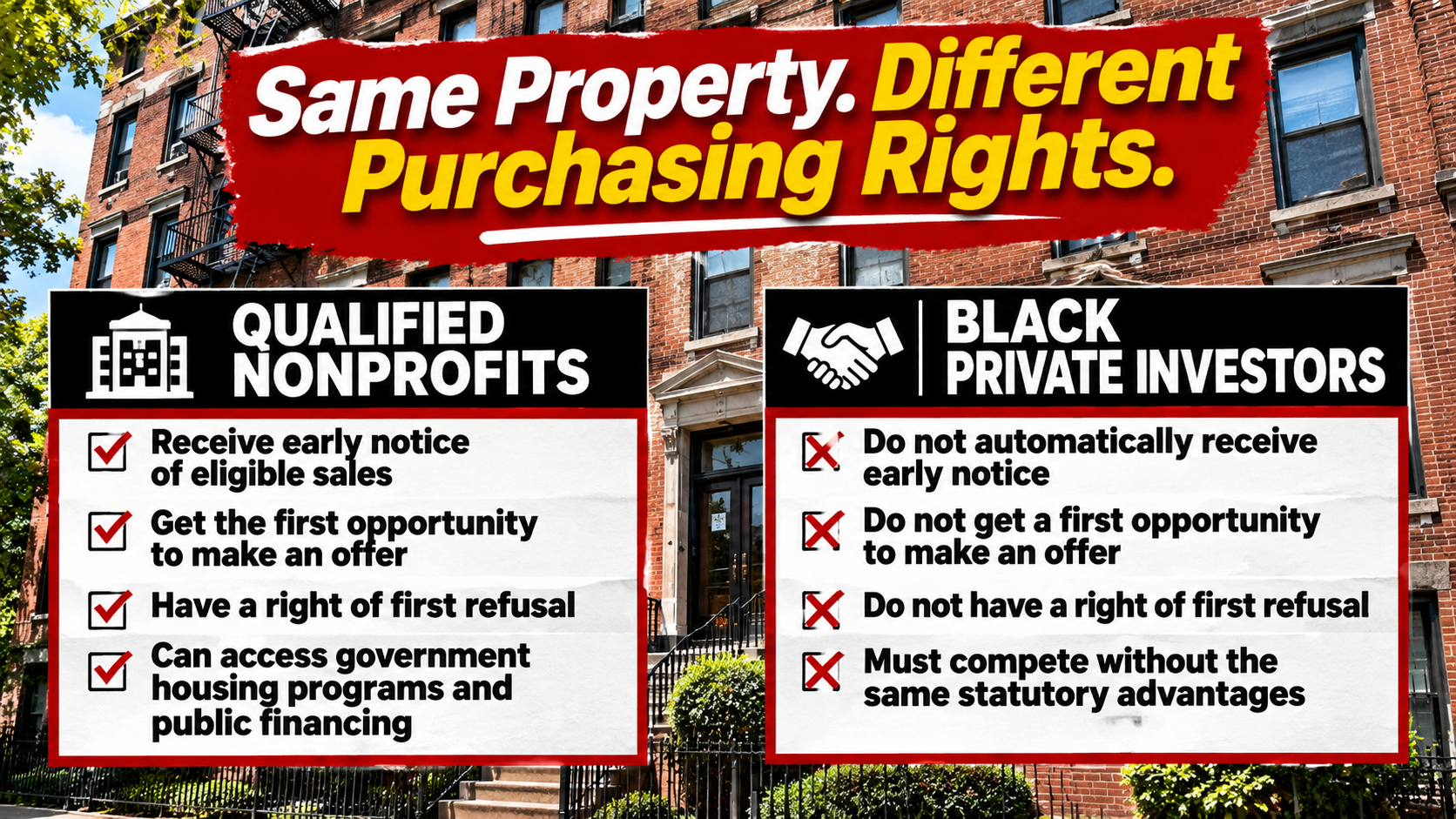
Why should nonprofit status determine who gets that advantage? Why shouldn’t responsible Black private investors receive comparable opportunities if they are willing to maintain affordable housing?
Follow the Taxpayer Money
Here is where my concerns become even greater. Where are these nonprofits getting the millions of dollars necessary to purchase apartment buildings throughout New York City?
Nonprofits can obtain private loans, charitable donations, and investments, but they can also receive government grants, subsidies, and publicly supported financing. That means taxpayer dollars could help finance some of these acquisitions.
The Mamdani administration has announced billions in affordable housing investment, including more than $2 billion in planned preservation funding over two years. However, that money is not exclusively designated for COPA, and the legislation does not establish a dedicated acquisition fund.
Nevertheless, the possibility of taxpayer-supported nonprofit purchases raises a serious question. Why should public money potentially help nonprofits acquire property while Black private investors struggle to obtain financing to purchase those same buildings?
If government can provide acquisition assistance to nonprofits, why can’t it develop comparable programs for qualified Black-owned real estate businesses willing to rehabilitate distressed buildings and maintain affordable rents?
Affordable Housing Is Not Generational Wealth
We need to stop confusing affordable housing with economic independence. Having an affordable apartment may provide stability, but paying rent does not automatically create property equity or an asset your children can inherit.
When a Black family owns an apartment building, that property can generate income, appreciate, and become an inheritance. It can provide collateral for another business or help finance the next generation’s education and investments.
When a nonprofit owns the building, the property generally belongs to the organization. Tenants may enjoy stable rents and improved living conditions, but they do not automatically become property owners.
Some nonprofit housing models create tenant-owned cooperatives, which can provide ownership opportunities. However, COPA does not require every acquisition to become a cooperative.
So, what are we building? More Black property owners, or more institutions that own property while Black families continue paying rent?
What Happens to Black Entrepreneurs?
One thing that bothers me about today’s housing conversation is how private landlords are often portrayed as the problem. Not every private investor is a wealthy corporate developer, and not every landlord is exploiting tenants.
Black entrepreneurs are purchasing distressed properties, renovating buildings, providing housing, and trying to establish family-owned real estate businesses. These are the people we should also be encouraging because ownership creates opportunities beyond a monthly paycheck.
Black investors already face challenges obtaining financing, accumulating down payments, and competing in an expensive real estate market. Now we must examine whether COPA’s purchasing preferences could create another obstacle.
The law does not specifically exclude Black investors, and its actual racial economic impact has not yet been established. But we should not wait until opportunities are lost before examining whether the policy disadvantages small private buyers.
Who Controls These Nonprofits?
Another concern is accountability. Nonprofits have executives, boards of directors, operating expenses, and financial obligations. Being a nonprofit does not automatically mean an organization is better managed or more accountable than a responsible private business.
Who selects these organizations? Who sits on their boards? How much taxpayer money will they receive? Who controls the properties after purchase, and what ownership opportunities will tenants have?
These are questions New York City’s Department of Housing Preservation and Development should answer publicly before COPA takes effect in November 2027.
Are Political Donors Positioned to Benefit?
Another issue Black New Yorkers should not ignore is the relationship among nonprofit organizations, political donors, private developers, and elected officials. We have seen how political relationships can influence public policy. When government creates special opportunities to acquire valuable real estate, we should examine who is positioned to benefit.
Who serves on these nonprofit boards? Have their executives, directors, or development partners contributed to the campaigns of elected officials who support COPA? Will politically connected organizations receive taxpayer-funded financing while independent Black entrepreneurs struggle to buy property? These questions deserve answers before millions of dollars in real estate change hands under this program.
I am not accusing any specific nonprofit of being a political front. That requires evidence. But Black New Yorkers should demand full transparency regarding campaign contributions, government contracts, property acquisitions, and the private businesses that partner with these organizations. Public money should serve the public interest, not become a financial reward for political relationships.
Black New Yorkers Need Ownership, Not Just Affordability
I understand the argument for protecting tenants from displacement and preserving affordable housing. Those are legitimate concerns, and nobody should have to live in unsafe conditions or face unlawful treatment from landlords.
But why must the conversation stop at affordable rent? Why aren’t we discussing programs that help Black New Yorkers purchase buildings, develop cooperatives, establish family-owned real estate companies, and build assets for future generations?
At this stage, we cannot conclude that COPA disproportionately harms Black investors or that specific acquisitions will use taxpayer dollars. Those outcomes require investigation, financial records, and actual transaction data.
But the purchasing preferences are real, and the questions about public financing and generational wealth deserve answers.
Black America does not need another generation conditioned to believe that renting is the highest level of economic achievement. We need ownership, investment, entrepreneurship, and opportunities to pass wealth to our children.
Only Black America can save Black America, and that begins with taking our economic future seriously. Affordable housing is important, but it cannot become a substitute for Black ownership.
The question remains: Who gets to own the buildings, who controls the wealth, and what will Black New Yorkers have to pass down to the next generation?

A multifaceted personality, Damon is an activist, author, and the force behind Black Westchester Magazine, a notable Black-owned newspaper based in Westchester County, New York. With a wide array of expertise, he wears many hats, including that of a Spiritual Life Coach, Couples and Family Therapy Coach, and Holistic Health Practitioner. He is well-versed in Mental Health First Aid, Dietary and Nutritional Counseling, and has significant insights as a Vegan and Vegetarian Nutrition Life Coach. Not just limited to the world of holistic health and activism, Damon brings with him a rich 32-year experience as a Law Enforcement Practitioner and stands as the New York Representative of Blacks in Law Enforcement of America.