



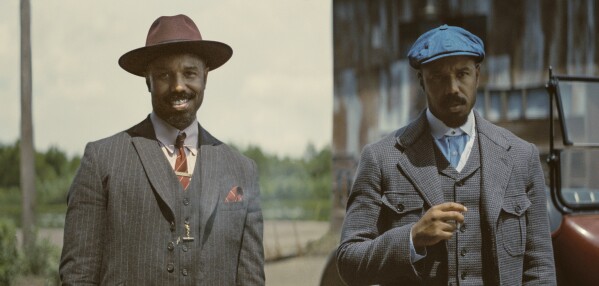
When Ryan Coogler’s Sinners hit theaters, it didn’t just land—it detonated. What some expected to be another genre experiment turned into a cinematic phenomenon. Starring Michael B. Jordan in dual roles as morally complex twin brothers, the film offered a gripping spiritual thriller draped in Southern Gothic aesthetics and underlined by themes of judgment, legacy, and internal war. But the brilliance of Sinners didn’t stop at box office numbers or critical acclaim—it exposed something deeper. It laid bare just how far behind Marvel’s long-delayed Blade reboot really is.
More than five years after announcing Mahershala Ali as the new Blade, Marvel has yet to deliver on its promise. A project once met with applause has now turned into a case study in developmental mismanagement. In contrast, Coogler’s Sinners arrived fully formed, timely, and devastatingly effective. It didn’t just entertain—it moved people. It sparked dialogue in churches, barbershops, classrooms, and among the very audience Marvel claims to understand. And that’s the problem: while Sinners connected on every level, Blade now looks like an outdated promise from a studio struggling to understand its present, let alone shape its future.
The original Blade film, led by Wesley Snipes, was a cultural milestone. It predated the Marvel Cinematic Universe and proved that a Black superhero could command the box office. But that was 1998. The terrain has shifted. Audiences have matured. Cultural appetites have changed. What Blade once represented—a rarity in a sea of white-led comic book films—is no longer enough to carry it forward. Representation alone doesn’t satisfy. People want depth. They want complexity. They want the kind of storytelling Sinners delivered without apology.
Timing, too, has turned against Marvel. The repeated delays and scrapped scripts have killed momentum. What should have been a triumphant return for a beloved character has become a cautionary tale. Coogler filled the void left by Marvel’s indecision. And he did it with a film that offered more than cool weapons and special effects. Sinners is both myth and mirror. It confronts the human condition. It delves into duality, spiritual trauma, and generational reckoning—territory Marvel rarely dares to enter. The twins Jordan portrays are not heroes or villains. They are reflections. Wounded, calculating, righteous, flawed. They are the embodiment of a higher-tier narrative, one that transcends capes and catches the conscience.
While Marvel busies itself with interconnected timelines and cameo reveals, Sinners chooses introspection. It gives audiences a single, focused story—no multiverse distractions, no sequel bait, no franchise bloat. That kind of self-contained power resonates more than any Easter egg could. And in an age of MCU fatigue, where even devoted fans admit to feeling overwhelmed and underwhelmed simultaneously, Sinners reminded us what cinema looks like when it’s unafraid to stand alone.
The cultural credibility that Coogler brings to the table is another weight Marvel cannot match. With Fruitvale Station, Creed, and Black Panther, Coogler has earned a trust that’s rare in Hollywood. He tells Black stories without diluting them. His characters are not written for a general audience—they are written truthfully, and the world adjusts. Marvel, for all its resources, has not earned that same trust. Its approach to Black characters often feels engineered by committee. It lacks the intimacy, the urgency, the purpose.
There’s also the undeniable reality that Sinners delivered something Mahershala Ali may now struggle to match. That’s no slight against his talent—he’s a phenomenal actor. But Michael B. Jordan’s performance as the two brothers in Sinners is a cinematic statement. It’s not just a dual role—it’s a psychological ballet. It’s a testament to the evolution of Black male characters in film: layered, broken, authoritative, vulnerable. In comparison, Blade’s stoic vampire hunter risks looking one-dimensional. Without radical reinvention, Marvel’s Blade will appear less like a savior and more like a relic.
And then there’s the bigger issue: Black cinema has moved on. It’s no longer waiting for permission. It’s no longer content with seeing itself squeezed into franchises designed decades ago by people who didn’t imagine us at all. Sinners is original. It is authored, not manufactured. That distinction matters. Because while Blade hunts fictional vampires, Sinnersslays the real ones—shame, grief, rage, guilt. That’s the kind of catharsis people pay to experience.
So can Marvel still salvage Blade? Perhaps. But the cultural moment has shifted. The bar has been raised. And that bar now wears a red fedora and carries the name Sinners. Marvel once taught audiences how to see superheroes. Now it may have to learn how to tell a story again—from Coogler.
And as far as the audience goes, we’ve already chosen. We don’t need another reboot. We need another revelation.