



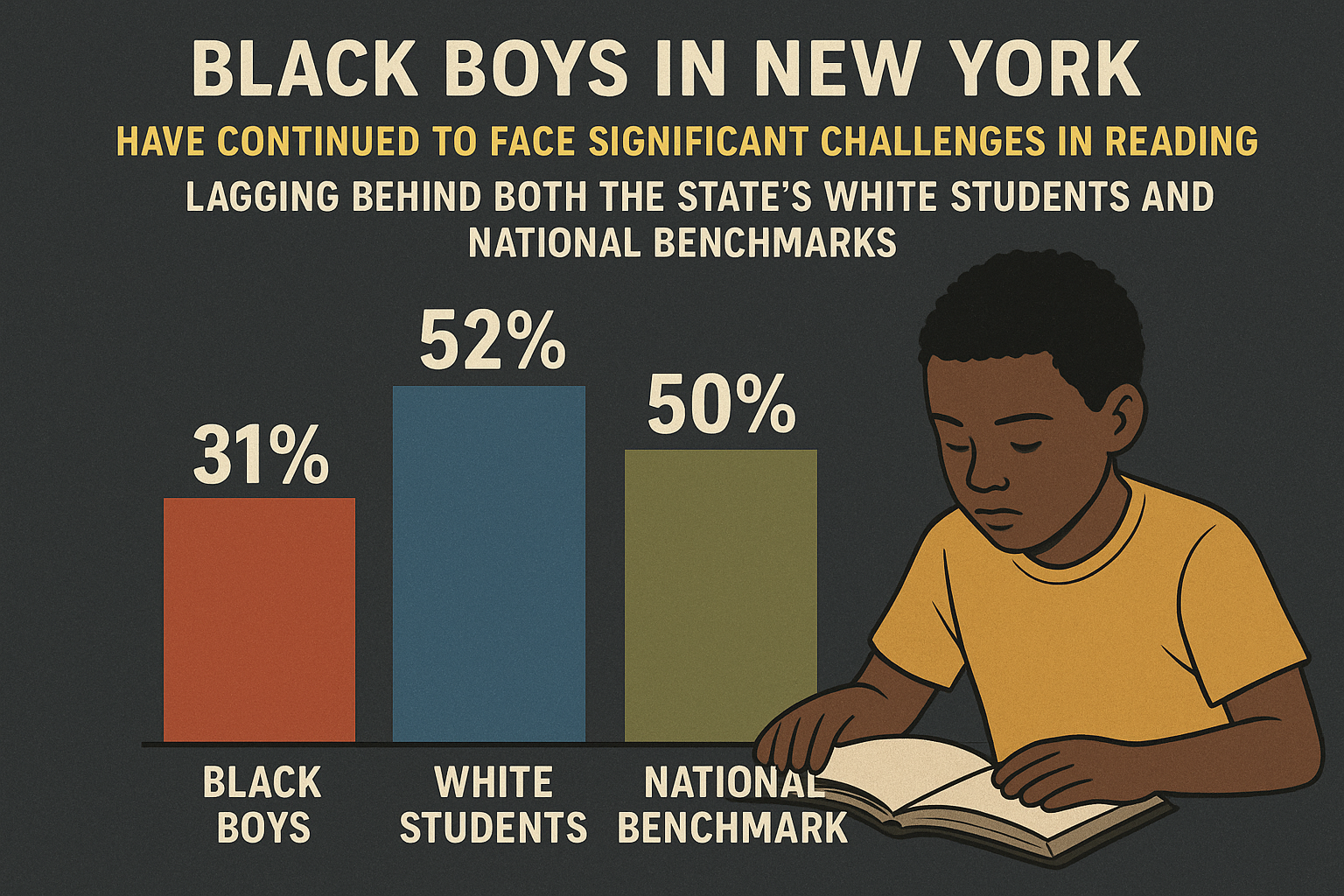
Over the past three years, Black boys in New York have continued to face significant challenges in reading, with performance lagging behind both the state’s White students and national benchmarks. With 2026 approaching, people can no longer place the blame solely on COVID.
According to the National Center for Education Statistics (NCES), in 2024, eighth-grade Black students in New York scored an average of 248 on the NAEP reading assessment, compared to 265 for White students—a 17-point gap. The state’s overall average score was 257, which matched the national average that year. In fourth grade, NCES reported that Black students in New York averaged 200, while White students averaged 223, reflecting a 23-point gap.
When looking at proficiency, NCES data from 2024 show that only 21% of Black eighth-graders in New York reached the Proficient or Advanced levels in reading, compared to 37% of White eighth-graders. For fourth grade, the divide was similar: just 17% of Black students were Proficient or above, while 37% of White students met that level. These figures place New York’s Black boys well below both their in-state peers and the national averages.
The Education Trust–New York added further context in a 2025 report, finding that 55% of Black fourth-graders and 42% of Black eighth-graders scored below the Basic level in reading. This shows that, despite years of attention, disparities remain deeply entrenched.
Comparisons with other states suggest that New York’s overall averages are not extreme, but its racial gaps remain among the widest. It is worth noting that NCES highlighted in 2024 that New York’s overall eighth-grade average (257) was statistically similar to about 40 other states.
The National Assessment Governing Board reported that between 2022 and 2024, fourth-grade reading scores for Black students declined by 8 points nationwide. The Manhattan Institute echoed this finding, describing a “historic low” in literacy for students of color. New York’s stagnant or declining scores mirror these national struggles, but its persistent racial gap stands out.
In sum, Black boys in New York continue to trail their peers in reading, with little progress made over the past three years. To change this narrative, caregivers must ensure that their children are reading at home. It is imperative to the future of our society that they do. Educators must also prioritize targeted literacy techniques rather than relying too heavily on programs. Culturally responsive instruction is equally essential.