



A society gains clarity when it respects the boundaries between politics and religion, fostering fairness and understanding for all.
This is where the Don Lemon episode moves beyond protest and into something more consequential. Lemon is a gay man married to a white man, and he publicly supports political and cultural doctrines that many religious traditions—including historic Christianity—have openly criticized as incompatible with their theological teachings. That fact alone is not the issue. A free society allows disagreement, dissent, and pluralism.
The problem arises when a political ideology that conflicts with religious doctrine no longer accepts disagreement and instead invades religious space to demand moral submission.
At that point, the boundary between political thought and religious belief is not blurred—it is erased.
Politics argues for laws. Religion answers to God. When activists enter a church to disrupt worship, they are no longer advocating policy outcomes; they are asserting that political ideology now has moral jurisdiction over religious conscience. That is not persuasion. That is supremacy.
The law has long recognized this distinction.
The law’s clear protections for religious worship aim to reassure the public that these sacred spaces are safeguarded from interference.
Federal law reinforces this protection. Under the FACE Act (18 U.S.C. § 248), it is a crime to intentionally obstruct, intimidate, or interfere with individuals exercising religious freedom inside a place of worship. The statute does not require violence. Deliberate disruption alone can be sufficient.
The Ku Klux Klan Act (42 U.S.C. § 1985)—written in direct response to coordinated intimidation of Black churches—prohibits conspiracies to interfere with constitutional rights, including the right to worship freely. When multiple individuals act together to disrupt a religious service, this law becomes relevant not symbolically, but legally.
State laws add another layer. Every state criminalizes disturbing a lawful assembly, disorderly conduct, and trespassinside private spaces, including churches. These are conduct-based violations, not speech restrictions. The Constitution protects belief and expression. It does not protect against intrusion.
This is where political rhetoric reveals its excess. When a movement reaches the point of purposefully disrupting worship inside a sanctuary, it is no longer advancing justice. It is displaying a loss of restraint so severe that it resembles either psychological instability or a deeper moral disorder. Historically, movements that abandon restraint in sacred spaces do not reform society—they fracture it.
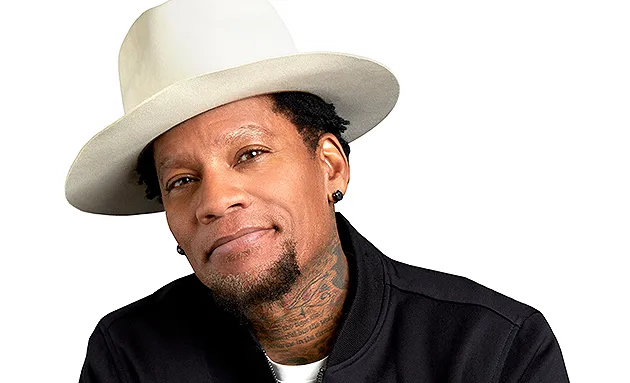
D.L. Hughley attempted to justify the disruption of a church service by saying, “Jesus turned over tables.” The implication is that interrupting worship is consistent with Christ’s example.
That argument fails on facts, context, and logic.
Jesus did not interrupt people praying.
He did not storm a worship service.
He did not confront congregants in the middle of devotion.
The biblical account describes Jesus acting in the outer courts of the Temple, where commercial exploitation was taking place—not worship. Money changers had turned a sacred space into a marketplace. Christ’s action was not political protest. It was divine authority restoring order to worship, not disrupting it.
Using that moment to excuse modern protesters interrupting prayer reverses the meaning of the scripture entirely.
Jesus was not demanding ideological submission from worshippers.
He was removing corruption so worship could continue.
That distinction matters.
This is where comedy, politics, and theology get dangerously confused. It is one thing to be a comedian, where exaggeration and simplification are part of the craft. It is another to consistently substitute liberal political dogma for serious analysis—especially when scripture is pulled out of context to justify conduct it never sanctioned.
When ideology comes first, context disappears. Scripture becomes a talking point rather than a moral boundary. And disorder is reframed as righteousness.
The outcome is predictable. Once people convince themselves that any cause can justify disrupting worship, no sacred space remains protected. Doctrine becomes optional. Boundaries become negotiable. And faith becomes a prop for politics.
That is not what Jesus modeled.
And it is not what a free society can survive.
The predictable outcome of ignoring these laws is not expanded freedom, but selective enforcement and eventual backlash. Once disruption is tolerated for approved causes, it will be used against disfavored ones. Black churches—historically targeted, surveilled, and attacked—will not be exempt.
While free speech is protected, the law distinguishes between peaceful observation and disruptive conduct; when protest actions cross into participation-such as entering a worship space to interfere-they lose certain protections, emphasizing the importance of lawful behavior.
Religious communities can engage in activism outside sacred spaces without compromising worship; respecting boundaries ensures that advocacy does not infringe on the sanctity of worship, maintaining both moral integrity and legal protections.
The question is not whether one agrees with Don Lemon’s politics or personal life. The question is whether politics now claims the right to override God inside God’s house—in violation of both moral tradition and written law.
History has already answered that question. Societies that fail to protect worship lose far more than quiet spaces. They lose the very framework that allows freedom to exist at all.