




There’s a version of Westchester that shows up like clockwork every few years.
It’s the version where your phone rings back.
Where elected officials are suddenly at the same block parties, fish fries, and Sunday services you’ve been attending for years.
Where familiar faces remember your name, ask about your family, and promise to follow up this week.
It feels warm.
It feels close.
It feels like access.
And then the votes are counted.
That version of Westchester quietly clocks out.
What replaces it isn’t hostility, it’s distance. Emails that once got same-day replies now take weeks, if they get answered at all. Conversations that used to happen standing on the sidewalk now require calendars, gatekeepers, and agendas. Presence becomes scheduled. Visibility becomes selective.
If you’ve noticed that shift, you’re not being ungrateful.
You’re being observant.
Election season, Westchester is built on proximity.
Governing season Westchester is built on distance.
And the space between those two realities is where trust begins to thin.
During campaigns, access feels abundant. The same faces appear repeatedly. Hands are shaken. Photos are taken. Notes are written. The word “we” is used generously. Community feels centered. Alignment feels mutual.
After elections, that closeness recalibrates.
Meetings move behind closed doors.
Appearances become seasonal.
Language shifts from “we’re working on it” to “there’s a process.”
Access that once felt relational becomes procedural.
This isn’t a character flaw.
It’s a system feature.
Political culture rewards visibility before power is secured and caution afterward. Once a seat is held, the risk calculus changes. Advocacy becomes something to manage instead of something to embody. Courage doesn’t vanish, it becomes conditional.
Communities feel this shift immediately, often in their bodies before their minds can articulate it.
You feel it when emails go unanswered longer.
When familiar faces stop showing up in the spaces they once shared with you.
When presence feels borrowed, not sustained.
When engagement becomes transactional instead of relational.
And here’s what often goes unspoken:
Trust moves at the speed of light. So does distrust.
The difference is how long each one is allowed to go unacknowledged.
No one announces the change.
It just happens.
This is how disillusionment grows quietly, not through dramatic betrayal, but through absence. Through redirection instead of engagement. Through the slow realization that participation does not always lead to power-sharing.
Across Westchester, public engagement has increased over the years, more listening sessions, more forums, more town halls, yet voter turnout in many local elections still hovers around 20–30%, and confidence in institutional responsiveness continues to lag. People are showing up. They are speaking clearly. They are naming the same concerns year after year.
What’s missing isn’t feedback.
It’s follow-through.
For communities that are already under-resourced and over-consulted, this pattern lands hard. It teaches people to expect visibility without accountability. To brace for alignment that expires once ballots are cast.
If you felt that shift before you could explain it, that wasn’t negativity or cynicism.
That was recognition.
And witnessing, especially when it’s shared, is medicine.
This is not a crisis of perception.
It’s a reckoning with patterns long felt and rarely named.
Elections are moments.
Governance is a relationship.
And relationships don’t survive on appearances alone.
If you’re tracking the difference between who shows up when power is being sought and who remains present once power is secured, you’re not wrong.
You’re paying attention.
And in Westchester, attention that is steady, shared, and unexhausted remains one of the most effective forms of power we have.
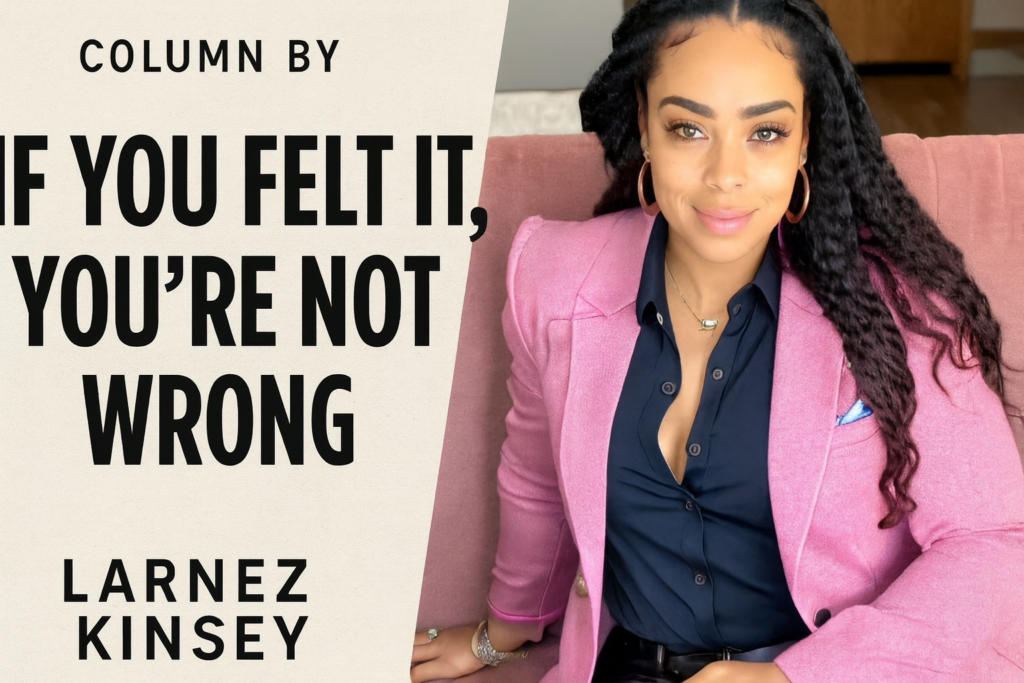
If You Felt That…
Black Westchester readers, we want to hear from you.
- Have you noticed a difference between how accessible leaders feel during election season versus after they’re in office?
- What shifts in presence, communication, or engagement have stood out to you the most?
Share your thoughts in the comments below.
Let’s see what patterns Black Westchester Magazine readers are noticing across our communities.








ALL TRUE! The difference between politics and government! However, WE have a responsibility to REMIND politicians once they become elected officials of their promises and unfortunately WE DON’T! We allow them to go quietly into the night!
Great article!!
Thank you for this. You’re right and it’s something I’m sitting with deeply. Elections feel communal, but accountability requires ongoing relationship. When we go quiet, the distance grows. This piece is really an invitation, to stay present, to remember what was promised, and to keep showing up even when the cameras are gone.
Thank you for this. You’re right and it’s something I’m sitting with deeply. Elections feel communal, but accountability requires ongoing relationship. When we go quiet, the distance grows. This piece is really an invitation, to stay present, to remember what was promised, and to keep showing up even when the cameras are gone.
Agreed Kisha, we been saying that on the website and on the radio show for over a decade!!!