



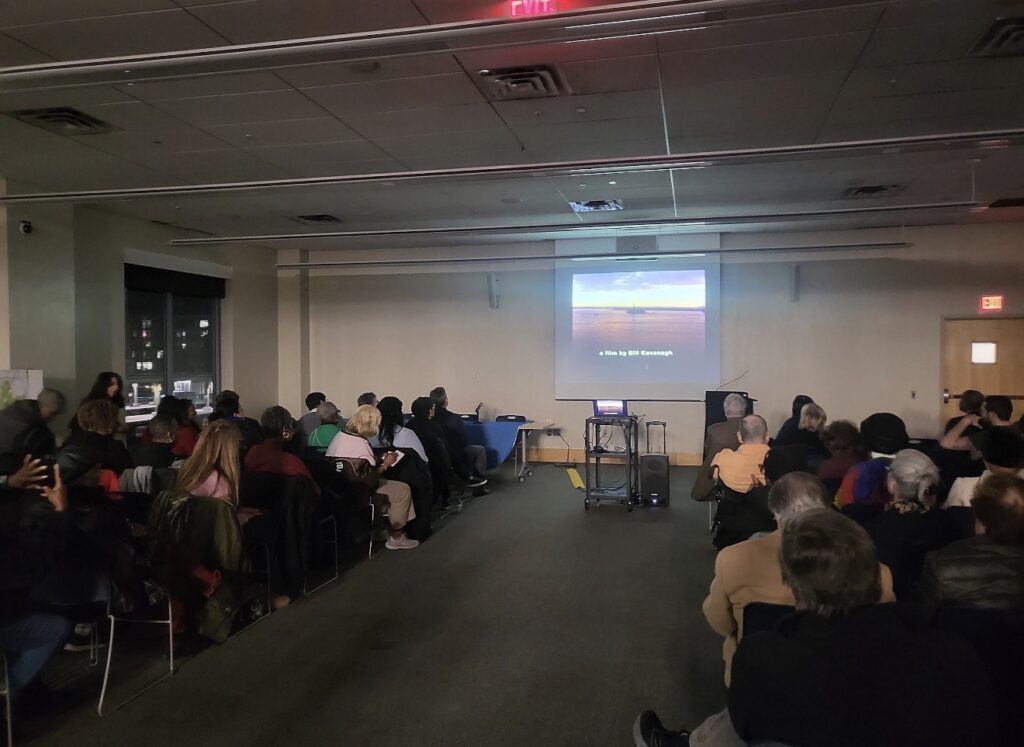
On January 15, 2026, at 5:30 p.m., the Yonkers Riverfront Library didn’t just host a film screening; it hosted a reckoning.
If you walked into that room expecting a tidy ending to the civil rights story, you came seeking closure in a space where accountability has yet to arrive. What you encountered instead was a mirror. A time machine. And a reminder that Westchester often calls injustice “history” when the work of reckoning feels too close.
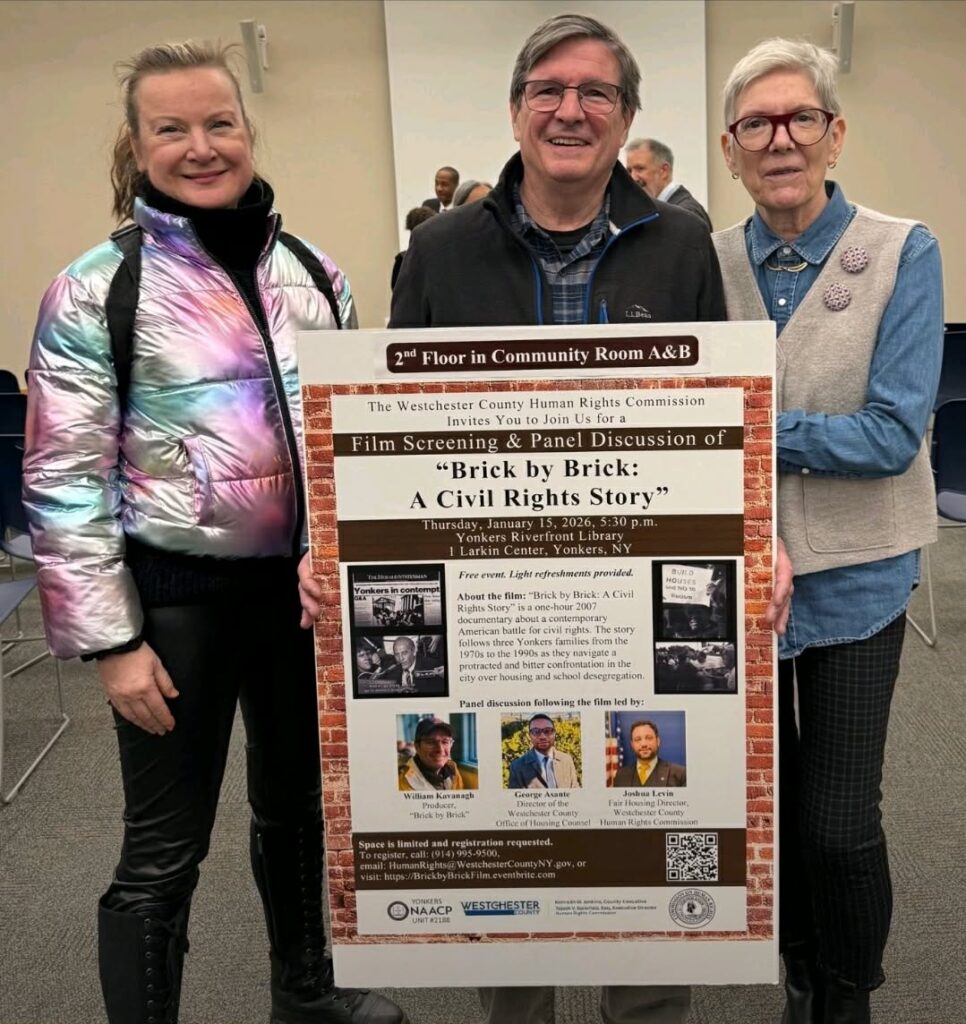
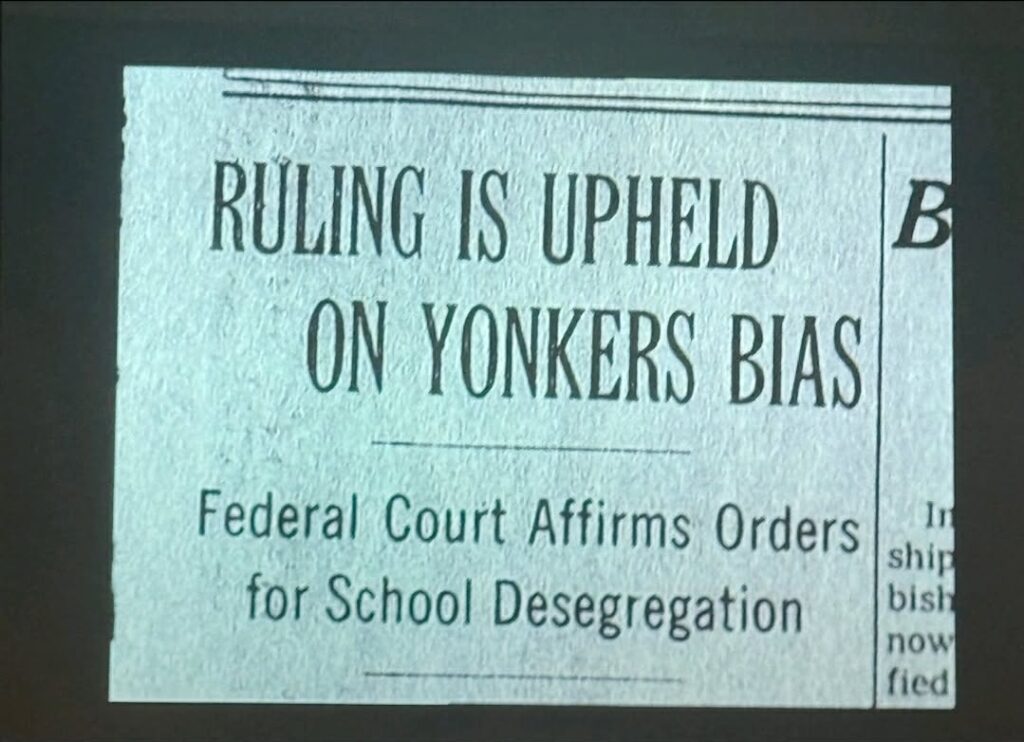
The event was sponsored by the Westchester County Human Rights Commission and the NAACP Yonkers Branch. The evening centered on a screening of “Brick by Brick: A Civil Rights Story,” a documentary that traces Yonkers’ prolonged and bitter fight for desegregation housing and education from the 1970s through the 1990s.

And before anyone could get cozy thinking, “Oh, that was back then,” the evening made one thing painfully clear: the “then” IS Now. It just learned how to speak in policy memos instead of protest chants.
Tejash Sanchala of the Westchester County Human Rights Commission opened the program by grounding the room in why this story still matters, not as nostalgia, but as unfinished business. It was Sanchala who also made clear that Majority Leader Andrea Stewart-Cousins is, quite literally, the “Mother of the Westchester County Human Rights Commission.” Institutions don’t appear out of thin air. Someone has to fight for them, fund them, defend them, and keep them alive when political will gets shaky.
This wasn’t simply a screening. It was a shared understanding in the room that policy only moves when people refuse to let it stand still.
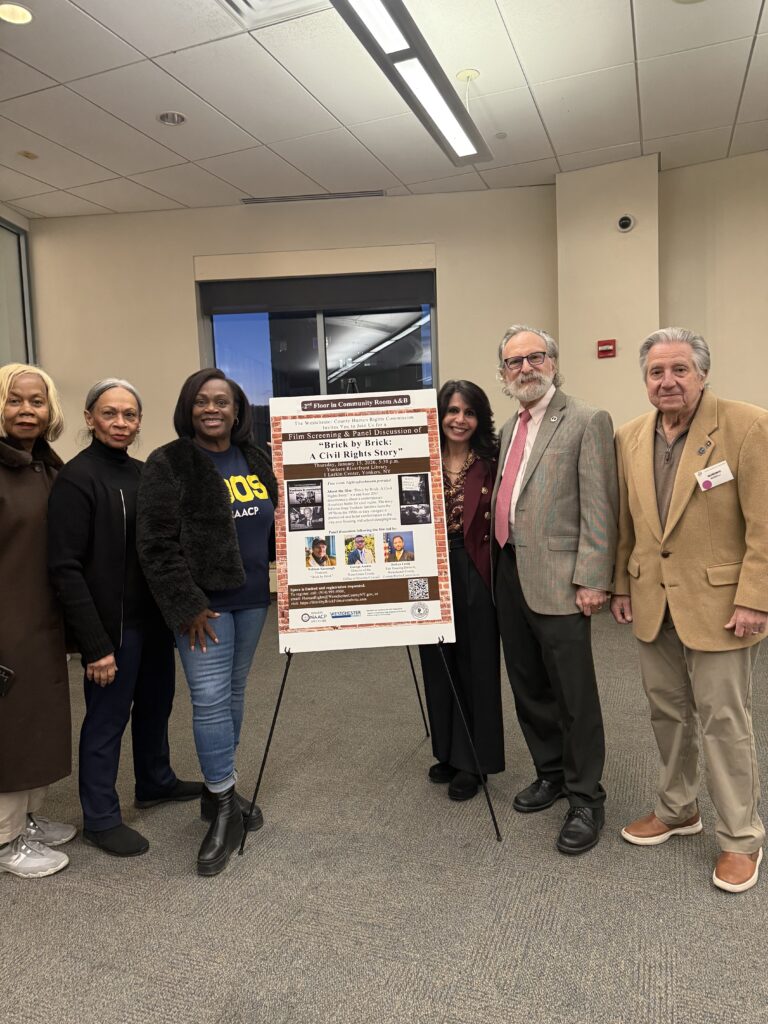
Kisha D. Skipper, President of the NAACP Yonkers Branch, one of the sponsors of the program, stepped fully into that moment. Not just supporting, but naming the ecosystem. She acknowledged fellow NAACP leaders who have been consistently active in housing justice initiatives: Janice Griffith of White Plains/Greenburgh and Aisha Cook of New Rochelle. Because movements don’t happen in silos and erasure thrives when we pretend that they do.
Kisha also made it clear that the Yonkers NAACP was not adjacent to this history; it was integral to it. She reminded the audience that the movement documented in Brick by Brick did not unfold without organized resistance and sustained advocacy from the Yonkers NAACP.
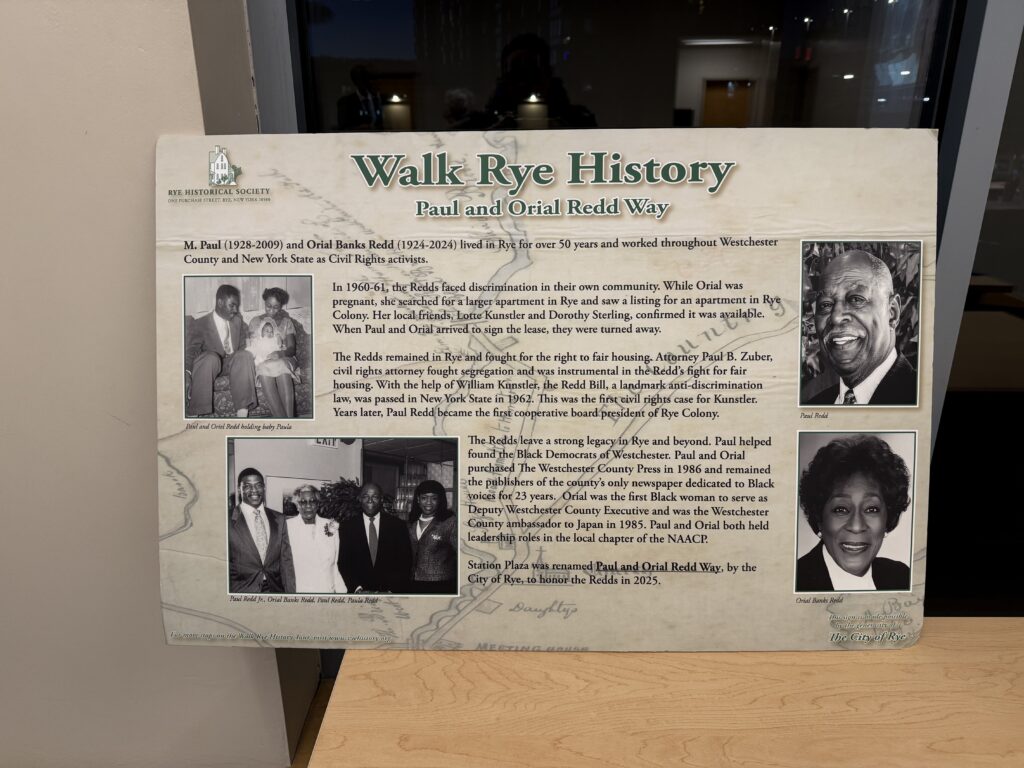
The film itself features Winston Ross, a pioneering President of the Yonkers NAACP from 1971 to 1978 and former Westchester Regional Director, whose leadership helped shape the city’s response to housing segregation during one of its most volatile chapters. By naming that legacy aloud, Kisha bridged past and present, reinforcing that today’s advocacy is not a reinvention, but a continuation of work built brick by brick by leaders willing to confront power directly.
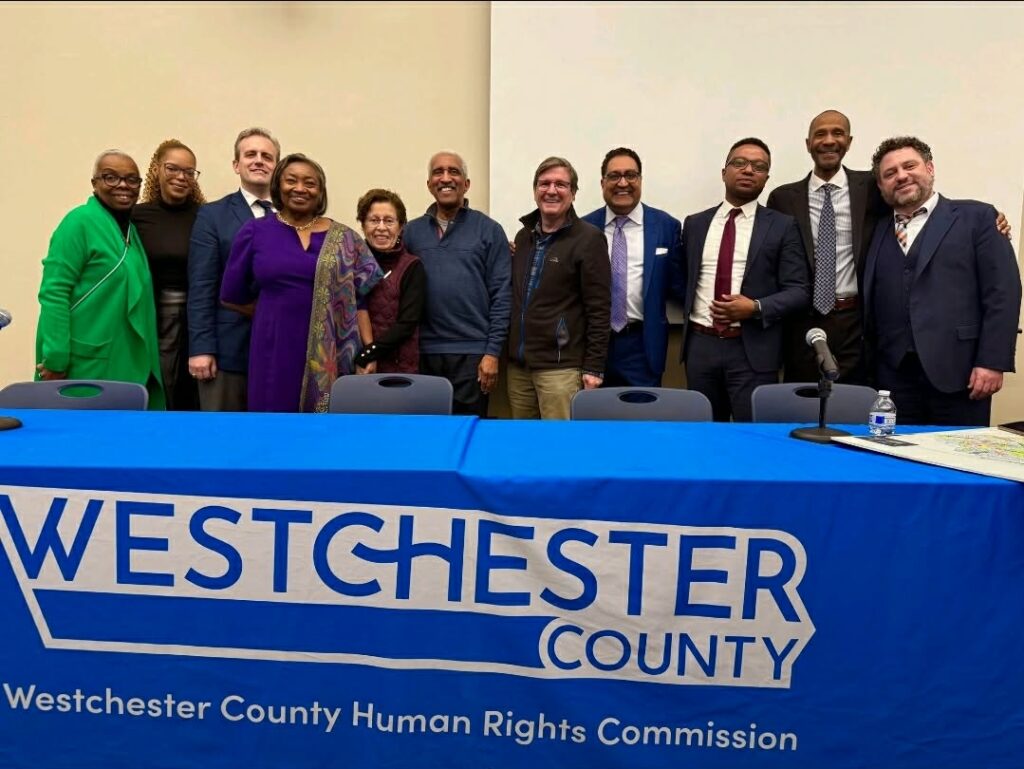
Majority Leader Andrea Stewart-Cousins echoed that sentiment, affirming the critical role the Yonkers NAACP has played then and now. She noted that the branch’s work has never wavered, only evolved and emphasized that under Kisha D. Skipper’s leadership, the Yonkers NAACP continues to meet today’s housing and human rights challenges with the same clarity, resolve, and moral urgency that defined its earlier work.
Also present were the people who show up when the cameras aren’t rolling: Michael Sabatino, Director of the Yonkers Human Rights Commission, and Michelle Sayegh, its Secretary. NY State Majority Leader Andrea Stewart-Cousins was in attendance, alongside representatives from her office Symra Brandon former Westchester County Legislator and Director of Community Affairs for Stewart-Cousins, Anne Willis and Jacob Weitzman, representative for Senator Shelley Mayer, Christine Fils- Aime, representative for Assemblyman Nader Sayegh, Chandra Sookdeo, and representative for Councilwoman Corazón Pineda-Isaac’s, Leslye Oquendo-Thomas.
Translation: this room mattered.
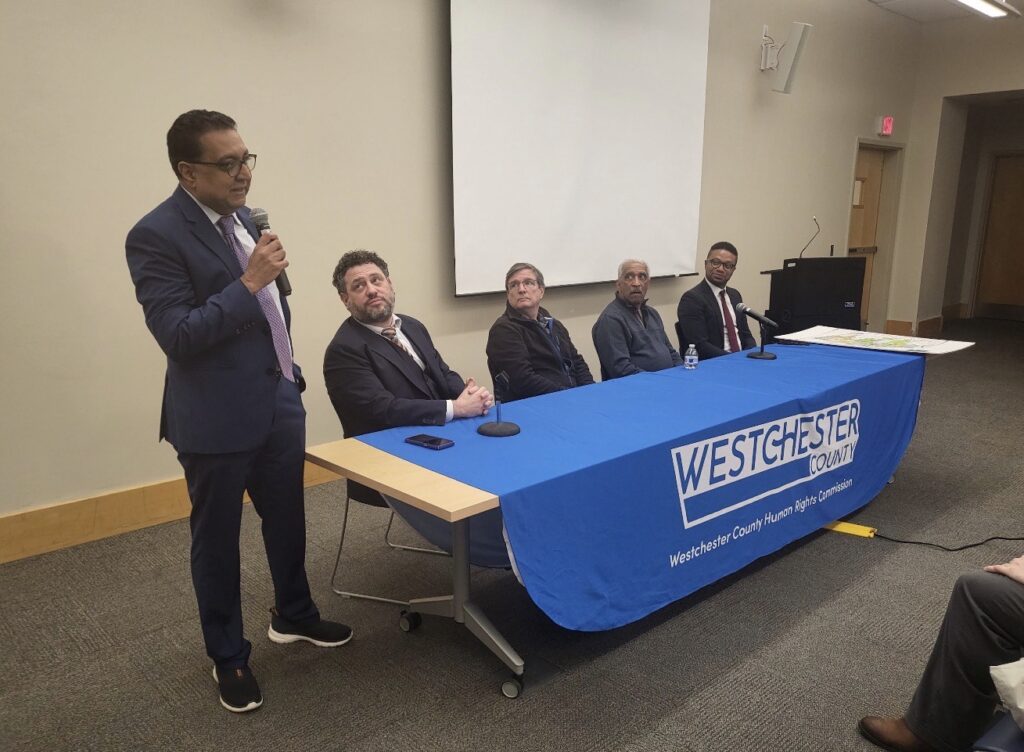
The panel itself reflected the many lanes this fight has traveled, legal, personal, political, and cultural.
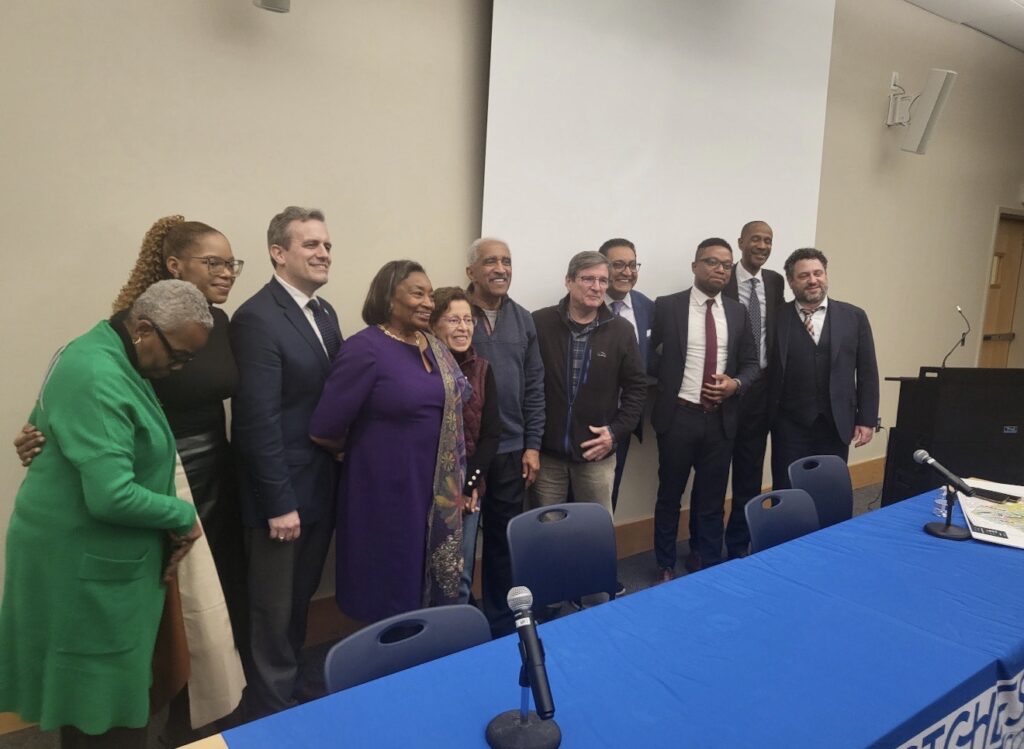
William Kavanagh, producer of Brick by Brick, reminded the audience that the film was never meant to be a victory lap. It was documentation. A warning. A record of what happens when communities are forced to litigate their humanity brick by brick while institutions opposing them wait comfortably for exhaustion to do the work.
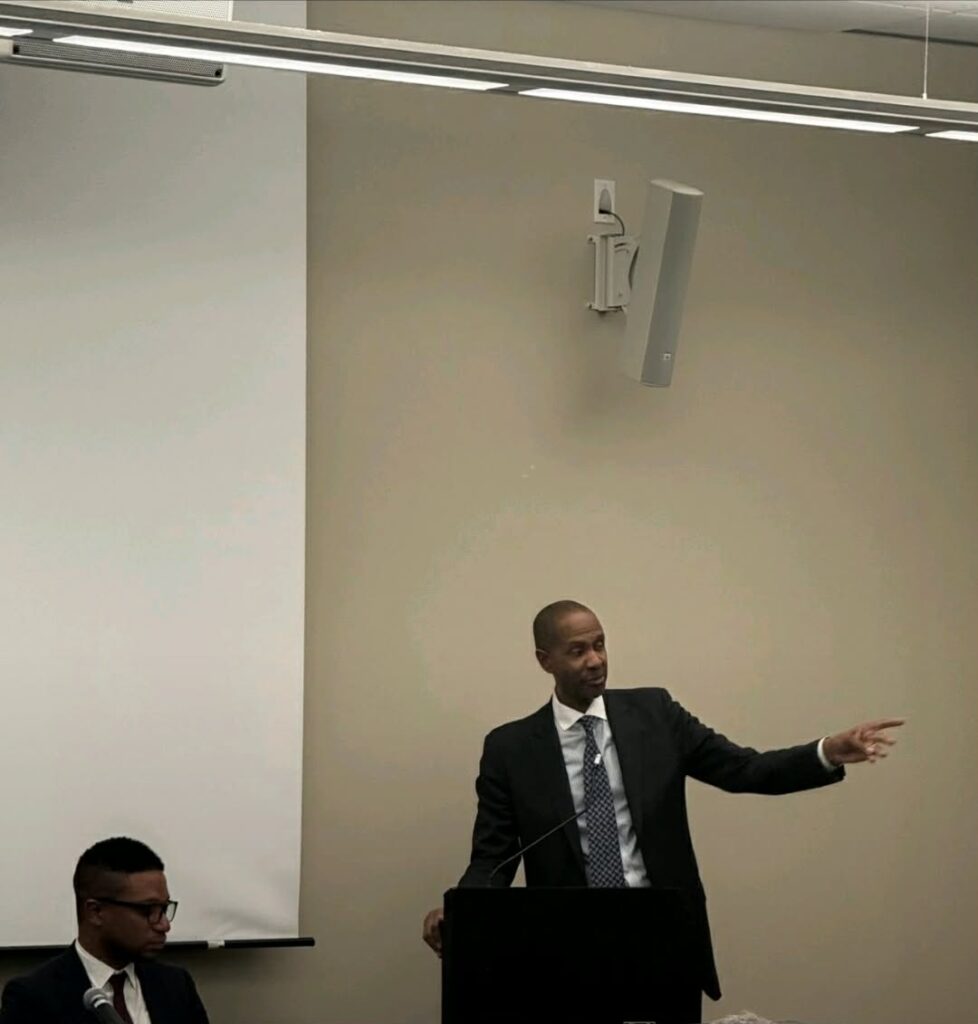
George Asante, Director of the Westchester County Office of Housing Counsel, grounded the conversation in present-day enforcement, pointing to how the legacy of segregation continues to shape where money flows, where it doesn’t, and who is expected to absorb the consequences quietly.
Then there was Gene Capello and when Gene spoke, the room leaned in.
Capello appears in the documentary, but during the panel he did something more important than narrate the past. He invited the audience to borrow his lens.
He posed a question that cut through policy language and landed squarely in the body:
“What’s more important than where you live?”
And then he answered it.
Where you live determines the opportunities you discover and the ones you never even get close enough to imagine.
Capello helped found FairHousingJustice.org, an organization rooted in that truth. Because housing isn’t just shelter, it’s access. It’s stability. It’s whether banks see you as “investable” or invisible.
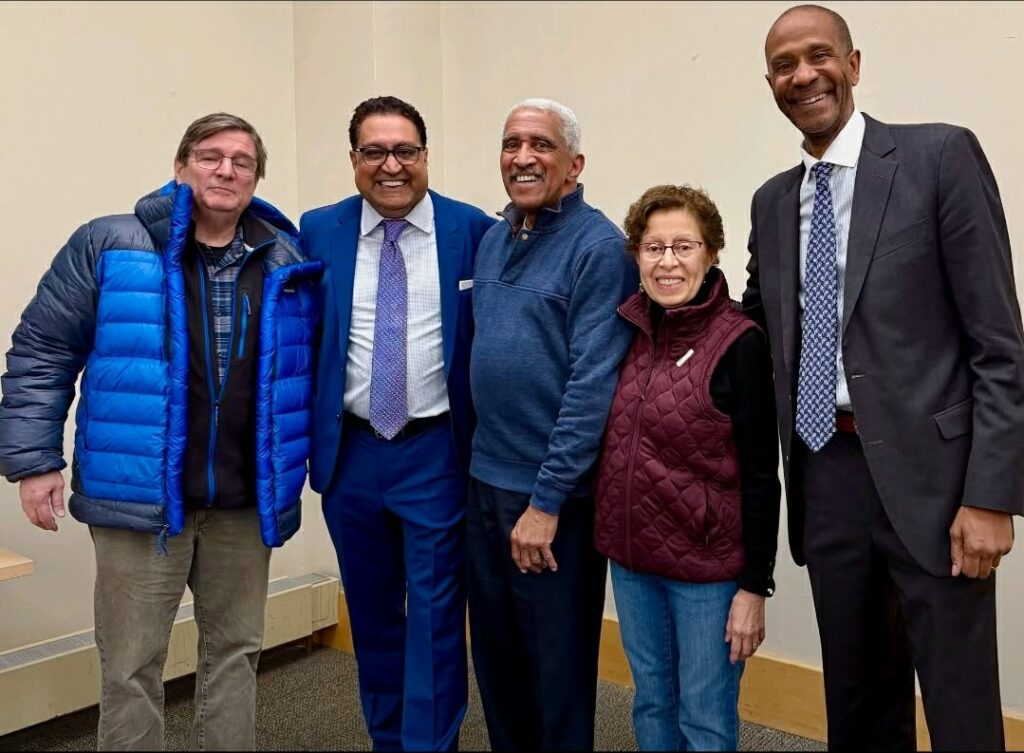
Before moving on, Gene paused to acknowledge someone sitting quietly in the audience, his wife, Doris Capello. He shared that she never left his side during the fight. Not through the legal battles. Not through the exhaustion. Not through the moments when pushing forward would have been easier to abandon. Doris, he said, was his fuel, the reason he kept pushing when the resistance felt relentless.

It was a reminder that movements aren’t powered by individuals alone. They’re sustained by unseen labor, by partnership, by the people who hold the weight when the spotlight isn’t theirs.
And the data backed Gene’s lens.
During the discussion, it was noted that most evictions in Yonkers occur in the 10701 zip code, one zip code absorbing a disproportionate share of displacement while other areas remain insulated.
That’s not coincidence. That’s design.
The panel addressed banking inequalities that mirror old redlining maps, where red-coded neighborhoods still experience disinvestment, while blue-coded areas enjoy an abundance of capital. Money flows freely where risk is perceived as low, and dries up where communities have long been labeled expendable.
This is how people lose homes without missing payments.
This is how instability becomes normalized.
This is how entire neighborhoods are treated as temporary.
And it’s not just local.
Racial covenants, once explicit, now disguised, still echo across the country, shaping who gets to keep their home, who gets pushed out, and who is forced to rebuild again and again without ever being allowed to settle.
Joshua Levin, also a panelist, spoke from another critical vantage point. While not featured in the documentary, he was actively engaged in housing and civil rights battles during the period when the film was developed and released. As he reflected on that era, the realization was unavoidable: today’s housing fights don’t feel like distant descendants of the past.
They feel familiar.
Different language.
Same delays.
Same resistance to equity dressed up as “process” and “procedure.”
What the panel ultimately made clear is that Yonkers and Westchester more broadly, is still negotiating with a history it has yet to fully resolve.
We didn’t just watch a documentary. We time-traveled. And when we came back to 2026, the buildings looked newer, the branding looked softer but the systems were standing in the same place.
The question now is whether moments like this stay in libraries or move into legislation.
And more specifically, whether the current administration is willing to do what equity actually requires: build decent-quality, truly affordable and low-income housing east of Sawmill River Road, not just where it’s politically convenient, but where it disrupts the crimson lines segregation was designed to protect.
Fair housing cannot remain concentrated west of those crimson lines that have dictated opportunity for generations. If access to stability, quality schools, green space, and economic mobility continues to stop at Sawmill Road, then we are not correcting history, we are maintaining it with better language.
This is the work in front of us.
Not studies.
Not symbolism.
Construction. Commitment. Political courage.
That’s the uncomfortable truth Brick by Brick leaves you with.
Progress isn’t linear. Justice isn’t guaranteed. And history doesn’t repeat itself, it just waits for us to get tired.
The real question isn’t whether Yonkers has changed.
It’s whether we’re finally ready to finish what people before us started or if we’re going to keep applauding stories about courage while avoiding the courage it takes to disrupt what still benefits from inequality.
Because brick by brick doesn’t just describe how injustice was built.
It’s also how it gets dismantled.
And that part?
That’s on us.