




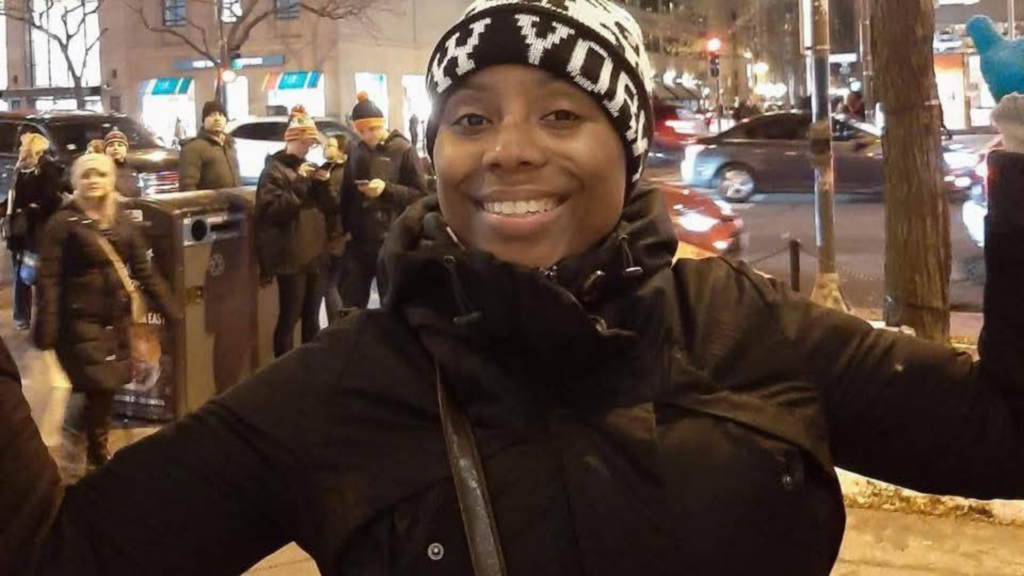
When Kiara Jenkins, a 36-year-old Black mother of five, was shot multiple times and left dead in a Chicago alley while heading to early-morning church, her loss was quietly ignored, leaving Black families feeling unseen and unheard. Her children lost their mother. A community absorbed another silent grief.
There were no mass protests.
There was no national media cycle.
You did not see it debated on CNN, MSNBC, or Fox News.
You did not hear it discussed by so-called “Black voices” on liberal media platforms.
Joy Reid did not lead with it. Don Lemon did not dedicate a segment to it. Liberal Black podcasters did not mobilize their audiences around it. Abby Phillips did not have a roundtable discussion about it on your CNN show.
Not because it wasn’t tragic—but because it didn’t serve an agenda rooted in systemic biases that prioritize certain lives over others.
Now compare that silence to what is happening today when white civilians are killed during ICE or immigration-related enforcement actions. Those deaths immediately dominate headlines. They spark protests. They become national moral emergencies. Media panels debate federal power, civil rights, and enforcement policy around the clock.
The same outlets that ignored Kiara Jenkins suddenly find their voices.
This contrast exposes an uncomfortable truth: media outrage is not driven by the value of life, but by how well a death fits a narrative that benefits certain power structures.
Black pain—when it comes from within Black communities—is treated as usual, expected, and unworthy of national disruption. It does not interrupt political coalitions. It does not threaten donor pipelines. It does not fit neatly into the white liberal framework that dominates modern media activism.
So it is ignored, but recognizing this pattern can motivate Black communities to demand attention and change, fostering a sense of collective responsibility and hope.
But when death can be framed as a consequence of federal enforcement—especially immigration enforcement—it becomes politically valuable. It reinforces pre-existing ideological positions. It activates protest culture. It justifies endless airtime.
In that process, Black Americans are subtly conditioned—through repetition and omission—to accept other people’s pain as more urgent while remaining silent about their own, eroding their agency.
This is not solidarity. It is conditioning.
The message is clear: Black life matters most when it can be used to support someone else’s political priorities. A Black mother murdered on her way to church does not qualify. Her death raises questions no one wants to answer—about failing cities, broken leadership, cultural decay, and policies that protect narratives instead of people.
Those conversations threaten the political status quo. So they are avoided.
Liberal Black media figures often present themselves as voices for the community, but their silence here can make us feel overlooked and question whether our concerns truly matter in the broader media landscape.
That agenda has no space for Black accountability, Black self-preservation, or Black-centered priorities—only for Black participation when it serves broader ideological battles.
So Kiara Jenkins is mourned privately, while others are mourned publicly.
That is not justice. It is a hierarchy.
A hierarchy where some deaths are worth shutting down cities for, while others are barely worth mentioning. Where Black suffering is only visible when it can be weaponized for causes that are not our own.











Thankyou