






Westchester’s Future in Focus: Jenkins Delivers 2026 State of the County, Highlights Progress and Priorities
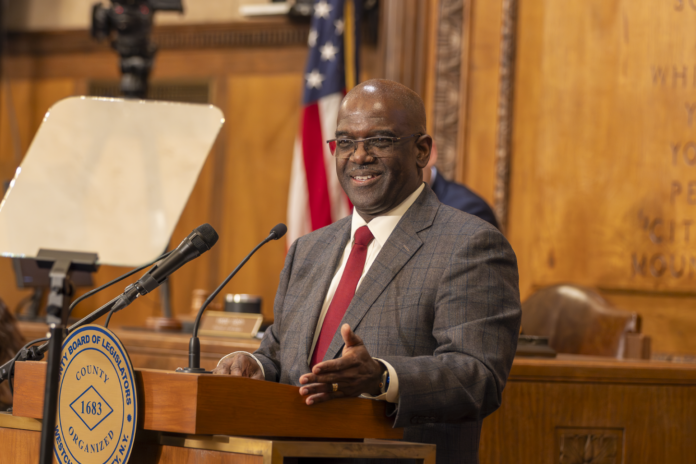
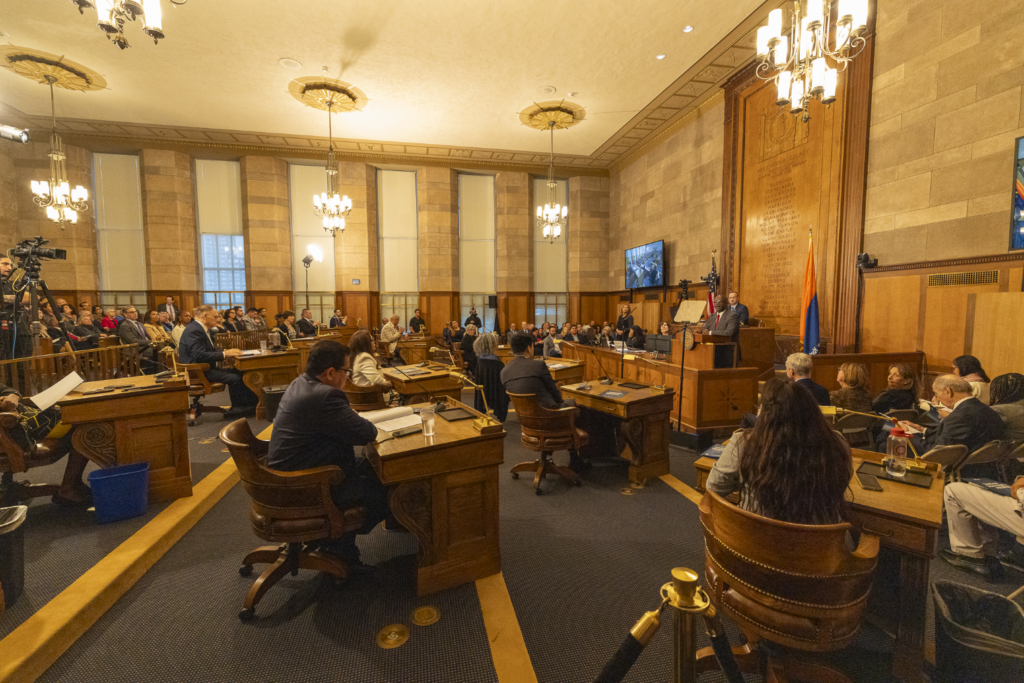
(White Plains, NY) – On Wednesday, May 6, Westchester County Executive Ken Jenkins gave his second State of the County Address in the Board of Legislators Chambers. He outlined a year of quantifiable progress, ongoing investment, and a people-first approach to governance that is focused on housing, affordability, public safety, mental health, and economic growth.
Speaking at the Michaelian Office Building before the Board of Legislators, led by Chairman Vedat Gashi, a packed audience of elected officials, community leaders, and residents, Jenkins struck a tone of progress while acknowledging the challenges that still lie ahead.
Westchester County Department of Correction Sergeant Joetta Crump played the National Anthem while Tom Roach led the Pledge of Allegiance from the podium. Thereafter came a succession of opening prayers that were both varied and significant. The first invocation was given by Rabbi Leora Frankel, president of the Westchester Board of Rabbis, and then by Arun Bhagirath of the Hindu Temple of the Tri-State. The interfaith contemplation was continued by Westchester Muslim Center Imam Shaffieq Chace, and the prayer portion was concluded by Westchester County Director of Faith-Based Initiatives Rev. Kym McNair.
CE Jenkins was brought to the platform by Majority Leader Judah Holstein and Minority Leader Margaret A. Cunzio.
In the opening of this speech, Jenkins said: “The State of our County isn’t something I read on a page—it’s something I see in the people I meet every single day. Because when you meet the people of Westchester, you understand the state of this County.”
The County Executive started off the State of the County address, highlighting the County’s finances. Westchester County once again earned the highest possible “AAA” bond ratings from both S&P Global Ratings and Fitch Ratings, reflecting strong financial management, healthy reserves, and long-term fiscal stability. Jenkins highlighted the county’s continued economic momentum, pointing to job growth, small business support, and ongoing development projects as signs that Westchester is moving in the right direction. He emphasized the importance of building an economy that works for everyone, noting that expanding opportunities for local entrepreneurs and strengthening workforce development remain key priorities for his administration.
Additionally, Jenkins addressed the tax increase head-on. He said, “I made a promise to you that I would always lead with honesty and with reality, not politics. And the truth is this: it would be irresponsible—truly irresponsible—for me to hold the line or cut taxes while the needs of our residents are growing every single day.”
Jenkins pointed out that the average annual impact of the tax increase is $60 a year, adding, “it was the right thing to do, and I appreciate you all supporting this decision.”
Public safety was another central theme of the address, with Jenkins reaffirming the county’s commitment to supporting law enforcement while also investing in community-based strategies that address the root causes of crime. He spoke about the importance of collaboration between county agencies, municipalities, and community organizations to ensure that neighborhoods across Westchester remain safe and supported.
The County reported significant declines in crime across all seven-index categories in 2025 compared to 2024: Overall crime down 17%, Violent crime down 25%, and Property crime down 15%.
In 2025, compared to 2024, crime is down across the board. All of the seven major index crime categories saw a decline, from violent crimes like murder, rape, robbery, and aggravated assault, to property crimes including burglary, larceny, and motor vehicle theft. Additionally, Mount Vernon was one of five police departments in New York State to report zero shooting incidents from January through March 2026. Jenkins thanked Governor Kathy Hochul for her support, as well as the Westchester County Department of Public Safety and all the local municipal departments.
Housing affordability and access also took center stage, as Jenkins addressed one of the county’s most pressing issues. He discussed ongoing efforts to expand affordable housing options, streamline development processes, and work with both public and private partners to meet the growing demand. The County Executive underscored that ensuring residents can live and remain in Westchester is critical to the county’s long-term stability and growth.
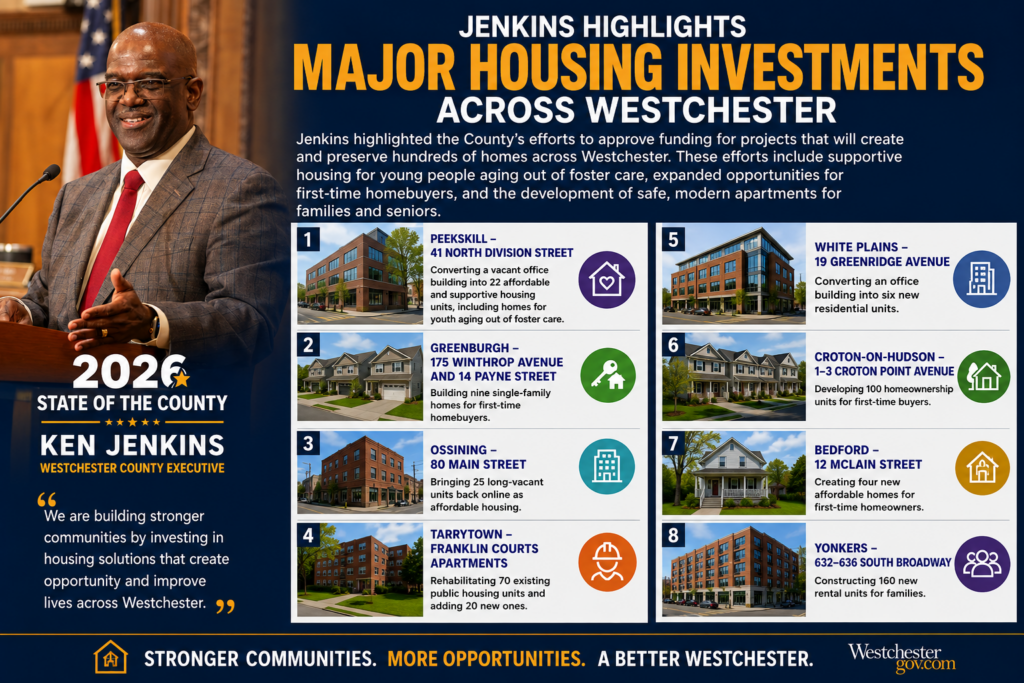
Jenkins also pointed to investments in infrastructure, health services, and youth programming as part of a broader strategy to strengthen communities. From improvements in transportation and public facilities to expanded services that support families and young people, the address made clear that the administration is focused on both immediate needs and long-term impact.
He highlighted the County’s continued prioritization of care for residents facing some of life’s most difficult challenges – those who are struggling, vulnerable, or seeking a second chance. During the speech, one such initiative highlighted was the County’s Lives Forward Program, a partnership between the Department of Community Mental Health and the Department of Corrections. The Program provides training for justice-involved individuals living with mental health and substance use challenges, preparing them to become dual-certified peer counselors. Since its launch, multiple cohorts have graduated, with participants moving into meaningful roles supporting others on their path to recovery.
Among those graduates is Alfredo Roldan, who, after overcoming significant personal challenges, successfully completed the program, passed New York State certification exams, and now serves as a peer counselor with Family Services of Westchester. His journey reflects the Program’s impact and the broader potential for recovery and reintegration.
The Westchester County Mental Health Safety Net Clinic was showcased, restoring the County’s direct role in providing outpatient mental health services for the first time in nearly 15 years.
The County also expanded outreach and awareness of the 988 Suicide & Crisis Lifeline, a free, confidential, 24/7 resource, through partnerships with local businesses, community organizations, and the Department of Public Works and Transportation.
Jenkins said, “Government is measured by whether we are willing to help people rebuild their lives. This is what progress looks like.”
Underscored was also the County’s commitment to small businesses. Over the past five years, the County’s MWBE initiatives have facilitated more than $250 million in contracts, expanding opportunity across Westchester. The County is investing in its workforce through initiatives like Connect Westchester and County-wide job fairs, connecting residents directly to employers. Programs like the Element 46 Tech Accelerator are supporting entrepreneurs as they launch and grow in Westchester.
Westchester also secured an approximately $820,000, three-year grant from The Taft Foundation to launch the Partnership for Inclusive Internships Program with The Arc Westchester Foundation and AHRC New York City, expanding opportunities for individuals with disabilities.
The County continues to strengthen its partnership with Rensselaer Polytechnic Institute (RPI), building a direct pipeline from education to employment in high-growth fields like engineering, AI, and quantum computing. A new degree completion program with RPI and SUNY Westchester Community College allows students to earn a bachelor’s degree without ever leaving Westchester.
Jenkins said: “Let me be clear – while we are proud to partner with globally respected institutions like RPI, we are equally proud that we already have outstanding colleges and universities right here in Westchester that are shaping futures every single day. Institutions like Pace University, Mercy University, Iona University, Sarah Lawrence College, Purchase College, and SUNY Westchester Community College are producing talent, driving innovation, and opening doors of opportunity for students across our County. Westchester is not waiting for the future to arrive – we are educating it right now.”
Jenkins closed his address by returning to the central theme of his administration. He said: “If anyone asks what the State of our County is—tell them it is not found in a report, a spreadsheet or a speech… The State of our County is our people… your struggles, your resilience, your hopes—and your voices.
“The State of our County is strong. The State of our County is hopeful. And the State of our County is you.”
He called on residents to move forward together—with courage, with compassion, and with confidence in what can be built side by side. In a moment that brought both pride and a sense of summer nostalgia into the room, Jenkins closed by looking ahead to something generations of Westchester families hold dear—the reopening of the iconic Dragon Coaster at Playland Park this summer.
“I’ll meet you at the Dragon Coaster,” he said—ending the night on a note of optimism, tradition and the shared experiences that continue to define Westchester County.
The State of the County is always more than a speech—it’s a statement of direction. And for Jenkins, this address was about reinforcing a message: progress is happening, but the work is far from done. The real question moving forward isn’t just what was said on that stage—it’s how those priorities translate into results for the people of Westchester. Because at the end of the day, residents aren’t just listening for promises… they’re watching for progress.
You can read Jenkins’ 2026 State of the County Address in its entirety here