

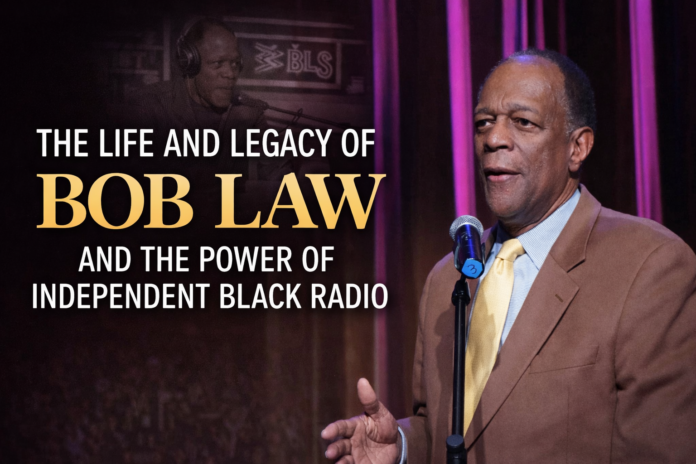




There are voices you remember because they were popular. And then there are voices you remember because they were necessary. Bob Law’s legacy exemplifies the latter, emphasizing his vital role in Black media.
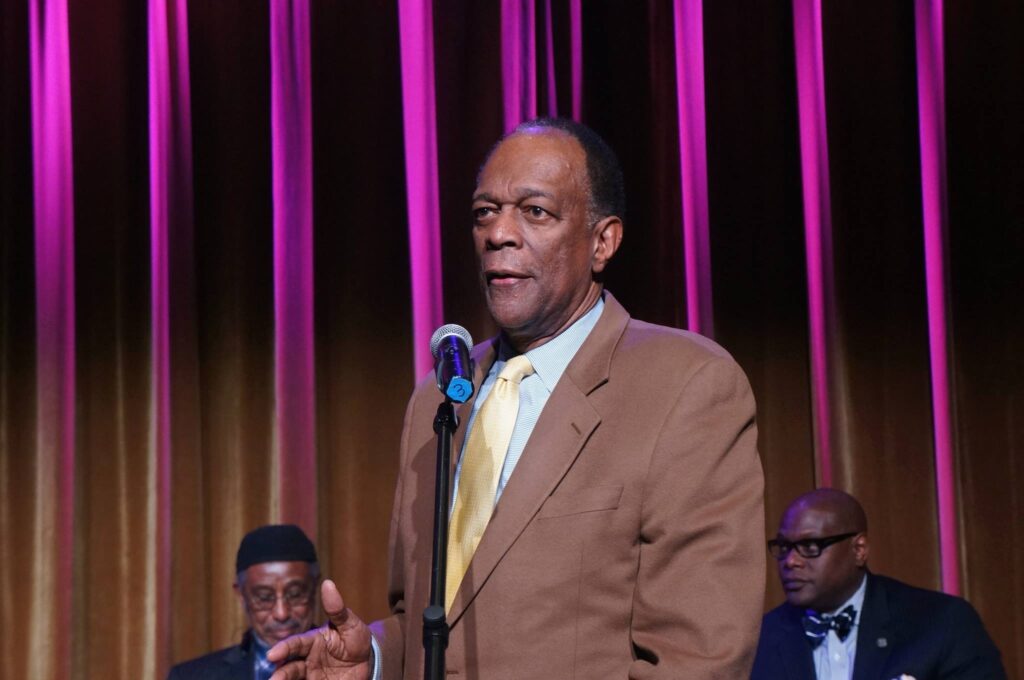
For decades, Bob Law did more than host a radio show; he built a platform where Black thought could exist without permission. At a time when mainstream media often filtered, softened, or ignored Black perspectives, his work on Night Talk created something rare: a space where truth could be spoken plainly, debated honestly, and challenged intellectually.
That is what made him influential. Not just the microphone, but what he chose to do with it.
Independent Black radio, as Bob Law practiced it, was never about entertainment alone. It was about ownership of narrative. It was about refusing to let others define the problems or the solutions facing Black communities. His show became what many described as a “political classroom,” where listeners were not treated as consumers, but as thinkers.
That model matters more than ever today.
Because when the media is dependent, the message becomes compromised. Sponsors influence tone. Political alliances shape coverage. Algorithms reward emotion over substance. And in that environment, truth becomes negotiable.
Bob Law rejected that structure.
He understood something that too many still ignore: if you do not own your platform, you do not control your voice, which should inspire your audience to feel empowered to take control of their own narratives.
That belief didn’t just stay on the airwaves; it translated into action. For many of us coming up in media, Bob Law was not a distant figure. He was accessible. He was instructive. And in my case, he was a mentor.
Bob Law gave me a platform in Harlem, placing me in rooms that mattered. Churches, community forums, and spaces where real conversations were happening about police reform, crime, and violence. He didn’t just introduce me—he validated my voice in front of the people. And that matters.
That opportunity was meaningful, but the validation he gave me made me feel truly seen and valued, which I hope inspires others to seek and offer similar recognition.
I will always be thankful for him giving me that opportunity.
As far as radio, he taught me something even more important. He taught me that my voice was valuable—not because it was popular, but because it was necessary. That independent Black radio had to be exactly that: independent, Black, and uncompromising on the issues that affect our families and our community.
He didn’t believe in soft language when hard truths were required. He didn’t believe in waiting for permission to speak about issues already affecting our lives. And he didn’t believe in building platforms that answered to anyone other than the people they were meant to serve.
That message stayed with me.
Because what he was really saying was this: without independent media, there is no independent thought. And without independent thought, there is no independent community.
Today, as we look at the current media landscape, his warnings feel less like opinion and more like a diagnosis. Too many platforms claim to speak for Black America while operating within systems that limit what can actually be said. Too many voices are amplified not because they are right, but because they are acceptable.
Bob Law built something different.
He built a space where being correct mattered more than being comfortable.
His influence on Black independent radio is not measured simply by ratings or reach. The number of people measures how he pushed them to think for themselves. The number of platforms he inspired to exist outside of controlled narratives. The number of conversations he forced that others were afraid to have.
And for those of us who were fortunate enough to learn from him, his legacy is personal.
He didn’t just leave behind broadcasts. He left behind a blueprint.
Build your own platform.
Control your own message.
Speak truth, even when it costs you.
That is the standard he set.
And now the responsibility shifts.
Because the question is no longer what Bob Law did.
The question is no longer what Bob Law did but who is willing to carry his principles forward to sustain independent Black media and thought.
Many of us stand on his shoulders. His absence will be felt, but the task remains: to continue building and defending independent Black media in his honor.