








America Is Preparing for the AI Economy — But Many of Our Schools Are Not Even Preparing Students for Today
Artificial intelligence is quickly becoming the next major industrial expansion in the United States. Massive data centers, power plants, and electrical infrastructure are being planned across the country to support the computing power required for AI.
But while policymakers and technology companies are preparing for the next economic era, many school systems—particularly in Black communities—are struggling to prepare students even for the current one.
A recent comparison of high schools across Westchester County illustrates the problem clearly. The data compares graduation rates, SAT scores, college readiness, class sizes, and economic disadvantage across dozens of school districts. HIGH-SCHOOLS_Public
The numbers reveal two completely different educational realities operating only a few miles apart.
In some districts, students graduate from high schools with SAT scores that place them among the most competitive in the country. Schools such as Scarsdale report SAT averages around 697 in reading and 716 in math. Edgemont reports averages near 700 reading and 720 math, while Bronxville averages approximately 690 reading and 690 math.
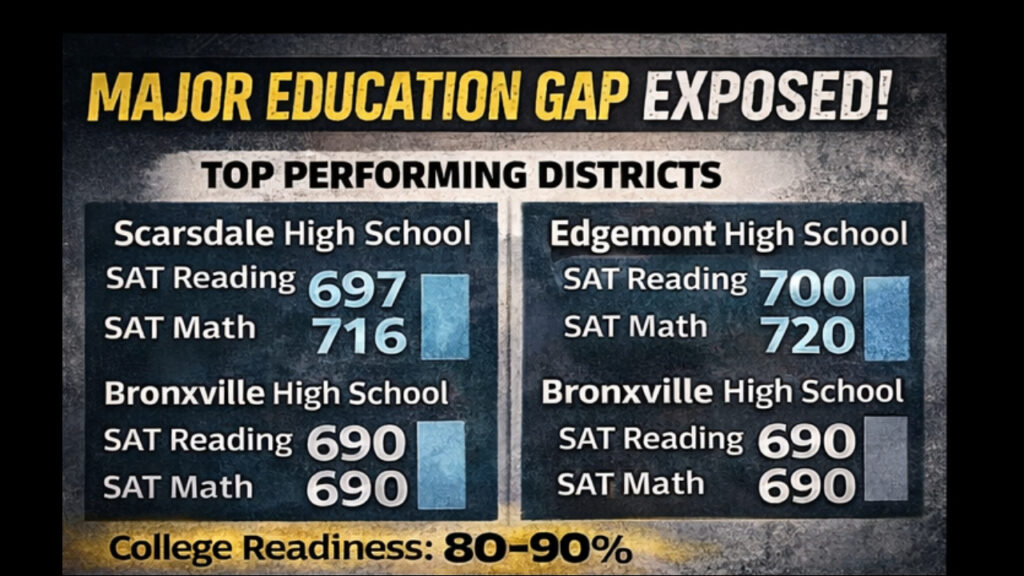
These scores reflect school systems where college readiness is the expectation, not the exception.
But the picture changes dramatically when looking at several urban districts.
Mount Vernon High School reports average SAT scores of 520 in reading and 500 in math, with a college readiness index of just 17.8 percent.
Several Yonkers schools report even lower outcomes. Schools such as Gorton, Lincoln, and Riverside show SAT averages around 465 in reading and 435 in math.
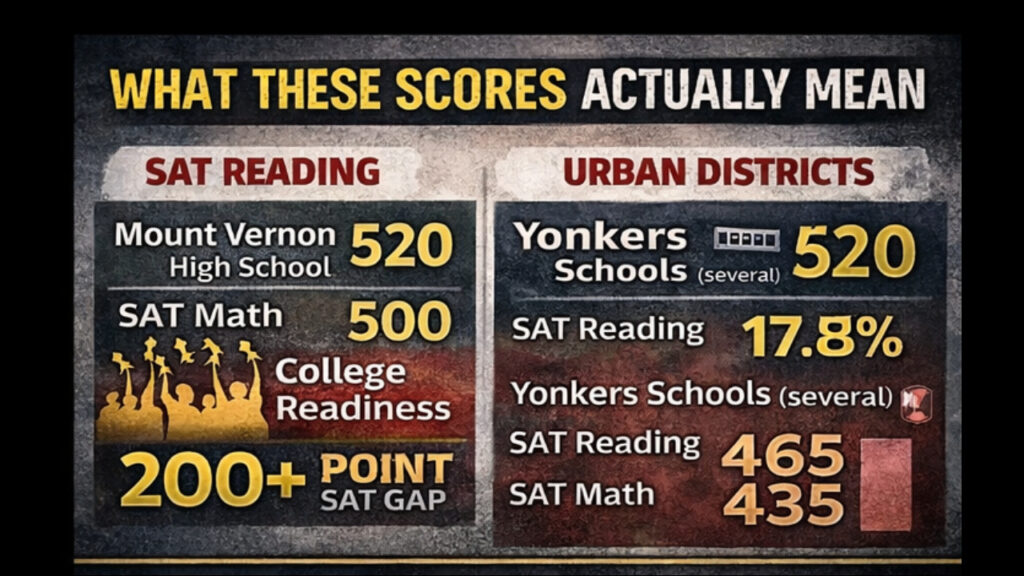
That represents a gap of more than 200 points compared to some of the county’s top-performing districts.
This is not simply an academic difference. It is a difference in preparation for the future economy.
Students graduating from schools where average SAT scores fall in the mid-400s are entering a labor market that increasingly demands technical literacy, problem-solving skills, and specialized training.
Yet many of these same schools offer limited exposure to the skilled trades that could provide viable economic alternatives.
At the same time, another uncomfortable reality must be addressed.
In many Black communities, public conversations often focus on national political drama, celebrity scandals, and controversies dominating the headlines. Recently, many people have spent days debating the release of the Epstein files and what they might reveal.
But a difficult question must be asked.
How concerned should we be about documents and political scandals when many of our own children are graduating from school without the reading and comprehension skills necessary to fully understand what those files even say?
We are debating national intrigue while a growing number of students in our own communities are leaving school functionally below grade level.
This is not simply a policy failure. It is a priority failure.
For decades, the national conversation around educational disparities has often focused on racism as the primary explanation. But in 2026, that explanation alone does not fully address what the data is showing.
The more immediate problem is that many school systems serving Black communities are operating under an outdated educational model that has failed to adapt to the needs of the students they serve.
The economy has changed dramatically over the past twenty years.
Industries today demand technical skills, mechanical knowledge, electrical expertise, and specialized training in fields that did not exist a generation ago. The expansion of artificial intelligence infrastructure will require electricians, HVAC technicians, plumbers, welders, network technicians, and power plant operators.
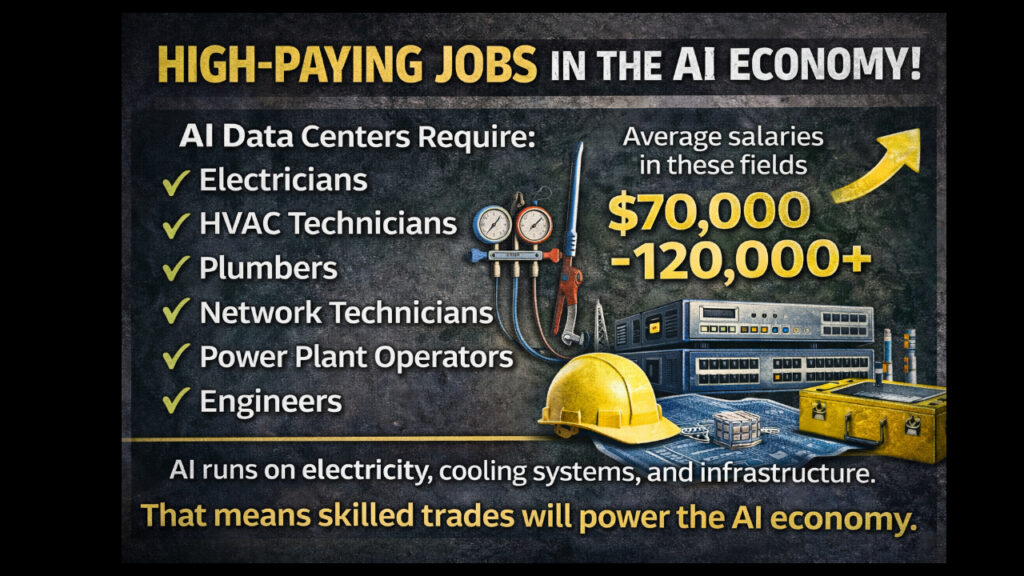
Yet many urban school systems continue to focus almost exclusively on pushing students toward four-year college degrees.
The result is predictable.
Students who struggle academically are often left without viable alternatives. Trade programs that once provided pathways into skilled professions have disappeared from many school districts. Career and technical education programs remain limited, underfunded, or disconnected from the industries that are actually growing.
In other words, students are being prepared for a labor market that no longer exists.
Artificial intelligence may dominate the headlines, but the infrastructure required to support it will depend on skilled workers. Data centers require cooling systems, electrical networks, ventilation systems, and constant maintenance.
These are not temporary jobs. They are stable industries that can provide middle-class incomes without requiring a four-year college degree.
But those opportunities will only benefit communities that prepare their students to participate.
If schools in Black communities continue operating under outdated educational assumptions while the economy moves in a different direction, the results will be predictable.
The AI economy will still grow. The infrastructure will still be built. The jobs will still exist.
But once again, the communities that need these opportunities the most risk watching the economic transformation from the sidelines.
How many times will the Black community find itself at the end of the curve when the economy changes?
Throughout American history, every major industrial shift—from manufacturing to technology to the digital economy—has created new opportunities. Yet too often, Black communities arrive after the systems, training pipelines, and ownership structures have already been established.
The result is predictable. By the time many students are prepared to enter the field, the most valuable positions and economic advantages have already been taken.
If our schools are always preparing students for yesterday’s economy, then our communities will always be chasing tomorrow’s opportunities instead of leading them.
Education policy, like any public policy, must ultimately be judged by outcomes.
And the outcomes reflected in these numbers should concern anyone who believes education is the foundation of economic opportunity.