






By Marvin Church
During the Winter Semester of 2025, Environmental Leaders of Color (ELOC) expanded its Artificial Intelligence program for Mount Vernon High School students in grades 9–12. What began as a technical course on machine learning quickly revealed a deeper truth: teaching young people how technology works is only half the job. If we do not also teach them how money works, we prepare them to participate in the future — but not to benefit from it.
Throughout the semester, students learned the foundations of machine learning, data patterns, and algorithmic decision-making. Just as important, they explored the ethical responsibilities behind these systems. A major component of the course asked students to analyze the difference between beneficial and harmful agents — not just in coding, but in society. They discussed how AI can improve healthcare, education, and business efficiency, but also how it can reinforce inequality if used irresponsibly.
This conversation naturally led to a broader realization: the same ethical questions exist in finance. Technology is increasingly deciding who receives loans, credit approvals, insurance rates, and even job opportunities. If a community lacks financial literacy, it cannot properly evaluate the systems that shape its economic future.
To bridge the gap between theory and reality, ELOC invited professionals from both the AI and financial sectors to speak with students. These sessions demonstrated how algorithms shape real-world financial decisions—from credit-scoring models to automated trading systems. Hands-on workshops enabled students to experiment with AI tools and financial software, providing practical experience rather than abstract knowledge.
At the end of the semester, students presented original projects that applied what they had learned. A panel of judges, families, and Mount Vernon School District leadership — including Superintendent Dr. Demario Strickland — attended the presentations. Many projects combined technology and economics, including an AI-powered budgeting application designed to help young users manage expenses and savings goals.
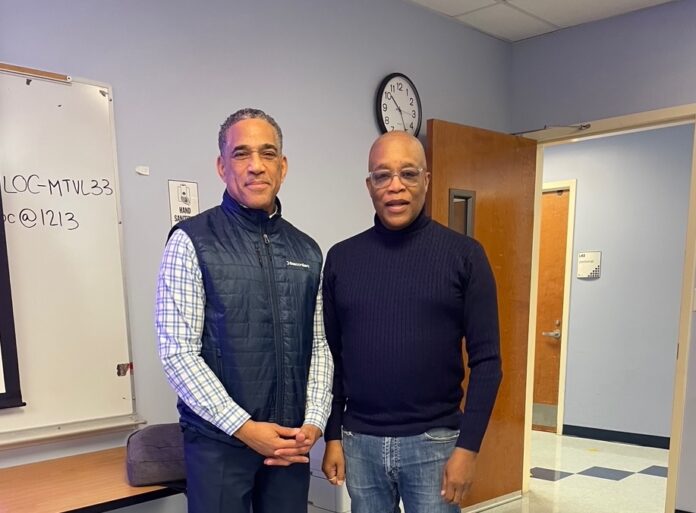
After reviewing the presentations, the judges made a clear recommendation: the students understood technology but needed structured financial education to use it fully. In response, ELOC partnered with Lindsay Carden, Vice President of Beacon Bank, to launch a Financial Literacy Program for Mount Vernon students in grades 9–12 enrolled in the AI course.
The goal of this program is not simply to teach budgeting or saving. It is to change how students understand money in a digital economy.
Today’s financial system is no longer paper statements and bank tellers. It is automated underwriting, algorithmic risk assessment, digital payments, and behavioral data tracking. Without financial literacy, a person becomes a user of the system. With financial literacy, they become participants—and potentially owners.
Students will learn practical topics such as:
• How credit actually works and why scores matter
• The long-term cost of debt versus the power of compounding savings
• Digital banking and financial technology risks
• The ethics behind algorithm-driven financial decisions
• How to evaluate financial products rather than simply accept them
• The connection between career income, investment behavior, and generational wealth
Parents and guardians have expressed strong interest because they recognize a reality schools often overlook: students graduate knowing formulas, but not contracts. They can solve equations but cannot interpret loan terms. They understand history but not interest rates. This gap has real consequences in communities where financial mistakes compound across generations.
ELOC will collect feedback from students and families to continually adapt the curriculum to community needs. The long-term vision extends beyond the classroom. Planned community showcases will allow students to present projects to residents, local leaders, and media — turning financial education into a public conversation rather than a private struggle.
This initiative represents a shift in how education should function in the modern economy. Teaching coding without finance produces skilled workers. Teaching coding with finance produces decision-makers.
We thank the Mount Vernon School District and Superintendent Dr. Demario Strickland for supporting this program, and we welcome Beacon Bank to this collaboration. Together, we are working toward a simple but powerful outcome: students who not only understand the future, but are prepared to prosper in it.
Students interested in participating may register online at www.eloc.earth.
Financial literacy is not a supplemental subject. In the age of AI, it is survival knowledge.