








This is not about one incident.
It is about a mindset — and who controls it.
From slave patrols to modern policing, Black Americans have lived under state violence from the very beginning of this country. That history is structural, not symbolic. American law enforcement was never designed with Black safety as its foundation — and the evidence has accumulated across centuries.
What’s more troubling today is not simply the continuation of that violence, but the way white liberalism has become the operating system for Black moral instincts — even when the issue is not ours, even when our own dead remain unacknowledged.
Let’s be apparent from the outset: this is not a defense of whether ICE was justified in the killing of Alex Pretti. That is a separate legal question. What is being examined here is outrage — who activates it, who amplifies it, and who remains silent.
Pretti had a gun.
Kenneth Chamberlain Sr. did not.
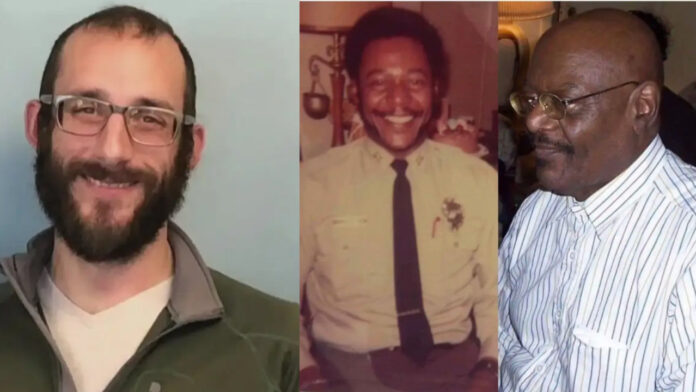
Chamberlain was a 65-year-old Black man, a Marine veteran, and a retired Westchester County correction officer. He was unarmed, in mental distress, and seeking help in his own home during what was supposed to be a welfare check. Instead, he was tased, shot with bean-bag rounds, called the n-word, and ultimately killed by White Plains police.
For more than a decade, rallies have been held to remember Kenneth Chamberlain Sr. Yet many of the same Black Westchester voices now loudly demanding accountability in the Pretti case never attended a single rally, never posted, never spoke publicly when it required confronting local power.
The Westchester County Department of Corrections offered no institutional support — despite Chamberlain being one of their own. More tellingly, Black correction officers who are now vocal online were absent then, when there were no national cameras, no trending hashtags, and no social rewards for speaking up.
That silence was not accidental.
It was incentivized.
Outrage today is no longer rooted primarily in lived Black experience, history, or proximity. It has been outsourced — handed over to national media narratives, white liberal institutions, and social approval systems that reward reaction over consistency.
There is little social reward for confronting local police departments, local politicians, or entrenched interests that Black people deal with every day. But there is applause for joining nationally approved outrage — especially when the target is federal, distant, and safely abstract.
That is not empathy.
That is status signaling.
This is where the Black mindset becomes enslaved — not by chains, but by dependency. When outrage is dictated externally, political courage collapses internally. The same politicians loudly condemning ICE today have failed to impose real police oversight or accountability in their own districts, where Black people actually live and die. Condemning distant federal power is safe. Challenging local police departments, unions, and entrenched interests requires sacrifice. What we are witnessing is not resistance, but managed dissent — protest everywhere except where leverage exists.
And the selective outrage extends even further — to New York’s highest law-enforcement authority.
Where is the same fury against Tish James that some have directed at Donald Trump or Pam Bondi? Where is the same demand for accountability when her own NY Attorney General’s Office of Special Investigation (OSI) repeatedly refuses to pursue criminal charges against police officers in cases of civilian deaths?
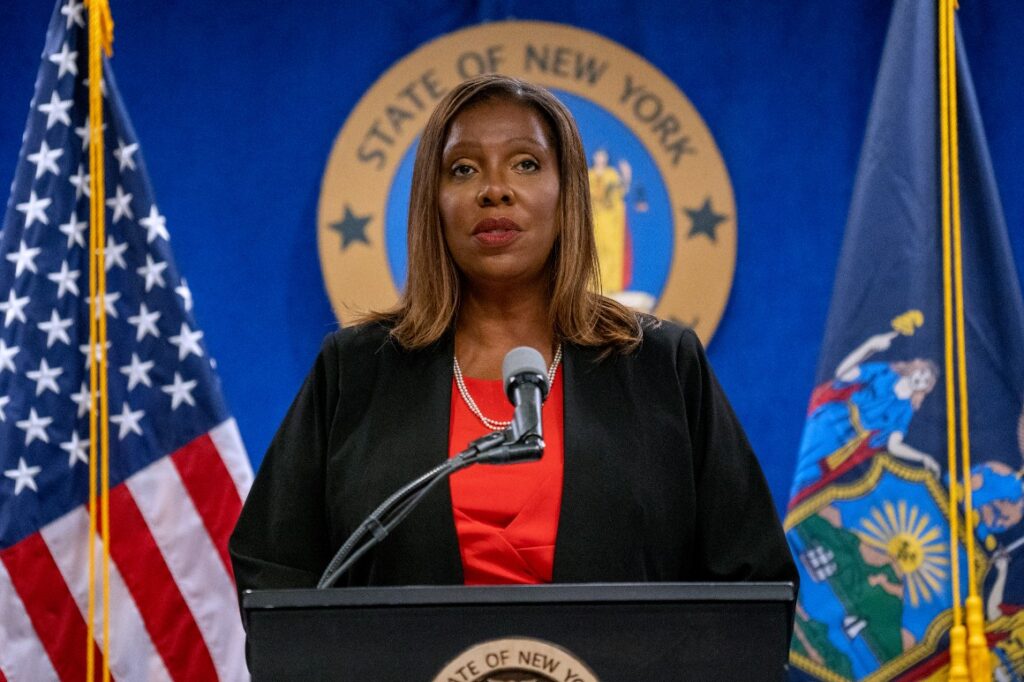
Under AG James, OSI has reviewed multiple police-involved deaths and declined to bring charges:
- Nyah Mway (13) — Utica (Oneida County), June 28, 2024 — no charges.
- Win Rozario (19) — Queens (NYC), March 27, 2024 — no charges.
- Jarrel Garris — New Rochelle (Westchester County), July 3, 2023 — no charges..
- Daniel K. McAlpin (41) — Wawarsing/Ulster County, September 9, 2022 — no charges.
Different cities. Different departments. Same outcome — no criminal charges pursued. Yet many of the same voices demanding accountability from federal officers show little to no sustained pressure on the AG, whose office repeatedly clears local police of criminal liability.
This is not a coincidence. Holding ICE accountable costs nothing locally. Holding the New York Attorney Generalaccountable means confronting party loyalty, political alliances, and institutional power in our own backyard. One produces applause. The other produces consequences.
That is how moral outsourcing works.
That is how outrage becomes selective.
That is how accountability dies quietly while activism stays loud.
The result is a distorted moral hierarchy:
- A white man’s death produces national outrage, political statements, and even discussions of lowering the American flag.
- A Black veteran and retired correction officer killed in his own home becomes a local inconvenience.
That hierarchy communicates value — whether people admit it or not. The level of outrage becomes a proxy for who is deemed more valuable.
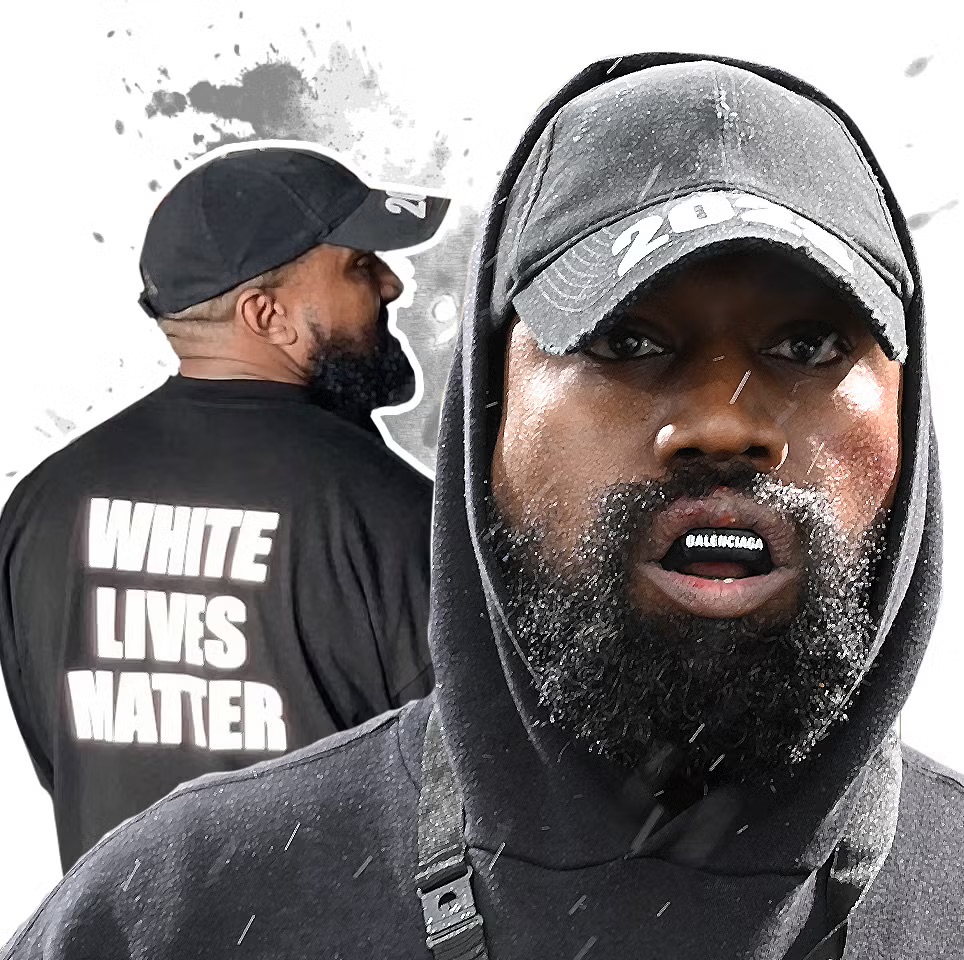
This is why the reaction to Kanye West’s “White Lives Matter” shirt is worth revisiting. Many condemned the slogan as offensive and dangerous. But the danger was never the shirt. The threat was behavior, making the slogan appear authentic.
When outrage for a white man with a gun eclipses outrage for an unarmed Black man seeking help — especially among those who claim to champion accountability — the contradiction becomes impossible to ignore.
Black America does not lack compassion.
It lacks sovereignty over its moral priorities.
When outrage is externally triggered and selectively applied, justice becomes theatrical and Black suffering becomes negotiable. That is not solidarity. That is dependency.
Police violence against Black people did not begin with social media. It did not start with body cameras. And it did not begin when national media decided a story was worthy of attention. The tragedy is that, after centuries of evidence, many still require permission to care.
That is not justice.
That is conditioning.
And until that conditioning is confronted — honestly and without excuses — Black lives will continue to be mourned quietly, while others are memorialized loudly.
That is not provocation.
That is the diagnosis.

The masthead may proudly declare Black Westchester, yet readers have come to expect that no matter how often you dip your pen in the wells of Black thought, the final product will be an apologia for the Republican Party—written in the red blood of its latest victims.
Like me, many readers must be wondering how your focus on “moral outsourcing,” “status signaling,” and the other buzzwords you deploy to suggest Black people are moral dupes managed to overlook a far more basic truth about why Alex Pretti’s killing drew more attention than the killing of Kenneth Chamberlain Sr.: no one was forced to witness Mr. Chamberlain’s final moments at the hands of armed officers. A picture carries a power that audio alone can never match. Perhaps a recording might have resonated in the heyday of radio, but in the digital age it is the image of injustice—not the sound—that spreads across the world. The sight of George Floyd’s killing in Minneapolis during the first Trump administration evoked the same moral outrage across the nation, if not the world. The critical factor in both cases wasn’t merely knowledge that a killing had occurred; it was the horrific video of armed agents of the state taking a man’s life, looping endlessly through America’s moral imagination.
While you continue to push a strategy of racial separatism that substitutes rhetoric for results, here’s a thought worth keeping in mind for anyone persuaded by your claim that the moral energies of Black people ought not extend to the likes of Alex Pretti or Renee Good. Acknowledging the catalytic role Black people played in our own freedom struggle does not require erasing the real contributions—and real sacrifices—made by allies from other racial and ethnic groups. Because Black people are a literal numerical minority, the dynamics of Black liberation have never played out in isolation. They include white men and women who faced violence, imprisonment, and even death because they chose to stand with us—a choice far fewer people of any background are willing to make than we like to pretend. Alex Pretti’s killing as an independent correspondent stands in a long line of white allies who sought to advance justice, sometimes with their very lives. I can only hope that the Prettis in Westchester will be there to watch over me when the Feds come to our county—because if one thing that’s evident by now, it’s that your moral aperture doesn’t expand quite that wide.
According to the U.S. Census, the United States has roughly 39.5 million Black residents and nearly 191.3 million white residents. That means that for every one of us, there are five of them. Even the most disciplined community would struggle to overcome such a yawning numerical disparity on its own—and we must be honest enough to admit that African Americans today are far from unified or well organized. This demographic reality cannot be ignored as we ready ourselves for the battles that loom over the horizon—regardless of whether the choice of weapon is the ballot, or the bullet.
Your refusal to grapple with this fundamental fact of American society leaves your analysis clouded by the very emotionalism you are so quick to accuse others of, rendering it devoid of any meaningful strategic insight. And like Candace Owens and so many other conservative Black commentators, much of the intellectual toolkit you wield was forged by conservative whites whose views of Blacks are a perversion of the liberalism you so detest. Liberalism as practiced by Democrats like Tish James often fails to secure a conviction, to be sure; but the conservatism practiced by the Republican Party is a conspiracy to ensure that white misdeeds targeting Black people never reach a grand jury in the first place. Nowadays, we only need to glance at Fox News to get a preview of the mental gymnastics you’ll perform to paper over that fact and try to convince us to support the Republican Party. And that, unfortunately, undermines your credibility as a serious thinker in this moment of national crisis.
First, there you go again with that name calling bruh! Dont let your keyboard get you fucked up! I thought we had this conversation alreay! Now let’s clear away a mischaracterization. Nothing in my argument is an apologia for the Republican Party. That framing is a reflex, not a rebuttal. Pointing out failures of Democratic governance—especially in jurisdictions where Democrats hold overwhelming power—is not Republican advocacy. It is accountability. If criticism of power is only acceptable when it targets political opponents, then accountability has already collapsed.
Second, your claim that Kenneth Chamberlain Sr.’s killing failed to resonate because “no one was forced to witness it” is factually incomplete. The entire encounter was recorded on Mr. Chamberlain’s Life Alert system. The audio captured White Plains police taunting him, calling him the n-word three times, tasing him, firing bean-bag rounds, and ultimately killing him while he was unarmed and seeking help in his own home.
So let me ask the question your response avoids:
What should have been the appropriate public response when people heard white police officers repeatedly calling a Black man the n-word moments before his death? Silence? Political avoidance?
If audio is supposedly insufficient to trigger moral urgency, then we are admitting something far more troubling than a media bias—we are admitting that racialized dehumanization no longer shocks when the victim is Black, even when it is documented.
You are right that video carries unique power in the digital age. But video alone does not explain the disparity in response. George Floyd’s killing mattered not only because it was filmed, but because condemning Minneapolis police in 2020 was politically safe across institutions. Sustained outrage over Chamberlain would have required confronting local police, local prosecutors, unions, and party allies in Westchester. That difference—power and proximity, not medium—is central to the analysis.
I am not arguing that Black moral concern should not extend to Alex Pretti or Renee Good. That is a strawman. The argument is about standards and consistency, not exclusion. Acknowledging allies in the Black freedom struggle does not require ignoring the pattern in which Black deaths lose urgency once accountability becomes inconvenient or local.
Bob, you live in Westchester. So let me ask you plainly: when have Black politicians here ever stood united in condemning police violence against Black people in this county? They didn’t do it for Kenneth Chamberlain Sr. They didn’t do it collectively for other cases. They didn’t even condemn Westchester DA Janet DiFiore when she said the reason White Plains police called Chamberlain the n-word wasn’t racism, but a “tactic to distract him.” That statement alone should have triggered universal outrage. It didn’t.
If a Black man can listen to recorded audio of white officers calling another Black man the n-word moments before killing him—and accept that explanation—then the issue isn’t party politics. It’s a failure of moral judgment.
Finally, invoking Fox News personalities or conservative commentators is irrelevant; the issue is accountability, not ideology. The unanswered question remains: why does outrage expand when the target is ICE, yet contract when accountability points inward—toward New York’s Attorney General and the local law-enforcement systems we elect and sustain? Why is moral intensity reserved for distant power, while failures at home are met with caution or silence?
And I’ll end here. You are an educator. You should know better than to put accountability in a political box—especially when Black lives are involved. As a Black man, to defend white deaths loudly while refusing to question your own liberal leaders about the consistent silence surrounding Black death—whether by police, crime, or violence—is not moral clarity. It is abandonment of responsibility.
Accountability is not partisan.
Justice is not tribal.
And if you can’t challenge power when it looks like you,or in youe own party, you’re not thinking freely.
It’s time to step out of the matrix.
Disagreement is healthy.
Avoidance is not.
And accountability—local, consistent, and unsentimental—remains the point of my aritcle.
Dr. Bob,
Let’s start with something factual, not theoretical. My father’s killing was not undocumented, there was audio from his Life Alert system, there was video from the taser along with police recordings transcripts not to mention a full federal civil rights investigation. Even if we accepted your explanation you still have not answered the actual question being raised:
Why did local Black elected officials, local Black organizations, Black law enforcement professionals, and Black civic leaders in Westchester remain largely silent about my father’s killing for years? They did not lack awareness, they did not lack proximity what they lacked was political will.
Nothing about Damon’s argument suggests Black people should not care about Alex Pretti or Renee Good, its about standards and having that same energy across the board for everyone. Calling out Tish James for overseeing an Office of Special Investigation that repeatedly refuses to prosecute police killings is not Republican advocacy it is an indictment of a system that protects itself no matter who is in charge. Parties change, Power does not and I say that as a family member of a victim of police violence and for every family whose loved one was taken by police and then erased by the very institutions sworn to deliver justice.
Holding Democratic officials to account is not betrayal the issue is why are Black deaths require exceptional conditions to matter at all. My father died because institutions knew they could act with impunity and until we confront that honestly, we will continue to perform outrage in public while burying accountability in private. Respectfully!!!