




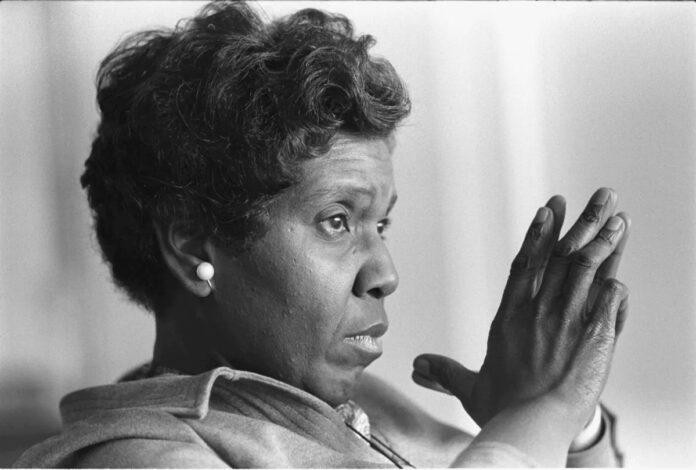





Black History Month often celebrates courage in theory while punishing it in practice. We praise Black leaders of the past precisely because they are no longer here to challenge us. Barbara Jordan is a perfect example.
Barbara Jordan was a Democrat. A civil-rights icon. A constitutional scholar. A Black woman who broke barriers in Texas and in Congress long before diversity slogans were fashionable. Yet if she articulated her immigration views today—unchanged, documented, and grounded in data—she would not be celebrated. She would be condemned.
Barbara Jordan’s credentials were unimpeachable. She was a constitutional scholar, a graduate of Boston University Law School, and the first Black woman elected to the Texas Senate since Reconstruction. She later became the first Black woman from the South elected to the U.S. House of Representatives, where she gained national respect during the Watergate hearings for her clear, principled defense of the Constitution. A lifelong Democrat and civil rights leader, Jordan’s integrity and intellect led President Bill Clinton to appoint her as chair of the U.S. Commission on Immigration Reform in 1994. Her authority on immigration policy came from law, data, and public service at the highest level, inspiring admiration for her principled leadership.
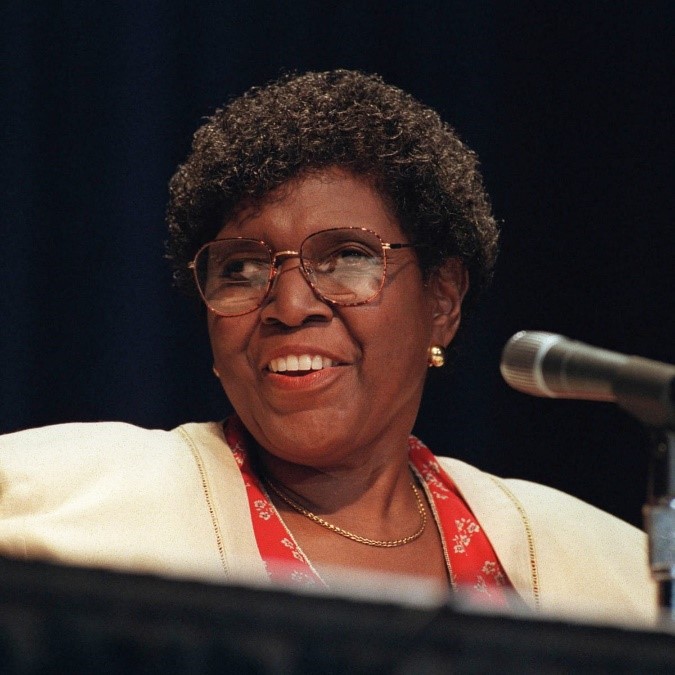
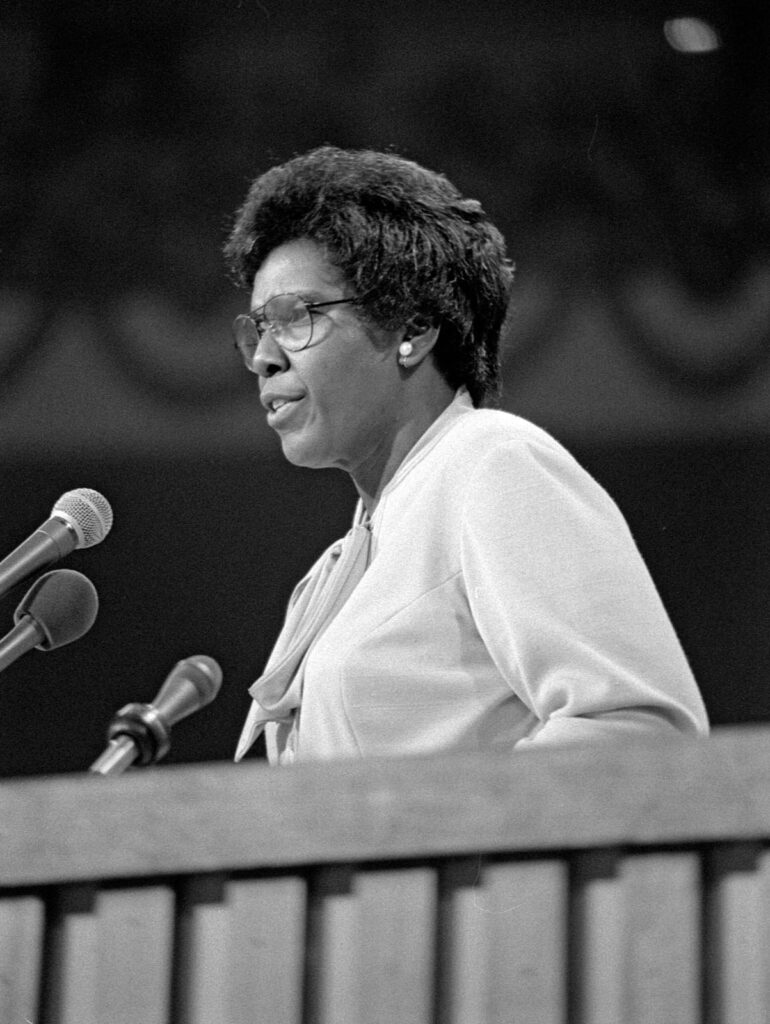

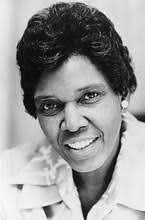
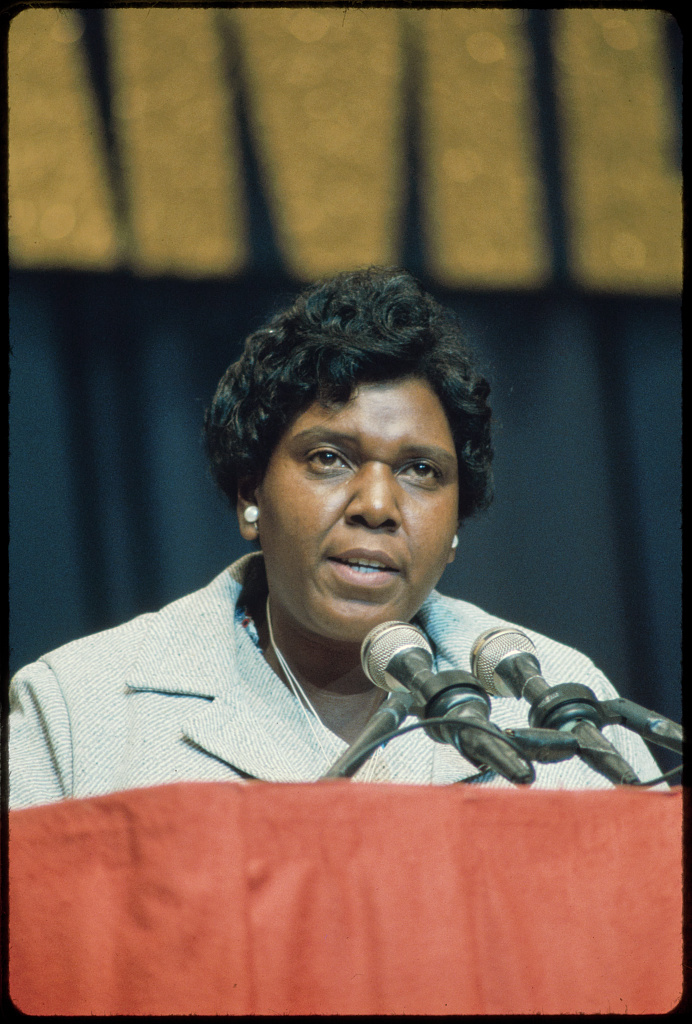
In today’s political culture, Barbara Jordan would be labeled “MAGA,” revealing how current narratives distort or dismiss principled figures like her, which should concern us all and motivate a sense of responsibility to uphold honest policy debates.
Not because she embraced conservatism, but because she refused to abandon logic. Not because she opposed immigrants, but because she believed laws grounded in data and law matter. Not because she lacked compassion, but because she understood outcomes and the importance of evidence-based policy.
And tragically, much of the Black community—conditioned to treat emotion as morality and disagreement as betrayal—would likely turn on her, illustrating why data-driven policy is essential for genuine social justice.
That is not speculation. That is the current political reality.
Recognize that Jordan’s immigration work was rooted in a Democratic commission, appointed by President Bill Clinton and led by a Black woman with undeniable civil rights credentials, emphasizing the importance of evidence-based leadership.
The commission’s conclusions were clear—and uncomfortable.
Jordan argued that a nation that fails to enforce its immigration laws undermines the rule of law itself. She supported legal immigration, but rejected illegal immigration as destructive—not morally, but economically and socially. She warned that unchecked immigration depresses wages at the bottom of the labor market, strains public services, and disproportionately harms Black and low-income American workers.
In plain terms, she recognized what today’s politics often refuses to say out loud: when labor supply increases at the bottom without enforcement, wages fall. When housing demand rises without matching supply, rents rise. When public systems are stressed, service quality declines. Elites or policymakers do not absorb these costs. They are absorbed by working-class communities—disproportionately Black ones.
The Jordan Commission, therefore, recommended enforcing existing immigration laws before expanding immigration programs, imposing real penalties on employers who knowingly hire undocumented workers, strengthening border enforcement, reducing overall legal immigration to match economic capacity better, ending the diversity visa lottery, narrowing family-based immigration to immediate family members, and rejecting blanket amnesty because it incentivizes future violations.
These were not right-wing positions. They were Democratic conclusions based on evidence.
Jordan understood something today’s politics often denies: compassion without limits is not compassion—it is negligence. When policy ignores incentives, reality does not disappear. It simply shows up later, more concentrated, and more painful.
What makes Jordan’s legacy especially relevant today is how current attitudes toward immigration and Black leadership undermine her principles, shifting from evidence-based policy to moral posturing that weakens social progress.
In effect, we are being asked to accept policies that weaken Black economic standing while being told that objecting is immoral. We are told to sacrifice wages, jobs, housing stability, and bargaining power in the name of virtue. That is not solidarity. That is replacement—replacing the material interests of Black Americans with political symbolism that offers no protection when the consequences arrive.
Barbara Jordan would not have complied with that silence.
She believed citizenship meant something. She felt the law mattered. And she thought that ignoring who pays the price for bad policy is itself a form of injustice. She never confused empathy with surrender, or activism with analysis.
Black History Month should not be about rehearsing safe narratives. It should be about intellectual honesty. Barbara Jordan reminds us that authentic Black leadership has always included the courage to say what is unpopular when it is true—even when it costs applause, allies, or acceptance.
If Barbara Jordan were alive today, she would not change her conclusions to fit the moment. The moment would be forced to confront her findings.
And the fact that such a woman—Democrat, civil-rights icon, Black constitutionalist—would now be dismissed as “MAGA” tells us far more about today’s political culture than it ever could about her.


Facts first.
Decades of labor-economics research show immigration has little to no overall negative impact on U.S.-born wages. When harm does show up, it’s narrow, localized, and driven by employer exploitation and weak labor enforcement, not immigrants existing.
Now honesty: before this article, I didn’t know who Barbara Jordan was.
So I read it. Then I did my homework. And what I found is that her legacy is being compressed to fit a narrative she herself would’ve pushed back on.
The Southern Poverty Law Center has documented how Barbara Jordan’s words have been selectively lifted by anti-immigrant movements to legitimize restrictionist agendas, stripped of context, coalition, and her repeated emphasis on employer accountability.
https://www.splcenter.org/resources/hatewatch/anti-immigrant-movements-dishonest-portrayal-barbara-jordan/
The Center for Migration Studies reinforces this: Jordan was a constitutional thinker trying to make a broken system work more justly, not a figure arguing that Black folks and immigrants are economic threats to each other.
https://cmsny.org/publications/martin-barbara-jordan/
So no, the pushback to this article isn’t about emotion overpowering logic. It’s about recognizing a familiar setup. Whenever Black and immigrant communities are framed as competitors, the winners are always the same: powerful institutions that profit from low wages, instability, and division.
Arguing over who gets the underpaid job keeps us from asking why the job is underpaid at all.
Speculating that today’s Black community would reject Barbara Jordan isn’t insight, it’s projection. And using her name to justify division does a disservice to her actual legacy.
If we’re going to invoke Barbara Jordan, let’s do it honestly. And if we’re serious about justice, let’s stop recycling narratives that fracture the very coalitions that history shows we need.
That is precisely the point of the article. Barbara Jordan warned—clearly and repeatedly—that when immigration policy goes unchecked and unenforced, the country would end up exactly where we are today. Her commission didn’t deal in abstractions; it laid out cause and effect. Ignore enforcement, and labor supply expands at the bottom. When that happens, wages are pressured, housing competition intensifies, and public services.Thats basic economics.But as always poor policy are strained—costs that fall first and hardest on Black communities.
This is not about blaming immigrants. Jordan never did that, her reports never said that and this article never said that. It’s about acknowledging policy failure and predictable outcomes. We don’t have to theorize this—we can see it. Look at cities like Chicago and New York, where sudden inflows without capacity planning have redirected limited resources away from long-neglected Black neighborhoods, creating exactly the pressures Jordan warned about decades ago.
Jordan’s point was simple: compassion without enforcement produces disorder, and disorder always harms the most vulnerable. That warning wasn’t divisive—it was responsible. The fact that her conclusions describe our current reality doesn’t mean she was setting communities against each other. It means she understood how systems work.
Invoking Barbara Jordan honestly means accepting that she warned us where unchecked immigration policy would lead—and recognizing that we are now living with those consequences.