


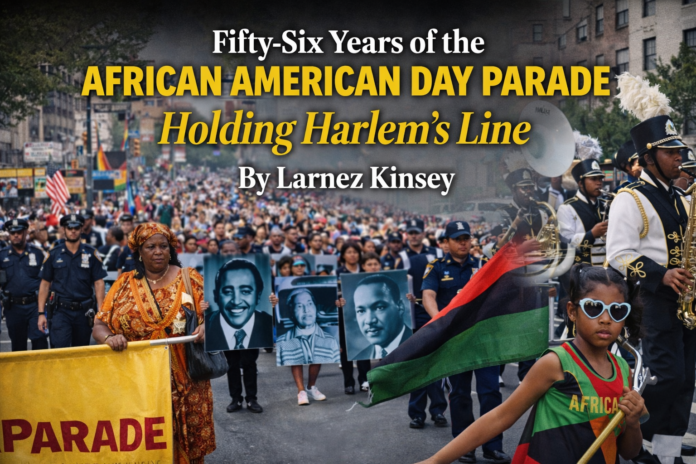




Harlem didn’t wake up for a show.
It woke up for remembrance.
By late morning on Sunday, September 21, 2025, Adam Clayton Powell Jr. Boulevard was already doing what it has done for generations, holding memory in plain sight. Folding chairs lined the sidewalks like punctuation marks. Drums tested the air before the first banner ever appeared. Elders claimed their corners early, not out of habit, but out of stewardship.
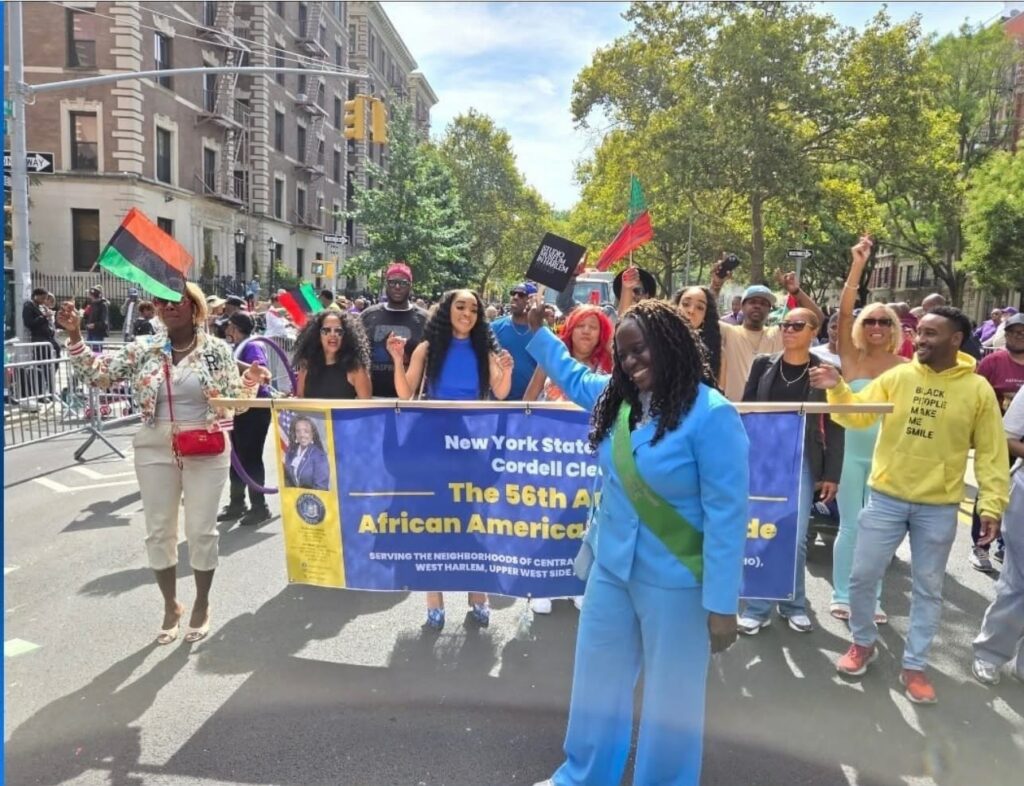
This was the 56th Annual African American Day Parade, and from the first note to the last float, it was clear: Harlem wasn’t trying to impress anyone. It was honoring itself.
Fifty-Six Years Is Not a Moment, It’s Muscle Memory
For more than half a century, the African American Day Parade has arrived every third Sunday in September with the same quiet insistence: we are still here, and we still know who we are. That kind of consistency isn’t ceremonial. It’s cultural discipline.
This year’s theme, “Education is Our #1 Priority,” wasn’t confined to banners or speeches. It was visible in posture, precision, and presence. In the marching bands that moved like classrooms in formation. In the educators and principals walking the route not as honorees seeking applause, but as pillars being recognized by a community that knows their labor intimately.
Education here wasn’t theoretical. It was embodied.
When the Street Becomes the Curriculum
As the parade moved north along Adam Clayton Powell Jr. Boulevard, the street transformed into a living syllabus. Youth drumlines demonstrated focus earned through repetition. Dance teams showed what discipline looks like when joy is allowed to coexist with rigor. Community organizations from more than a dozen states marched as if Harlem were home because on this day, it was.
Nearly 900,000 people were expected, yet the atmosphere resisted anonymity. The crowd spoke back. Applause traveled in waves. Elders nodded in recognition. Children pointed with certainty. This wasn’t passive spectatorship; it was collective participation.
Celebrities appeared, as they do. But the rhythm never shifted for them. Harlem doesn’t pause its truth for proximity to fame.
The Weekend Was Designed With Intention
The parade was only one chapter. The day before, the Get Involved Literacy, Health, and Culture Celebration at Adam Clayton Powell Jr. Plaza grounded the weekend in care. Free health services, accessible panels, live performances, and meaningful giveaways made the theme tangible.
This was education beyond the classroom, education that acknowledged bodies, access, and lived realities. A reminder that learning doesn’t exist without wellness, and celebration doesn’t last without support.
Investment Without Spectacle
True to its legacy, the parade continued its commitment to the future by awarding scholarships through the Abe & Lucinda Snyder Scholarship Fund. No grandstanding. No inflated announcements. Just intentional investment in students still shaping the next chapters of Black American life.
It was a quiet moment, met with sustained applause. The kind that understands what’s at stake.
Harlem as Archivist
As the afternoon stretched toward evening and the last organizations passed, the energy didn’t dissipate; it settled. People lingered. Conversations continued. Nobody rushed to dismantle what had been built in the street.
Because Harlem had done what it always does when it is allowed to be whole: it preserved memory without freezing it, honored legacy without sanitizing it, and reminded the nation that Black culture is not an event, it is infrastructure.
This was not a performance.
It was a remembering.
And for 56 years now, Harlem has been consistent about one thing:
Memory is an act of power.