










For decades, Black America has followed federal nutrition advice and still ended up with the worst health outcomes in the nation. Higher rates of diabetes. Higher rates of hypertension. Higher rates of heart disease. Higher rates of obesity. And shorter life expectancy to show for it.
So when the U.S. government quietly announced a major reset of its dietary guidance in early 2026, the question wasn’t whether the food pyramid changed — it was why it took this long, and whether this shift will actually help the communities most harmed by the old advice.
The new Dietary Guidelines for Americans, issued by the U.S. Department of Health and Human Services and the U.S. Department of Agriculture, move away from a model that failed many, and this shift should inspire hope that real change is possible.
The new message is blunt: eat real food, avoid ultra-processed products, cut sugar aggressively, and stop pretending refined carbs are the foundation of a healthy diet.
That admission matters — especially for Black America.
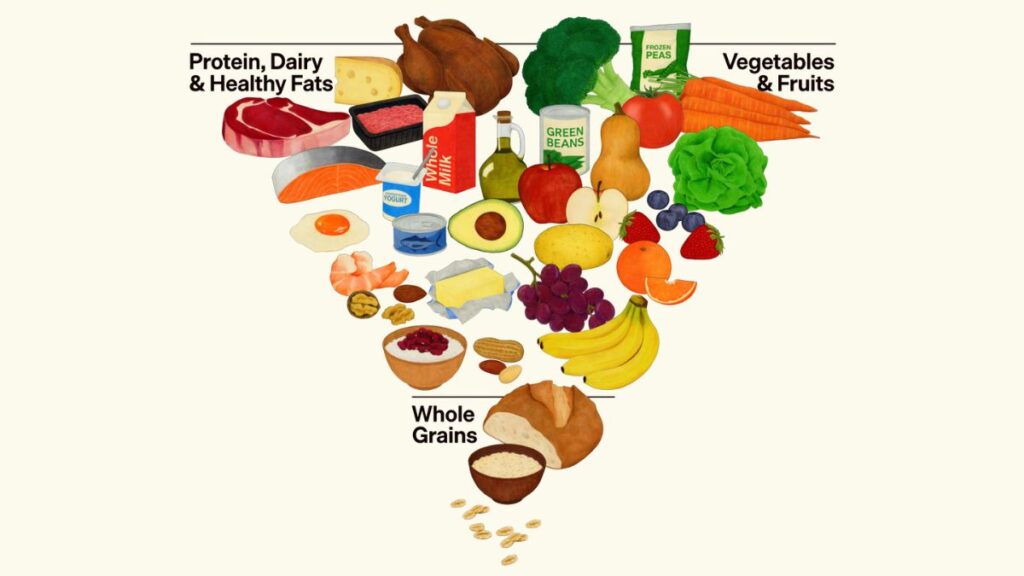
The Old Pyramid Failed Us
The old food pyramid, and later MyPlate, were built around cheap calories: refined grains, low-fat processed foods, sugar-heavy products, and government-subsidized commodities. These recommendations didn’t land equally across America. Wealthier communities could “interpret” the guidance with organic produce and lean proteins. Poorer and working-class Black communities got corner stores, dollar menus, and shelves stacked with ultra-processed food.
We were told to fear fat, fear meat, and trust “heart-healthy” labels slapped on foods that quietly fueled insulin resistance, inflammation, and metabolic disease. The result? A nutrition policy that looked neutral on paper but produced racially unequal outcomes in real life.
Black Americans didn’t fail the system. The system failed Black Americans.
What’s Actually Different Now
The new guidelines do something rare in Washington: they acknowledge reality.
The new guidelines explicitly address structural barriers by emphasizing affordable, accessible whole foods, which is crucial for Black communities facing food deserts and economic challenges.
If followed correctly, this guidance aligns far better with what Black communities need: stable blood sugar, reduced inflammation, better metabolic health, and fewer diet-driven illnesses.
But here’s the uncomfortable truth: guidelines don’t heal people — access does.
Why This Could Still Miss Black America
Telling people to eat “real food” while flooding their neighborhoods with ultra-processed products can feel dismissive; acknowledging these barriers helps Black America feel understood and supported.
Worse, without targeted policy reforms-like expanding SNAP benefits for fresh produce and funding community food programs — federal efforts risk perpetuating disparities and leaving Black children behind.
There’s also risk in the messaging. Encouraging more protein and fats without clear guidance can backfire in communities already burdened by cardiovascular disease. This is not about pushing bacon and burgers. It’s about quality food, not louder slogans.
The Real Opportunity
This moment is bigger than a graphic redesign.
If the government is serious, this reset should come with:
• Investment in grocery access in Black neighborhoods
• Support for Black farmers and food entrepreneurs
• Nutrition education that respects culture instead of shaming it
• Federal programs that prioritize quality over volume
• Honest accountability for decades of failed nutrition policy
Black America doesn’t need another lecture about personal responsibility. We need policies that stop subsidizing sickness and start supporting health.
The Bottom Line
The U.S. finally admitted what many Black families have known for years: the old food advice wasn’t working. The new pyramid is a step in the right direction — but only a step.
If this change is treated as a media moment rather than a structural shift, Black health outcomes will remain where they are. If it’s paired with access, affordability, and accountability, it could mark the beginning of something rare in public policy: a correction that actually saves lives.
The pyramid changed.
Now the question is whether the system will.


That food pyramid encouraging red meat and dairy consumption will cause breast Cancer and other health issues. Eat a plant based diet which includes legumes, lentils and drink lots of water, three cups of green tea everyday.