


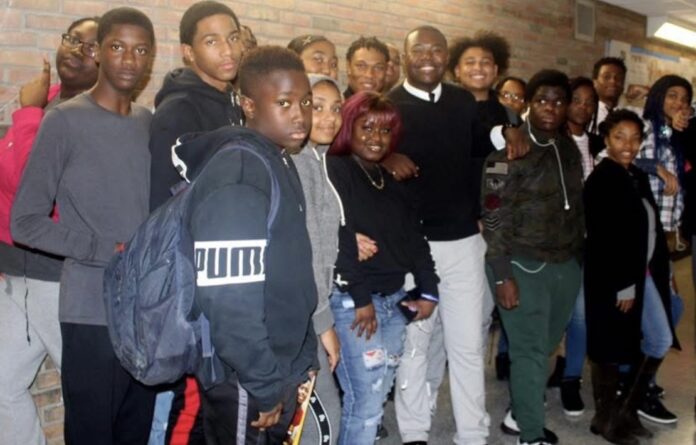




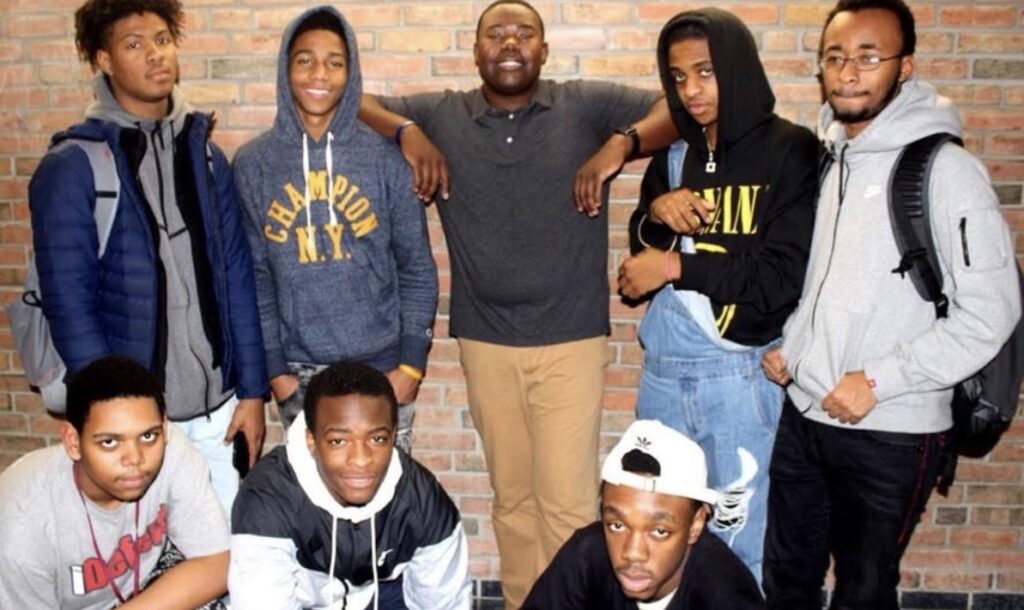
More than a decade ago, I started talking to young people, mostly teenagers, about Historically Black Colleges and Universities because I knew firsthand what an HBCU could do for a young Black student.
I was 19 years old and attending Claflin University when I began visiting schools and encouraging students in New York to consider HBCUs. What started with conversations in classrooms and school hallways grew into The New York–New Jersey HBCU Initiative.
Katrina Jefferson encouraged me to expand the original name, The New York HBCU Initiative, to The New York–New Jersey HBCU Initiative. Professor Patricia Koger of Claflin University gave me the words that became my tagline, “Beating the Drum for HBCUs.”
More than a decade later, I am beating that drum again.
In 2020, the New York Amsterdam News described me as a “heartbeat” of the HBCU community. Six years later, I understand that description differently. HBCUs have always had a heartbeat. Generations of Black families, educators, alumni, churches, fraternities, sororities, and communities have kept that heart beating. My responsibility is simply to do my part.
And right now, that work matters. According to federal higher-education data, roughly 300,000 students attend HBCUs, with Black students continuing to make up the majority of their enrollment. Yet these institutions represent only a small fraction of American higher education.
There is encouraging news. According to the National Student Clearinghouse Research Center’s 2026 Persistence and Retention Report, 70 percent of Black students who entered college in fall 2024 remained enrolled the following fall, the highest Black persistence rate in more than a decade. Black student retention at the institutions where they started also rose to 59.6 percent.
Those numbers deserve our attention because we have heard the opposite story about Black children for far too long.
We hear about what they are not doing, where they are falling behind, and what they supposedly do not value. But our young people are going to college, staying in college, and searching for places where they can build their futures.
Our HBCUs must remain among those choices.
We also cannot forget history. America once had more Black colleges than it has today. Some institutions closed after facing financial difficulties, declining enrollment, accreditation challenges, and other pressures. Others survived through consolidation.
Clark Atlanta University is one example. According to the university’s official history, Atlanta University, founded in 1865, and Clark College, founded in 1869, consolidated in 1988 to form Clark Atlanta University.
Funding inequity has also followed HBCUs for generations. Federal and state analyses have documented billions of dollars in historical funding disparities between Black land-grant universities and their predominantly white counterparts.
There has been progress. According to the U.S. Department of Education, the federal government announced more than $174 million in additional one-time HBCU funding in September 2026. Combined with $438 million in additional funding announced the previous year, the Department reported more than $612 million in new HBCU funding during fiscal years 2025 and 2026.
That matters. But Washington cannot do everything. Money cannot introduce a ninth grader in Yonkers to Claflin University. A federal appropriation cannot place a Howard University brochure into the hands of a student in Mount Vernon. A statistic cannot sit at a kitchen table with a family in Harlem and explain that North Carolina A&T, South Carolina State, Morehouse, Florida A&M, or another HBCU might change the trajectory of their child’s life.
That takes people. That takes community. That takes us. That is why The New York–New Jersey HBCU Initiative is here. I want students in Mount Vernon, Yonkers, New Rochelle, White Plains, the Bronx, and beyond to hold these college brochures in their hands. I want them to see HBCU flags. I want them to know the names, histories, scholarships, traditions, opportunities, and possibilities associated with these institutions.
At 19, I believed in this work, and today, I understand its weight. This is bigger than something I started as a college student. Our ancestors fought for the right to learn. Generations before us built institutions when other institutions would not welcome us. Those schools educated teachers, doctors, lawyers, ministers, scientists, journalists, business leaders, and generations of Black families.
Mount Vernon, stay tuned!
Take care,
Dennis Richmond, Jr., M.S.Ed.
Author, He Spoke At My School