




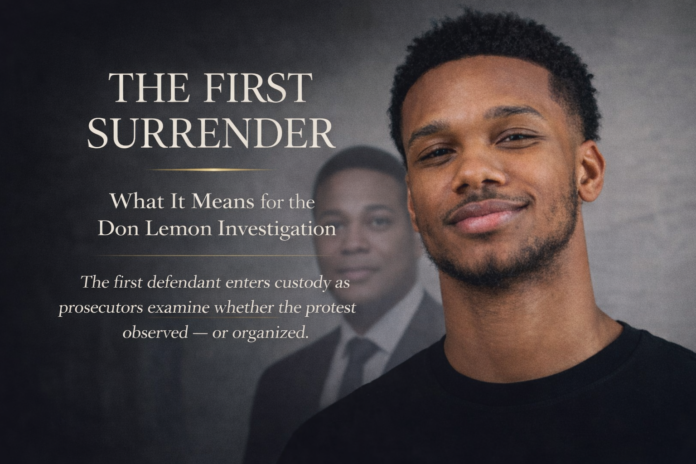





A new development has moved the controversy surrounding the anti-ICE church protest from online speculation into an active legal process. Jerome Richardson, a 21-year-old Temple University student, has surrendered to federal authorities after being named in an indictment tied to the incident. His surrender is the first confirmed custody event connected to the case.
According to law-enforcement reporting summaries, Richardson voluntarily presented himself to authorities in Philadelphia after learning he had been charged. Prosecutors allege he was not merely present but played a role in coordinating activity connected to a demonstration that took place inside a church in St. Paul, Minnesota. Authorities describe the event as an interruption of a religious service tied to immigration activism.
The location matters legally. Protests in public spaces are generally treated differently than demonstrations inside houses of worship. Entering and interfering with a religious assembly can elevate a case from disorderly conduct to criminal interference and potential conspiracy-type allegations depending on planning and coordination.
Investigators claim the protest was not spontaneous but planned in advance, with participants assigned roles. Richardson is accused of helping with logistics and connecting activists involved in the demonstration. These remain allegations, not findings of guilt, and the case now moves into the court process where evidence will be tested.
The matter became national news because of the reported involvement of Don Lemon. The legal question emerging from the case is not immigration policy but the boundary between journalism and participation. Courts typically look at whether someone planned the action, coordinated with participants, or took part in the conduct itself. If prosecutors prove active coordination rather than observation, liability can expand beyond trespass into conspiracy-related exposure.
Read: Don Lemon Arrested by Federal Agents in Los Angeles Over Minnesota Church Protest
What Richardson’s Arrest Means for Don Lemon
Richardson’s surrender matters because cases like this are often built from the inside out. Prosecutors typically establish the actions of participants first, then determine who helped organize, direct, or enable those actions. If Richardson or other defendants communicated with Lemon about timing, entry, messaging, or strategy, investigators could argue the conduct went beyond coverage and into facilitation.
The legal distinction is critical. Journalists are protected when they observe or document events, even controversial ones. They are not protected if they help plan unlawful activity. If evidence shows coordination — such as directing participants, arranging access, or assisting the execution of the protest — prosecutors could attempt to attach conspiracy or aiding-and-abetting liability. If, however, communication was limited to arranging interviews or documenting events after they occurred, the activity would more likely fall under press protection.
In practical terms, Richardson’s case could determine Lemon’s exposure. Testimony, messages, or recorded communications could either narrow the case to the individuals who entered the church or expand it to anyone alleged to have helped orchestrate the disruption.
Recap of Allegations in the Case
Richardson is alleged to have assisted coordination and taken part in the disruption and has now turned himself in. Other participants are accused of entering the church during service and participating in the organized protest. Don Lemon’s legal position centers on whether his presence and communications constituted reporting or involvement in planning. The expected defense argument is journalistic activity, while prosecutors appear to be examining participation.
With a surrender now confirmed, the case moves into arraignments, discovery, and motions that will likely focus on press freedom versus participation. Ultimately the outcome will depend on a narrow but decisive question: whether the conduct is determined to be coverage of an event or collaboration in creating it.


Dude this article was so well written. Thank you for telling us the facts of the case and not including your opinion or thoughts on it. Much respect.
Mark B
Franklin, TN
[…] Feb. 2, Temple University senior Jerome Richardson turned himself in to federal authorities after being […]
Hey there, I was wondering if you took guest posts on blackwestchester.com? If so, how would I go about getting one on your site? If there is a fee, let me know.
Also, if you have any other sites you can get me a post on please list them.
Thanks
Justin
email BlackWestchesterMag@gmail.com