



I would like to start off with a point that ought not to be contentious: Fat Joe is part of hip-hop. He actually comes from the Bronx, his career proves this for itself, and his contributions to the culture can no reasonable way be dismissed. The aim here is not to exclude Fat Joe from hip-hop history, nor is it to minimize the contributions of Puerto Ricans, Latinos, Jamaicans, or other Caribbean groups that helped to shape hip-hop in New York City.
My objection arises when getting involved in hip-hop is turned into a way of asserting Black identity and providing a reason for using the N-word. Recently, Fat Joe has defended his association with hip-hop by talking about his upbringing in the Bronx, his relationships with some of the early hip-hop personalities, and the fact that his late brother used to carry the record crates for Grandmaster Flash. He then stated, “I am Black,” and called himself the “blackest” person you’ve ever seen when it comes to the N-word. That is where I differ from Fat Joe.
Fat Joe has no need to become Black in order to show that he is hip-hop, since his career already proves his position within the culture. However, hip-hop credentials do not change one’s genealogy, and simply being accepted by Black people does not convey the Black American historical experience to someone else.
Cultural Acceptance Is Not Ancestral Inheritance
The distinction between taking part in a culture and inheriting a people’s history exists. Even if I spent the rest of my life being immersed in Italian culture—learning the language, living in an area that is Italian, studying Italian history and being accepted by Italian families—I should still have no Italian ancestors. The fact that this boundary is recognized does not mean that Italians are rejecting me; it only means that ancestry has a significance which goes beyond cultural closeness.
Black identity should not be handled any differently. One can love Black culture, support Black people, create music based on Black traditions and still become a significant figure in hip-hop without having to be a descendant of Black Americans whose historical experience has included American slavery, Reconstruction, Jim Crow and segregation. Black Americans are able to embrace someone culturally without giving up the difference between that person’s ancestry and our own.
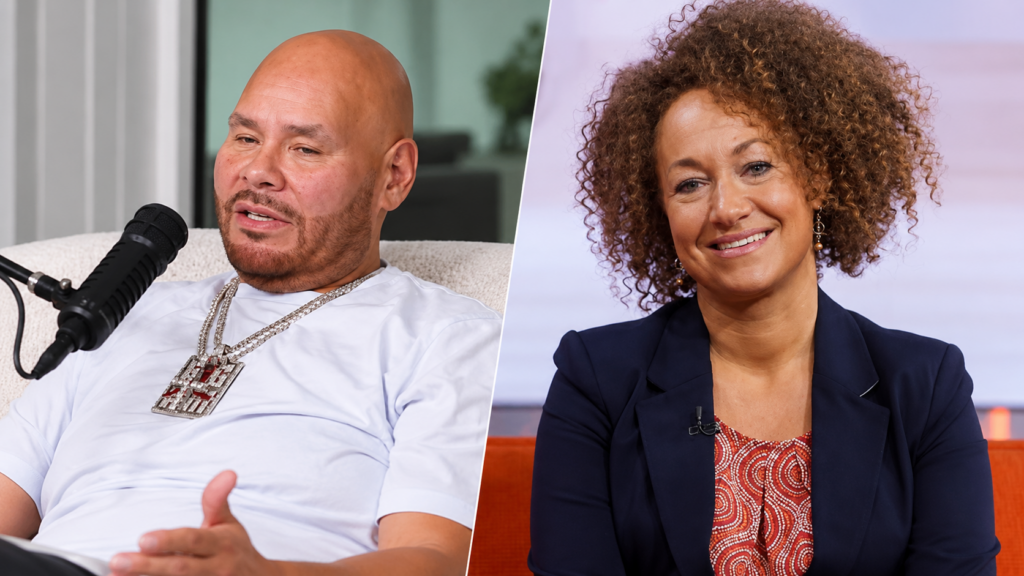
If Rachel Dolezal wasn’t able to become Black, then why can Fat Joe?
That is when I consider Rachel Dolezal. In 2015 the United States held a national discussion regarding Dolezal, a white woman who had been born to white parents and who had become thoroughly involved in Black culture and in the struggle for civil rights. She attended Howard University, taught courses in Africana studies and later became president of the NAACP chapter in Spokane, Washington. When doubts about her ancestry were made public, Dolezal still maintained that she saw herself as Black.
America mostly rejected that argument, and many Black Americans were particularly offended by it. The main reason for the objection could be understood: simply loving Black people, studying Black history, working for a Black civil rights organisation and getting involved in Black culture does not alter one’s ancestry.
We ought to apply the principle consistently. Of course, I’m not claiming that the cases of Fat Joe and Rachel Dolezal are the same; they aren’t. Fat Joe genuinely has a long-standing association with the Bronx and hip-hop, and his Puerto Rican and Cuban background is part of a distinct racial and cultural history from that of Dolezal’s white European ancestors. Still, the comparison raises a significant question about self-identification: if cultural immersion alone is not sufficient to make Rachel Dolezal Black, why should cultural immersion in hip-hop automatically make Fat Joe Black?
Dolezal could support Black people without having to become Black; she could take part in the NAACP without having to become Black, since the NAACP itself pointed out at the time of the controversy that one did not need to be Black in order to hold a leadership position. The same ought to be true in this case. Fat Joe can be part of the family in hip-hop without having to rewrite his ancestry.
We Were Rhyming Before Hip-Hop Had a Name
We also have to address the way this history is at times presented. It is sometimes suggested that Black rhythmic verbal expression suddenly appeared when DJs began using two turntables in the Bronx. Although the Bronx merits its status as the birthplace of hip-hop as a distinct culture, many of the elements that later contributed to the development of rap had already been present in Black America for many generations.
By stating that Black Americans were “rapping” before the emergence of hip-hop, I am referring to lineage and not asserting that earlier Black performers were hip-hop artists. In the 1940s The Jubalaires employed rapid rhythmic rhyming and a certain vocal cadence in their recordings. During the 1960s Muhammad Ali was rhyming, making boastful statements, predicting the number of rounds, and engaging in verbal battles with his opponents. The song “Here Comes the Judge”, recorded in 1968 by Dewey “Pigmeat” Markham, included rhythmic spoken words and rhyme set against a funky musical background.
In the same year The Last Poets appeared in Harlem, they put together politically charged spoken word, percussion, Black consciousness and street language. By the early 1970s Gil Scott-Heron was combining spoken word, music and sharp commentary on Black America, while Clarence Reid, who was better known as Blowfly, was likewise developing his underground alter ego and trying out explicit parody and rhythmic verbal expression before rap became a major commercial industry.
The hip-hop tradition didn’t start with those performers. If you go back further into the Black church and listen to the way preachers speak—with their rhythm, repetition, improvisation, and use of call-and-response—then look at the practice of verbal competition among Black people through the use of insults, punchlines, and improvisation, and trace the line of influence through the blues, gospel, jazz, Black radio, spoken-word poetry, soul, and funk, the conclusion to draw is not that all of these things were hip-hop, but rather that the components needed for hip-hop were already present.
The Bronx Created Something New
The fact that those foundations existed does not lessen what took place in the Bronx. The DJs lengthened the breakbeats, the MCs became more skilled at rhyming, and turntablism, breaking, graffiti, and the culture of block parties all contributed to the creation of something truly new. Puerto Ricans and other Latinos took part in the early days of hip-hop, and Caribbean influences and the Jamaican sound-system traditions played important roles in the story.
Multicultural history ought to be celebrated not turned into a competition. The fact that Black American traditions form a foundation does not mean that the contributions of Puerto Ricans or people from the Caribbean have to be erased, any more than acknowledgement of the latter’s contributions implies that the Black American traditions which came before hip-hop should be downplayed. We should be able to present the full history.
Which leads me back to Fat Joe’s account of his late brother carrying record crates for Grandmaster Flash. Fat Joe has been telling that story publicly for many years, saying that his brother Angel was Grandmaster Flash’s “crate boy”. I respect that association, but the fact of carrying records for a pioneering DJ links one to hip-hop history; it does not mean one owns Black American history.
Even before Fat Joe’s brother picked up the crates, generations of Black Americans had already developed traditions centred on rhythm, rhyme, storytelling and verbal contests. Therefore, when I say that we were rhyming before your brother picked up the crate, I am not asserting that hip-hop existed before hip-hop. What I am saying is that the Black American cultural background which contributed to the development of rap existed before the turntables began to spin.
Hip-Hop Didn’t Create the N-Word
My disagreement with Fat Joe becomes a great deal more serious here. The N-word was not invented by hip-hop, rappers or the Bronx; it predated Grandmaster Flash, Kool Herc or Fat Joe, and the historical connection between the word and Black Americans had already been settled long before hip-hop became a global phenomenon.
Since I am a Black man and a descendant of those who were enslaved in America, I don’t encounter the term just in the context of a rap song. Rather, I have come to understand it from a history in which it was employed to degrade and dehumanize people who looked like me; it survived slavery and emancipation and has since been part of the racial terror experienced by Black Americans, the Jim Crow era, segregation, and generations of discrimination.
Which is why I oppose the notion that taking part in hip-hop gives someone a lifetime licence to use the word. Hip-hop arose centuries after that historical relationship had already existed. Since hip-hop did not create that history, it has no authority to erase it or to grant permanent permission on behalf of generations of Black Americans.
Maybe Black America Should Stop Issuing Passes
It’s not fair to place all of this on Fat Joe; Black Americans should also be willing to look at themselves. I do appreciate the point about reclaiming the term, and I do see how the word is used in everyday conversation in certain sections of Black culture. However, since I am 58 years old, it is somewhere in our lives as mature adults that we ought to consider whether every word that we used when we were 18 still has a place in our vocabulary at 40, 50 or 60.
Our ancestors weren’t seeking the right to be called the N-word; rather they were opposing a society which used such words as part of a broader system intended to lower their humanity. Maybe the more important question isn’t whether Fat Joe’s N-word pass should be taken away; perhaps Black America should consider why we are still giving out passes at all.
Fat Joe has achieved a great deal and therefore has no need of the N-word to prove his position in hip-hop. Black America also has a rich enough language and history to believe that giving up the word would in any way diminish us.
You Don’t Have to Be Black to Be Hip-Hop
This has nothing to do with canceling Fat Joe; he should be proud of his Puerto Rican and Cuban background, the way he was raised in the Bronx, his association with the Terror Squad, his records, and all the other things he has added to hip-hop. Indeed, one of the reasons hip-hop is so great is that it transcends racial and national boundaries. People all over the world can take part in the culture authentically without changing their ancestry.
There is no need for anyone to erase Fat Joe’s heritage in order to acknowledge his contributions, any more than Black Americans should have to erase their own history in order to have it recognised. Rachel Dolezal never became Black just because she had immersed herself in Black culture and had been devoted to Black causes; in just the same way, one should not automatically acquire Black identity simply because one has become immersed in hip-hop. Although the situations are different, the fundamental question stays the same: does being close to a culture give a person the right to claim the ancestry and historical identity of the people who created it? My answer is no.
One doesn’t have to be Black in order to be hip-hop, though being hip-hop doesn’t make someone Black either, and it doesn’t grant him—or anyone else—a lifetime immunity to use the N-word. I respect the contribution that Fat Joe and his family have made to the culture, but acceptance within the culture is not the same as inheriting it from ancestors. We had already started rhyming long before his brother ever picked up the crate.