

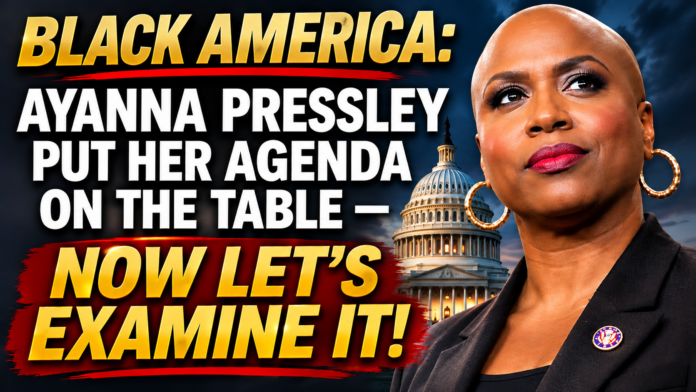






For years, I have been asking Black elected officials one simple question: What is your agenda for Black America? Not what you are going to do for everybody else. Not what your political party wants to accomplish. I want to know what you are proposing for the descendants of American slavery, the very people whose votes have helped Democrats maintain political power for generations.
Congresswoman Ayanna Pressley recently delivered a speech outlining her political priorities. I listened because she did something I have long asked of Black politicians. She put an agenda on the table and acknowledged that Black voters, particularly Black women, helped deliver Democratic victories. She also declared that it was time for Democrats to deliver for Black America.
I respect that acknowledgment, but it does not pay bills, create ownership, improve schools, or build generational wealth. We have celebrated enough elections without asking what happens afterward. So, I decided to examine her agenda not through the eyes of a Democrat or a Republican, but through the interests of Black America.
Homeownership: Are We Building Wealth or Managing Poverty?
One area where Pressley addressed a serious concern among Black Americans was housing discrimination. She discussed discriminatory property appraisals, affordable housing, and the growing influence of corporate landlords. These are legitimate issues because undervaluing Black-owned property directly affects equity, borrowing power, and the wealth families can leave their children.
But my question goes further. Where is the national plan to move Black Americans from renting to ownership? Where is the protection for seniors who have paid off their mortgages but face property taxes that threaten their ability to stay in their homes?
We cannot continue discussing affordable housing without addressing ownership. There is a difference between helping someone afford rent and helping that person acquire an appreciating asset. Both matter, but only the latter automatically provides an opportunity to accumulate property equity.
Black America needs more homeowners, more business owners, and more opportunities to build wealth that endures beyond one generation. I want to hear more about that.
Medicare for All: Black Americans Are Already in the Healthcare System
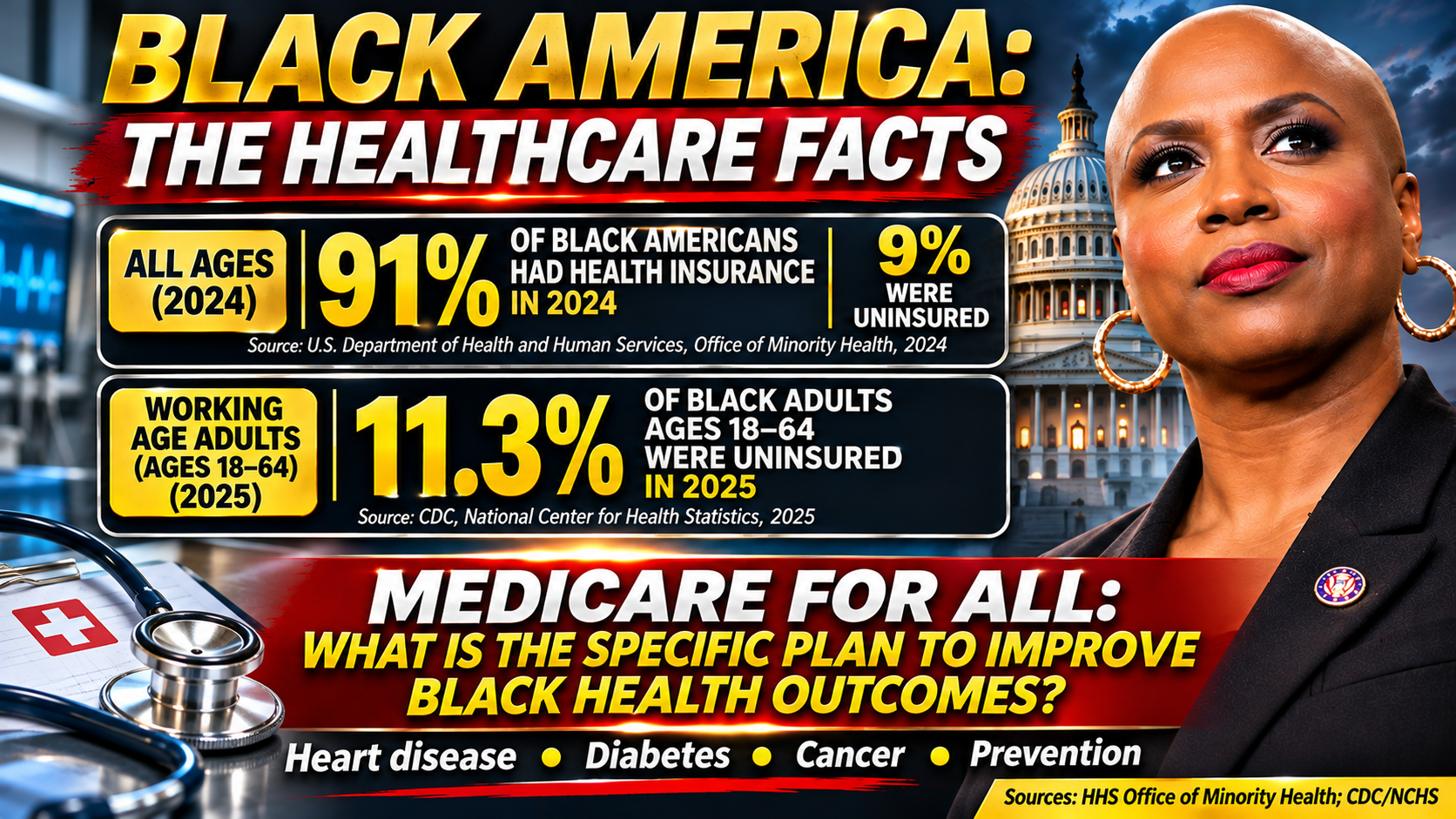
Pressley made Medicare for All a major part of her agenda. But here is where I have questions, because the overwhelming majority of Black Americans already have some form of health insurance through employment, Medicaid, Medicare, or other coverage.
That does not mean everyone has adequate insurance. However, expanding insurance coverage is not the same as presenting a specific healthcare agenda for Black Americans.
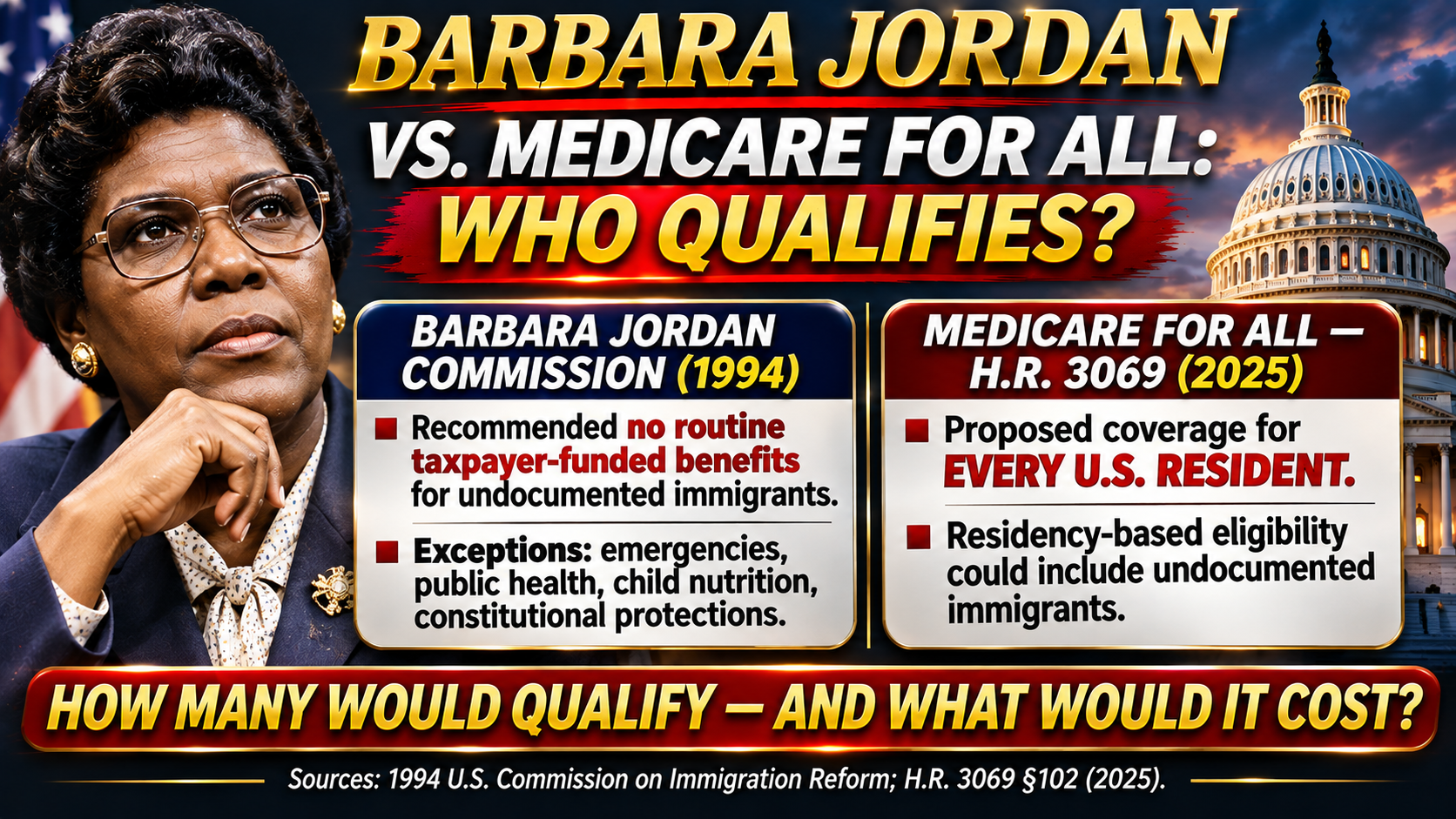
Depending on how Congress drafts Medicare for All legislation, undocumented immigrants could also become eligible for publicly financed coverage. Supporters argue that universal coverage improves public health and reduces financial barriers. Critics question the costs and whether people without lawful immigration status should qualify for federal benefits.
And that brings me to the late Congresswoman Barbara Jordan.
Have we forgotten Barbara Jordan’s remarks on immigration and public benefits? Jordan chaired the bipartisan U.S. Commission on Immigration Reform during the Clinton administration. Her commission generally recommended that people unlawfully present in the United States not qualify for public benefits, while recognizing exceptions for emergency services and essential public protections.
Jordan understood that America could have compassion while maintaining laws governing immigration and eligibility for taxpayer-funded programs.
But my larger concern is this: What is the plan to make Black America healthier?
Where is the strategy for diabetes, hypertension, heart disease, obesity, and preventable illness? Why aren’t we talking more about nutrition, physical fitness, healthy food, and educating our children about taking responsibility for their bodies?
As a holistic health practitioner, I believe access to medical care is important, but prevention must be part of the conversation. An insurance card does not automatically produce a healthy body. Black America needs a healthcare agenda that helps us live longer, healthier lives, not merely one that expands the number of people receiving coverage.
Abolishing ICE: What Happens Next?
Pressley called for abolishing Immigration and Customs Enforcement and ending qualified immunity for ICE agents. Having spent 33 years in law enforcement and corrections, I have serious questions about that proposal. We heard similar arguments during the movement to defund the police, but eliminating an agency does not eliminate its responsibilities. America still has immigration laws, so who will enforce them if ICE disappears?
And what about Democratic proposals to provide a pathway to citizenship for potentially 10 million or more undocumented immigrants? Has Pressley examined how such a policy could affect Black American jobs, wages, and economic opportunities? The economic effects are debated, but Black workers deserve to be part of that discussion.
Have we forgotten what our ancestors taught us? Booker T. Washington emphasized economic self-sufficiency, Frederick Douglass fought for the economic advancement of formerly enslaved Americans, and Barbara Jordan warned that immigration policy must consider its impact on American workers, particularly disadvantaged communities. Are we listening to those lessons today?
Government agencies must be accountable when they violate people’s rights. But before Congress eliminates ICE or undertakes sweeping immigration changes, it should explain what replaces the agency and how its policies will affect American workers. My question to Congresswoman Pressley is simple: Where is the plan to protect Black American economic interests while advancing your immigration agenda?

Temporary Protected Status: How Long Is Temporary?
Pressley also discussed extending Temporary Protected Status for Haitians and people from other countries. I understand the humanitarian purpose of TPS. When a country experiences war, natural disasters, or extraordinary instability, returning people to dangerous conditions raises serious concerns.
But Congress needs to explain one thing. How long is temporary?
Some TPS designations have continued through repeated extensions for decades. Federal law permits those extensions when qualifying conditions continue, but the public deserves to understand the long-term policy.
When does temporary protection end? What happens when conditions improve? What happens to individuals who have established lives here but do not have another lawful immigration status?
We can recognize humanitarian concerns without abandoning the principle that a nation must have enforceable immigration laws.
Strong Families, Education, and Economic Independence: What Is the Plan for the Black Family?
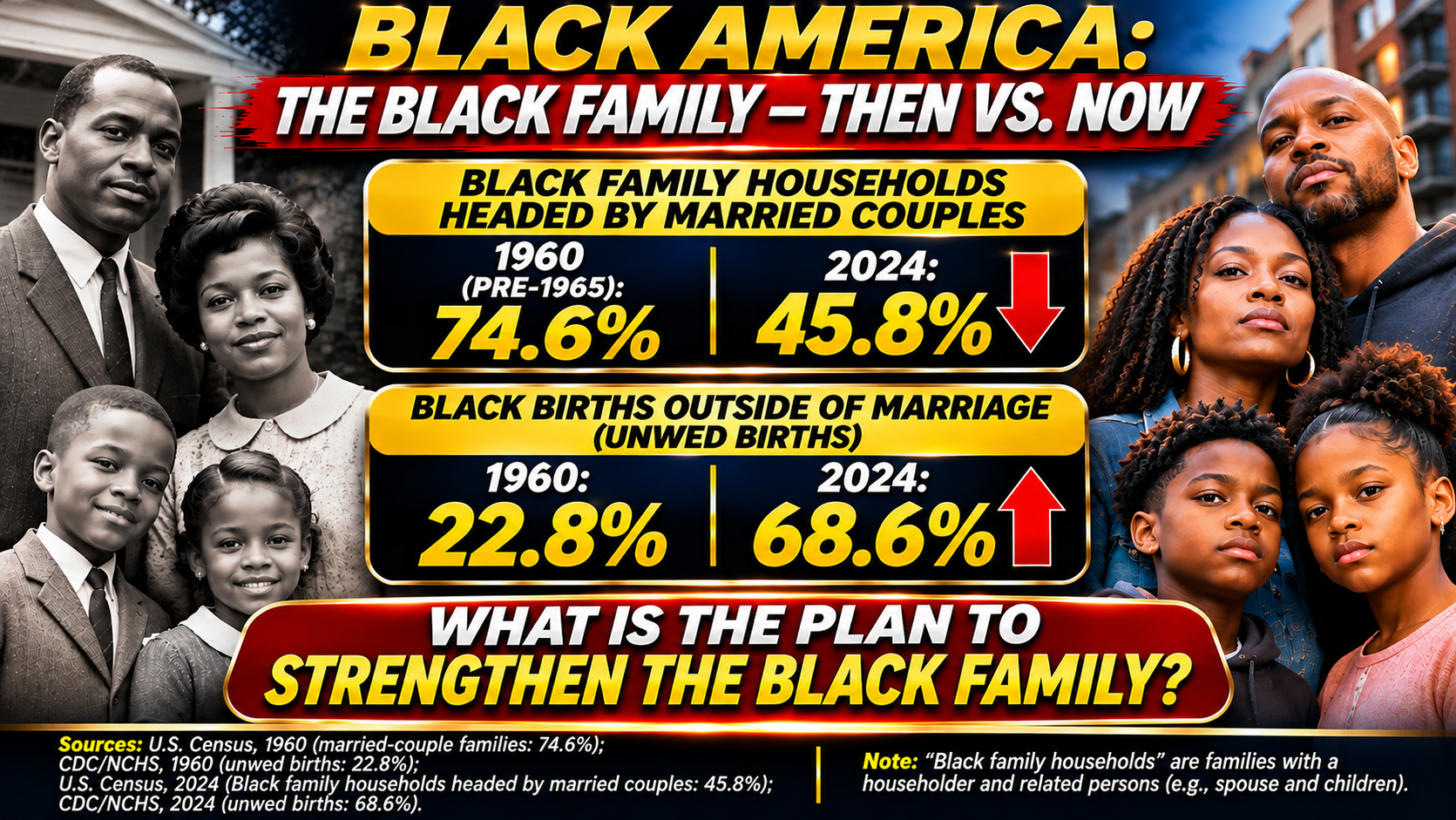
Pressley discussed childcare, paid leave, workers’ rights, and other economic issues. These policies may benefit Black families, and they deserve consideration. But I have a bigger concern that too many Black elected officials seem unwilling to address. The traditional Black family structure has changed dramatically. In 1960, approximately 74% of Black families were headed by married couples. By 2024, that number had fallen to approximately 45.8%. Meanwhile, 68.6% of births to Black mothers occurred outside marriage in 2024. These numbers raise serious questions about marriage, responsible fatherhood, family stability, and the future of our children. We cannot continue discussing childcare and government assistance without also discussing how to strengthen families and create stable households. So, my question to Congresswoman Pressley is simple: What is your plan to strengthen and rebuild the Black American family?
Where is the conversation about strengthening marriage, responsible fatherhood, healthy relationships, and stable households? Where are the policies that encourage family formation rather than simply aiding after families face economic hardship? Unmarried parents can certainly raise successful children, but we cannot ignore the financial challenges many single-parent households face.
And what about education and economic independence? What is Pressley’s targeted strategy for improving educational achievement, expanding Black-owned businesses, increasing access to capital, and helping Black families build generational wealth?
I believe government has a responsibility to remove discriminatory barriers and provide fair opportunities. But Black America also has responsibilities involving marriage, parenting, education, entrepreneurship, financial discipline, and community investment. Government cannot replace strong families, and assistance programs cannot substitute for economic independence.
So, my question to Congresswoman Pressley is simple: What is your plan to strengthen the Black American family, restore economic independence, and help our children build a better future? We cannot continue building our entire economic strategy around government assistance. Assistance may help people survive difficult times, but it cannot be our long-term plan for generational wealth.
Reparations: I Saved the Most Important Question for Last
Now, I deliberately saved reparations for last because this is where Congresswoman Pressley addressed a specific historical injustice involving descendants of American slavery. She supports H.R. 40 and wants Congress to act. I recognize that commitment, but I also believe Black America has every right to question why this legislation has remained unfinished for so long.
Congressman John Conyers first introduced H.R. 40 in 1989. That was 37 years ago! During President Trump’s first administration, Congresswoman Sheila Jackson Lee reintroduced the legislation in 2019. Reparations suddenly became a major talking point during the 2020 Democratic presidential campaign. Candidates discussed it, endorsed studying it, and sought support from Black voters. But after the speeches, campaign promises, and elections, where were the results?
This is what concerns me. Reparations became a prominent campaign issue, but Black Americans are still waiting for Congress to establish even the proposed study commission. I am not questioning every politician’s sincerity, but I am questioning why a bill can be discussed during election season and remain unfinished afterward.
And let’s remember what H.R. 40 does. It establishes a commission to study slavery’s continuing effects and to recommend reparations. It does not authorize direct compensation. So why has Congress taken 37 years without passing even the legislation to establish that commission?
What will the eligibility requirements be? What form will compensation take? Who will qualify? How will reparations be funded? When will descendants of American slavery finally see a concrete legislative plan?
We are discussing slavery, Jim Crow, discriminatory government policies, and the generations of economic opportunities denied to our ancestors. Universal healthcare is not reparations. Affordable housing is not reparations. Childcare and paid leave cannot substitute for addressing this specific historical injustice.
I recognize Congresswoman Pressley’s willingness to keep reparations on the agenda. But after 37 years, Black America deserves more than another speech, another campaign promise, or another call for a study. Congress must explain what it intends to do and when it intends to do it.
My Final Assessment: Black America Must Demand Measurable Results
After examining Pressley’s speech, I see proposals that directly address Black American concerns, particularly discriminatory home appraisals and reparations. I also see broader progressive policies that may benefit Black Americans but are not specifically designed around our historical circumstances.
What remains unanswered is how these proposals would translate into measurable improvements in Black homeownership, business ownership, health, education, and generational wealth.
I am not interested in attacking Pressley for putting her agenda on the table. I want more Black elected officials to do exactly that. But once an agenda is presented, the public has every right to examine it, question it, and demand details.
We have spent too many years celebrating political victories while struggling with many of the same economic problems. Political loyalty should never eliminate political accountability, and asking questions should never be confused with opposing progress.
Voting expresses preference. Funding creates obligation. Political representation must produce measurable results.
Congresswoman Pressley said it is time for Democrats to deliver for Black America. The next question is what they will deliver, how they will implement it, and whether it will create lasting improvements for the people whose support they continue to seek.
Because at the end of the day, Black America cannot depend on election-night celebrations to change our condition. We must demand accountability while taking responsibility for building stronger families, healthier communities, successful businesses, and generational wealth.
Only Black America can save Black America.

A multifaceted personality, Damon is an activist, author, and the force behind Black Westchester Magazine, a notable Black-owned newspaper based in Westchester County, New York. With a wide array of expertise, he wears many hats, including that of a Spiritual Life Coach, Couples and Family Therapy Coach, and Holistic Health Practitioner. He is well-versed in Mental Health First Aid, Dietary and Nutritional Counseling, and has significant insights as a Vegan and Vegetarian Nutrition Life Coach. Not just limited to the world of holistic health and activism, Damon brings with him a rich 32-year experience as a Law Enforcement Practitioner and stands as the New York Representative of Blacks in Law Enforcement of America.