

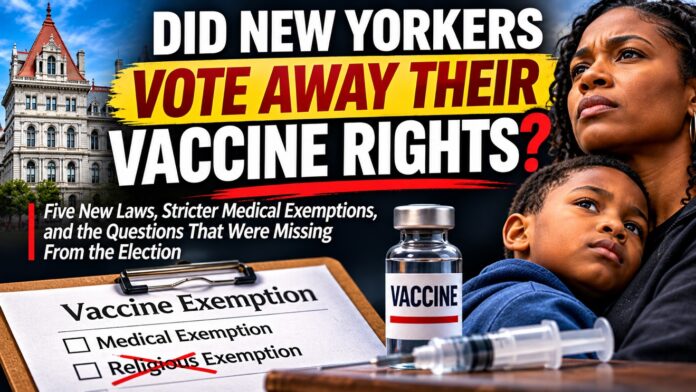





Medical Freedom, Parental Rights, and the Questions Missing From New York’s 2026 Election
By Damon K. Jones | Publisher, Black Westchester Magazine
New Yorkers went to the polls on November 3, 2026, after months of political campaigning. We heard about Donald Trump, immigration, crime, housing, taxes, and the rising cost of living. Democrats and Republicans spent millions trying to convince voters that their party was the answer to New York’s problems. But there was another issue that deserved serious public discussion: How much authority should New York State have over the medical decisions parents make for their children?
While politicians were asking for our votes, lawmakers had already been making decisions about vaccination requirements, medical exemptions, and the authority of state health officials. Yet how many voters knew what had changed? How many understood the legislation being considered in Albany? And how many heard their candidates explain where they stood on religious exemptions, medical freedom, and parental rights?
In 2019, New York eliminated religious exemptions from school vaccination requirements. That decision was not made through a statewide public referendum. It was made by the Legislature and signed into law by then-Governor Andrew Cuomo. Parents who previously qualified for religious exemptions could no longer rely on those exemptions to satisfy school immunization requirements.
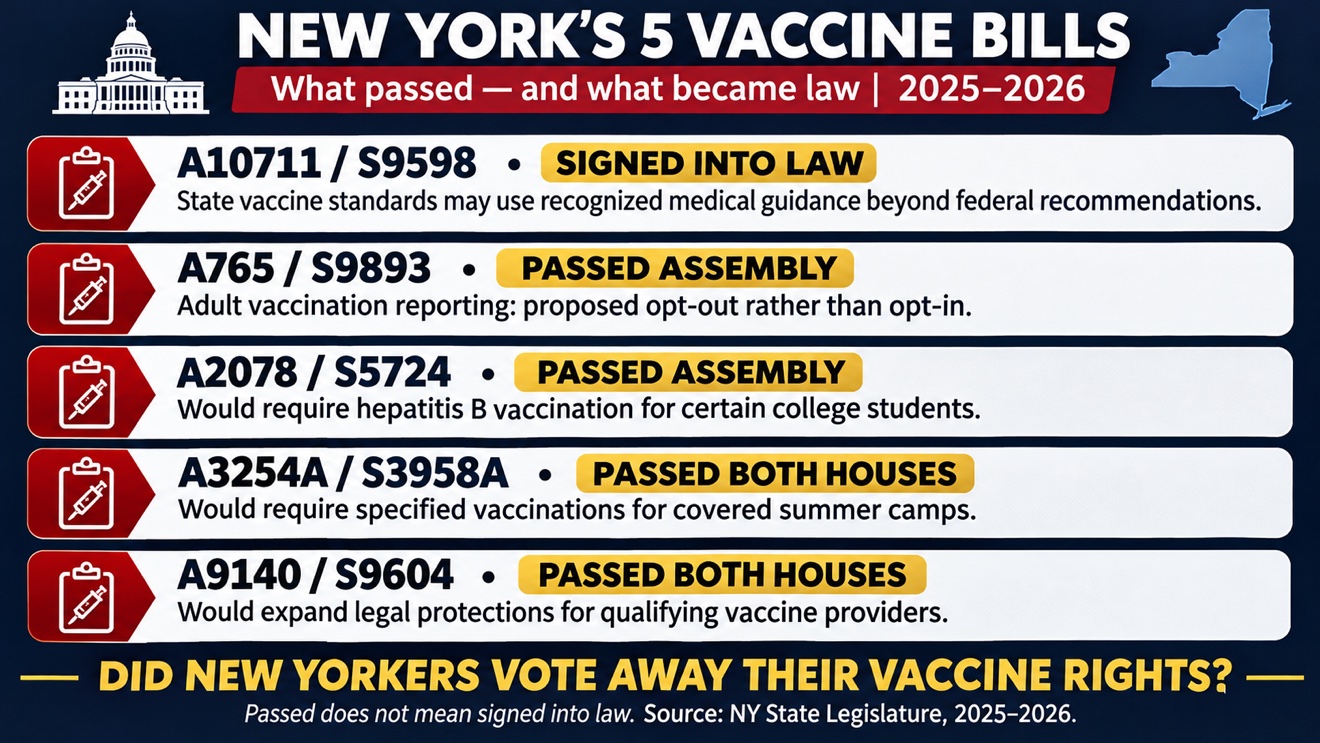
Fast-forward to 2026. Governor Kathy Hochul signed legislation giving New York greater flexibility to establish vaccine standards using recommendations from recognized medical organizations rather than relying exclusively on federal guidance. Other legislation concerning summer camps, college vaccination requirements, immunization records, and vaccine-provider liability also advanced through Albany.
Supporters argue that these policies protect public health, preserve access to vaccines, and help prevent dangerous outbreaks. Those are legitimate concerns. Vaccines have an established role in preventing serious infectious diseases. But public health does not eliminate the responsibility of elected officials to explain their decisions or answer questions about the rights of families.
And that brings me back to the election.
When candidates ask voters to give them another term in office, shouldn’t voters know how those candidates intend to exercise government authority over medical decisions? Shouldn’t parents know whether a candidate supports restoring religious exemptions, maintaining existing medical exemption standards, or expanding vaccination requirements?
An election victory is not automatically a public endorsement of every policy passed by the winning party. People vote for many reasons, and some of the most consequential decisions government makes receive very little attention during campaigns.
The question is not whether every New Yorker should reject vaccination. The question is whether New Yorkers were given enough information to evaluate the medical freedom policies of the people asking for their votes.
Because democracy should mean more than choosing between political parties. It should also mean understanding what those parties are doing with the authority voters give them.

A multifaceted personality, Damon is an activist, author, and the force behind Black Westchester Magazine, a notable Black-owned newspaper based in Westchester County, New York. With a wide array of expertise, he wears many hats, including that of a Spiritual Life Coach, Couples and Family Therapy Coach, and Holistic Health Practitioner. He is well-versed in Mental Health First Aid, Dietary and Nutritional Counseling, and has significant insights as a Vegan and Vegetarian Nutrition Life Coach. Not just limited to the world of holistic health and activism, Damon brings with him a rich 32-year experience as a Law Enforcement Practitioner and stands as the New York Representative of Blacks in Law Enforcement of America.