


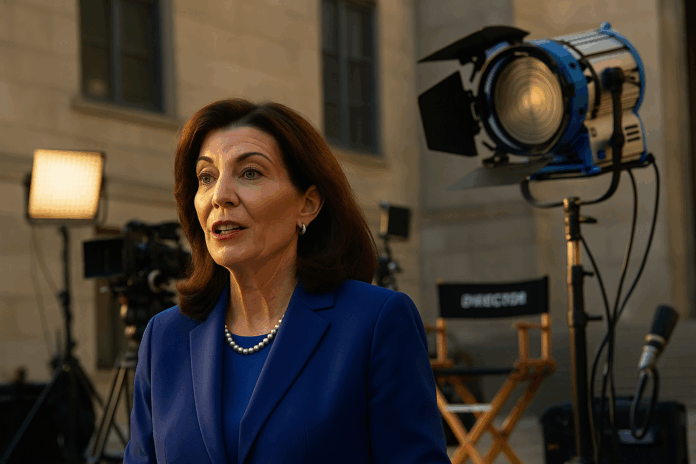





When it comes to politics, slogans often carry the day. New York politicians boast of being the “film capital of the East Coast,” promising jobs, tourism, and cultural prestige. To back that promise, taxpayers are on the hook for more than $1 billion in film and TV subsidies in 2025—a figure that raises both eyebrows and fundamental questions.
The Logic Behind Subsidies
The logic offered by lawmakers is straightforward: Hollywood jobs are good jobs, and without subsidies, productions will flee to states like Georgia, Louisiana, or even Canada. To keep the cameras rolling in New York, the state dangles tax credits and incentives to producers.
But what does the math show? For every dollar taxpayers spend, the state recoups roughly 30 cents in economic return. That means for every episode of Saturday Night Live or FBI: Most Wanted subsidized with millions in credits, New Yorkers are essentially paying a premium to be entertained.
If this were a private investment, no rational investor would accept such a return. Yet in the world of politics, spending other people’s money can always be spun as “investment.”
The Outcome for Taxpayers
The outcome is simple: taxpayers shoulder the burden while major media conglomerates—companies worth billions—collect the benefits. NBC, CBS, and streaming giants like Netflix and Amazon do not need help from a working-class homeowner in the Bronx or a small business owner in Mount Vernon. Yet those are precisely the people underwriting this subsidy scheme through their tax dollars.
And here lies the most significant flaw: $1 billion in taxpayer money does not equal $1 billion in jobs created. Independent studies show the state pays upward of $65,000–$75,000 per job “created” or “supported.” By comparison, investing in infrastructure, healthcare, or small business development would generate more jobs per dollar spent and deliver longer-lasting returns to communities. Subsidies may create headlines about “tens of thousands of jobs,” but the cost per job makes this one of the most inefficient economic development programs in the state.
For Black New Yorkers, the effect of these billion-dollar subsidies is not even apparent. The state requires diversity plans from film and TV productions, but it does not release public data showing how many Black workers actually get hired. That means communities most in need of economic opportunity cannot even measure whether they are sharing in the jobs and income these programs are supposed to generate. Without transparency, taxpayers in Black neighborhoods are left footing the bill for subsidies that may benefit wealthy corporations, while having no guarantee that any of the promised jobs or contracts reach their communities.
The Broader Lesson
The lesson here is not limited to film subsidies. It’s about the political logic that prioritizes headlines over hard numbers. Elected officials measure success by how many ribbon-cuttings they can attend, not by whether taxpayers see value in return.
The outcome is predictable: more subsidies, more spending, and fewer resources left for the issues that determine whether New Yorkers can afford to stay in their own state.
Final Thought
If we want logic to guide policy, the question isn’t whether Hollywood should film in New York—it’s whether New Yorkers should be forced to pay Hollywood to do it. By that measure, the subsidies are less about job creation and more about political theater, staged at taxpayer expense.