




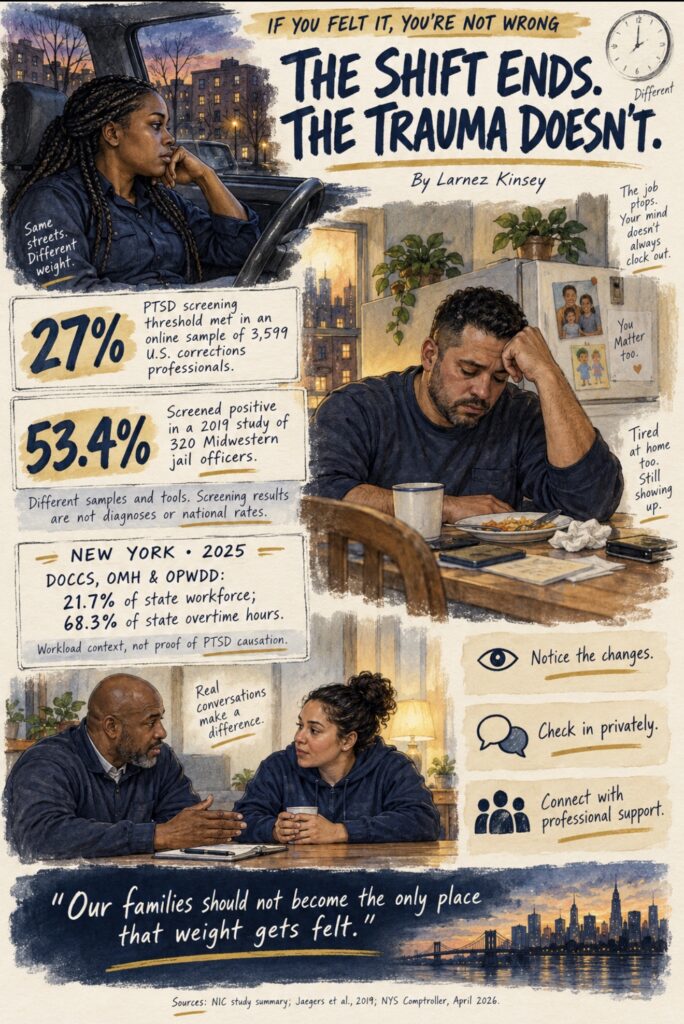
Twenty-seven percent. In an online study of 3,599 U.S. corrections professionals, more than one in four reported symptoms meeting a PTSD screening threshold. A separate 2019 study of 320 Midwestern jail officers found that 53.4 percent screened positive using a brief screening tool. These are findings from particular samples, not clinical diagnoses or national rates. They demand attention without exaggeration.
In New York, Corrections, the Office of Mental Health, and the Office for People With Developmental Disabilities represented 21.7 percent of the state workforce but accounted for 68.3 percent of state agency overtime hours in 2025. That does not prove overtime causes PTSD. It shows how heavily these agencies depend on people staying beyond their regular hours.
I have spent 21 years in New York State service, including 11 inside a maximum security forensic psychiatric facility. My responsibilities include crisis management, de-escalation, and behavioral stabilization. I understand the expectation to remain composed while protecting others. I want us to examine what that composure can conceal.
We manage crises, respond to assaults, and protect the people in our care. A staff member can be assaulted and still be expected to finish the shift. Another assignment needs coverage. The immediate danger passes, and the day continues around the person who experienced it.
Continuing is not the same as recovering.
A swollen wrist gives you somewhere to point. How do you show someone that the incident keeps replaying while you drive home? How do you explain being exhausted but unable to settle?
An injury that cannot be seen can be doubted. Before speaking, we may already be preparing a defense. Will they believe me? Will they think I am avoiding work? Sometimes we stay silent because we fear the response. Sometimes we have not recognized the signs ourselves.
Imagine arriving home after a difficult shift. This is an illustration, not a coworker’s story. You sit in the parked car, needing a minute before anyone asks something of you. Upstairs, you heat food and leave half of it. A loved one asks an ordinary question. Your answer comes out sharp, and their expression changes.
Later, you lie awake calculating how much sleep you can still get. By morning, you call it a bad night and get dressed.
None of those experiences alone establishes PTSD. Persistent changes in sleep, mood, concentration, or reactions deserve professional assessment. Reporting to work does not settle the question.
Attendance is a record of showing up. It is not an assessment of wellbeing.
We can become so accustomed to pushing through that we describe changes as personality. “I just have a temper.” “I don’t like people anymore.” Have those statements always described you, or are they explaining something you have not examined?
“Reach out if you need help” assumes employees recognize the need, understand the process, and trust what happens after speaking. Leadership has a responsibility to help build those conditions.
Supervisors should be trained to notice changes and respond privately without diagnosing or humiliating anyone. That attention should begin with rookies. Leadership walkthroughs should include questions about their transition into the position: “How are you settling in?” “Has anything stayed with you after a shift?” “Do you know where to get support?”
Make those conversations routine. A new employee should not have to unravel before learning who they can speak with.
Dependable anchors could include a designated mentor, scheduled check-ins, and follow-up after serious incidents. Explain available resources and confidentiality limits. Help employees navigate access and find time to attend. A phone number on a handout is only useful if the person can realistically use it.
I also believe these environments need a trauma response team offering practical assistance and access to qualified clinical care. Nobody should be pressured to retell an incident before they are ready. The first conversation may come too soon; follow-up gives someone another opening.
These are suggestions for making a small but meaningful improvement in our wellbeing. They need adequate staffing, recovery time, and a culture that takes concerns seriously. Occupational trauma is real. We should not be left to carry the psychological weight of the job home and manage it alone.
Our families should not become the only place that weight gets felt.
In Westchester, it can surface at a Mount Vernon kitchen table or behind a New Rochelle bedroom door. Loved ones may notice withdrawal without understanding it. They deserve boundaries as well as compassion. Distress does not excuse mistreatment; recognizing it can help us seek support before more harm occurs.
If you recognize yourself here, you do not need a diagnosis before asking for help. Begin with what changed: “Since that incident, my sleep has been different.” Or, “I’m reacting differently, and I need help understanding why.” Write it down if speaking feels difficult. Ask a trusted person to sit with you while you contact a qualified professional.
For agency leaders and union representatives, bring three questions to the next meeting: Who checks in after an assault? How are rookies supported? Can employees access care without another exhausting negotiation? Workers should not have to disclose private medical information publicly to get those answers.
Want to examine the evidence? Read the corrections study summary, the 2019 jail officer study, and the New York workforce findings. Share this article with someone who keeps saying they are fine.
We give the job our attention, judgment, and protection. We deserve to return home with something left for ourselves and the people we love. We should not have to fall apart before someone believes something happened to us.