








There is something about the Medicare for All conversation that I believe Black America needs to examine more carefully. Every time politicians introduce another universal healthcare proposal, we hear about fairness, equality, compassion, and making sure everyone has access to medical treatment. Those are wonderful talking points, but I have a question that seems to get lost in the conversation. What exactly is Black America getting that we do not already have, and who stands to gain new eligibility under these proposals?
Before anyone rushes to accuse me of opposing healthcare, let me be perfectly clear. I am not arguing that people should be denied medical treatment. I am questioning the economic and legislative priorities of a government that continues to ask Black Americans to support policies without explaining the measurable benefits to our communities. We have spent generations supporting political agendas presented as progress, only to discover that progress for everybody does not necessarily translate into economic advancement for Black America.
Black Americans Are Already in the Healthcare System
Here is something rarely emphasized when Medicare for All is discussed. Millions of Black Americans already participate in America’s healthcare system through Medicaid, Medicare, employer-sponsored insurance, and other coverage programs. We are not a population legally excluded from federal healthcare because of our race. We have eligibility pathways available to us, even though income requirements, age restrictions, affordability, and other barriers still prevent some Black Americans from receiving the care they need.
According to the Kaiser Family Foundation, about 10.1 percent of Black Americans under age 65 were uninsured in 2024. That means nearly 90 percent already had some form of healthcare coverage. These figures do not mean the system is perfect, nor do they mean Black Americans are receiving equal treatment. However, they establish an important fact: most Black Americans are already insured, and expanding eligibility is not the same as providing them with an entirely new benefit.
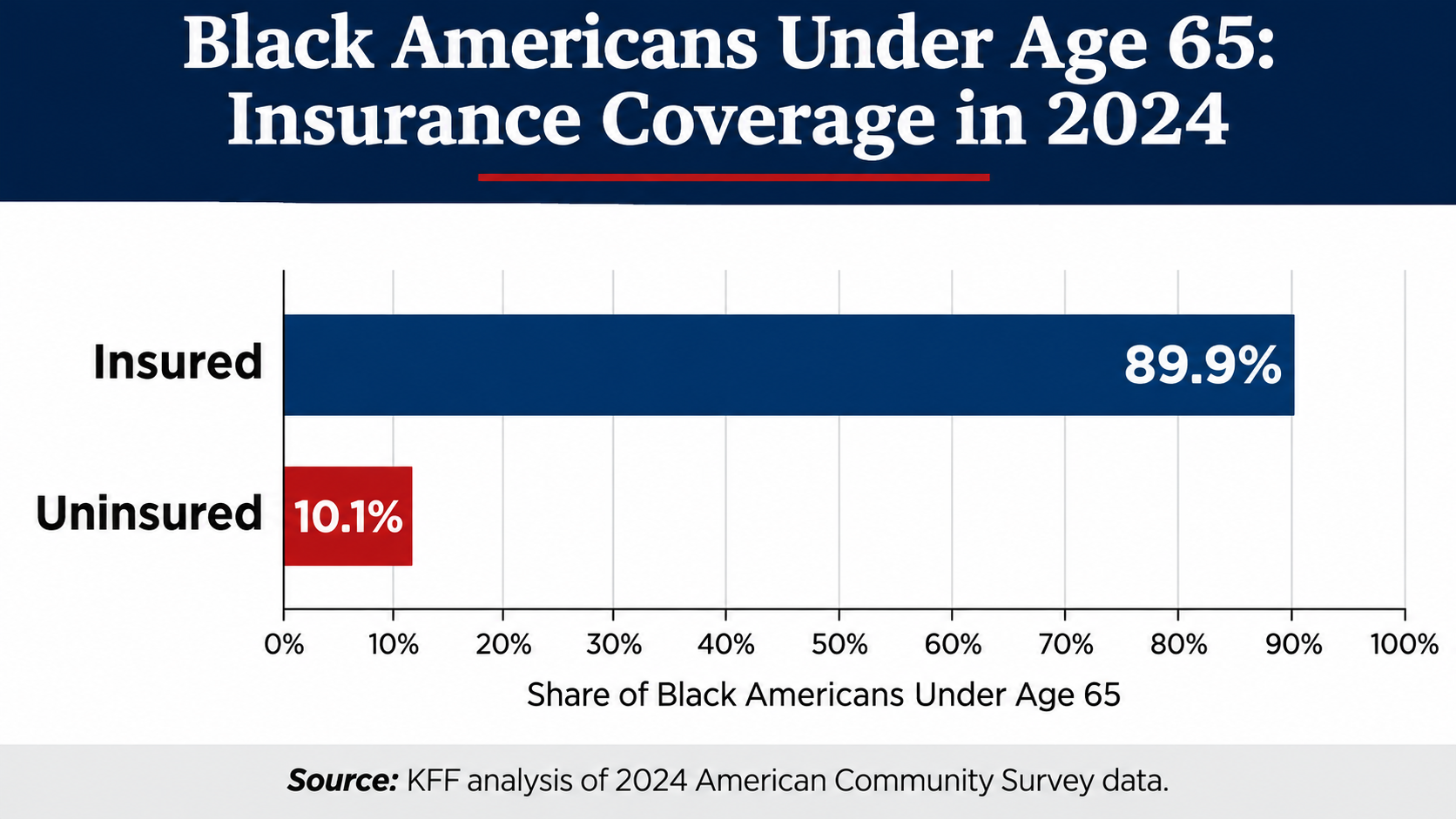
When politicians promote Medicare for All as a historic expansion of healthcare, I want to know how much of that expansion represents genuinely new coverage for Black American citizens. How much represents improved benefits for people already insured, and how much represents changes to federal eligibility rules for populations currently excluded from these programs? Those are legitimate questions that deserve specific answers.
The Immigration Eligibility Question Nobody Wants to Discuss
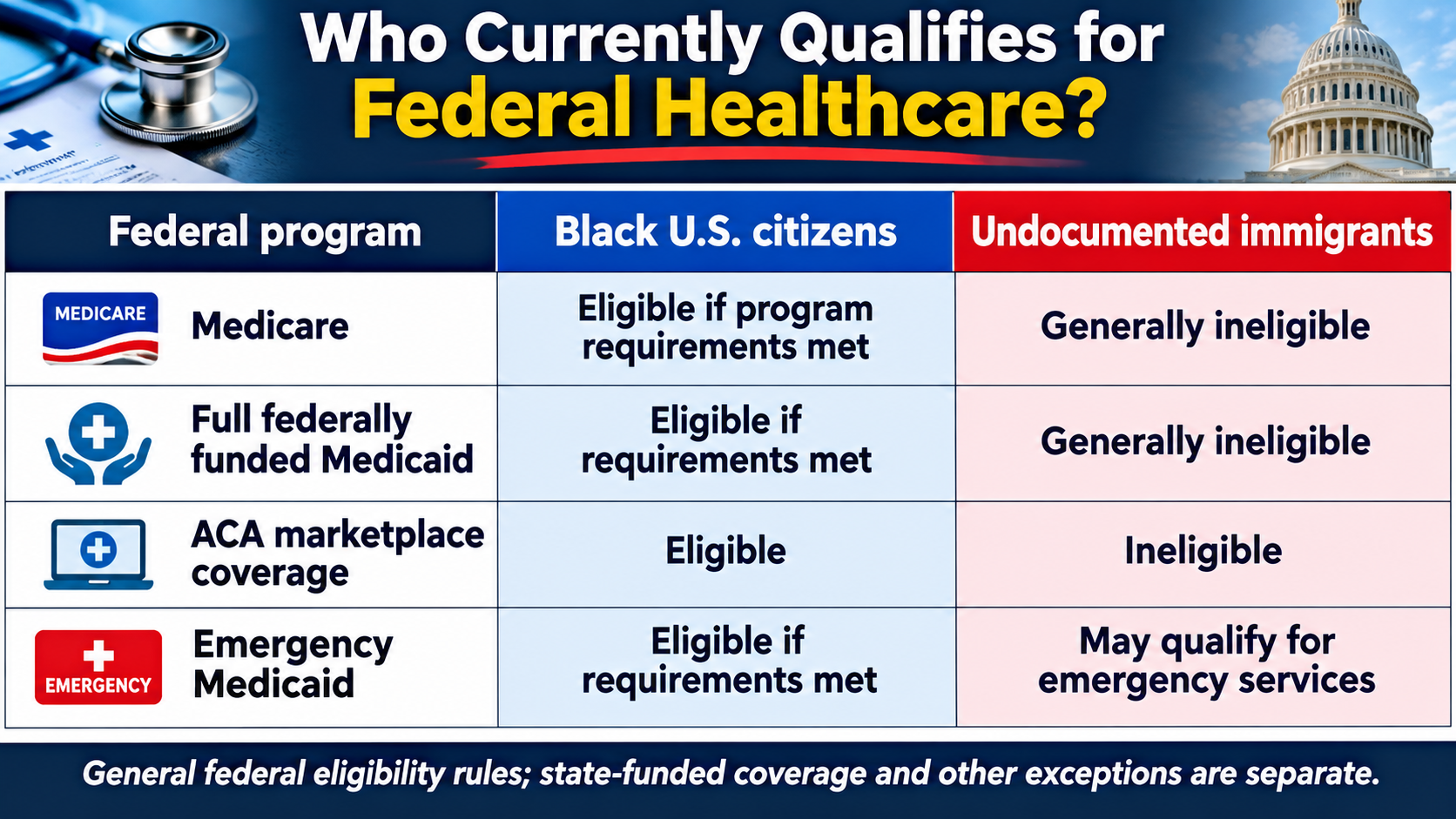
Under current federal law, undocumented immigrants generally cannot enroll in Medicare, federally funded Medicaid, or Affordable Care Act marketplace coverage. There are limited exceptions for emergency medical services, and some states separately fund healthcare programs for certain immigrant populations. Nevertheless, immigration status remains a major legal barrier to participation in federally funded health insurance programs.
Now examine the Medicare for All Act introduced by Senator Bernie Sanders in April 2025. Section 102 provides healthcare benefits to every individual who qualifies as a United States resident under federal rules. It also authorizes the Secretary of Health and Human Services to extend eligibility to additional individuals. This would establish an eligibility framework substantially different from that governing existing federal healthcare programs.
That distinction matters because Black American citizens and undocumented immigrants do not face the same legal barriers to federal healthcare. Black Americans may struggle with affordability, insurance gaps, inadequate hospitals, or poor treatment, but citizenship does not exclude them from eligibility for Medicare or Medicaid. Undocumented immigrants face an additional legal restriction that a residency-based Medicare for All program could remove.
For an undocumented immigrant who is currently uninsured and becomes eligible, this could represent an entirely new federal healthcare benefit. For a Black American already receiving comprehensive Medicaid coverage, the immediate change might be considerably smaller. Other Black Americans could benefit significantly from lower deductibles, broader coverage, and lower medical expenses. The point is that these outcomes differ, and politicians should stop treating them as identical.
Barbara Jordan Warned About Public Benefits and Illegal Immigration
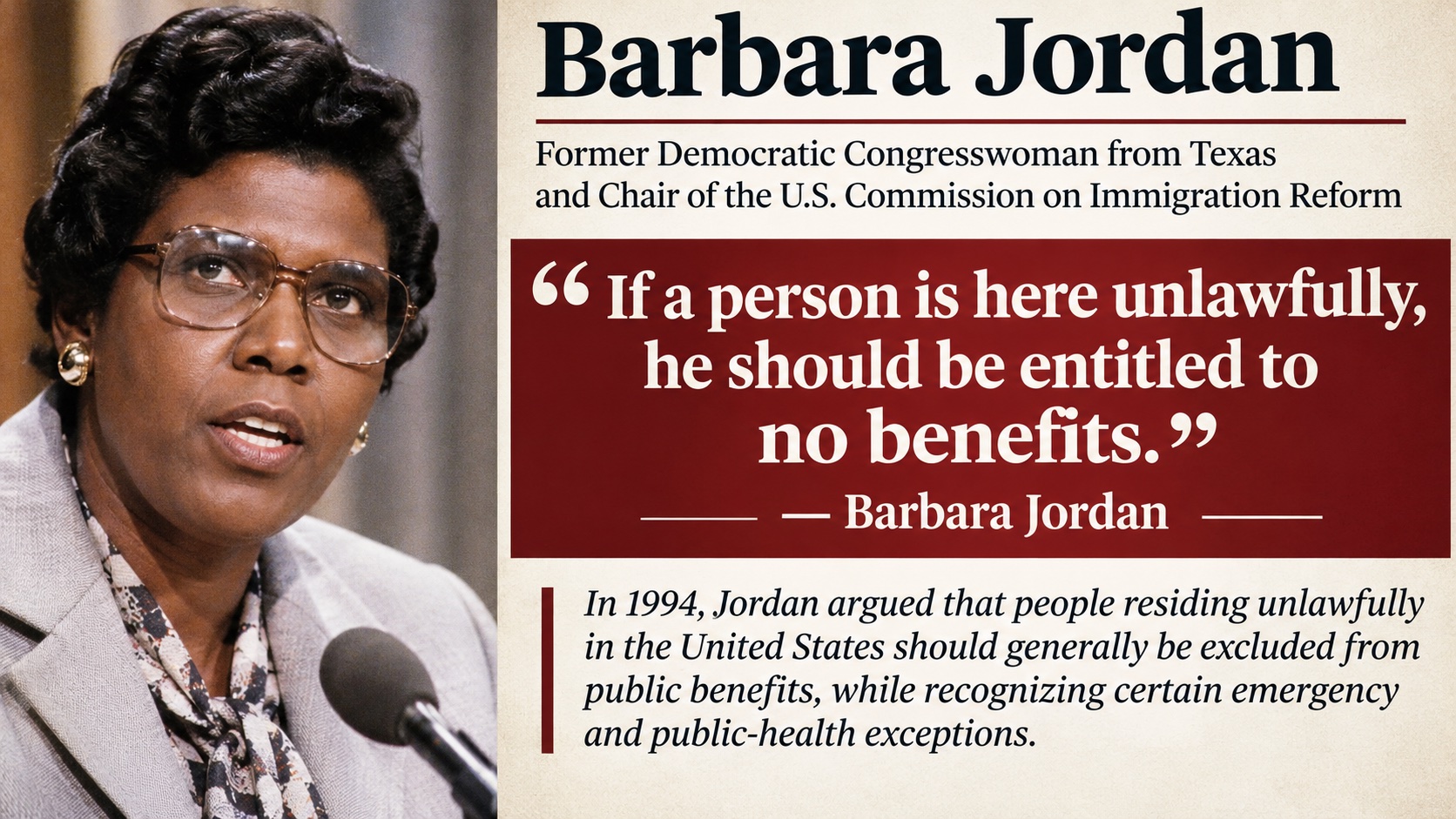
What makes this conversation even more interesting is that one of the strongest voices calling for limiting taxpayer-funded benefits for undocumented immigrants was not a Republican conservative. It was Barbara Jordan, a Black woman, civil rights icon, former Democratic congresswoman from Texas, and one of the most respected political voices of her generation. In 1993, President Bill Clinton appointed Jordan to chair the bipartisan U.S. Commission on Immigration Reform.
In 1994, Jordan made her position clear. She stated, “If a person is here unlawfully, he should be entitled to no benefits.” Her commission recommended that people residing in the country illegally generally be excluded from publicly funded assistance, with exceptions for emergency medical treatment, public health, and constitutionally protected services. Jordan also supported maintaining a safety net for lawful permanent residents.
Now, think about that for a moment. Here was a Black Democratic civil rights leader who understood the importance of protecting vulnerable Americans while maintaining a distinction between legal and illegal immigration. Jordan recognized that the government has a responsibility to establish immigration policies that serve the national interest, including protecting American workers and taxpayers.
So, I must ask, when did questioning taxpayer-funded benefits for undocumented immigrants become something Black Americans are expected to apologize for? If Barbara Jordan could raise these concerns in the 1990s, why should Black Americans be discouraged from examining the same questions today? We should be able to discuss immigration eligibility, federal spending, and Black America’s economic interests without our concerns being dismissed simply because they challenge the political agenda of the moment.
Black Americans Are Taxpayers, Not Just Beneficiaries
Another part of this conversation deserves attention. Millions of Black Americans wake up every morning, go to work, run businesses, pay property and payroll taxes, and help fund the government programs politicians want to expand. Black Americans are not simply recipients of public assistance. We are workers, homeowners, entrepreneurs, retirees, and taxpayers whose financial contributions help sustain this country.
When Congress proposes expanding eligibility for federally financed healthcare to undocumented immigrants, Black taxpayers would be among those contributing to the expanded system. This is not an argument that undocumented immigrants pay nothing. Research from the Institute on Taxation and Economic Policy estimated that undocumented immigrants contributed $96.7 billion in federal, state, and local taxes in 2022, including Medicare payroll taxes. Those contributions are part of the financial picture and should not be ignored.
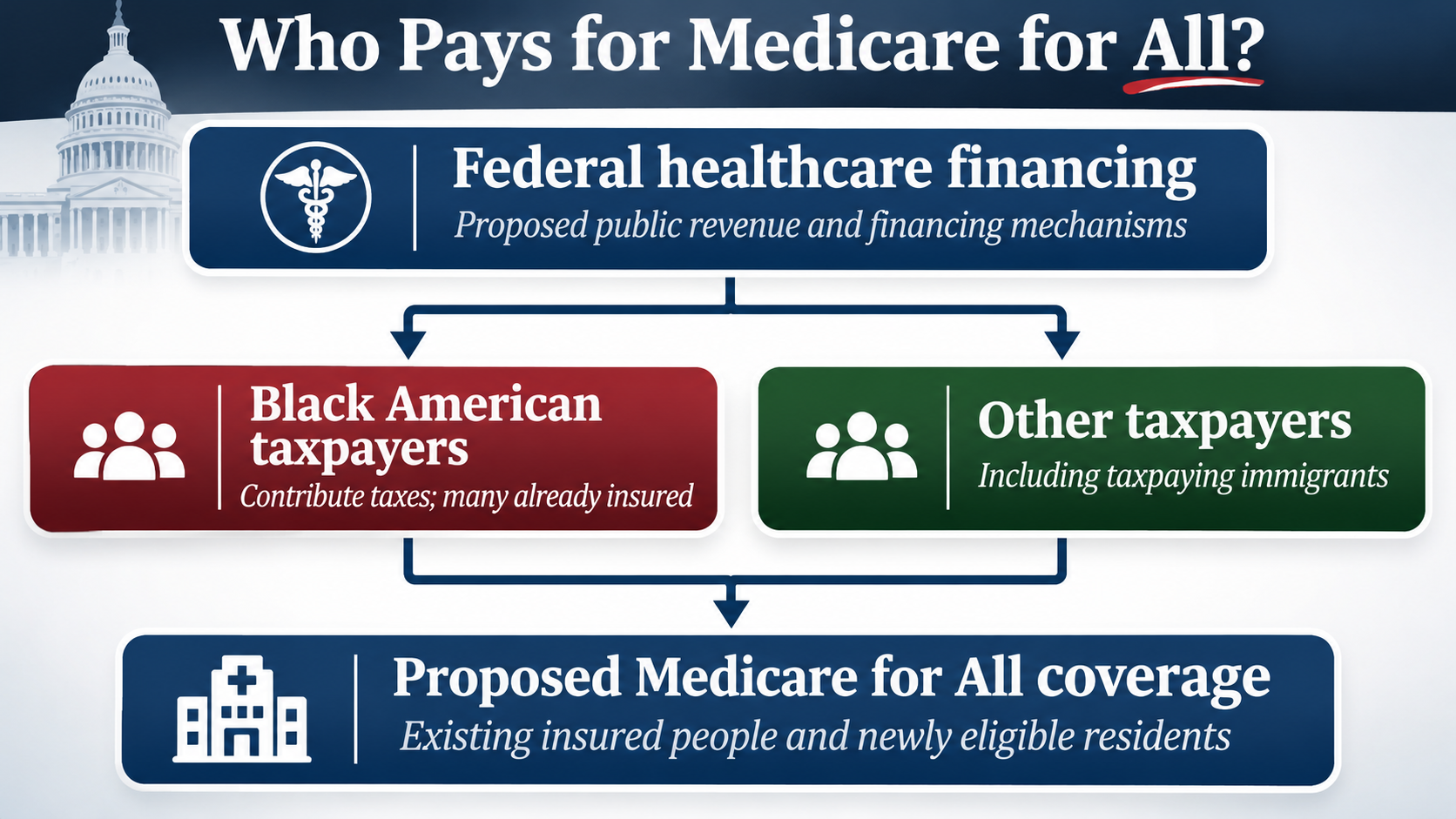
But acknowledging those contributions does not eliminate the responsibility to explain how a new federal healthcare program would be financed. Would Black working families pay higher taxes? Would Black small-business owners face additional obligations? Would savings on insurance premiums offset those costs? Would Black retirees and homeowners see meaningful financial improvements, or would some simply trade one set of healthcare expenses for another?
These questions matter because government programs are not funded by political slogans. They are funded by economic resources, including the income earned by working Americans. Before asking Black taxpayers to support another major federal commitment, Congress should explain the costs, benefits, and how those benefits are distributed.
New Eligibility Is Not the Same as Improved Coverage
This is the distinction I want Black America to understand. Someone who is legally excluded from a federal healthcare program and then becomes eligible receives a different kind of benefit than someone who already qualifies for government healthcare but receives expanded services. Both may benefit, but the nature and magnitude of those benefits are not necessarily equal.
Research from KFF found that 46 percent of likely undocumented immigrant adults reported being uninsured in 2025. Compare that with the 10.1 percent uninsured rate among Black Americans under 65 in 2024. These figures involve different age groups and survey periods, so they should not be treated as a perfect comparison. Nevertheless, they illustrate why changing eligibility rules could substantially affect uninsured immigrant populations.
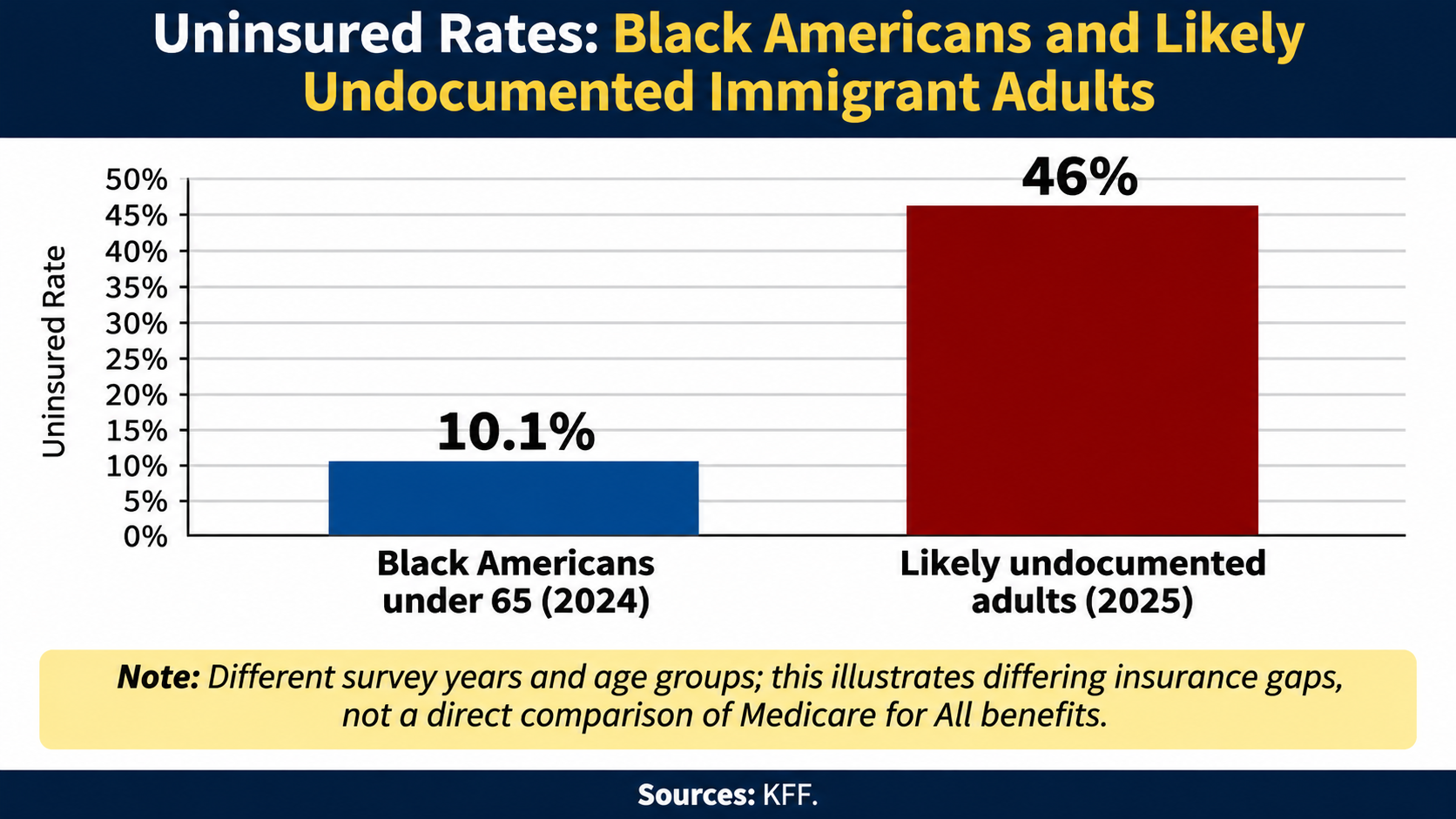
Does that prove undocumented immigrants would receive more total economic value from Medicare for All than Black Americans? No. That would require a comprehensive analysis of healthcare spending, tax contributions, insurance savings, and the benefits each population receives. But it does establish why I believe Congress should produce that analysis before presenting universal healthcare as an automatic economic victory for Black America.
I am not interested in politicians telling us everybody wins without showing us the numbers. I want to see how many Black American citizens would become newly insured, how much Black households would save annually, and how those results compare with expanding eligibility to undocumented immigrants.
What About Black America’s Existing Healthcare Problems?
While Washington debates universal coverage, many predominantly Black communities continue to struggle with inadequate healthcare facilities, physician shortages, chronic diseases, and unequal health outcomes. Having an insurance card does not guarantee access to a quality physician, a nearby hospital, or timely medical treatment. These problems require investments beyond simply changing who qualifies for federal insurance.
I also want to know what these proposals would do for Black-owned healthcare businesses, medical practices, community clinics, and healthcare entrepreneurs. If billions of additional federal dollars enter the healthcare economy, who receives the contracts, who owns the institutions, and who builds long-term economic opportunities? Healthcare policy has economic consequences that extend far beyond the examination room.
A comprehensive healthcare proposal can address coverage and still leave questions about Black economic development unanswered. We should be examining both issues instead of assuming that expanded government spending automatically strengthens Black communities.
Black America Must Demand a Return on Its Investment
For too long, Black Americans have been expected to support broad political proposals without demanding a clear accounting of their direct benefits. We are told that if a policy helps everybody, it must automatically help us. But history has taught us that being included in a national program does not guarantee that our economic and institutional needs will be addressed.
Medicare for All may reduce healthcare costs for many Black families. It may also expand benefits for seniors and improve financial protection for working Americans. These possibilities merit serious consideration. But the proposal also raises questions about expanded immigration eligibility, taxpayer financing, and how new benefits would be distributed. None of those questions should be dismissed simply because someone finds the conversation politically uncomfortable.
My position is straightforward. Before Black America is asked to celebrate Medicare for All, Congress should provide a transparent analysis of what Black American taxpayers would contribute, what Black households would save, and how much new eligibility would extend to people currently excluded by federal immigration law.
I am not asking what Medicare for All promises everyone. I am asking what it delivers specifically to Black America, beyond the benefits many of us already receive.
Voting expresses preference. Funding creates obligation. And if our tax dollars are helping finance the system, we have every right to demand a full accounting of who benefits and what we receive in return.

A multifaceted personality, Damon is an activist, author, and the force behind Black Westchester Magazine, a notable Black-owned newspaper based in Westchester County, New York. With a wide array of expertise, he wears many hats, including that of a Spiritual Life Coach, Couples and Family Therapy Coach, and Holistic Health Practitioner. He is well-versed in Mental Health First Aid, Dietary and Nutritional Counseling, and has significant insights as a Vegan and Vegetarian Nutrition Life Coach. Not just limited to the world of holistic health and activism, Damon brings with him a rich 32-year experience as a Law Enforcement Practitioner and stands as the New York Representative of Blacks in Law Enforcement of America.